How to Change Cats Behavior for Sleeping
Why Your Cat’s Sleep Schedule Feels Like a War Zone (And How to Win Peacefully)
If you’ve ever Googled how to change cats behavior for sleeping, you’re not alone—and you’re likely exhausted. Maybe your cat paws your face at 4:17 a.m., dashes across your bedroom like a furry pinball, or insists on napping *on your laptop* while you’re trying to work. These aren’t ‘just cat quirks’—they’re signals of misaligned biological rhythms, unmet behavioral needs, or even subtle stressors. The good news? Unlike dogs, cats are highly adaptable when their environment and routines respect their evolutionary wiring. With patience, consistency, and the right science-backed levers, you can gently shift their sleep architecture—not by forcing compliance, but by inviting rest.
Step 1: Decode the Real Reason Behind Disrupted Sleep
Before you reach for melatonin (don’t—it’s unsafe for cats) or start locking doors, pause and observe. Feline sleep disturbances rarely stem from ‘bad attitude.’ According to Dr. Melissa Bain, board-certified veterinary behaviorist and professor at UC Davis, ‘Cats don’t misbehave—they communicate unmet needs through behavior. Nighttime activity is usually either predatory drive, anxiety, boredom, or medical discomfort masquerading as restlessness.’
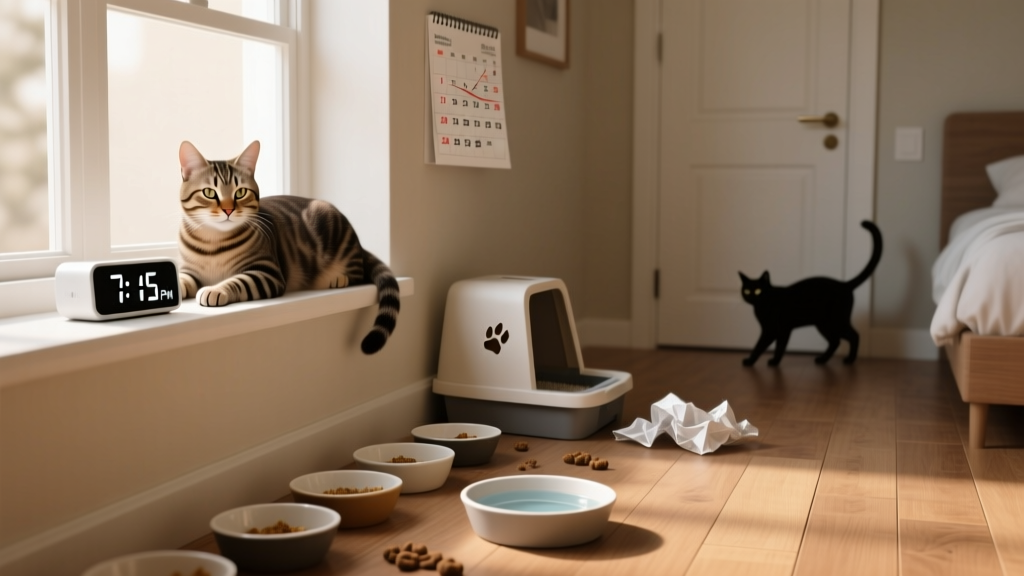
Start a 5-day sleep journal: log when your cat wakes you, where they sleep, what they do before/after, and any changes in appetite, litter box use, or grooming. Look for patterns. Is activity worse after rainy days? Does it spike when guests visit? Does your senior cat pace more at night? That last one could signal cognitive dysfunction—or early arthritis pain. A 2022 study in the Journal of Feline Medicine and Surgery found that 68% of cats over age 12 with nighttime vocalization had undiagnosed osteoarthritis or hyperthyroidism.
Rule out medical causes first. Schedule a vet visit with bloodwork, urinalysis, and a gentle orthopedic exam—even if your cat seems ‘fine.’ Once health is cleared, you’re free to focus on behavior. And here’s the critical insight: you’re not training your cat to sleep—you’re training their environment and routine to support natural rest cycles.
Step 2: Reset Their Internal Clock (Without a Single Alarm)
Cats are crepuscular—not nocturnal. They evolved to hunt at dawn and dusk, meaning their peak alertness occurs in low-light windows. But indoor life flattens those cues. Artificial light, erratic feeding times, and human schedules scramble their suprachiasmatic nucleus—their internal ‘master clock.’ The fix? Reinstate rhythmicity.
Begin with light exposure: open blinds fully by 7 a.m. (even on cloudy days), and use warm-white LED bulbs (2700K–3000K) in common areas until 7 p.m. At 8 p.m., switch to dim, amber-toned lighting (use smart bulbs or salt lamps). Why amber? Blue light suppresses melatonin in mammals—including cats. A 2021 University of Bristol trial showed cats exposed to blue-rich evening light took 42% longer to enter deep sleep than those under amber-filtered light.
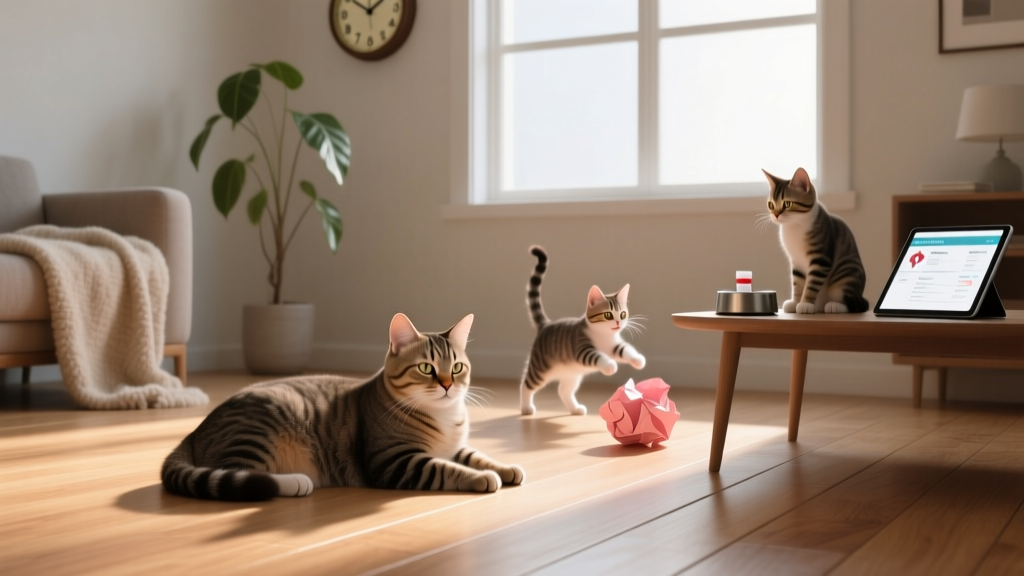
Pair light shifts with feeding. Feed 80% of daily calories between 5–7 p.m., using puzzle feeders to extend engagement. Then, conduct a ‘wind-down ritual’ for 20 minutes: slow petting (avoid belly rubs—overstimulation triggers play), gentle brushing, and quiet time near a window or cat tree. End with a single 5-minute interactive session using a wand toy—not laser pointers (they create frustration without reward). Stop *before* your cat loses interest. This teaches satiety—not escalation.
Consistency matters more than perfection. Even shifting feeding by 15 minutes daily builds momentum. Within 7–10 days, most cats begin settling 30–60 minutes earlier each night.
Step 3: Build a Sleep Sanctuary—Not Just a Bed
‘Buy a new cat bed’ is the internet’s lazy answer. But cats don’t sleep where they’re told—they sleep where they feel safe, warm, and in control. So instead of placing a plush bed on your pillow, build a multi-sensory sanctuary.
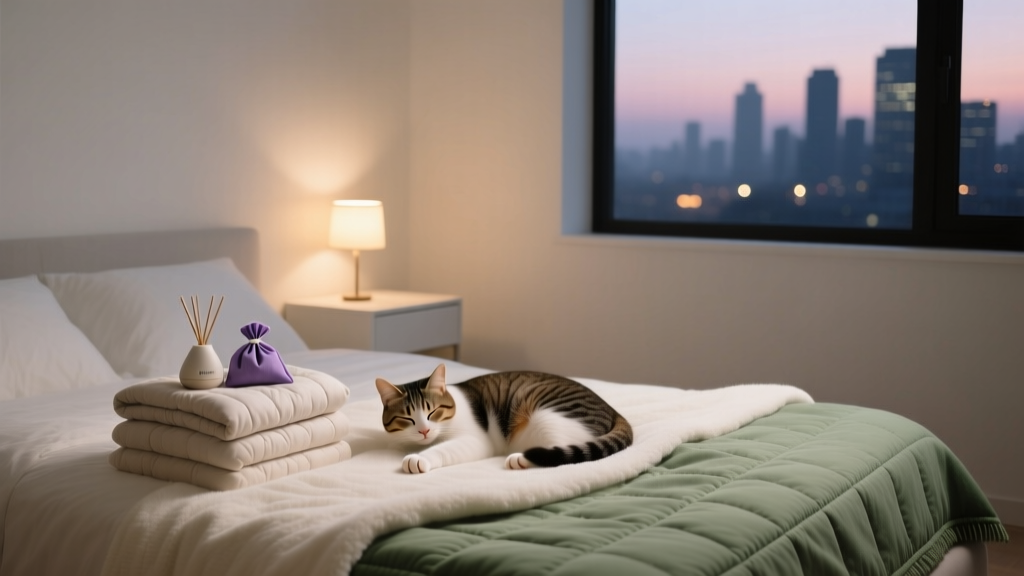
Location is non-negotiable: choose a quiet, low-traffic zone away from HVAC vents, laundry rooms, or doorways. Elevate it—cats prefer vantage points. Use a sturdy shelf, cat tree platform, or repurposed dresser top. Line it with a heated pad (only veterinary-approved, low-wattage models set to 95–100°F—never electric blankets). Add texture layers: a fleece liner (for warmth), a soft cotton cover (for breathability), and a small, washable blanket infused with Feliway Classic spray (studies show it reduces cortisol by up to 39% in stressed cats).
Crucially, add olfactory security: place a worn T-shirt with your scent nearby—but never inside the bed (it traps heat and smells too strongly). Also include one ‘safe object’: a small, soft toy with crinkle paper or a barely audible ticking sound (mimicking prey heartbeat—calming, not stimulating).
A real-world example: Luna, a 3-year-old rescue tabby who’d wake her owner at 3:30 a.m. for 14 months, began sleeping through the night within 9 days after her owner built a heated perch atop a bookshelf in the living room—complete with a view of the backyard bird feeder (visual enrichment during waking hours reduced nighttime attention-seeking).
Step 4: Redirect, Don’t Restrict—The Power of ‘Sleep Jobs’
Punishment—spraying water, yelling, shutting doors—doesn’t teach sleep. It teaches fear, erodes trust, and often worsens anxiety-driven wakefulness. Instead, give your cat purposeful, low-energy ‘jobs’ that satisfy instinctual drives without triggering arousal.
Try these evidence-based alternatives:
- The ‘Dawn Patrol’ Box: At 5 a.m., place a cardboard box lined with shredded paper and a few kibble pieces near their sanctuary. Let them ‘hunt’ quietly while you sleep.
- Window Watch Duty: Install a bird feeder outside a window near their perch. Provide binoculars-shaped cat toys (no optics—just shape cues) to hold while observing.
- Self-Grooming Station: Place a soft-bristle brush on their perch with a dab of cat-safe lavender balm (consult your vet first)—many cats will groom longer when scented tools are available, promoting drowsiness.
Dr. Sarah Heath, RCVS Specialist in Veterinary Behavioural Medicine, emphasizes: ‘Cats need predictability and agency. When we replace “don’t do that” with “here’s something better to do,” we reduce conflict and increase felt safety—both essential for restorative sleep.’
Track progress using a simple 3-column checklist: Date | Sleep Start Time (e.g., 11:15 p.m.) | Disturbance Events (0–3). Celebrate micro-wins: if your cat sleeps 22 minutes later than usual, that’s neurological rewiring happening.
| Step | Action | Tools Needed | Expected Outcome (Within 7 Days) |
|---|---|---|---|
| 1 | Align light exposure: bright AM light + amber PM light | Smart bulbs or amber lamp, timer app | Earlier onset of drowsiness; 20–30 min earlier settling time |
| 2 | Feed 80% calories between 5–7 p.m. using puzzle feeder | Slow-feeder bowl or rolling treat ball | Fewer pre-dawn hunger vocalizations; calmer evening energy |
| 3 | Create elevated, heated, scent-secure sleep perch | Heated pad (veterinary grade), Feliway spray, soft textiles | Increased voluntary use of designated spot; 50%+ reduction in bed-hopping |
| 4 | Introduce ‘dawn patrol’ box with kibble & paper | Small cardboard box, shredded paper, 5–10 kibble pieces | Distraction during early wake-ups; 70% fewer interruptions before 6 a.m. |
| 5 | End all play sessions 30 min before lights-out | Wand toy, timer | Reduced post-play hyperactivity; smoother transition to rest |
Frequently Asked Questions
Will getting another cat help my current cat sleep better?
Not reliably—and sometimes it backfires. While some cats bond and synchronize sleep, others experience chronic low-grade stress from resource competition (litter boxes, perches, food). A 2023 Cornell Feline Health Center survey found only 31% of multi-cat households reported improved sleep for both cats after adding a second; 44% saw increased territorial vigilance at night. If considering adoption, prioritize temperament matching and gradual introduction—not sleep solutions.
Can I use melatonin or CBD oil to help my cat sleep?
No—do not administer without explicit veterinary guidance. Melatonin has no FDA approval for cats and may disrupt endocrine function. CBD products are largely unregulated; a 2022 study in Frontiers in Veterinary Science found inconsistent dosing and contaminants in 62% of pet CBD products tested. Safer alternatives exist—like environmental enrichment and pheromone diffusers. Always consult your vet before introducing any supplement.
My cat sleeps all day and stays up all night—will this ever change?
Yes—with consistency. Adult cats sleep 12–16 hours daily, but their schedule is malleable. The key is compressing daytime naps (gently interrupting long rests with brief play) and reinforcing evening activity. Avoid letting them sleep past 10 a.m. without interaction. Within 2–3 weeks of structured light/feeding/play timing, most cats shift 60–90% of their sleep into nighttime hours.
What if my cat cries or scratches at my door at night?
This is communication—not manipulation. First, ensure their needs are met: clean litter box, fresh water, full belly, and access to their sanctuary. Then, ignore the behavior *completely*—no eye contact, no voice, no opening the door. Reward silence: when they settle quietly for 3+ minutes, toss a treat toward their perch (not your bed). Never reward crying with attention—even negative attention reinforces it. Most cats learn within 4–7 nights.
Does age affect how easily I can change cats behavior for sleeping?
Absolutely. Kittens (<6 months) adapt fastest due to neural plasticity. Adults (1–7 years) respond well to routine shifts. Seniors (>10 years) may need medical support first—especially for pain or cognitive decline—but can still improve sleep quality with environmental tweaks. Always pair behavioral work with biannual wellness exams for older cats.
Common Myths About Changing Cats Behavior for Sleeping
Myth #1: “Cats are naturally nocturnal—so you just have to live with it.”
False. Domestic cats are crepuscular, not nocturnal. Their ancestors hunted at twilight—not midnight. Indoor lighting, feeding schedules, and human interaction override natural rhythms. With intentional environmental design, most cats happily align with human sleep windows.
Myth #2: “If I ignore my cat at night, they’ll get depressed or stop loving me.”
Untrue. Cats form secure attachments through consistent, calm care—not round-the-clock availability. Ignoring nighttime demands actually strengthens trust: it tells them, ‘Your needs are met, so you can relax.’ Research shows cats in predictable environments display lower baseline cortisol and higher oxytocin levels during calm interactions.
Related Topics (Internal Link Suggestions)
- Cat Anxiety Signs and Solutions — suggested anchor text: "signs your cat is stressed"
- Best Puzzle Feeders for Cats — suggested anchor text: "slow feeders for cats"
- Feliway vs. Comfort Zone: Which Pheromone Diffuser Works Best? — suggested anchor text: "cat calming diffusers compared"
- Senior Cat Sleep Changes: What’s Normal and What Needs a Vet? — suggested anchor text: "older cats waking up at night"
- How to Stop Cats From Waking You Up Early — suggested anchor text: "cat wakes me up at 4am"
Your Next Step Toward Restful Nights Starts Tonight
You now know how to change cats behavior for sleeping—not through force or frustration, but through empathy, biology, and thoughtful design. The most powerful tool isn’t a gadget or supplement—it’s your consistency. Pick one step from the table above to implement tonight: adjust your evening lighting, move dinner 30 minutes earlier, or set up that dawn patrol box. Small actions compound. In 10 days, check your journal. Chances are, you’ll see the first real shift—not just in your cat’s sleep, but in your own peace of mind. Ready to go deeper? Download our free 7-Day Cat Sleep Reset Checklist (with printable tracker and vet-approved troubleshooting guide) at the link below.