Why Cats Sit on the Toilet Tank Lid
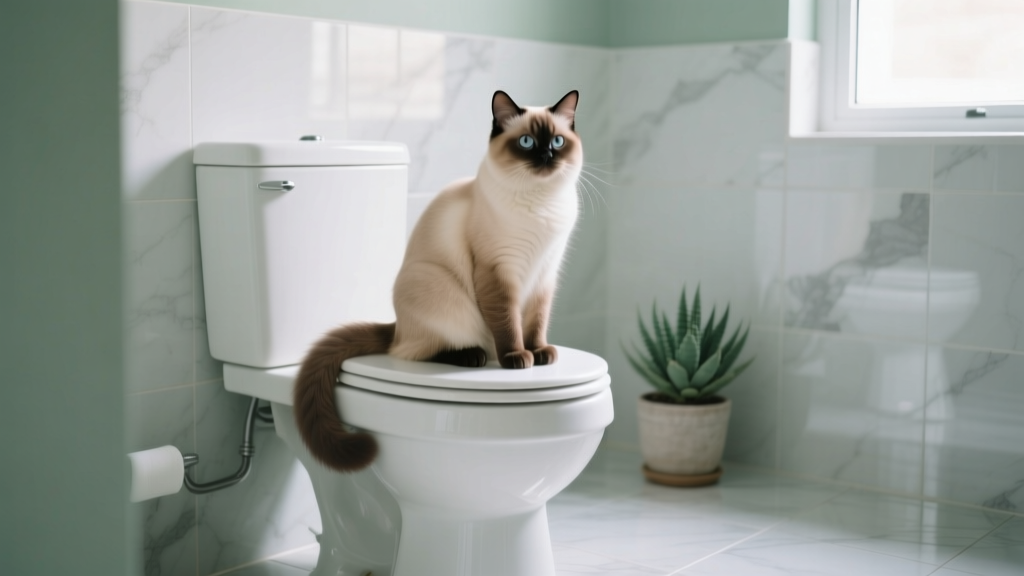
You walk into the bathroom half-awake, reaching for your toothbrush, and there’s your cat—perched like a tiny, fluffy statue on the toilet tank lid. They blink slowly. Their tail tip twitches once. They look pleased with themselves, as if they’ve discovered a secret lookout point in your home that you somehow missed.
If you’ve ever wondered, “Why there?” you’re not alone. The toilet tank lid is one of those cat choices that feels random until you look at it through cat logic: height, warmth, safety, scent, and a front-row seat to you doing interesting human things (like turning on water). Once you understand the “why,” it becomes less weird—and honestly, kind of charming.
1) The scientific (and evolutionary) reason: cats love elevated, safe vantage points
Cats are both predators and, historically, potential prey. That combo shaped a brain that’s constantly scanning for the best place to observe without being bothered. Elevation offers a survival advantage: better sightlines, more control over approach routes, and fewer surprise ambushes.
In the wild, a slightly higher perch—rock, stump, low branch—can mean the difference between spotting prey early or being spotted. Your bathroom doesn’t have stumps, but it does have a surprisingly good “cat perch” built in: the toilet tank.
It’s usually:
- Higher than the floor (instant confidence boost)
- Stable (especially if the lid is flat and wide)
- In a small, protected room (less traffic than the living room)
- Near intriguing sounds and scents (running water, soap, towels)
From a feline psychology standpoint, the toilet tank lid is a miniature observation tower in a quiet zone—an appealing combination for a species that’s wired to monitor its environment.
2) A detailed breakdown: different contexts for “toilet tank sitting”
Not every toilet-tank sitter is doing it for the same reason. Cats are great at multi-tasking: one perch can meet several needs at once. Here are the most common contexts I see.
It’s the best “watchtower” in a small room
Bathrooms tend to have clear sightlines. From the tank, your cat can see the doorway, your hands at the sink, and any movement in the room without being underfoot. Many cats prefer “near you, but not in your way.” The tank lid is a polite compromise.
Typical scenario: You’re brushing your hair, and your cat sits quietly behind you. They’re not asking for petting; they’re supervising. If you leave, they may hop down and follow—mission accomplished.
They like the temperature (yes, really)
In some homes, the bathroom is a little warmer than other rooms—especially after a shower. Warm, humid air can be cozy for cats, who generally prefer warmer resting spots than humans do. The tank lid can also hold a tiny bit of residual warmth depending on your plumbing and room temperature.
Typical scenario: After you shower, your cat appears as if summoned. They sit on the tank while the room is steamy, then relocate once the warmth fades.
It smells like you (and like “home”)
Cats are scent-oriented creatures. Bathrooms often contain strong “family scent” concentrations: laundry hampers, towels you’ve used, bath mats you step on, and the simple fact that you spend private time there. The toilet tank lid sits amid all of it, and your cat may choose it because it’s in the middle of the household’s scent map.
Typical scenario: You notice your cat gravitates to the bathroom when you’ve been away or when visitors are over. That’s a comfort-seeking pattern.
It’s a “safe distance” from activity
Some cats dislike being crowded or picked up, but still want to be close to their favorite person. A raised perch allows proximity without direct contact. Think of it as a social boundary that still feels connected.
Typical scenario: Your cat hops up when you enter but doesn’t rub your legs. They watch, blink slowly, and remain poised. They’re participating socially—on their terms.
It’s part of a routine (and cats love routines)
Cats notice patterns: morning bathroom visit, evening skincare, the sound of a cabinet opening. If your cat has learned that the bathroom predicts attention, water, or interesting sounds, the toilet tank becomes a “station” in the routine.
Typical scenario: Every night you wash your face, and your cat appears to sit on the tank until you’re done—then walks out with you like an escort.
They’re curious about water and porcelain acoustics
Many cats are fascinated by water—especially moving water. The toilet may flush, the sink may run, the shower may drip. Bathrooms also amplify sound in a way cats can find interesting. A tank lid perch puts them near the action without stepping into the sink.
3) What it means about your cat’s mood and feelings
Toilet tank sitting is usually a sign your cat feels comfortable in your home. But you can learn more by reading body language.
- Relaxed cat: loose posture, paws tucked, slow blinks, ears neutral. This is “I feel safe here.”
- Curious/engaged cat: forward ears, alert eyes, tail tip flicking gently. This is “I’m watching you and the environment.”
- Seeking connection: meowing softly, leaning toward your hand, hopping down to rub your legs when you move. This is “I want attention, but I approached politely.”
- Stressed or uncertain: tense body, crouched low, ears angled sideways or back, dilated pupils, freezing. This can be “I’m choosing a perch because I don’t feel comfortable on the floor right now.”
In many households, the bathroom is a low-traffic refuge. If your cat uses it as a “safe zone,” the tank lid may be their favorite seat in that safe zone.
4) Related behaviors you might also notice
If your cat loves the toilet tank lid, you may see similar “cat logic” elsewhere:
- Sitting on the back of the couch (another lookout point)
- Perching on the bathroom counter to watch water or grooming routines
- Following you into the bathroom and “guarding” you (cats often stick close during vulnerable moments—yours and theirs)
- Sleeping on laundry (warmth + your scent)
- Choosing doorway thresholds where they can monitor multiple rooms
All of these behaviors share a theme: cats like to observe, control their personal space, and stay close to “their people” while maintaining a sense of safety.
5) When it’s normal vs. when it might be a concern
Most of the time, toilet tank sitting is harmless and normal. It becomes worth a closer look when it shows up suddenly or intensely, or when it comes with other changes.
Usually normal
- Your cat sits there occasionally, especially when you’re in the bathroom
- They look relaxed and leave easily
- They’re eating, drinking, using the litter box, and playing normally
Potential concern (especially if new)
- Sudden hiding or isolating in the bathroom (especially in a cat who used to be social)
- Restlessness, vocalizing, or agitation while perched
- Increased drinking/urination or hovering near water sources (could indicate medical issues like kidney disease, diabetes, urinary discomfort—worth a vet call)
- Avoiding other areas after changes like a new pet, new baby, construction, or visitors
If your cat seems to be using the toilet tank lid as a “retreat” because something feels off, the goal isn’t to remove the perch—it’s to figure out what’s stressing them and restore a sense of safety (and rule out health problems when needed).
6) Tips for responding to (or encouraging) the behavior
If your cat loves their bathroom perch, you can use it to strengthen your relationship and make the behavior safer.
Make it stable and safe
- Close the toilet lid to reduce temptation to drink or investigate the bowl.
- Check the tank lid fit. If it slides, consider a non-slip pad (cut to size) to prevent wobbling.
- Keep chemicals secured. Toilet cleaners and bathroom products should be in a cabinet—cats can be bold explorers.
Offer a “better” perch nearby (if you’d rather they didn’t sit there)
If the tank lid makes you nervous, don’t just remove access—replace the option. Cats dislike having favorite spots taken away with no alternative.
- A slim cat stool or small bathroom cat shelf
- A window perch in a nearby room
- A cat tree placed where they can still watch you
Then reward the new spot with what your cat values: a treat, a chin scratch, or a calm “good seat” moment when they choose it.
Use it as a training opportunity
Because the bathroom is a small, predictable space, it’s great for gentle positive reinforcement. If your cat sits calmly while you brush your teeth, you can reinforce calmness with a quiet pet (if they enjoy it) or a tiny treat after.
Respect the “supervisor role”
Some cats truly just want to be near you. If your cat sits on the tank lid and slow-blinks, that’s social bonding. You can slow-blink back; it’s one of the simplest ways to “speak cat” in a human house.
7) Fun facts and research-y tidbits
- Elevated resting is common in cats because it supports environmental monitoring and perceived safety. Behaviorists often recommend vertical space (cat trees, shelves) as a key environmental enrichment tool for indoor cats.
- Bathrooms concentrate scent due to fabrics (towels, bath mats) and frequent human presence. Cats use scent to map “safe territory,” so they’re often drawn to rooms that smell strongly like their people.
- Small rooms can feel safer to some cats during stress because there are fewer approach angles to monitor. A tank lid perch in a small room can become a strategic “control point.”
- Many cats prefer to observe affection before engaging. Watching you in a quiet setting can be part of their social decision-making: “Do I want interaction right now, or just company?”
FAQ: Common questions about cats sitting on toilet tank lids
Is my cat trying to tell me something by sitting on the toilet tank?
Often, they’re saying, “I like being near you,” or “This is a good lookout spot.” If they meow insistently or paw at you, they may also be asking for attention, play, or water.
Why does my cat follow me into the bathroom and sit there every time?
Routine + social bonding. Cats are pattern learners, and the bathroom is a predictable moment when you’re stationary. For some cats, that’s prime time for companionship (or supervision).
Could my cat be guarding me?
In a way, yes—cats often stick close during “vulnerable” moments (yours and theirs). More accurately, they’re monitoring the environment while staying close to a valued social partner: you.
Is it safe for my cat to sit on the toilet tank lid?
Usually, yes, if the lid is stable and the bathroom is cat-safe (closed toilet lid, chemicals put away). If your cat is elderly or unsteady, consider offering a more secure perch to reduce slipping risks.
Why does my cat choose the toilet tank instead of a comfy bed?
Because comfort isn’t only softness. For cats, “comfortable” often means safe, elevated, and socially strategic. A plush bed in the wrong location can lose to a hard perch with the perfect view.
Should I stop my cat from doing this?
If you don’t mind and it’s safe, there’s no need. If you’d prefer they didn’t, redirect gently by offering a better perch nearby and reinforcing it—avoid scolding, which can make the bathroom feel tense or unpredictable.
Cats have a talent for turning everyday household objects into meaningful territory, and the toilet tank lid is a surprisingly sensible choice in cat terms: height, privacy, scent, routine, and a prime view of their favorite human.
Does your cat have a favorite “why on earth are you sitting there?” spot—like the toilet tank, the laundry basket, or the top of the fridge? Share your story (and your cat’s funniest bathroom habits) with us on catloversbase.com.