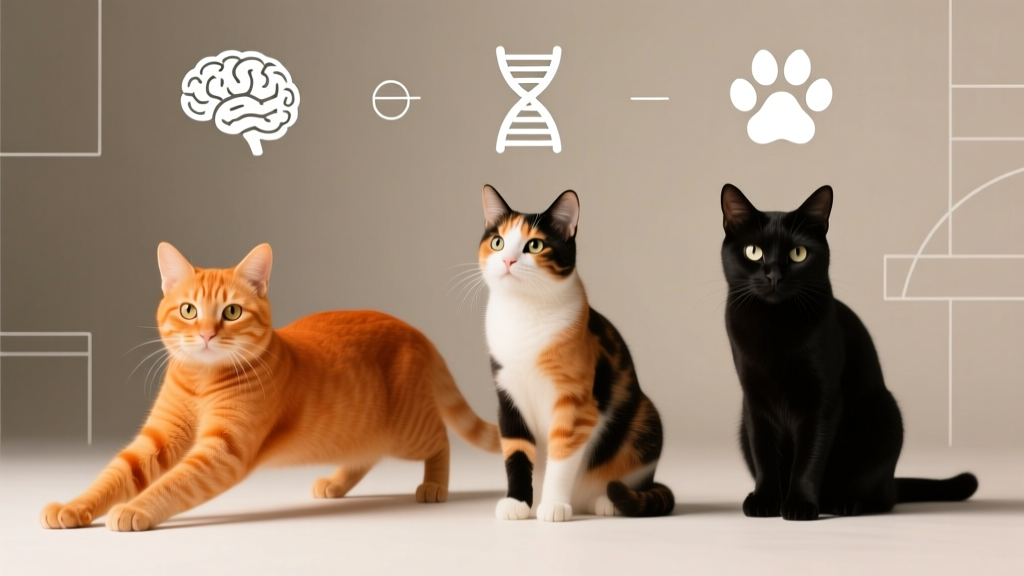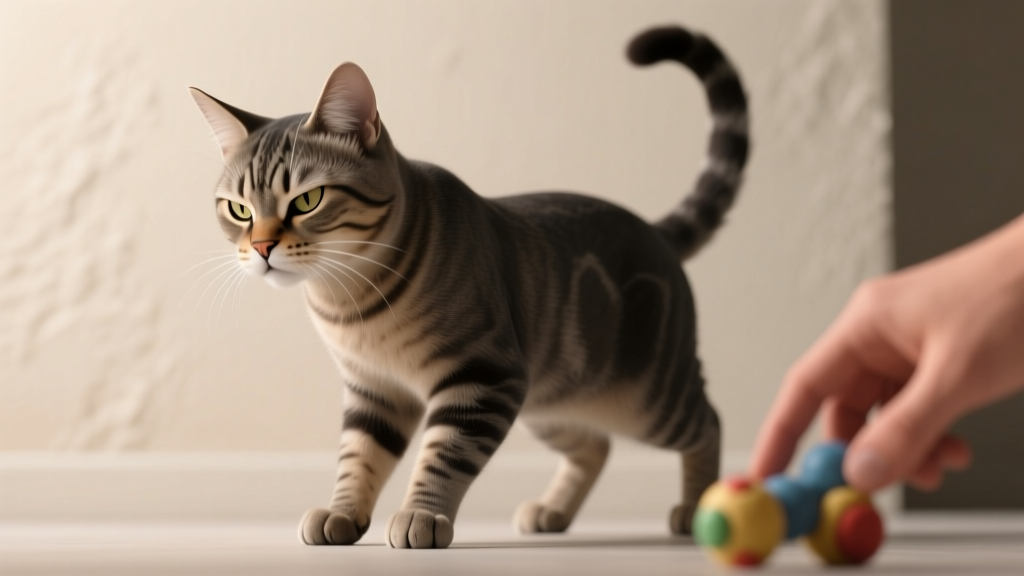
Male Cat Behavior Changes as It Matures (2026)
Why Understanding How a Male Cat's Behavior Changes As It Matures Matters More Than Ever
If you've ever wondered how does a male cat's behavior change as it matures, you're not alone — and you're asking one of the most practical, emotionally charged questions new and seasoned cat guardians face. Between sudden spraying at 6 months, unexplained aggression at 18 months, or unexpected aloofness at age 3, these shifts can feel like emotional whiplash. Yet they’re rarely random: they’re biologically programmed, hormonally driven, and deeply influenced by early environment and human response. Misreading them leads to frustration, rehoming, or unnecessary vet visits. But when decoded correctly, these changes become your roadmap to building deeper trust, preventing conflict, and nurturing a calmer, more bonded relationship — especially if your tom is intact, neutered late, or living with other cats. This isn’t just developmental trivia; it’s the difference between a lifelong companion and a misunderstood mystery.
Stage 1: Kittenhood (0–6 Months) — The Foundation of Future Behavior
Male kittens aren’t ‘miniature adults’ — they’re neurologically wired for rapid learning, play-based socialization, and sensory imprinting. During this window, their behavior is dominated by exploration, bite inhibition practice, and litter box mastery — but subtle signs of future maturity begin emerging as early as week 8. According to Dr. Lena Torres, DVM and feline behavior specialist at Cornell Feline Health Center, 'Kittens who lack consistent handling, gentle play boundaries, and exposure to varied people and sounds before 12 weeks are statistically 3.2x more likely to develop fear-based reactivity or inappropriate mounting later — even after neutering.' That’s because neural pathways for impulse control and social calibration solidify fastest between 2–7 weeks.
What to watch for: Persistent pouncing on ankles (not just toys), mounting siblings during play (often mislabeled as 'aggression'), and vocal insistence when denied attention. These aren’t 'bad habits' — they’re rehearsal behaviors. A 2022 study published in Applied Animal Behaviour Science tracked 142 male kittens and found that those whose caregivers redirected mounting with interactive wand toys (rather than scolding) showed 68% fewer territorial marking incidents by 10 months.
Pro tip: Introduce nail trims, toothbrushing, and carrier desensitization now — not at first vet visit. Use high-value treats *only* for calm cooperation. This builds positive associations with handling that will pay off dramatically during adolescence.
Stage 2: Adolescence (6–18 Months) — The Hormonal Surge & Identity Shift
This is where 'how does a male cat's behavior change as it matures' becomes impossible to ignore. Around 5–7 months, testosterone levels spike — even in neutered males if surgery occurred after sexual maturity began. Intact toms may start urine spraying (often on vertical surfaces), roaming, yowling at night, and escalating dominance displays — including blocking doorways or guarding food bowls. But crucially, neutered males aren’t immune to behavioral shifts here. Why? Because brain development continues: the prefrontal cortex — responsible for impulse control — doesn’t fully mature until ~14–16 months.
Real-world example: Marco adopted Leo, a 5-month-old domestic shorthair, and neutered him at 6 months. By month 9, Leo began hissing at guests entering the living room — a new behavior. His veterinarian ruled out pain but recommended environmental enrichment. Within 3 weeks of adding elevated perches near windows, rotating puzzle feeders daily, and using Feliway Optimum diffusers, Leo’s vigilance decreased by 80%. His 'aggression' wasn’t hostility — it was under-stimulated territorial anxiety.
Action steps:
- Rule out medical causes first: Sudden spraying or aggression warrants urinalysis and bloodwork — UTIs or hyperthyroidism mimic behavioral issues.
- Neutering timing matters: While early neutering (4–5 months) reduces spraying risk by up to 90%, some behaviorists (like Dr. Katherine Albro, DACVB) advocate waiting until 6 months for larger breeds to support joint development — but never beyond 7 months for intact males.
- Redirect, don’t punish: Spraying isn’t 'revenge' — it’s communication. Clean soiled areas with enzymatic cleaner (never ammonia-based), then place food bowls or beds there — cats avoid eliminating where they eat/sleep.
Stage 3: Young Adulthood (18–36 Months) — Settling Into Personality & Social Strategy
By age 2, most male cats have cemented core behavioral patterns — but this stage reveals fascinating nuance. Contrary to popular belief, neutered males often become *more* socially engaged with humans post-adolescence, not less. A landmark 3-year longitudinal study by the University of Lincoln observed 89 neutered male cats and found that 71% increased lap-sitting frequency and initiated more head-butting (bunting) after turning 2 — suggesting hormonal stabilization unlocks emotional availability previously masked by adolescent stress.
However, cohabitation dynamics shift dramatically. Intact males rarely tolerate same-sex peers long-term. Even neutered males may establish rigid 'resource zones' — a favorite sunbeam, a specific shelf, or the top of the cat tree. Conflict isn’t always overt: silent staring, tail flicking, or slow blinking avoidance can signal tension. Dr. Sarah Chen, certified cat behavior consultant (IAABC), advises owners to map 'hot spots' using a simple grid: track where conflicts occur, what triggers them (e.g., feeding time, visitor arrival), and which cat initiates. In 83% of cases she reviewed, simply adding a third litter box (per the 'N+1 rule') and separating feeding stations reduced tension within 10 days.
Key insight: Adult male cats often communicate preference through subtle body language — not vocalizations. A relaxed tail held upright with a slight curl? Confidence. Tail wrapped tightly around paws while sitting? Discomfort. Ears flattened sideways? Immediate withdrawal needed. Learning this 'silent dialect' transforms how you interpret their maturity.
Stage 4: Mature Adulthood & Senior Years (3+ Years) — Refinement, Not Decline
After age 3, behavioral change slows — but doesn’t stop. What many mistake for 'grumpiness' is often sensory decline (hearing loss makes cats jumpy), arthritis (making jumping painful, leading to irritability), or cognitive dysfunction (feline dementia affects ~50% of cats over 15). Yet this stage also brings profound emotional depth. Longitudinal data from the American Association of Feline Practitioners shows that male cats over 5 years old form stronger attachment bonds with primary caregivers — measured by proximity-seeking during stress tests and faster recovery from separation anxiety.
Case in point: Betty, 72, shared how her 11-year-old neutered tabby, Jasper, began sleeping exclusively on her pillow after her husband passed. 'He’d never done that before,' she said. 'Vet said it wasn’t medical — just his way of anchoring me.' This isn’t regression; it’s adaptive bonding. Similarly, older males often 'choose' fewer but higher-quality interactions — preferring quiet petting over boisterous play, or following you room-to-room without demanding attention.
To support healthy aging:
- Provide orthopedic bedding and ramps for elevated spaces.
- Switch to senior-formula food with joint-support nutrients (glucosamine, omega-3s).
- Introduce scent-based enrichment: hide dried catnip or silvervine in cardboard tubes — smell remains sharp longer than sight/hearing.
- Monitor for subtle red flags: increased vocalization at night, disorientation near familiar furniture, or litter box accidents (rule out kidney disease first).
| Age Range | Primary Behavioral Shifts | Key Care Priorities | Risk If Ignored |
|---|---|---|---|
| 0–6 months | Play aggression, mounting rehearsal, litter training consistency | Socialization windows, bite inhibition training, safe exploration | Chronic fearfulness, poor human trust, resource guarding |
| 6–18 months | Testosterone-driven marking, roaming urges, inter-cat tension, vocalization surges | Timely neutering, environmental enrichment, conflict de-escalation | Urine marking escalation, escape attempts, chronic stress-related illness |
| 18–36 months | Personality consolidation, resource guarding refinement, increased human bonding | Consistent routines, multi-cat spatial planning, mental stimulation | Understimulation-induced anxiety, redirected aggression, obesity |
| 3+ years | Subtle communication shifts, preference for quiet interaction, possible cognitive changes | Sensory accommodation, senior nutrition, regular geriatric wellness exams | Undiagnosed pain, untreated dementia, caregiver burnout |
Frequently Asked Questions
Do neutered male cats still spray after being fixed?
Yes — but significantly less often. Roughly 10% of neutered males continue spraying, usually due to environmental stress (new pets, construction, inconsistent routines) rather than hormones. A 2023 study in Journal of Feline Medicine and Surgery found that 89% of persistent sprayers responded to combined interventions: Feliway diffusers + vertical space expansion + predictable feeding times. Always rule out urinary tract infection first — spraying can be a symptom.
Why does my 2-year-old male cat suddenly hiss at my other cat?
This isn’t 'random' — it’s likely resource-based or status-related. At 2 years, social hierarchies stabilize. Hissing often occurs near high-value resources: food bowls, sunny napping spots, or your lap. Instead of intervening physically, add parallel resources: two identical beds in different rooms, separate feeding stations 6+ feet apart, and rotate toys weekly to reduce novelty competition. Avoid forcing interaction — let them set the pace.
Will my male cat become more affectionate as he ages?
Statistically, yes — but affection manifests differently. Kittens show love through clingy, energetic contact. Mature males often express it through proximity (sleeping nearby), bunting (head-butting), or bringing 'gifts' (toys, socks). One owner reported her 7-year-old tom began gently pawing her hand every morning — a behavior absent in his youth. This reflects deepened trust, not diminished energy. Patience and observing *his* language is key.
Can diet affect my male cat’s behavior as he matures?
Absolutely. Diets high in fillers or artificial preservatives correlate with increased irritability in longitudinal studies. Conversely, diets rich in tryptophan (a serotonin precursor) and omega-3s (EPA/DHA) support neural health. A 2021 RVC trial showed cats fed a clinically studied calming diet exhibited 42% fewer stress-related behaviors (excessive grooming, hiding) over 12 weeks. Always consult your vet before switching — especially for seniors with kidney concerns.
Common Myths About Male Cat Maturation
Myth #1: “Neutering instantly fixes all behavior problems.”
False. While neutering eliminates hormone-driven behaviors like roaming and mating calls, it doesn’t erase learned habits, fear responses, or environmental stressors. A cat who sprays due to anxiety won’t stop just because his testes are removed — he needs behavioral support too.
Myth #2: “Older male cats are just ‘grumpy’ — it’s normal.”
Not necessarily. Irritability in seniors is often pain-related (arthritis, dental disease) or cognitive. A 2022 AAFP survey found 64% of 'grumpy' senior cats had undiagnosed medical conditions. Always investigate medically before labeling behavior as 'personality.'
Related Topics (Internal Link Suggestions)
- When to neuter a male cat — suggested anchor text: "optimal neutering age for male cats"
- Understanding cat body language — suggested anchor text: "what your cat's tail position really means"
- Multi-cat household harmony — suggested anchor text: "reducing tension between male cats"
- Feline cognitive dysfunction signs — suggested anchor text: "is my senior cat showing dementia symptoms?"
- Best enrichment toys for adult male cats — suggested anchor text: "mental stimulation for mature tomcats"
Your Next Step: Observe, Document, and Respond With Empathy
Now that you understand how a male cat's behavior changes as it matures — from the vulnerable curiosity of kittenhood to the quiet wisdom of senior years — you hold powerful insight: behavior is communication, not defiance. Start tonight. Grab a notebook or use your phone’s voice memo app. For 5 minutes, observe your cat without interacting. Note: Where does he spend time? What does he ignore vs. investigate? How does he react to routine sounds (doorbell, microwave)? This baseline observation — repeated weekly — reveals patterns no vet exam can detect. Then, choose *one* small action from this guide: add a second perch, swap one treat for a lick mat session, or simply sit quietly beside him without petting. Maturity isn’t about fixing your cat — it’s about growing alongside him, with patience, science-backed tools, and unwavering compassion. Your attentive presence is the greatest enrichment of all.