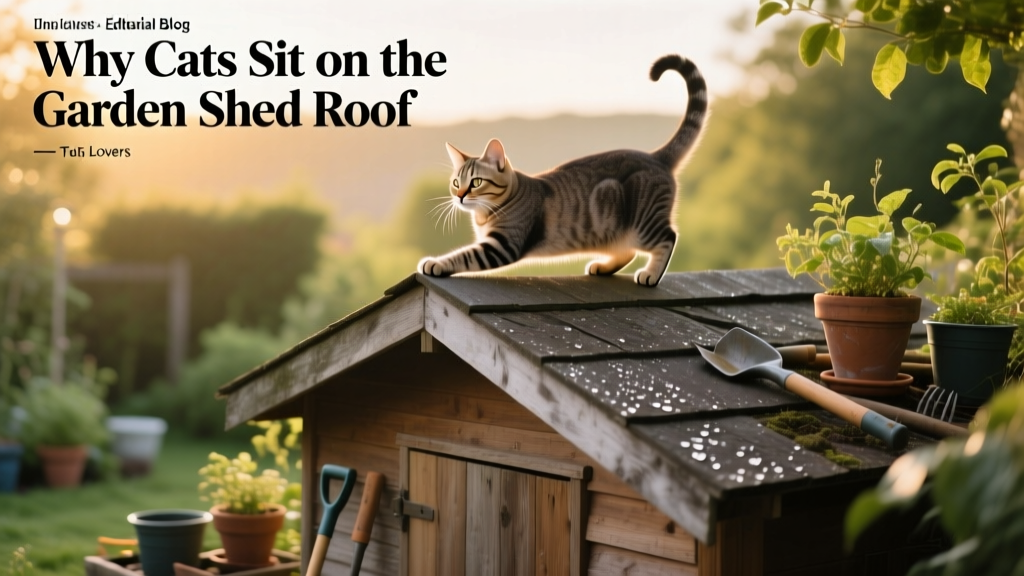
Why Cats Sit on the Garden Shed Roof
You glance out the kitchen window to check the weather… and there’s your cat. Not on the patio. Not in their fancy bed. Not even on the fence like the neighbor’s cat. Nope—your cat is perched on top of the garden shed like a tiny, furry lighthouse keeper, calmly surveying the yard as if they own the place (and honestly, they probably think they do).
If you’ve ever wondered, “Why there?” you’re in good company. Shed roofs hit a sweet spot for feline instincts: height, visibility, warmth, and control. From a behaviorist’s perspective, it’s one of those “quirky” cat choices that’s actually beautifully logical once you see the world from a cat’s angle.
The evolutionary reason: height equals safety, information, and opportunity
Cats are both predators and—depending on the neighborhood—potential prey. Even confident outdoor cats are wired to think in terms of “Where’s the safest place to observe?” A raised platform like a shed roof offers:
- A tactical advantage: Height improves sightlines. From above, your cat can spot birds, squirrels, other cats, and people long before they get close.
- Reduced surprise attacks: It’s harder for a rival cat (or a dog) to sneak up on a roof-sitter than on a cat lounging at ground level behind the compost bin.
- Territory monitoring: Cats are natural boundary-checkers. The shed roof can function like a watchtower for keeping tabs on “their” yard.
- Efficient energy use: Cats are masters of doing the least possible while still being fully informed. Perching means your cat can gather a lot of information without pacing the fence line all afternoon.
Domestic cats still carry the behavioral toolkit of their ancestors. In the wild, elevated perches help small predators hunt and avoid danger. In our backyards, that ancient strategy translates into a cat sitting atop the shed like a fuzzy security camera with whiskers.
A closer look: different reasons cats choose the shed roof
Not all shed-sitting is created equal. The same behavior can mean different things depending on timing, body language, and what’s happening around your home.
1) The “neighborhood watch” shift
This is the classic posture: your cat sits upright, tail wrapped neatly, ears rotating like satellite dishes. They’re not necessarily hunting; they’re monitoring. You’ll often see this at dawn and dusk when outdoor activity peaks—birds, rabbits, other cats, and humans heading to work.
Common scenario: You hear a soft chirp from your cat (that little “ek-ek-ek” sound) and look up to find them laser-focused on a sparrow at the feeder. The roof gives them a front-row seat.
2) The “sunny rooftop lounge”
Shed roofs often warm up nicely, especially if they’re metal, dark shingles, or positioned in direct sunlight. Cats love warmth for simple, biological reasons: warmth supports muscle comfort and helps conserve energy.
Common scenario: It’s a crisp morning. Your cat disappears after breakfast, and an hour later you spot them loafed on the shed roof, eyes half closed, soaking up the heat like a solar panel with paws.
3) The “avoid the chaos” retreat
If your home is busy—kids playing, a new puppy, visitors, lawn mowing—your cat may use the shed roof as a quiet escape. Height creates distance, and distance creates emotional relief.
Common scenario: A delivery truck rumbles up. Instead of bolting under the couch, your cat chooses the roof, where they can watch the commotion from a safe, predictable space.
4) The “social boundary” statement
Outdoor cats communicate territory partly through presence. Sitting in a prominent spot can be a subtle way of saying, “I’m here, I’m calm, and I’m in charge of this corner.” It’s not always aggressive—often it’s simply confident.
Common scenario: The neighbor’s cat strolls along the fence. Your cat doesn’t chase; they simply sits tall on the shed roof, unbothered, like royalty observing a visitor.
5) The “launch pad” and travel route
Cats think in three dimensions. A shed roof can be part of a route: fence to roof to tree branch to the porch awning. Some cats prefer elevated pathways to avoid the vulnerability of open ground.
Common scenario: Your cat hops from the shed roof to the fence and then to the gate—smooth, confident, as if they’ve mapped the whole yard in an invisible parkour grid.
What it says about your cat’s mood and feelings
The shed roof itself is neutral; your cat’s body language tells the story.
- Relaxed and content: Soft eyes, slow blinks, loaf posture, tail still or gently wrapped. This is a “I feel safe here” message.
- Curious and engaged: Upright sit, ears swiveling, head tracking movement, whiskers forward. Your cat is gathering information.
- Confident and territorial: Tall posture, steady gaze, slow deliberate movements. They’re comfortable claiming space.
- Anxious or on high alert: Crouched body, tight muscles, tail tucked close or flicking sharply, ears flattened or constantly pinned then released. In this case, the roof may be a coping strategy.
- Overstimulated or frustrated: Rapid tail thumps, intense stare at birds or other cats, vocalizing, pacing along the roofline. Sometimes this is “I want to chase but I can’t,” which can build frustration.
One of the nicest takeaways: a cat who chooses a perch often feels they have options. And having options is a big part of feline emotional security.
Related behaviors you might also notice
If your cat loves the shed roof, you may see other “vertical living” habits around the house and yard:
- Fence-walking: Using narrow elevated surfaces like balance beams.
- Window surveillance: Sitting in the same window at the same time each day (cats love routine patrols).
- Tree perching: Especially if the tree offers a view of birds or neighboring yards.
- High indoor spots: Top of the fridge, tall cat trees, shelving—anywhere they can observe without being approached.
- Roof-to-roof travel: Confident outdoor cats may string together routes across sheds, porches, and low гараges like an aerial highway.
When it’s normal vs. when it might be a concern
Most of the time, shed-roof sitting is normal, healthy cat behavior. It can become a concern when safety, stress, or sudden changes enter the picture.
Normal and healthy when:
- Your cat can get up and down easily and calmly.
- They’re relaxed, responsive, and not “stuck” up there.
- The behavior is part of a normal routine—short patrols, sunbathing, observation.
Potentially concerning when:
- Sudden increase in hiding/perching: If your social cat abruptly spends hours on the shed roof, consider stress (new animal, construction noise, neighborhood cat conflict) or health discomfort.
- They seem afraid to come down: Cats can misjudge jumps or get spooked by a dog, a person, or another cat below.
- Frequent yowling or agitation: Could indicate territorial stress, especially if other cats are roaming nearby.
- Risky roof conditions: Slippery surfaces, steep pitches, fragile roofing, nearby roads, or access to higher roofs that lead to dangerous falls.
- Older cats or mobility issues: Arthritis can make jumping down painful, even if jumping up was manageable.
If you notice limping, stiffness, changes in appetite, or unusual withdrawal, it’s worth consulting your veterinarian. Behavior changes can be the first sign your cat doesn’t feel physically right.
How to respond (and how to encourage it safely)
You don’t need to “correct” this behavior—your cat is expressing normal feline needs. The goal is to make it safe and reduce any conflict it might create.
- Check the roof safety: Ensure it’s stable, not sharp, and not dangerously steep. Remove hazards like loose tools, nails, or slippery tarps nearby.
- Provide a safer alternative perch: A sturdy outdoor cat house with a platform, a secure catio, or a tall scratching post near a window can satisfy the same need for height.
- Create an easy “cat ramp” route: If your cat is older or the jump down is large, consider adding intermediate steps (a bench, a sturdy table, or a purpose-built ramp) so they can descend in stages.
- Reduce neighborhood cat tension: If rival cats are triggering roof patrols, consider motion-activated sprinklers (aimed away from your cat’s routes), blocking sightlines, or supervised outdoor time.
- Reward calm returns: If you want your cat to come in at dusk, pair the request with a reliable routine—call them, offer a small treat, then feed dinner. Cats love a predictable “closing time.”
- Don’t scare them off the roof: Yelling or chasing can increase stress and make the roof feel like the only safe option. Calmly call them down, use treats, and give them time.
One practical relationship tip: when you respect your cat’s need to observe from a safe place, you’ll often see less clinginess, less skittishness, and fewer surprise “zoomies” fueled by pent-up tension.
Fun facts and research-tinged nuggets
- Cats are “perch predators” by design: Elevated observation reduces the need for constant movement—energy efficiency is a big theme in feline behavior.
- Height can lower stress: In multi-cat homes, vertical space is often recommended because it increases perceived territory and escape options, which can reduce conflict. The same principle applies outdoors.
- Warmth is not a luxury—it's a strategy: Cats gravitate toward warm surfaces partly because it supports comfort and relaxation; you’ll often see more sunbathing when temperatures are mild rather than extreme.
- Routine patrols are a thing: Many cats follow remarkably consistent “inspection routes,” checking the same vantage points at similar times daily, especially around dawn and dusk.
FAQ: Common questions about cats on shed roofs
1) Is my cat trying to run away when they sit on the shed roof?
Usually no. Most cats perch to observe and feel secure, not to escape. If your cat looks relaxed and comes when called (or comes down for food), it’s more “watchtower” than “runaway plan.”
2) Should I stop my cat from going on the shed roof?
If the roof is stable and the area is safe, it’s typically fine. Consider stopping it if there are fall risks, nearby traffic, fragile roofing, or if your cat is older and struggling to get down.
3) Why does my cat sit up there and stare at me?
Because you’re part of the landscape they’re monitoring—and they’re social creatures in their own subtle way. A slow blink exchange from rooftop to window is basically a long-distance “We’re good.”
4) My cat yowls from the shed roof. What does that mean?
Common reasons include wanting to come in, frustration about seeing birds/other cats, or feeling uncertain about getting down. If it’s new or intense, look for triggers: rival cats, noise, or physical discomfort.
5) Can a cat get “stuck” on a shed roof?
It can happen, especially if they jumped up easily but the descent feels too steep, slippery, or exposed. Use calm coaxing with treats and provide a stepping surface. Avoid climbing up and grabbing unless you must—fear plus heights can lead to scrambling and falls.
6) Is it a sign my cat is unhappy at home?
Not necessarily. Many happy cats enjoy high perches. It becomes more suggestive of stress if the roof-sitting increases suddenly, replaces normal social behavior, or comes with other stress signs like hiding, over-grooming, or appetite changes.
If your cat has claimed the garden shed roof as their personal throne, you’re seeing a classic mix of instincts: safety, curiosity, comfort, and a dash of feline drama. Watch their posture, consider the context, and use what you learn to make your yard (and your relationship) even more cat-friendly.
Does your cat have a favorite “high place” outdoors—or a funny shed-roof routine you’ve come to expect? Share your stories (and the unforgettable details) with the Cat Lovers Base community at catloversbase.com.