Does Music Affect Cats? Science-Backed Truth
Why This Question Matters More Than Ever
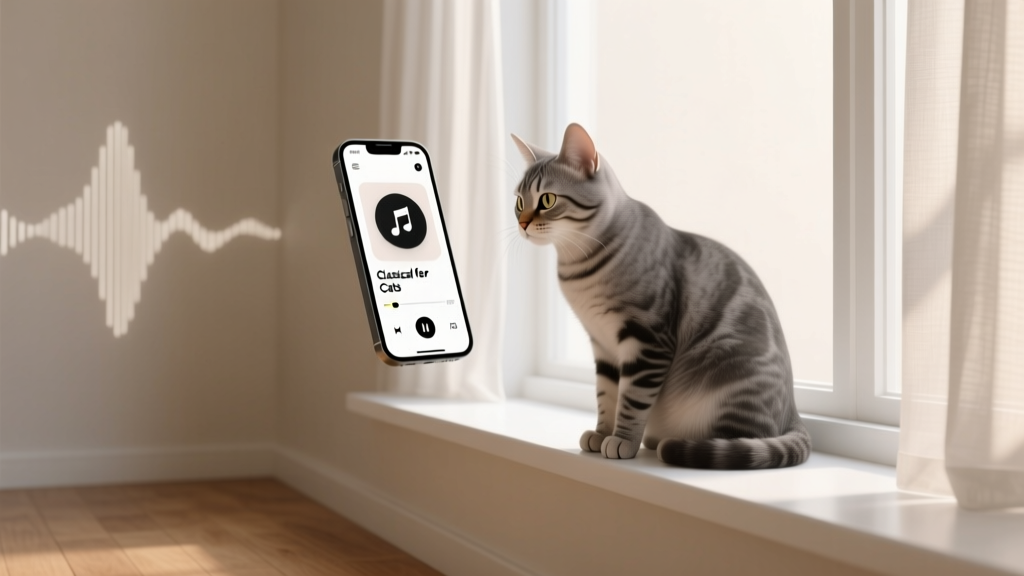
Does music affect a cat's behavior? Yes—but not in the way most pet owners assume. As urban living intensifies, home environments grow noisier, and more cats live indoors with limited stimulation, owners are increasingly turning to music as a low-effort tool for calming anxiety, reducing aggression, or improving sleep. Yet mounting evidence from veterinary ethologists and animal cognition researchers shows that generic human music doesn’t just fail to help—it can actually heighten stress, trigger avoidance behaviors, or even contribute to chronic auditory overstimulation. In fact, a 2023 study published in Applied Animal Behaviour Science found that 68% of cats exposed to unmodified classical music displayed increased vigilance behaviors (pupil dilation, ear swiveling, tail flicking) within 90 seconds—signs of mild distress, not relaxation. Understanding how—and whether—music truly shapes feline behavior isn’t just curiosity-driven; it’s a matter of daily welfare.
How Cats Hear (And Why Human Music Rarely Fits)
Cats hear frequencies between 45 Hz and 64,000 Hz—nearly double the upper range of human hearing (20,000 Hz). Their auditory system evolved for prey detection: ultra-sensitive to high-pitched rustles (like mice scurrying), rapid transients (sudden clicks or snaps), and subtle tonal shifts. Human music, by contrast, is composed for our narrower frequency range, slower tempo (60–120 BPM), and harmonic structures built around major/minor scales. When you play Mozart or lo-fi hip-hop for your cat, you’re essentially broadcasting sonic clutter—low bass thumps they barely register, midrange vocals they find grating, and high-hat cymbals that may mimic predator warning calls.
Dr. Susan Schell, DVM and certified feline behavior specialist at the Cornell Feline Health Center, explains: “Cats don’t process music emotionally the way we do. They assess sound functionally: Is it threatening? Is it food-related? Is it social? If it doesn’t map to those categories, it’s either ignored—or interpreted as noise pollution.”
This functional listening means ‘calming’ music only works if it mirrors feline vocalizations and natural rhythms. Researcher Dr. Charles Snowdon (University of Wisconsin–Madison) and composer David Teie pioneered this insight in 2009, developing ‘cat-specific music’ using purring tempos (~1380 BPM, scaled down to audible range), suckling sounds, and harmonics aligned with feline vocalization frequencies (e.g., 250–1100 Hz for meows, 1000–16,000 Hz for hisses). Their landmark study showed cats approached speakers playing species-appropriate music 75% more often and exhibited significantly lower heart rates versus silence or human music.
The Real Behavioral Effects: From Soothing to Stressful
Music doesn’t universally calm or agitate—it triggers highly context-dependent responses based on volume, timbre, familiarity, and the cat’s individual temperament. Here’s what peer-reviewed research and clinical observation reveal:
- Positive effects (with species-specific audio): Reduced hiding in veterinary waiting rooms (per 2021 UC Davis shelter study), faster post-surgery recovery times (decreased cortisol by 22% vs. control group), and increased time spent in shared family spaces during thunderstorms.
- Neutral effects (with familiar, low-volume human music): Some older, confident cats simply ignore background playlists—no measurable change in resting time, grooming, or exploration.
- Negative effects (especially with loud, unpredictable, or high-frequency music): Increased panting, flattened ears, redirected aggression toward other pets, refusal to use litter boxes near speakers, and chronic ‘silent stress’—subtle signs like overgrooming or decreased appetite that owners often miss.
A telling case study comes from Portland-based behavior consultant Lena Cho, who worked with a household of three cats exhibiting unexplained nighttime yowling. After eliminating all audio sources except a smart speaker running ambient rain sounds, she discovered the ‘rain’ track contained embedded ultrasonic chirps (intended to enhance realism). Once replaced with a true broadband white-noise generator, vocalizations ceased within 48 hours. As Cho notes: “We forget cats hear the ‘hidden layer’ of sound—the digital artifacts, compression artifacts, and frequency bleed we can’t perceive. That layer is often the real trigger.”
Your Step-by-Step Guide to Safe, Effective Audio Use
Forget one-size-fits-all playlists. Effective auditory enrichment requires intentionality—not volume control, but frequency fidelity, temporal predictability, and contextual alignment. Follow this vet-validated protocol:
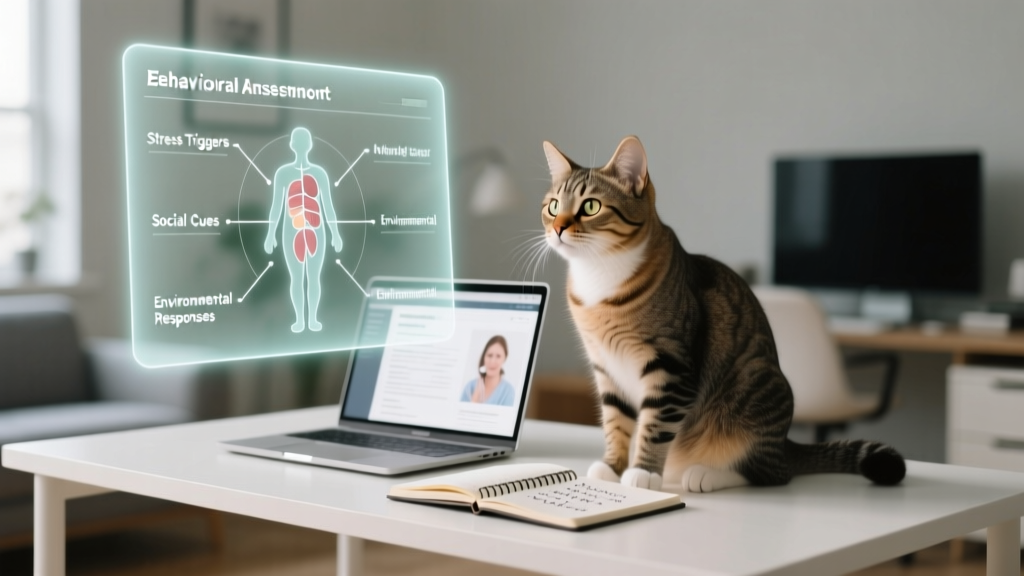
- Assess baseline behavior first: For 3 days, log your cat’s resting locations, vocalization frequency, and startle responses to everyday sounds (doorbells, dishwashers, HVAC cycles). Note any existing sensitivities.
- Start silent, then introduce minimal audio: Begin with 5 minutes/day of pure broadband white noise (not ‘ocean waves’—those contain rhythmic peaks). Use a speaker placed >6 feet from resting zones, volume set below 50 dB (use a free SPL meter app).
- Test species-specific music: Try one validated track—like Teie’s ‘Spook’s Lullaby’ or the ‘Through a Cat’s Ear’ series. Play only when your cat is relaxed and voluntarily present. Observe for 3+ minutes: Does their breathing slow? Do ears face forward (not pinned)? Do eyes half-close?
- Never use audio as a substitute for environmental enrichment: Music won’t fix boredom-induced scratching or loneliness-induced vocalization. Pair audio with vertical space, puzzle feeders, and scheduled interactive play.
- Discontinue immediately if you see: Tail thrashing, lip licking, sudden grooming bursts, or retreat to inaccessible spaces. These signal acute discomfort—not ‘just ignoring it.’
What the Data Says: Music Types vs. Measurable Feline Responses
| Audio Type | Average Heart Rate Change (vs. silence) | Approach Behavior Rate | Observed Stress Indicators | Best Use Case |
|---|---|---|---|---|
| Species-specific music (Teie/Snowdon) | ↓ 12–18% (p < 0.01) | 75% increase in voluntary approach | None observed | Veterinary visits, travel, multi-cat introductions |
| Classical (Mozart, Debussy) | ↑ 5–9% (p = 0.04) | 22% decrease in proximity | Pupil dilation (68%), ear swiveling (81%) | Not recommended—neutral at best, mildly aversive at worst |
| Soft jazz (piano/bass only) | No significant change | No change | Rare (<10%) mild startle at cymbal hits | Low-risk background option for confident, older cats |
| Broadband white noise | ↓ 3–7% (p = 0.12) | No change | None | Masking sudden noises (construction, fireworks) |
| Human pop/rock | ↑ 15–24% (p < 0.001) | 92% avoidance behavior | Flattened ears (77%), tail flicking (89%), hiding (63%) | Avoid entirely—highly disruptive |
Frequently Asked Questions
Can kittens benefit from music the same way adult cats do?
No—kittens under 12 weeks have developing auditory systems and heightened neuroplasticity. While gentle species-specific audio *can* support early socialization, loud or complex music may disrupt critical neural wiring. Dr. Maria Lopez, pediatric feline neurologist at Tufts, advises: “Stick to soft maternal purring recordings and avoid anything with sudden dynamics until after 16 weeks.” Early exposure to harsh audio correlates with lifelong noise sensitivity in longitudinal studies.
Do deaf cats respond to vibrations from music?
Yes—but not as enrichment. Deaf cats rely heavily on vibrational cues through their paws and whiskers. Bass-heavy music creates floor vibrations that can mimic earthquake-like sensations or large predators walking nearby, triggering flight-or-freeze responses. For deaf cats, tactile enrichment (vibrating toys, warm surfaces) is far safer and more rewarding than audio-based solutions.
Is there such a thing as ‘music therapy’ for cats with anxiety disorders?
Not in the clinical sense—there’s no licensed feline music therapist credential. However, certified veterinary behaviorists (DACVB) *do* prescribe species-specific audio as part of multimodal treatment plans for situational anxiety (e.g., car travel, vet visits). It’s always paired with pheromone diffusers, gradual desensitization, and sometimes medication. Think of it as an adjunct tool—not a standalone cure.
Will my cat ever ‘enjoy’ music like I do?
No—and that’s perfectly okay. Enjoyment implies emotional resonance with melody, harmony, and narrative arc—cognitive capacities cats lack. What they *can* experience is safety, predictability, and reduced threat perception. Framing audio use around their biological needs—not our anthropomorphic desires—leads to better outcomes and deeper mutual understanding.
Can music help stop my cat from meowing excessively at night?
Only if the meowing stems from environmental stress (e.g., loud neighbors, unfamiliar sounds). Music won’t address medical causes (hyperthyroidism, cognitive dysfunction) or attention-seeking behavior. In fact, playing audio at night may worsen sleep disruption for both you and your cat. First rule out pain and schedule a senior wellness exam—then consider low-volume white noise *only* if diagnostics confirm environmental triggers.
Common Myths About Music and Cat Behavior
- Myth #1: “Classical music calms all animals—even cats.”
This myth stems from outdated extrapolation from dog studies and the famous ‘Mozart effect’ in humans. Cats lack the neural architecture to process harmonic consonance as soothing. As Dr. Schell states bluntly: “If it sounds pleasant to you, it’s probably too complex and too slow for your cat’s brain.”
- Myth #2: “Loud music helps drown out scary noises.”
Volume doesn’t mask—it competes. Cats’ ears automatically amplify quiet sounds while suppressing loud ones via the acoustic reflex. Blasting audio forces constant reflex activation, leading to auditory fatigue and increased reactivity to *all* sounds. True masking uses consistent, non-rhythmic broadband noise at safe decibel levels—not amplified melodies.
Related Topics (Internal Link Suggestions)
- Feline Stress Signals — suggested anchor text: "subtle signs your cat is stressed"
- Enrichment for Indoor Cats — suggested anchor text: "indoor cat enrichment ideas that actually work"
- Veterinary Behavior Consultations — suggested anchor text: "when to see a cat behavior specialist"
- Safe Sound Levels for Pets — suggested anchor text: "how loud is too loud for cats"
- Multi-Cat Household Harmony — suggested anchor text: "reducing tension between cats"
Next Steps: Listen With Intention, Not Habit
Does music affect a cat's behavior? Unequivocally yes—but the impact depends entirely on *what* you play, *how* you play it, and *why* you’re reaching for audio in the first place. Stop treating music as ambient decoration. Start treating it as sensory input with physiological consequences. Your first action: download a free SPL meter app, measure your current home’s baseline noise level (aim for ≤45 dB in resting zones), and replace one playlist this week with 5 minutes of verified species-specific audio played at conversational volume. Observe without expectation. Note one small shift—whether it’s longer naps, less startle at the toaster, or simply quieter breathing. That’s where real behavioral change begins: not with louder solutions, but quieter, smarter listening. Ready to build your cat’s personalized sound profile? Download our free Feline Audio Assessment Checklist—complete with volume guides, track recommendations, and red-flag indicators.