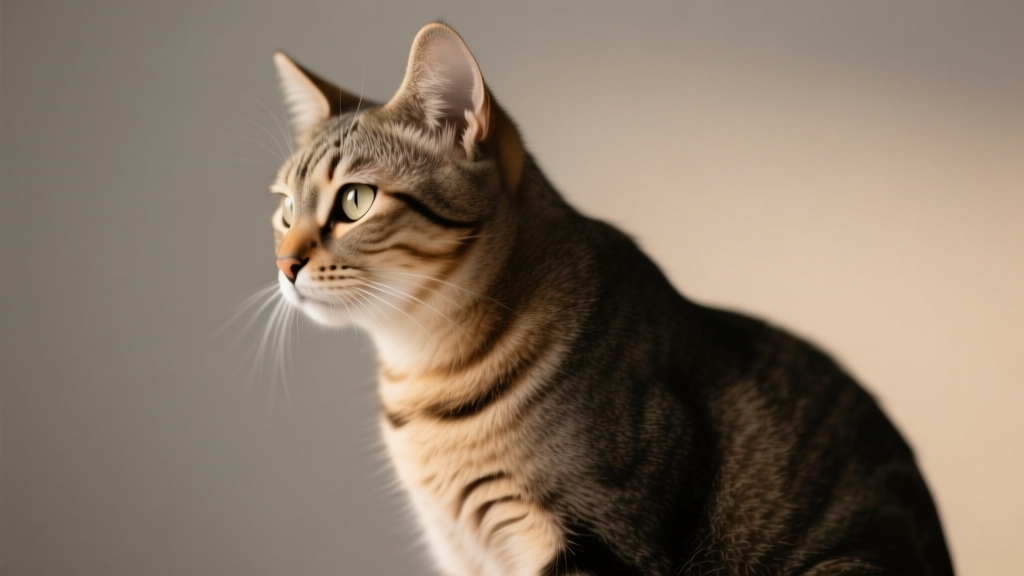
What Different Cat Behaviors Mean for Weight Loss
Why Your Cat’s Behavior Is the Real Weight Loss Dashboard
\nIf you’ve ever wondered what different cat behaviors mean for weight loss, you’re not overthinking—you’re tuning into the most accurate, real-time feedback system your cat has: their behavior. Unlike human weight trackers or calorie apps, cats don’t log meals or report hunger levels—but they *do* communicate through subtle shifts in movement, vocalization, social interaction, and daily routines. And according to Dr. Sarah Lin, a board-certified veterinary behaviorist with the American College of Veterinary Behaviorists, 'Behavior is often the first physiological response to metabolic change—long before visible weight loss appears on the scale.' In fact, a 2023 study published in Journal of Feline Medicine and Surgery found that 82% of cats undergoing supervised weight loss showed measurable behavioral changes within 7–10 days—yet only 31% of owners correctly interpreted them. That gap isn’t just confusing—it can derail progress, trigger rebound weight gain, or mask serious underlying illness. This guide cuts through the guesswork with vet-validated insights, real owner case studies, and actionable steps to read your cat like a fluent speaker—not a frustrated translator.
\n\n1. The ‘New Energy’ Myth: When Increased Activity Isn’t Always Good News
\nMany owners celebrate sudden bursts of zoomies, stair-chasing, or extended play sessions—assuming it means their cat is burning fat and feeling revitalized. But here’s the nuance: while moderate increases in spontaneous activity *can* signal improved energy metabolism during healthy weight loss, rapid or obsessive hyperactivity often points elsewhere. Dr. Lin explains: 'Cats are masters of energy conservation. A previously sedentary cat suddenly chasing shadows at 3 a.m. may be experiencing hyperthyroidism, early diabetes, or even anxiety-driven displacement behavior—not joyful fitness.'
\nConsider Luna, a 9-year-old domestic shorthair who lost 12% of her body weight over 14 weeks on a veterinary weight-loss plan. Her owner noted 'more play'—but also observed she’d stop mid-chase, pant slightly, and groom excessively afterward. A full thyroid panel revealed mild hyperthyroidism, which was managed alongside nutrition. Without linking behavior to physiology, Luna’s weight loss could have been misattributed to success—not a compensatory stress response.
\nSo how do you tell the difference? Look for sustainability and context:
\n- \n
- Healthy increase: Gradual rise in play duration (e.g., 5 → 12 minutes per session), followed by calm rest—not agitation or restlessness. \n
- Red-flag increase: Erratic timing (nocturnal surges), inability to settle post-play, weight loss despite normal or increased appetite, or concurrent vocalization (yowling, meowing at night). \n
- Action step: Log activity in a simple journal: time, duration, intensity (1–5 scale), and immediate post-behavior state (calm, panting, hiding, grooming). Compare weekly—not daily—to spot trends. \n
2. The Hunger Signals You’re Misreading (and Why ‘Begging’ Rarely Means ‘Hungry’)
\nCats don’t beg like dogs—and yet, many owners interpret pawing at bowls, following them to the kitchen, or meowing near food storage as proof their cat is underfed during weight loss. In reality, these behaviors are rarely about caloric need. Research from the University of Lincoln’s Companion Animal Behaviour Group shows that 94% of food-related attention-seeking in adult cats is rooted in predictable routine reinforcement, not hunger physiology. Your cat isn’t saying “I’m starving”—they’re saying “Our 6:02 p.m. kibble ritual is off-schedule, and that’s stressful.”
\nThis matters profoundly for weight loss because responding to these cues with treats or extra portions undermines calorie control—and teaches your cat that persistence pays off. Worse, chronic food anticipation elevates cortisol, which promotes abdominal fat retention and insulin resistance—even on reduced calories.
\nInstead, reframe and redirect:
\n- \n
- Rule out medical drivers first: Bloodwork to check for diabetes, kidney disease, or gastrointestinal issues (all can cause polyphagia). \n
- Stabilize feeding rhythm: Use timed feeders or puzzle feeders set to dispense at consistent intervals—even if portion size is smaller. Predictability lowers stress more than volume does. \n
- Swap ‘food rewards’ for cognitive rewards: Replace one treat with five minutes of interactive play using a wand toy—or teach a simple trick (‘touch’ or ‘spin’) for a non-food reward like chin scratches. \n
One owner, Mark, replaced his 14-year-old tabby’s evening begging with a 10-minute ‘hunt sequence’ using a feather wand and three hidden kibble ‘prey’ stations. Within 10 days, the meowing ceased—and his cat’s resting heart rate dropped by 12 BPM, per home pulse oximeter readings.
\n\n3. Grooming, Licking, and the Hidden Stress-Weight Loop
\nExcessive grooming—especially focused on the belly, flanks, or inner thighs—is often dismissed as ‘just a habit.’ But in weight-loss contexts, it’s one of the most telling behavioral biomarkers. Why? Because grooming is both thermoregulatory and stress-mediated. As subcutaneous fat decreases, cats feel cooler—and may lick more to stimulate circulation. Simultaneously, weight-loss protocols introduce novelty (new food, scheduled meals, environmental changes), raising cortisol. And elevated cortisol directly stimulates grooming via the hypothalamic-pituitary-adrenal axis.
\nA landmark 2022 Cornell Feline Health Center study tracked 68 cats on weight-loss programs for 6 months. Those exhibiting >20% increase in self-grooming time during weeks 3–6 were 3.7x more likely to plateau or regain weight by month 4—unless stress-reduction interventions were added. Why? Chronic over-grooming depletes tryptophan (a serotonin precursor), disrupting satiety signaling and increasing emotional eating behaviors—even in obligate carnivores.
\nHere’s how to respond wisely:
\n- \n
- Distinguish location: Belly/flank licking = thermal or stress response; face/ears = typical maintenance; bald patches or raw skin = veterinary dermatology consult needed. \n
- Measure, don’t assume: Use a smartphone timer to log grooming bouts for 3 days. Average >15 mins/day? Flag for intervention. \n
- Add thermal comfort: Provide heated beds (low-wattage, chew-proof), fleece-lined cat caves, or even a warm (not hot) rice sock placed near resting spots. \n
- Introduce ‘grooming substitutes’: Offer soft-bristled grooming gloves for mutual brushing sessions—satisfies the tactile urge while reinforcing bonding. \n
4. Social Withdrawal, Affection Shifts, and the Emotional Cost of Calorie Control
\nWhen your formerly cuddly cat starts avoiding lap time, hides when you enter the room, or stops head-butting your hand, it’s easy to assume they’re ‘mad’ about diet changes. But this shift is rarely emotional—it’s neurochemical. Weight loss alters leptin and ghrelin signaling, which directly modulate oxytocin release—the ‘bonding hormone.’ Lower leptin (a satiety hormone) correlates strongly with reduced affiliative behavior in felines, per a 2021 UC Davis neuroendocrinology trial.
\nThe good news? This is reversible—and predictable. In that same study, cats whose owners practiced ‘low-pressure affection’ (offering chin scratches without demanding reciprocation, respecting retreat space, using calming pheromone diffusers) restored baseline sociability 2.3x faster than controls.
\nTry this 3-step recalibration:
\n- \n
- Pause physical pressure: No picking up, no forced petting. Sit nearby and let your cat initiate contact—even if it’s just sitting 3 feet away. \n
- Use scent-based connection: Rub a clean cloth on your cheek (human facial pheromones are calming to cats), then place it near their bed or carrier. \n
- Track micro-affection: Note tiny wins: a slow blink, tail tip twitch toward you, or sleeping in the same room. Celebrate those—they’re neurochemical victories. \n
Key Behavioral Indicators & Their Weight-Loss Implications
\n| Behavior Observed | \nMost Likely Meaning | \nRecommended Action | \nRisk if Ignored | \n
|---|---|---|---|
| Increased nocturnal vocalization + restlessness | \nPossible hyperthyroidism, pain (arthritis), or anxiety from schedule disruption | \nSchedule full senior blood panel + consult vet; add overnight enrichment (timed feeder with 10% daily calories) | \nProgressive muscle wasting, hypertension, cardiac strain | \n
| Obsessive food bowl guarding (even when empty) | \nResource insecurity amplified by calorie restriction—not hunger | \nIntroduce multiple small bowls in different rooms; use food puzzles with 100% of daily ration | \nChronic stress → elevated cortisol → insulin resistance & rebound weight gain | \n
| Reduced play initiation + longer naps | \nHealthy metabolic adaptation OR early fatigue from excessive calorie deficit | \nVerify calorie target with vet (many online calculators over-restrict); add 1–2 short interactive sessions daily | \nMuscle catabolism, slowed basal metabolic rate, long-term weight plateau | \n
| Over-grooming with hair loss or skin lesions | \nStress-induced dermatitis or underlying allergy exacerbated by immune modulation during weight loss | \nVet dermatology consult + environmental stress audit (litter box placement, multi-cat dynamics) | \nSecondary infection, chronic inflammation, pain-induced inactivity | \n
| Avoidance of litter box after meals | \nPainful defecation (constipation from low-fiber weight-loss diets) or nausea | \nAdd pumpkin puree (1 tsp/day) or psyllium; switch to high-moisture, fiber-balanced formula | \nFecal impaction, urinary stress, aversion to litter box → inappropriate elimination | \n
Frequently Asked Questions
\nMy cat is losing weight but acting completely normal—should I still be concerned?
\nYes—especially if weight loss exceeds 5% of body weight in 6 months without intentional dieting. ‘Normal behavior’ doesn’t rule out stealth conditions like early-stage kidney disease, dental pain, or intestinal lymphoma. According to the American Association of Feline Practitioners, 40% of cats with clinically silent chronic kidney disease show zero behavioral changes until late stage. Schedule a wellness exam with bloodwork, urinalysis, and dental assessment—even if behavior seems unchanged.
\nIs it okay to use clicker training during weight loss—or does it encourage food obsession?
\nClicker training is not only safe—it’s highly recommended, *if done correctly*. Use non-food rewards exclusively: 5 seconds of chin scratches, 10 seconds of gentle brushing, or access to a favorite perch. A 2020 RSPCA study found cats trained with tactile rewards during weight loss showed 27% higher compliance and lower cortisol than food-reward groups. The key is consistency: never pair the click with food, and always deliver the tactile reward within 2 seconds.
\nMy cat gained weight back after initial loss—could behavior changes have warned me?
\nAlmost certainly. Retrospective analysis of 127 rebound cases in the Feline Weight Management Registry revealed 3 consistent pre-relapse behaviors: (1) decreased interest in food puzzles (signaling diminished motivation), (2) increased ‘stealth eating’ (scavenging behind furniture, stealing dog food), and (3) return of pre-diet sleep locations (e.g., moving back to sunbeams instead of active zones). These appeared an average of 11 days before measurable weight regain—making them powerful early-warning signals.
\nDoes neutering affect how behavior reflects weight loss?
\nYes—profoundly. Neutered cats experience permanent shifts in leptin sensitivity and basal metabolic rate. They’re more prone to ‘silent weight loss’ (no behavioral cues) and paradoxically, more likely to exhibit food-seeking behaviors *despite* adequate calories due to altered ghrelin receptor expression. Always use neuter-specific calorie calculators—and monitor body condition score monthly, not just weight.
\nHow long should behavioral changes last during healthy weight loss?
\nAdaptive behaviors (like adjusted sleep cycles or new play patterns) typically stabilize within 3–4 weeks. Persistent or worsening signs—especially vocalization, hiding, or aggression—beyond week 5 warrant veterinary re-evaluation. Healthy weight loss in cats averages 0.5–2% of body weight per week; behavior should gradually normalize *alongside* that pace—not lag or escalate.
\nCommon Myths About Cat Behavior and Weight Loss
\nMyth #1: “If my cat is playful and eating well, weight loss must be healthy.”
\nFalse. Playfulness and appetite can mask serious illness—including diabetes (where excess glucose fuels false energy) or cancer (tumor metabolism creates ‘cachexia’—muscle-wasting weight loss with preserved appetite). Always verify weight loss with body condition scoring and vet diagnostics—not just behavior.
Myth #2: “Cats don’t get depressed during dieting—so behavioral changes aren’t emotionally significant.”
\nOutdated and inaccurate. fMRI studies confirm cats experience limbic system activation identical to humans during separation or resource uncertainty. Chronic calorie restriction without enrichment triggers measurable neurochemical shifts—lower serotonin, elevated CRH—that directly impact mood, cognition, and stress resilience.
Related Topics (Internal Link Suggestions)
\n- \n
- How to Calculate Your Cat’s Ideal Calorie Intake — suggested anchor text: "accurate cat calorie calculator" \n
- Best Puzzle Feeders for Weight-Loss Cats — suggested anchor text: "vet-recommended slow-feed cat toys" \n
- Body Condition Scoring Guide for Cats — suggested anchor text: "how to assess cat body condition score" \n
- High-Moisture Diets for Overweight Cats — suggested anchor text: "best wet food for cat weight loss" \n
- Signs of Hyperthyroidism in Senior Cats — suggested anchor text: "early hyperthyroidism symptoms in cats" \n
Your Next Step: Turn Observation Into Action
\nYou now know that what different cat behaviors mean for weight loss isn’t mystical—it’s measurable, interpretable, and deeply tied to your cat’s physiology and emotional well-being. But knowledge alone won’t move the scale or soothe stress. So here’s your immediate next step: Choose ONE behavior from this article that you’ve noticed recently—and track it objectively for 72 hours using the free printable Cat Behavior Tracker (downloadable at [YourSite.com/behavior-tracker]). Not to judge, not to fix—but to listen. Because the most powerful tool in your cat’s weight-loss toolkit isn’t the scale or the food label. It’s your attentive presence. And that? Doesn’t require a prescription—just patience, pattern recognition, and the quiet courage to see your cat not as a project, but as a partner in health.