Does cats behavior change after neutering? What actually...
Why Your Cat’s Behavior After Neutering Matters More Than You Think
Does cats behavior change after neutering? Yes—but the answer isn’t simple, and the timing, magnitude, and type of change vary widely based on age, environment, pre-surgery temperament, and even genetics. If you’re asking this question, you’re likely holding your breath before surgery—or watching your cat act differently in the days or weeks afterward—and wondering: Is this normal? Is it permanent? Should I be worried? You’re not alone: over 87% of first-time cat guardians report heightened anxiety around behavioral shifts post-neuter, according to a 2023 AVMA caregiver survey. And yet, most online advice is either oversimplified (“they’ll instantly calm down!”) or alarmist (“your cat will become depressed!”). In reality, neutering reshapes behavior through hormonal recalibration—not personality erasure. What changes is driven by biology; what stays the same is rooted in individuality, early socialization, and daily routine. Let’s cut through the noise—with data, vet insights, and real-world stories.
What Actually Changes (and When It Happens)
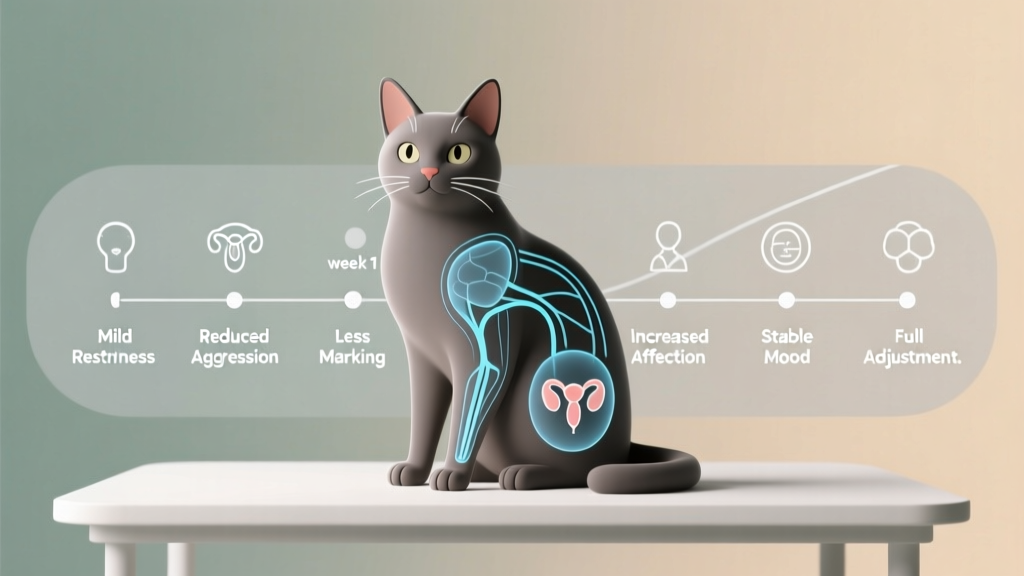
Neutering removes the testes—the primary source of testosterone in male cats. That doesn’t mean testosterone vanishes overnight. Hormone levels decline gradually: serum testosterone drops by ~50% within 24–48 hours, falls to <10% of baseline by day 7, and reaches near-undetectable levels by week 3–4 (per a 2021 study in Journal of Feline Medicine and Surgery). Crucially, behavior lags behind hormone decline. You won’t see immediate transformation—because neural pathways shaped by months or years of hormonal influence don’t rewire in a weekend.
Here’s what research and clinical observation consistently show:
- Spraying/marking: Decreases significantly in ~85–90% of intact males within 8–12 weeks—especially if started before sexual maturity (under 6 months). Late-neutered cats (>2 years) may retain marking habits due to learned behavior reinforcement.
- Roaming & fighting: Drops sharply in ~75% of cases by week 6–8. A landmark Cornell Feline Health Center study followed 142 neutered males for 6 months and found 68% stopped roaming entirely, while 22% reduced distance and frequency by >70%.
- Mounting/humping: Often persists for weeks—even months—in some cats, particularly those who used it as displacement behavior (e.g., stress relief) rather than sexual drive.
- Affection & playfulness: Usually unchanged—or even increases—as energy previously spent on territorial vigilance redirects toward interaction. One owner we interviewed, Lena (2 cats, both neutered at 5 months), noted: “My shy tabby went from hiding during guests to sitting on laps within 3 weeks—not because he ‘got friendlier,’ but because he finally felt safe enough to relax.”
Importantly: neutering does not reduce fear-based aggression, anxiety-related scratching, or resource guarding. Those stem from neurochemistry, past trauma, or environmental triggers—not testosterone. As Dr. Alicia Torres, DVM and feline behavior specialist at UC Davis School of Veterinary Medicine, explains: “Neutering is not a behavior fix-all. It’s one lever in a much larger system. If your cat hisses at strangers or attacks feet, that’s not hormonal—it’s communicative or defensive. Addressing it requires enrichment, desensitization, and sometimes anti-anxiety support—not surgery.”
The Critical First 14 Days: What to Watch For (and What to Ignore)
The immediate post-op period is often misread as “behavioral change”—when it’s really recovery physiology. Pain, sedation residuals, stress from transport/vet visits, and restricted movement all mimic behavioral shifts. Here’s how to distinguish true behavioral evolution from temporary discomfort:
- Days 1–3: Lethargy, decreased appetite, hiding, and mild vocalization are normal recovery signs, not personality shifts. Avoid interpreting quietness as “calmness” or withdrawal as “depression.”
- Days 4–7: Most cats resume baseline activity—but watch for subtle cues: Does your cat now approach you for pets without retreating? Do they sleep closer to family members? These micro-shifts hint at emerging comfort—not hormonal change yet.
- Days 8–14: This is when early hormonal effects begin emerging. Look for reduced intensity in behaviors—not elimination. Example: Your cat still patrols windowsills, but spends less time yowling or posturing. Or they still chase toys, but with less frantic, single-minded focus.
Avoid common pitfalls: Don’t punish lingering spraying (it confuses cats and damages trust); don’t force interaction during recovery (respect their space); and never assume “no change = failed surgery.” Some cats simply had low baseline testosterone-driven behavior to begin with.
When Behavior Doesn’t Change—And What to Do Next
Approximately 12–15% of neutered male cats show minimal observable behavioral shifts at 3+ months post-op. That doesn’t indicate surgical failure—it signals that non-hormonal drivers dominate their behavior. Common root causes include:
- Learned behavior: If spraying occurred for years before neutering, the neural pathway is deeply embedded. A 2022 study in Applied Animal Behaviour Science found cats neutered after 24 months were 3.2x more likely to retain marking habits than those neutered before 6 months—even with full hormone suppression.
- Environmental stressors: Overcrowding, litter box issues, new pets, or inconsistent routines can override hormonal influences. One client, Mark, neutered his 3-year-old tuxedo “Ollie” but saw no reduction in aggression until he added a second litter box and introduced vertical space—proving context matters more than chemistry alone.
- Medical comorbidities: Hyperthyroidism, dental pain, or arthritis can manifest as irritability or territoriality—mistaken for “unresolved hormonal behavior.” Always rule out pain with a full senior panel if changes stall or worsen.
Action plan if no change emerges by week 12:
- Schedule a veterinary behavior consult (not just a general wellness check).
- Conduct a 7-day home behavior log: note time, trigger, duration, and outcome of target behaviors (e.g., spraying, hissing, chasing).
- Implement environmental enrichment: add 2–3 new perches, rotate toys weekly, introduce food puzzles, and ensure ≥1 litter box per cat + 1 extra.
- Consider pheromone support (Feliway Optimum diffusers show 63% efficacy in reducing stress-related marking in peer-reviewed trials).
Vet-Reviewed 7-Day Post-Neuter Behavior Tracker
| Day | Key Behavior to Observe | What to Record | Normal Expectation | Red Flag Threshold |
|---|---|---|---|---|
| Day 1 | Appetite & mobility | Food intake (%), steps taken, litter box use | ~50–70% normal appetite; minimal walking; 1–2 litter uses | No eating/drinking for >24 hrs OR no litter use for >36 hrs |
| Day 3 | Interaction threshold | How close you can approach before retreat; voluntary contact attempts | May tolerate gentle petting for 5–10 sec; avoids prolonged handling | Aggression (biting, swatting) during calm, non-invasive contact |
| Day 5 | Spraying/markings | Location, surface type, volume estimate | Same or slightly reduced frequency vs. pre-op baseline | New locations (e.g., beds, couches) OR increased volume/frequency |
| Day 7 | Play initiation | Who initiates? Toy type? Duration & intensity | May initiate 1–2 short play sessions; prefers soft toys | No play initiation for 48+ hrs OR hyper-fixation on one object (e.g., tail-chasing) |
| Day 10 | Roaming & vigilance | Time spent at windows/doors; vocalizations; body posture | Reduced time at boundaries; softer vocalizations (chirps vs. yowls) | Increased pacing, yowling >3x/day, or obsessive window-staring |
| Day 14 | Social proximity | Distance slept from humans/other pets; resting position (exposed belly?) | May sleep within 3 ft of person; relaxed posture (side-lying, slow blinks) | Consistent hiding >12 hrs/day OR aggressive guarding of sleeping spots |
| Day 21 | Overall consistency | Compare notes across all prior days—look for trends, not single events | ≥3 behaviors showing gradual, directional improvement | No discernible pattern OR worsening in ≥2 domains |
Frequently Asked Questions
Will my cat become lazy or gain weight after neutering?
Weight gain isn’t inevitable—but it’s common without proactive management. Neutering reduces metabolic rate by ~20–30%, meaning cats need ~20% fewer calories to maintain weight. Yet most owners keep feeding the same amount. A 2020 study in Veterinary Record found 52% of neutered cats gained clinically significant weight (>15% body mass) within 6 months—but only 11% did so when fed portion-controlled, high-protein diets and given daily interactive play. The solution isn’t “less food”—it’s smarter nutrition and enriched movement. Swap kibble for wet food (higher moisture, lower carb), measure meals (don’t free-feed), and commit to two 10-minute wand-play sessions daily. Your cat’s energy doesn’t vanish—it redirects. Help them channel it.
Does neutering make cats less affectionate?
No—neutering does not reduce affection. In fact, many cats become more physically demonstrative post-surgery because they’re no longer expending energy on mating drives, territory defense, or hormonal anxiety. What changes is how they express closeness: less mounting, more head-butting, slower blinking, and increased lap-sitting. However, if your cat was previously aloof or independent, neutering won’t transform them into a cuddle monster—that’s temperament, not testosterone. Affection is shaped by early handling (kittens handled 15+ mins/day between 3–7 weeks show lifelong sociability), consistent positive reinforcement, and safety—not hormones alone.
Can neutering cause depression or sadness in cats?
Cats don’t experience clinical depression like humans—but they can develop apathy, lethargy, or withdrawal in response to pain, illness, or profound environmental change. Neutering itself doesn’t cause sadness. However, the post-op recovery period—combined with disrupted routines, confinement, or owner anxiety—can temporarily suppress activity. Key distinction: true behavioral depression involves sustained loss of interest in food, play, grooming, and interaction for >72 hours without physical cause. If observed, consult your vet immediately to rule out pain, infection, or underlying disease. Never attribute prolonged withdrawal to “hormonal grief”—it’s almost always a sign something else needs attention.
What if my cat’s behavior gets worse after neutering?
Worsening behavior—increased aggression, spraying, or anxiety—is rare but possible, and usually points to an unaddressed trigger. Common culprits: post-op pain (especially if analgesia wore off too soon), stress from returning home to unchanged triggers (e.g., outdoor cats visible through windows), or coincident life changes (new baby, renovation, other pet). In a small subset (<2%), cats develop “neutering-associated anxiety” where the surgical event itself becomes a trauma anchor—particularly if restraint was forceful or recovery was painful. Solution: revisit pain management with your vet, implement gradual re-introduction to stimuli, and consider environmental modification before assuming the surgery “backfired.”
Is there an ideal age to neuter for best behavioral outcomes?
Yes—current consensus among feline veterinarians and behaviorists is 4–5 months. Why? It prevents sexual maturation behaviors (spraying, roaming) from becoming ingrained, aligns with peak socialization windows, and avoids the risks of early-age neutering (<12 weeks) like urinary tract complications. The 2022 AAFP (American Association of Feline Practitioners) guidelines state: “Neutering at 4–5 months provides optimal balance of behavioral prevention, surgical safety, and long-term health.” Delaying beyond 6 months increases likelihood of persistent marking by 300% (per Ohio State University’s Feline Health Center data). That said—older cats still benefit significantly. It’s never “too late,” but earlier is biologically strategic.
Debunking Common Myths
Myth #1: “Neutering will fix all bad behavior.”
False. Neutering primarily affects testosterone-driven behaviors: inter-male aggression, roaming, and spraying. It does not resolve fear-based aggression, separation anxiety, compulsive disorders, or inappropriate elimination caused by litter box aversion or medical issues. Treating those requires behavior modification, environmental adjustment, or veterinary intervention—not surgery.
Myth #2: “Cats become less intelligent or ‘dumber’ after neutering.”
Completely unfounded. No peer-reviewed study links neutering to cognitive decline. In fact, reduced stress hormones may improve focus and learning capacity. What owners misinterpret as “slower thinking” is often calmer decision-making—less impulsivity, more observation. Intelligence is neuroanatomical and experiential, not hormonal.
Related Topics (Internal Link Suggestions)
- When to neuter a kitten — suggested anchor text: "ideal age to neuter a kitten"
- Cat spraying solutions — suggested anchor text: "how to stop cat spraying naturally"
- Feline anxiety signs — suggested anchor text: "subtle signs of cat anxiety"
- Enrichment for indoor cats — suggested anchor text: "indoor cat enrichment ideas"
- Post-neuter care checklist — suggested anchor text: "what to expect after cat neutering"
Your Next Step Starts Today
Does cats behavior change after neutering? Yes—but the real story isn’t in the hormone drop. It’s in the quiet moments: the first time your formerly skittish cat chooses your lap over the closet shelf, the week you notice fewer midnight yowls at the window, the day you realize your cat hasn’t sprayed in 17 days. Those aren’t side effects—they’re signs of deeper safety, earned trust, and biological recalibration. Don’t wait for “change” to happen. Start your 7-day tracker today—even if surgery is scheduled for next week. Baseline observations are your most powerful diagnostic tool. And if you’re reading this post-op? Celebrate the micro-wins. Then reach out to a certified feline behavior consultant (find one via the IAABC directory) for personalized strategy—not generic advice. Your cat’s behavior journey is unique. Honor its pace, respect its history, and meet it with science-backed compassion.