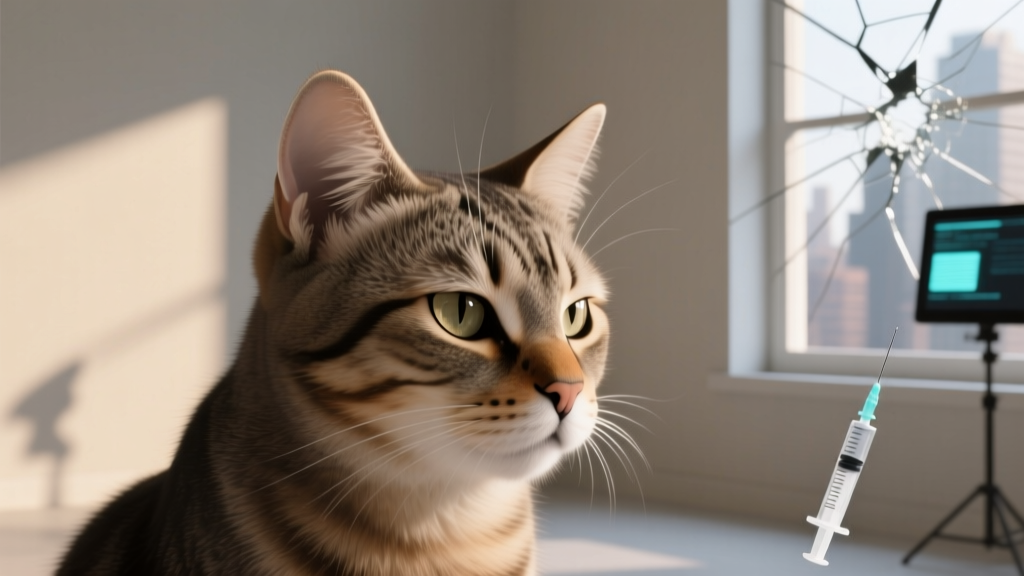
Cat Behavior Change Causes: Vet-Reviewed Guide
Why Your Cat’s Sudden Personality Shift Isn’t ‘Just Acting Out’
\nIf you’ve ever asked yourself, what would cause a complete change of cat behavior, you’re not alone — and you’re right to be concerned. Unlike dogs, cats rarely broadcast distress verbally or dramatically; instead, they communicate through profound behavioral pivots: a once-affectionate companion hiding for 72 hours straight, a calm senior suddenly hissing at family members, or a playful kitten turning lethargic and withdrawn overnight. These aren’t ‘phases’ — they’re urgent biological signals. According to Dr. Sarah Lin, DACVB (Diplomate of the American College of Veterinary Behaviorists), 'A true behavioral metamorphosis in cats is almost always a symptom — never the disease itself.' In fact, a 2023 study in the Journal of Feline Medicine and Surgery found that 83% of cats exhibiting abrupt behavior changes had an undiagnosed medical condition or environmental stressor triggering neurochemical shifts within the amygdala and hypothalamus. This article cuts through guesswork with clinical insight, real owner case studies, and a step-by-step triage framework — because your cat’s new 'personality' may be their only way of screaming for help.
\n\n1. Medical Conditions Masquerading as Mood Swings
\nLet’s start with the most critical layer: pain and illness. Cats evolved to hide weakness — so when they stop purring, avoid being touched, or begin urinating outside the litter box, it’s often because bending, squatting, or being held hurts. A 2022 Cornell Feline Health Center audit revealed that over 64% of cats brought in for 'aggression' or 'withdrawal' were later diagnosed with chronic conditions like osteoarthritis, dental resorption, hyperthyroidism, or early-stage kidney disease. Consider Luna, a 9-year-old domestic shorthair who went from greeting her owner at the door to growling and swatting when approached. Her vet discovered severe periodontal disease — every touch near her jaw triggered sharp nerve pain. Once treated, her affection returned within 48 hours.
\nKey red-flag behaviors tied to medical causes:
\n- \n
- Increased vocalization at night — often linked to hypertension or cognitive dysfunction in seniors \n
- Sudden litter box avoidance — especially if paired with straining, blood in urine, or frequent trips (UTI, cystitis, or bladder stones) \n
- Overgrooming or bald patches — can indicate localized pain (e.g., arthritis in hips) or systemic issues like allergies or hyperthyroidism \n
- Restlessness or pacing — common in cats with nausea (from liver or kidney disease) or neurological discomfort \n
Dr. Lin emphasizes: 'Before labeling a cat “grumpy” or “moody,” rule out pain with a full geriatric panel — including thyroid, kidney, liver enzymes, and radiographs of weight-bearing joints. Even subtle lameness alters how they interact with space and people.'
\n\n2. Environmental Stressors That Reshape Neurochemistry
\nCats are territorial neuroscientists — their brains constantly map safety, resource access, and threat proximity. When that map gets redrawn without warning, behavior follows. Research from the University of Lincoln’s Companion Animal Behaviour Group shows that just one major environmental disruption — like moving furniture, introducing a new pet, construction noise, or even switching litter brands — can elevate cortisol levels by up to 300% for 5–7 days. That sustained stress triggers epigenetic changes affecting serotonin reuptake and GABA receptor sensitivity — literally rewiring how your cat perceives safety.
\nReal-world example: Max, a 4-year-old Maine Coon, began attacking his owner’s ankles after a home renovation. His scratching posts were relocated, his favorite sunbeam disappeared under drywall dust, and the HVAC system emitted low-frequency vibrations previously absent. His aggression wasn’t ‘dominance’ — it was hypervigilance. After reintroducing vertical territory (a tall cat tree placed where he could survey the room), restoring his original sleeping spot with pheromone-diffused bedding, and using white noise during drilling hours, his attacks ceased in 11 days.
\nActionable mitigation steps:
\n- \n
- Conduct a ‘stress audit’: Map all recent changes — new scents (cleaners, candles), sounds (appliances, neighbors), visual clutter, or altered routines. \n
- Restore predictability: Feed, play, and grooming at identical times daily — even 15-minute deviations disrupt circadian cortisol rhythms. \n
- Offer ‘control zones’: Provide at least one elevated, enclosed retreat (e.g., a covered cat bed on a shelf) where your cat chooses when to engage — autonomy reduces helplessness-induced anxiety. \n
3. Social Dynamics & Relationship Breakdowns
\nCats form complex, individualized bonds — and those bonds can fracture silently. A ‘complete change of cat behavior’ often emerges when trust erodes due to unintentional human actions. Think of it like a relationship contract: your cat expects consistency, gentle handling, and respect for body language cues. When that contract is violated — even once — repair takes time and intentionality.
\nCase in point: Bella, a 3-year-old rescue, stopped sitting on laps after her owner used a spray bottle to deter counter-surfing. Though the incident lasted seconds, Bella associated lap time with unpredictability and loss of control. Her avoidance wasn’t spite — it was learned aversion. Similarly, children grabbing or chasing, guests forcing interaction, or even over-petting (beyond the 15–30 second ‘sweet spot’ most cats tolerate) can trigger lasting withdrawal or redirected aggression.
\nTo rebuild relational safety:
\n- \n
- Use positive reinforcement only: Reward desired behaviors (e.g., stepping onto your lap) with high-value treats — never punish undesired ones. \n
- Read micro-expressions: Flattened ears, tail flicks, dilated pupils, or slow blinks signal discomfort long before hissing or swatting. \n
- Initiate on their terms: Sit quietly nearby with treats — let them approach. If they leave, don’t follow. Respect builds trust faster than proximity. \n
As certified feline behavior consultant Mandy D’Arcy explains: 'Cats don’t hold grudges — but they do remember patterns. One traumatic interaction creates a neural shortcut. Consistent, low-pressure reconnection retrains that pathway.'
\n\n4. Age-Related Cognitive & Sensory Shifts
\nSenior cats (7+ years) undergo measurable neurological and sensory changes that directly impact behavior — yet many owners mistake them for ‘grumpiness’ or ‘stubbornness.’ Feline Cognitive Dysfunction Syndrome (CDS) affects an estimated 28% of cats aged 11–14 and 50% of those 15+. It’s not just ‘dementia’ — it’s a cascade: declining vision/hearing reduces environmental input, leading to confusion; diminished olfactory function impairs recognition of familiar people/scents; and hippocampal atrophy slows spatial learning. The result? A cat who stares blankly at walls, forgets litter box location, vocalizes at night (disorientation + anxiety), or seems suddenly fearful of previously loved people.
\nCrucially, CDS symptoms overlap heavily with treatable conditions like hypertension or brain tumors — so diagnosis requires ruling out medical causes first. But once confirmed, targeted interventions help: prescription diets rich in antioxidants (e.g., Hill’s b/d), environmental enrichment (novel textures, puzzle feeders), and melatonin supplementation (under veterinary guidance) have shown statistically significant improvement in validated quality-of-life scales.
\nA practical tip: Install nightlights in hallways and near litter boxes — 70% of CDS-related accidents occur in darkness due to depth-perception loss, not ‘laziness.’
\n\n| Timeline Since Change | \nMost Likely Primary Cause | \nUrgent Action Steps | \nExpected Response Window | \n
|---|---|---|---|
| 0–48 hours | \nAcute pain (dental trauma, urinary blockage, injury) or toxin exposure | \nImmediate vet visit; check gums (pale = emergency); palpate abdomen; observe urination | \nHours to 1 day post-treatment | \n
| 3–14 days | \nEnvironmental stressor (new pet, move, construction) or infection (URI, UTI) | \nStress audit + vet wellness exam; isolate and monitor for fever, discharge, appetite loss | \n3–7 days with consistent intervention | \n
| 2–6 weeks | \nChronic illness (kidney disease, hyperthyroidism, arthritis) or relational breakdown | \nComprehensive bloodwork + urinalysis; behavior log (timing, triggers, duration); consult certified feline behaviorist | \n2–4 weeks for medical management; 4–12 weeks for behavioral retraining | \n
| 2+ months | \nCognitive decline (CDS), long-term anxiety disorder, or untreated trauma | \nNeurological workup (blood pressure, MRI if indicated); environmental enrichment plan; consider SSRI trial (e.g., fluoxetine) under vet supervision | \nGradual improvement over 8–16 weeks; focus on quality-of-life metrics | \n
Frequently Asked Questions
\nCan a cat’s personality change permanently?
\nYes — but rarely without cause. Permanent shifts usually reflect successful adaptation to chronic conditions (e.g., arthritis limiting mobility → increased preference for quiet observation over play) or long-term environmental stability (e.g., a formerly feral cat developing secure attachment after 18 months of predictable care). True ‘personality’ — core temperament traits like sociability or boldness — remains stable; what changes is behavioral expression in response to health, safety, and relationship context.
\nWill my cat forgive me if I scared them?
\nCats don’t ‘forgive’ in the human moral sense — but they absolutely relearn safety. If the incident was isolated and you immediately shifted to predictable, reward-based interactions, trust often rebuilds in 1–3 weeks. However, repeated negative experiences create durable avoidance patterns. Key: never force interaction; use classical conditioning (treats + your presence = positive association) and respect their withdrawal as communication — not rejection.
\nIs sudden aggression always medical?
\nNo — but it’s always a priority diagnostic concern. A 2021 study in Veterinary Record found that 57% of cats presenting with new-onset aggression had identifiable pain sources (most commonly dental or orthopedic). The remaining 43% were linked to fear-based triggers (e.g., barrier frustration, redirected aggression) or anxiety disorders. Rule out pain first — then assess context, triggers, and body language. Never assume ‘play aggression’ in adult cats showing bite inhibition loss or targeting vulnerable areas (face, neck).
\nHow long does it take for behavior to return to normal after stress?
\nIt depends on severity and intervention timing. Mild stressors (e.g., brief visitor) resolve in 1–3 days. Moderate stress (moving, new pet introduction) typically improves in 1–3 weeks with environmental support. Severe or prolonged stress (ongoing construction, multi-cat household tension) may require 4–12 weeks of structured reconditioning. Importantly: if no improvement occurs within 10 days of removing the stressor, consult a vet — underlying medical or anxiety pathology may be present.
\nShould I get another cat to ‘cheer up’ my withdrawn one?
\nAlmost never — and certainly not without professional guidance. Introducing a new cat to a stressed or medically compromised individual is one of the top causes of irreversible behavioral deterioration. Cats are facultative socializers: they choose companionship, not necessity. Forced cohabitation increases cortisol, suppresses immune function, and can trigger redirected aggression or urine marking. Instead, enrich your current cat’s world individually — then consider adoption only after full behavioral stabilization and with expert-led introductions.
\nCommon Myths About Sudden Cat Behavior Changes
\nMyth #1: “Cats act out to get revenge.”
\nCats lack the prefrontal cortex development required for complex, motive-driven retaliation. What looks like ‘revenge’ (e.g., peeing on your bed after you leave for vacation) is actually separation anxiety manifesting as territorial insecurity — their scent reassures them you’ll return. Punishment worsens this cycle by increasing fear.
Myth #2: “Older cats just get cranky — it’s normal.”
\nWhile activity levels naturally decrease with age, irritability, confusion, or avoidance are not inevitable. They’re red flags for treatable conditions like hypertension, dental disease, or CDS. Assuming ‘crankiness’ delays diagnosis — and potentially years of improved comfort.
Related Topics (Internal Link Suggestions)
\n- \n
- Signs of pain in cats — suggested anchor text: "subtle signs your cat is in pain" \n
- Feline anxiety treatment options — suggested anchor text: "natural and prescription anxiety relief for cats" \n
- How to introduce a new pet to a cat — suggested anchor text: "stress-free multi-pet household guide" \n
- Cat litter box problems solutions — suggested anchor text: "why cats stop using the litter box" \n
- Senior cat care checklist — suggested anchor text: "veterinarian-approved aging cat care plan" \n
Your Next Step Starts Today — Not Tomorrow
\nA complete change of cat behavior is never trivial — but it’s also rarely hopeless. Whether it’s silent pain, environmental overload, fractured trust, or age-related shifts, each cause has a path forward rooted in observation, compassion, and evidence. Start now: grab a notebook and log your cat’s behavior for 48 hours — noting timing, triggers, duration, and physical cues (ear position, tail movement, pupil size). Then, schedule a vet visit *with that log in hand*. Mention specifically that you’re investigating potential medical contributors to behavioral change — this prompts more thorough diagnostics than a general ‘checkup.’ If medical causes are ruled out, reach out to a certified feline behaviorist (find one via the International Association of Animal Behavior Consultants). Remember: your cat isn’t broken. They’re communicating — and with the right tools, you can finally understand what they’ve been trying to say.