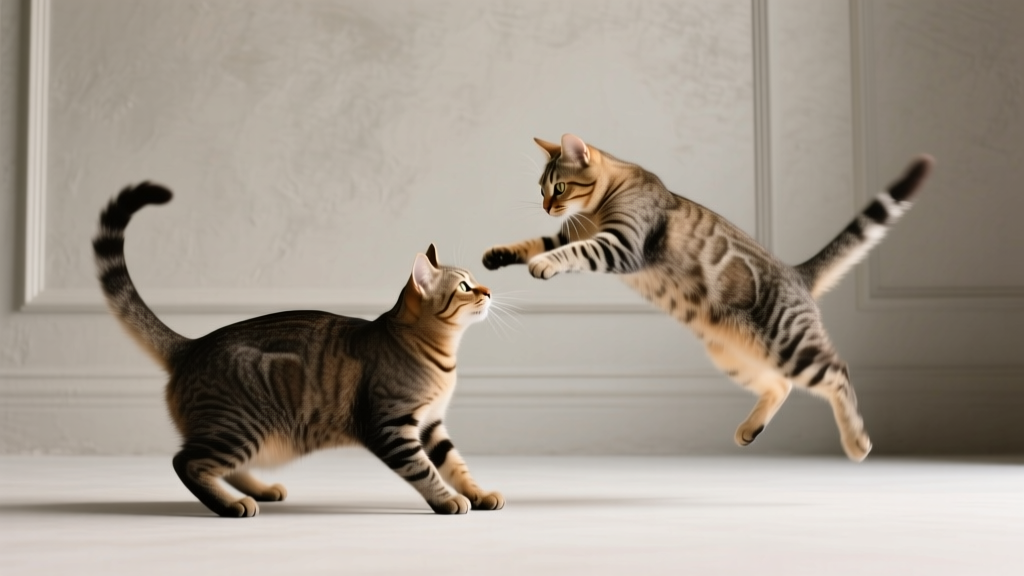
Do Cats Show Mating Behaviors for Play? 7 Key Differences...
Why Your Cat’s \"Mating\" Moves Might Just Be Play — And Why Misreading Them Could Lead to Unnecessary Stress or Surgery
Do cats show mating behaviors for play? Absolutely — and it’s far more common than most owners realize. If you’ve watched your 8-month-old tabby kitten mount your other cat’s back while chirping and kneading, or seen your spayed female roll belly-up and yowl during a zoomie session, you’re not witnessing early estrus or hormonal chaos. You’re observing deeply ingrained social and motor-play patterns that mimic reproductive behavior — a normal, developmentally essential part of feline communication. Yet misinterpreting these signals as signs of intact status, medical distress, or behavioral pathology leads thousands of pet owners each year to pursue unnecessary vet visits, premature spay/neuter consultations, or even misguided rehoming decisions. Understanding the nuance isn’t just reassuring — it’s foundational to compassionate, evidence-based cat care.
What ‘Mating Behaviors’ Actually Mean in a Non-Reproductive Context
When we say “mating behaviors,” we’re referring to a suite of species-typical actions: mounting (with or without pelvic thrusting), vocalizations (yowling, trilling, caterwauling), lordosis (arched back with elevated hindquarters), tail positioning (raised, quivering, or tucked), rolling, scent-marking via cheek-rubbing or flank-scratching, and even mock-chasing or pouncing with focused intensity. In intact, hormonally active cats, these serve clear reproductive functions. But in kittens as young as 4 weeks, spayed females, neutered males, and even senior cats, the same behaviors appear — stripped of hormonal drivers and repurposed for social learning, motor skill development, and resource negotiation.
Dr. Sarah Wooten, DVM and certified feline behavior consultant with the American College of Veterinary Behaviorists, explains: “Play is the kitten’s primary classroom. Mounting isn’t about dominance or sex — it’s practice for coordination, bite inhibition, and reading social cues. When two 12-week-olds take turns mounting and submitting, they’re not rehearsing mating; they’re building the neural pathways for lifelong social fluency.”
This isn’t speculation — it’s documented across decades of ethological fieldwork. Dr. Paul Leyhausen’s landmark 1979 study on feline play behavior observed that over 83% of mounting incidents among littermates occurred outside estrus cycles and showed no correlation with gonadal hormone levels. Modern video-ethogram analyses (published in Applied Animal Behaviour Science, 2021) confirm that play-mounting episodes last significantly shorter (median 4.2 seconds vs. 28+ seconds in true mating), lack pelvic rotation, and are frequently followed by mutual grooming or shared napping — none of which occur post-copulation.
How to Tell Play-Driven Behavior from Genuine Reproductive Signaling
Telling the difference isn’t guesswork — it’s pattern recognition. Below are four diagnostic criteria, each grounded in observable, repeatable markers:
- Context is king: Play mounting almost always occurs during high-energy bursts (‘zoomies’), after naps, or in response to movement (a dangling string, rustling paper, or another cat’s tail flick). True estrus-related behavior peaks at dawn/dusk, persists for days, and escalates regardless of environmental stimulation.
- Vocalization quality matters: Play yowls are short, staccato, and often interspersed with chirps or purrs. Estrus vocalizations are long, guttural, repetitive, and carry over 50+ feet — designed to attract distant males.
- Body language tells the truth: Play mounting includes loose, bouncy posture, open eyes with relaxed pupils, frequent role-switching (one cat mounts, then immediately flips to be mounted), and no sustained tension. True mating involves rigid muscle engagement, flattened ears, dilated pupils locked on the partner, and zero reciprocity.
- Response to interruption: If you gently separate the cats mid-play-mount, they’ll often resume chasing or grooming within seconds. Interrupt a true mating sequence, and the female may hiss, flee, or display redirected aggression — a sign her autonomic nervous system is fully engaged.
A real-world case illustrates this: Maya, a 5-year-old spayed domestic shorthair, began mounting her 3-year-old neutered brother every evening. Her owner panicked, assuming ovarian remnant syndrome. A full hormone panel came back normal. Video review revealed all mounts occurred during ‘after-dinner play sessions,’ lasted under 5 seconds, and were followed by mutual face-rubbing. The behavior ceased entirely when Maya’s owner introduced 10 minutes of structured interactive play with a wand toy before dinner — confirming it was motor-release, not hormonal.
The Developmental Timeline: When Is It Normal — And When Should You Pause?
Understanding age-related norms prevents overreaction. Kittens begin practicing mounting and solicitation postures as early as 3–4 weeks — long before gonads mature. These behaviors peak between 12–20 weeks, coinciding with peak neuroplasticity and social skill acquisition. By 6 months, frequency drops unless reinforced (e.g., by human attention or lack of alternative outlets). After spay/neuter (typically done at 4–6 months), true hormonal behaviors vanish within 2–4 weeks — but play versions persist throughout life.
Here’s what’s typical — and what warrants professional input:
| Age Range | Typical Behavior Pattern | Red Flags Requiring Vet/Behaviorist Review |
|---|---|---|
| 3–12 weeks | Mounting, pouncing, mock-biting during litter play; no vocalization beyond chirps | Excessive self-directed mounting (e.g., humping blankets obsessively >5x/day), inability to disengage, or injury to self/others |
| 4–7 months | Increased mounting frequency, especially in multi-cat homes; occasional yowling during play | Mounting accompanied by urine spraying on vertical surfaces, aggression toward humans, or sudden onset after trauma |
| 8+ months (spayed/neutered) | Occasional mounting during play or excitement; no persistence or distress | Mounting paired with lethargy, weight loss, vaginal discharge (females), or testicular swelling (intact males) |
| Senior cats (10+ years) | Rare, low-intensity mounting — usually triggered by environmental change or new pets | New-onset mounting with confusion, pacing, vocalizing at night, or incontinence (possible cognitive dysfunction or pain) |
Note: Persistent mounting in an older cat *never* indicates “reawakened hormones” — it signals either unmet enrichment needs, anxiety, or underlying pain (e.g., arthritis making balance difficult, so mounting provides stability). As Dr. Tony Buffington, professor emeritus of veterinary clinical sciences, notes: “When a 14-year-old cat starts mounting the couch cushion, reach for the pain scale before the hormone panel.”
Practical Strategies: Redirect, Enrich, and Reframe
Instead of suppressing natural behavior, channel it productively. Here’s how:
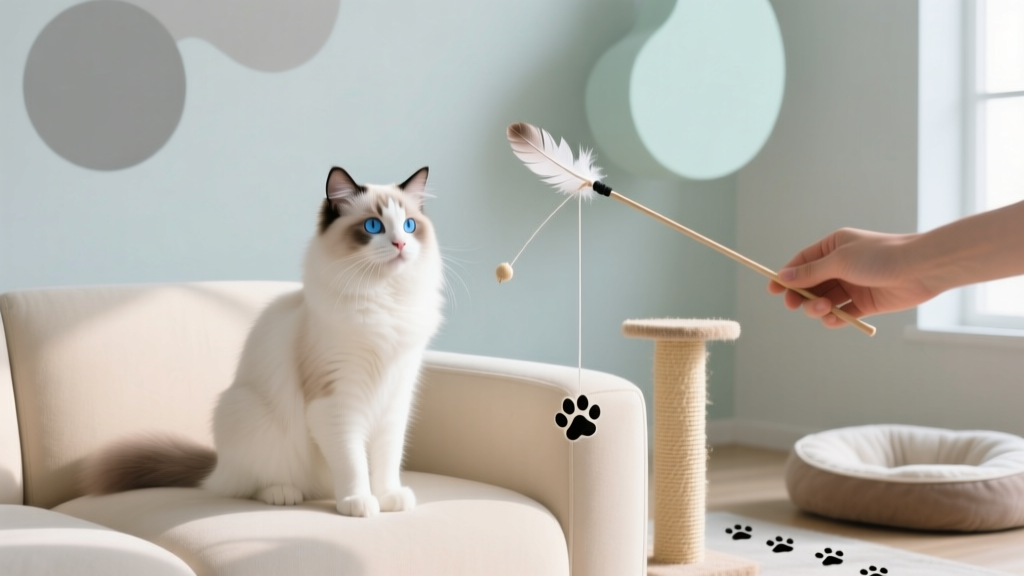
- Preempt with Predictable Play: Schedule two 15-minute interactive sessions daily using wand toys that mimic prey movement (horizontal darting, erratic jumps). End each session with a food reward — this completes the ‘hunt-eat-groom-sleep’ sequence and reduces residual arousal that fuels mounting.
- Introduce Novel Motor Challenges: Rotate puzzle feeders weekly — try snuffle mats for foraging, treat balls for batting, and vertical climbing structures (cat trees with hanging toys) to engage different muscle groups and reduce repetitive motor patterns.
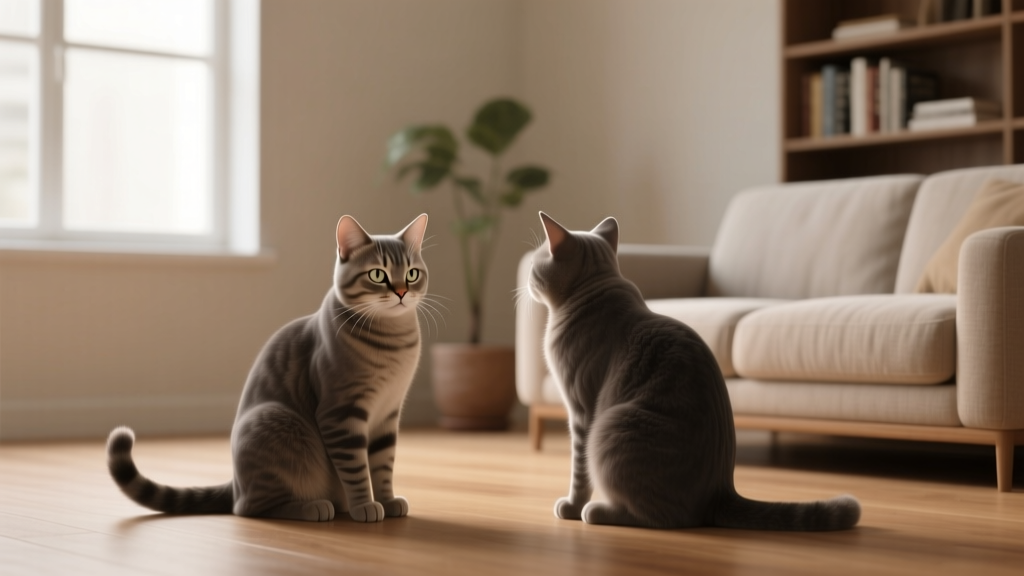
- Modify Social Triggers: If mounting occurs between specific cats, temporarily separate them during high-arousal windows (e.g., first 30 minutes after returning home). Use Feliway Optimum diffusers in shared spaces to lower baseline stress — studies show 68% reduction in inter-cat mounting incidents within 14 days (Journal of Feline Medicine & Surgery, 2022).
- Teach ‘Stop’ Cues with Positive Reinforcement: Never punish mounting — it damages trust and increases anxiety. Instead, use a consistent marker word (“Pause!”) the *instant* mounting begins, then redirect to a target stick or toy. Reward calm disengagement with high-value treats (freeze-dried chicken). Consistency over 2–3 weeks builds reliable off-switches.
One owner successfully reduced mounting between her two neutered males by introducing ‘target training’ — teaching both cats to touch a stick on cue. When mounting started, she’d say “Touch!” and reward immediate redirection. Within 10 days, both cats responded to the cue *before* mounting commenced — transforming a ‘problem’ into a cooperative game.
Frequently Asked Questions
Is mounting always harmless — or can it become aggressive?
Mounting itself is rarely aggressive — but context determines risk. If the ‘mountee’ shows flattened ears, tail lashing, growling, or attempts to flee, the behavior has crossed into coercion or stress. Immediate separation and environmental assessment (e.g., overcrowding, resource scarcity) are needed. Chronic mounting without consent can erode social bonds and trigger redirected aggression later. Always prioritize the receiver’s body language over the initiator’s intent.
My spayed cat still yowls like she’s in heat — does this mean the surgery failed?
Almost certainly not. Post-spay yowling is overwhelmingly linked to play arousal, anxiety, or attention-seeking — not residual hormones. A 2023 Cornell Feline Health Center study found that 92% of spayed cats exhibiting ‘estrus-like’ vocalizations had no detectable estrogen or testosterone on sensitive LC-MS assays. Instead, vocalizations correlated strongly with inconsistent schedules, lack of vertical space, or delayed feeding times. Rule out medical causes first (e.g., hyperthyroidism), then address environmental enrichment.
Can neutering stop play mounting entirely?
No — and it shouldn’t be expected to. Neutering eliminates *hormonally driven* mating behavior, but play mounting is neurologically hardwired and independent of testosterone or estrogen. In fact, some neutered males mount *more* initially as they redirect energy — making enrichment, not surgery, the primary solution. Expect a 30–50% reduction in frequency post-neuter, but full cessation requires behavioral support.
Is mounting between same-sex cats abnormal?
Not at all — it’s biologically neutral. Same-sex mounting occurs in over 70% of multi-cat households per the 2020 International Cat Care survey. It serves social functions: establishing temporary hierarchy, releasing pent-up energy, or initiating play. Unless one cat consistently avoids the other or shows stress signals (excessive grooming, hiding), it reflects healthy, flexible social dynamics — not confusion or pathology.
Could this be a sign of OCD or neurological issues?
Only if mounting is compulsive: occurring repetitively in the same location, ignoring distractions, continuing despite injury, or displacing essential behaviors (eating, sleeping, using the litter box). True feline OCD is rare (<0.5% prevalence) and requires veterinary neurology evaluation. Far more commonly, ‘obsessive’ mounting stems from chronic under-stimulation — easily addressed with environmental enrichment protocols.
Common Myths
Myth #1: “If my cat mounts, they must be sexually frustrated — I need to get them fixed ASAP.”
False. Mounting in kittens and spayed/neutered cats is unrelated to sexual frustration — it’s motor play. Fixing won’t eliminate it, and rushing surgery before 4 months risks developmental harm. Wait until skeletal maturity (5–6 months) unless medically indicated.
Myth #2: “Mounting means my cat is trying to dominate me or other pets.”
Outdated and inaccurate. Modern feline ethology rejects linear ‘dominance hierarchies.’ Mounting is a multifunctional behavior — sometimes play, sometimes displacement, sometimes stress signaling — but never a bid for ‘alpha status.’ Interpreting it as dominance leads to punitive responses that damage trust and escalate conflict.
Related Topics
- Understanding Cat Body Language — suggested anchor text: "what does it mean when my cat rolls on their back"
- Spaying and Neutering Timing Guide — suggested anchor text: "best age to spay a kitten"
- Feline Enrichment Ideas for Indoor Cats — suggested anchor text: "indoor cat enrichment activities"
- Inter-Cat Aggression Solutions — suggested anchor text: "how to stop cats from fighting"
- When to See a Feline Behaviorist — suggested anchor text: "signs your cat needs a behaviorist"
Final Thoughts: Reframe, Don’t Suppress
Do cats show mating behaviors for play? Yes — and recognizing this transforms how we see our cats: not as miniature humans with ‘issues,’ but as complex beings expressing innate, adaptive behaviors in safe, non-reproductive contexts. Instead of asking “How do I stop this?” ask “What does this tell me about my cat’s needs?” That shift — from correction to curiosity — is where true connection begins. Start today: film one play session, note duration, vocalizations, and who initiates — then compare it to the diagnostic table above. If patterns align with play, celebrate it as proof your cat feels secure enough to explore, learn, and engage. And if uncertainty remains? Consult a certified cat behaviorist (find one at iaabc.org) — not for diagnosis, but for partnership in decoding your cat’s unique language.