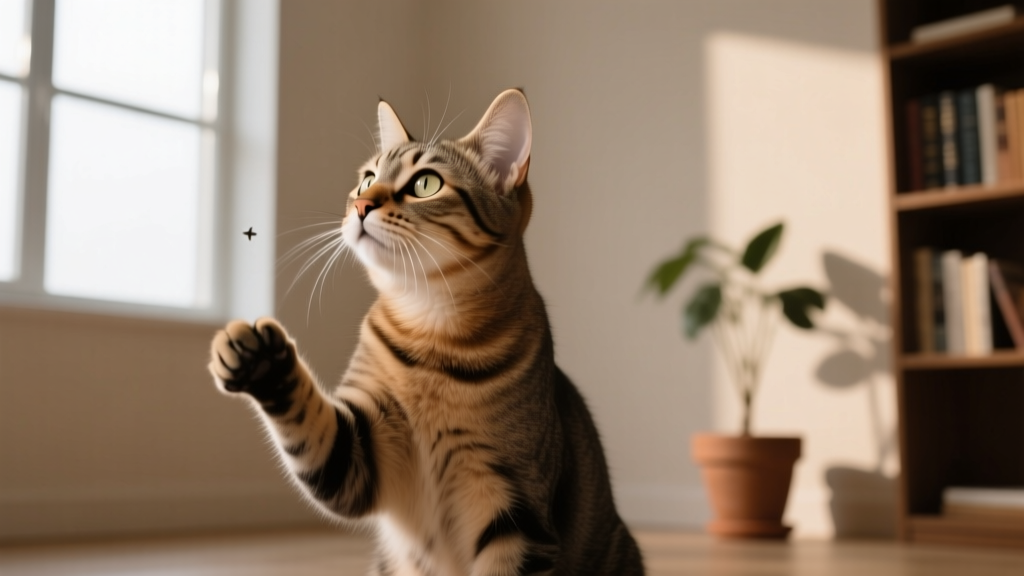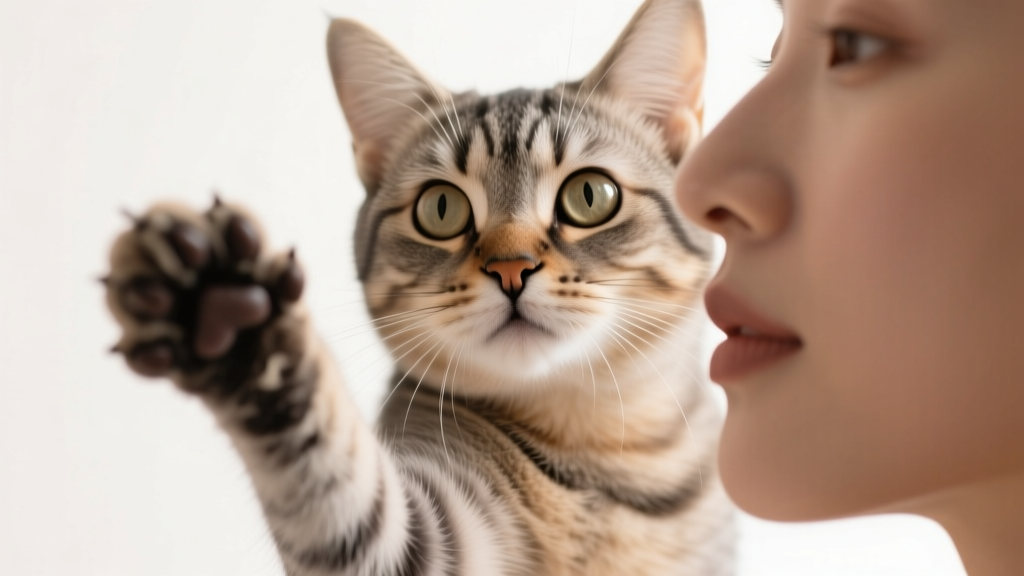
Cat Pawing at Your Face: Attention Demand Behavior
You’re drifting off to sleep when you feel it: a soft tap… tap… on your cheek. Maybe a gentle pat to the lips. Maybe a tiny paw carefully prying your eyelid open like it’s checking if you’re still “in there.” You crack one eye and there’s your cat—sitting inches from your face—looking deeply offended that you’re not responding to this very important meeting.
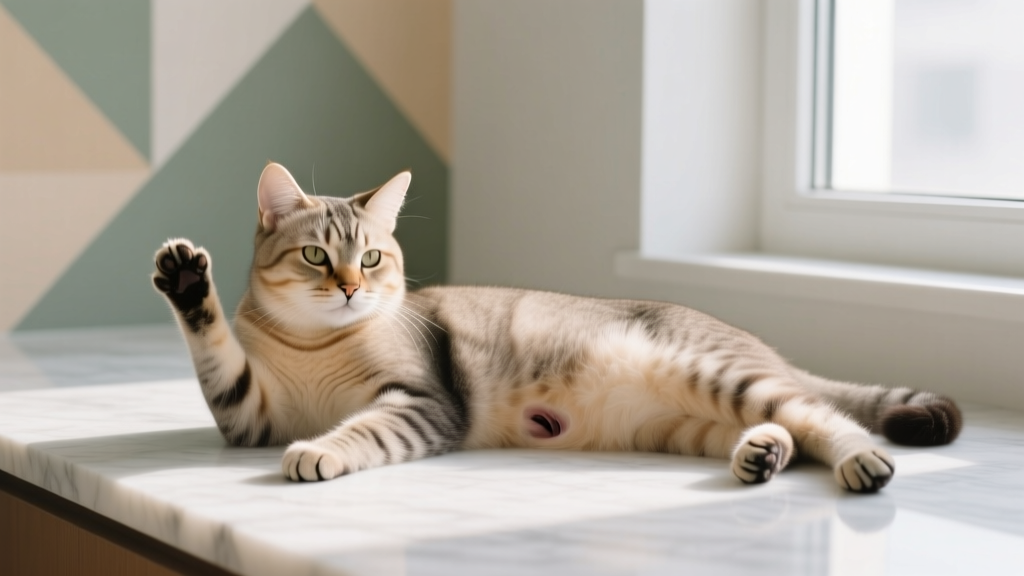
For many cat owners, face-pawing is equal parts adorable, baffling, and mildly alarming (those claws!). It can feel intimate—like your cat is trying to communicate directly—and, in a way, they are. Pawing at your face is one of the clearest “human, I need you” signals a cat can deliver. The trick is figuring out which need, and teaching your cat a way to ask that works for both of you.
Why Cats Paw at Faces: The Science and the Ancient Cat Brain
Cats are experts at getting what they want with minimal effort. From an evolutionary perspective, they’re both predator and prey—wired to be observant, efficient, and responsive to subtle cues. Using their paws is part of that toolkit.
Paws are sensitive and precise. A cat’s paws contain a high concentration of nerve endings and are used to test surfaces, manipulate prey, and investigate objects. Your face is warm, expressive, and reactive—basically an interactive button.
Kittens learn that pawing works. In kittenhood, pawing and kneading are tied to nursing behavior and social interaction. Kittens paw at their mother’s belly to stimulate milk letdown. That early learning—“paws make good things happen”—can carry over into adulthood, especially if humans respond quickly.
Cats train humans through reinforcement. This is the big one. If your cat paws your face and you wake up, talk, pet them, or—best of all—feed them, your cat’s brain files the behavior under: Highly effective strategy. Even negative reactions (pushing them away, groaning, sitting up) can be rewarding because attention is still attention.
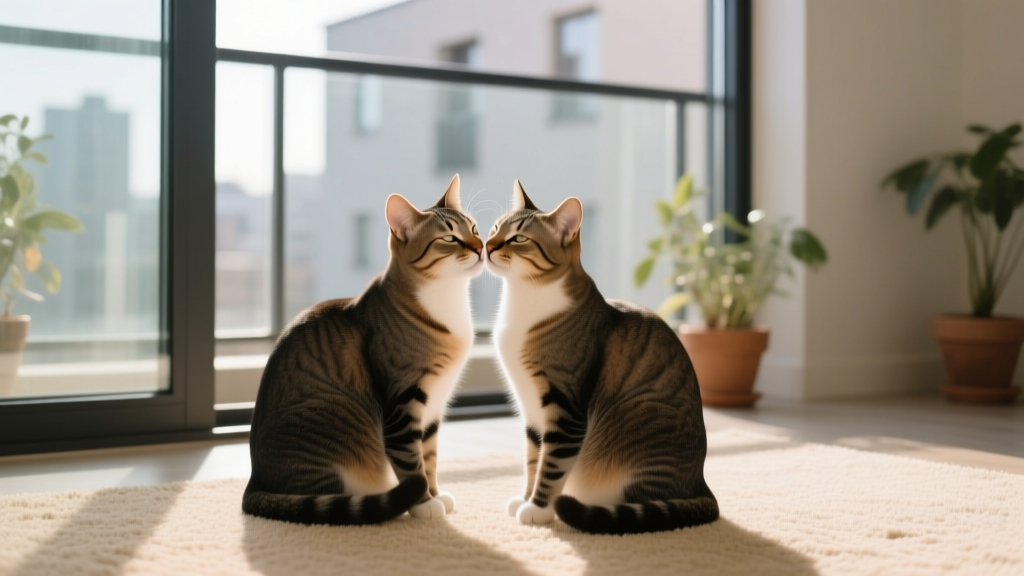
Your face is a social hotspot. Cats use scent to recognize and bond. Faces, hands, and hair hold familiar smells. When your cat gets close to your face, they’re in prime territory for social connection: sniffing, rubbing, slow blinking, and yes—pawing if they want engagement.
Different Contexts: What Face-Pawing Can Look Like (and What It Usually Means)
Not all face-paws are the same. The “why” often lives in the details: claw status, body posture, timing, and what happens next.
The Morning Alarm Clock Paw
Scenario: It’s 5:12 a.m. Your cat taps your cheek, then walks to the food bowl, then returns to tap again—louder.
Meaning: Food-motivated attention. Your cat has learned that waking you up leads to breakfast (or at least movement toward the kitchen).
The “Pay Attention to Me” Soft Pat
Scenario: You’re on the couch scrolling. Your cat reaches up, gently pats your chin, then stares into your soul.
Meaning: Social attention seeking. They want interaction: petting, play, or your focus. This is especially common in cats who bond strongly to one person.
The “Stop Doing That” Interruption Paw
Scenario: You’re typing, talking on the phone, or petting another animal. Your cat climbs up and places a paw on your face like they’re pressing “mute.”
Meaning: Redirecting your attention. Some cats do this when overstimulated by noise, when they want your hands, or when they’re mildly jealous of competing attention.
The Clawy Paw with Intensity
Scenario: Your cat paws your face repeatedly with claws slightly out, body tense, pupils wide.
Meaning: High arousal—could be impatience, frustration, or overstimulation. Sometimes it’s play that’s getting too rough. Sometimes it’s “I’ve asked nicely and you didn’t respond.”
The Gentle Paw During Cuddles
Scenario: Your cat is purring in your lap and slowly reaches up to touch your cheek, then rests their paw there.
Meaning: Affiliation and comfort. In calm contexts, a soft paw can be a social bonding gesture, similar to a cat-to-cat touch.
What This Says About Your Cat’s Mood and Feelings
Face-pawing is communication, and communication is emotional. Here are common emotional states behind the behavior:
- Affection and trust: Approaching your face is vulnerable for a cat. If they’re relaxed—soft eyes, slow blinks, loose posture—it often signals closeness and comfort.
- Anticipation: Ears forward, focused stare, tail tip twitching? They’re excited and expecting something (food, play, door opened, water refreshed).
- Frustration: Fast pawing, short meows, pacing, and repeated attempts usually mean they’re not getting what they want quickly enough.
- Anxiety or insecurity: Some cats paw to check that you’re present—especially after changes like travel, a new pet, schedule shifts, or moving house.
- Overstimulation: If the pawing happens after prolonged petting, watch for tail lashing, skin twitching, or sudden nips. Your cat may be saying, “That’s enough.”
The most helpful question to ask is: What consistently happens right after the pawing? That cause-and-effect pattern usually reveals your cat’s goal.
Related Behaviors You Might Notice
Face-pawing often comes as part of a whole “attention toolkit.” If your cat does one, they may do others:
- Head bunting (bunting your chin or forehead): A friendly scent-marking gesture that can also initiate attention.
- Face sniffing and whisker checking: Cats gather information through scent—your breath, skin, and hair tell a story.
- Kneading on your chest: Comfort behavior that can turn into “I’m settling in… also, pay attention to me.”
- Walking across your pillow: Proximity plus guaranteed reaction.
- Meowing only at you: Many cats reserve “human-directed meows” for their people—especially when they want something.
- Knocking items off surfaces: If pawing doesn’t work, gravity might. (Cats are persistent negotiators.)
When Face-Pawing Is Normal… and When It Might Be a Concern
Usually normal: Gentle pawing that happens occasionally, especially around predictable routines (meal times, bedtime cuddles), and doesn’t include aggression or escalating intensity.
Potential concern if you notice:
- Sudden increase in clinginess or urgency (especially in an older cat). This can signal pain, cognitive changes, or medical issues.
- Pawing paired with yowling at night, disorientation, or changes in litter box habits—worth a vet check.
- Claws out with repeated scratching despite your attempts to redirect—could indicate stress, overstimulation, or a learned pattern that needs retraining.
- Pawing at your face while you sleep combined with breath sniffing and persistent waking—occasionally cats respond to changes in your breathing, but it’s more often a reinforced “wake-up-for-food” habit.
- Any sign of fear or defensive aggression (ears pinned back, growling, swatting). That’s not “attention,” that’s “I’m not okay.”
If you’re unsure, rule out health problems first—then work on behavior.
How to Respond (Without Accidentally Training More Face-Pawing)
Here’s the balancing act: you want to respect your cat’s communication while also protecting your sleep, your skin, and your sanity.
1) Decide if you want to encourage it or phase it out
If the pawing is gentle and you enjoy it, you can treat it as a sweet “hello.” If it’s happening at 5 a.m. with claws, you’ll want a plan.
2) Reward the behavior you prefer
Pick an alternative signal and reinforce it. Options that work well:
- Sitting politely near you
- Touching your hand instead of your face
- Using a cue like a mat (teach “go to your spot” and reward)
When your cat approaches, look for the tiniest moment of calm—paws down, quiet body—and reward that with attention or a treat. Over time, you’re shaping a more polite request.
3) Don’t pay the paw tax at night
If face-pawing wakes you and you immediately feed your cat, the behavior becomes extremely durable. Try:
- An automatic feeder for early breakfast, so your cat stops associating your waking with food.
- A consistent bedtime routine: play session (5–10 minutes), then a small meal or snack to encourage longer sleep.
- Strategic ignoring: if safe, keep your face covered and avoid reacting. Any reaction can reinforce it.
4) Keep claws and arousal in check
- Trim nails regularly (or ask your vet/groomer to show you how).
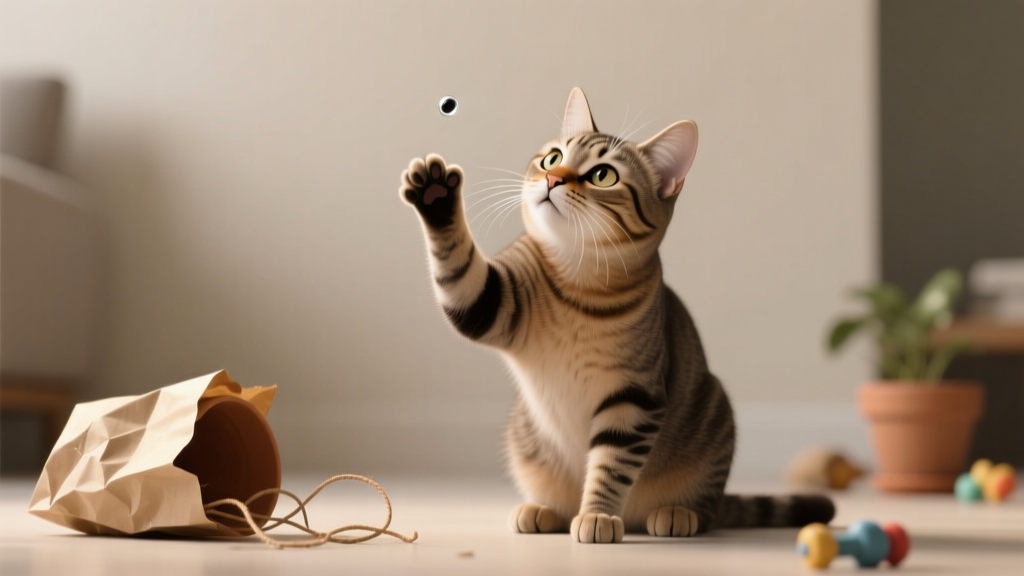
- Offer daily play that matches your cat’s style (stalk-chase-pounce with a wand toy is ideal).
- Add enrichment: window perches, puzzle feeders, and short training sessions reduce boredom-driven attention demands.
5) If it’s affection-based, give it a “yes, and”
When your cat paws your face gently during cuddle time, you can respond in a way that keeps it sweet:
- Slow blink back
- Offer your hand to rub (redirect face to hand)
- Pet in preferred zones (many cats love cheeks and chin more than full-body strokes)
Fun Facts and Research Nuggets
- Cats are excellent at learning human routines. They notice patterns—alarm times, coffee rituals, work calls—and adjust their behavior to intercept you at maximum effectiveness.
- Human-directed behaviors are often “shaped” by us. In behavioral terms, your response is the reward. Cats are masters at repeating whatever gets results fastest.
- Gentle touch is a social tool in many species. Among cats who are friendly with each other, you’ll sometimes see light paw touches and body contact as low-conflict communication.
- Many cats reserve certain behaviors for their favorite person. If you’re the chosen one, congratulations—your face is the official customer service desk.
FAQ: Cat Pawing at Your Face
Why does my cat paw my face when I’m sleeping?
Most commonly: they’ve learned it wakes you, and waking you leads to something they want (food, attention, or access). Less commonly, they’re seeking reassurance or responding to movement/breathing changes. If it’s new or intense, consider a vet check.
Is my cat being affectionate or demanding?
It can be either—or both. Affection usually looks gentle and relaxed (soft eyes, purring, slow blinks). Demanding tends to be repetitive, urgent, and linked to a goal (food bowl visits, pacing, louder vocalizing).
How do I stop my cat from pawing my face without hurting our bond?
Teach an alternative request (touch your hand, sit on a nearby spot) and reward that. At night, remove the reward by not reacting and using an automatic feeder for early meals. The bond stays strong when your cat still gets attention—just for a different behavior.
Why does my cat put a paw on my mouth?
Cats explore with paws and may also be reacting to your talking or breathing. Some cats do it as an “interruption” gesture—especially if your voice or phone calls consistently pull attention away from them.
Should I punish my cat for doing this?
No. Punishment tends to create fear or confusion and can increase stress-driven behaviors. It also doesn’t teach what you want instead. Redirection and reinforcement are more effective and kinder.
My cat paws my face and then bites. What does that mean?
Often it’s overstimulation or play escalating too far. Watch for signs like tail flicking, skin twitching, or sudden intensity. Reduce long petting sessions, increase play outlets, and redirect to toys before your cat gets revved up.
Face-pawing is one of those behaviors that feels deeply personal—because it is. Your cat is using the most direct route to your attention, and with a little detective work, you can translate what they’re asking for and guide them toward a more polite request.
Does your cat do the gentle “good morning” tap, the dramatic clawed wake-up call, or the theatrical paw-on-the-lips shush? Share your stories (and your best “my cat trained me” moments) with the Cat Lovers Base community at catloversbase.com.