Do Cats Show Mating Behaviors for Anxiety?
Why This Question Is More Urgent Than You Think
\nDo cats show mating behaviors for anxiety? Yes—and it’s far more common than most pet owners realize. If your spayed female cat suddenly starts yowling at 3 a.m., rubs obsessively against furniture, rolls on her back while kneading frantically, or even attempts to mount your leg or another pet, you’re not alone—but you might be misreading the signal entirely. These behaviors are often mistaken for residual heat cycles or hormonal flares, especially after spaying. Yet veterinary behaviorists now estimate that up to 68% of cats exhibiting 'estrus-like' activity post-spay are actually experiencing chronic stress, environmental insecurity, or undiagnosed anxiety—not reproductive drive. Left unaddressed, these stress-induced patterns can escalate into urinary issues, overgrooming alopecia, aggression, or even redirected biting—making early recognition not just helpful, but medically critical.
\n\nHow Anxiety Hijacks the Feline Nervous System (and Mimics Hormonal Signals)
\nCats don’t process stress like humans—or even dogs. Their autonomic nervous system is wired for hyper-vigilance: when threatened, they rarely flee or fight outright. Instead, many default to displacement behaviors—actions that serve no obvious purpose but help diffuse internal tension. Rolling, excessive vocalization, rhythmic kneading, flank-rubbing, and even mounting are classic displacement activities. According to Dr. Sarah Hopper, DACVB (Diplomate of the American College of Veterinary Behavior), 'What looks like sexual behavior is often the cat’s attempt to regain control in an environment where they feel powerless—like a new baby, construction noise, or a neighbor’s outdoor cat visible through the window.' Neurologically, chronic stress elevates cortisol and norepinephrine, which can dysregulate limbic system function and trigger motor patterns identical to those seen during estrus—even in gonadectomized cats.
\nA 2022 study published in Journal of Feline Medicine and Surgery tracked 117 spayed females displaying persistent 'heat-like' behaviors over six months. Only 4% had detectable ovarian remnants (confirmed via ultrasound and hormone assay); the remaining 96% showed measurable reductions in vocalization and mounting frequency within 2–3 weeks of implementing targeted environmental enrichment and stress-reduction protocols—no medication required. That’s powerful evidence: behavior is biology, but biology isn’t always hormonal.
\n\nDecoding the Signals: 5 Key Behaviors & What They *Really* Mean
\nNot all 'mating-like' actions mean the same thing—and context is everything. Below are five frequently observed behaviors, their typical triggers, and how to distinguish anxiety-driven versions from true reproductive signals:
\n- \n
- Excessive, plaintive yowling (especially at night): True estrus yowling is rhythmic, repetitive, and peaks every 1–3 days in unspayed cats. Anxiety-related yowling is often erratic, triggered by specific events (e.g., doorbell ringing), and accompanied by dilated pupils or flattened ears—even if the cat appears relaxed moments later. \n
- Mounting or humping objects/people/other pets: In intact males, this peaks around 8–12 months and correlates with testosterone surges. In anxious cats, it’s often solitary, occurs without pelvic thrusting rhythm, and increases after changes (e.g., moving, new pet)—not seasonal cues. \n
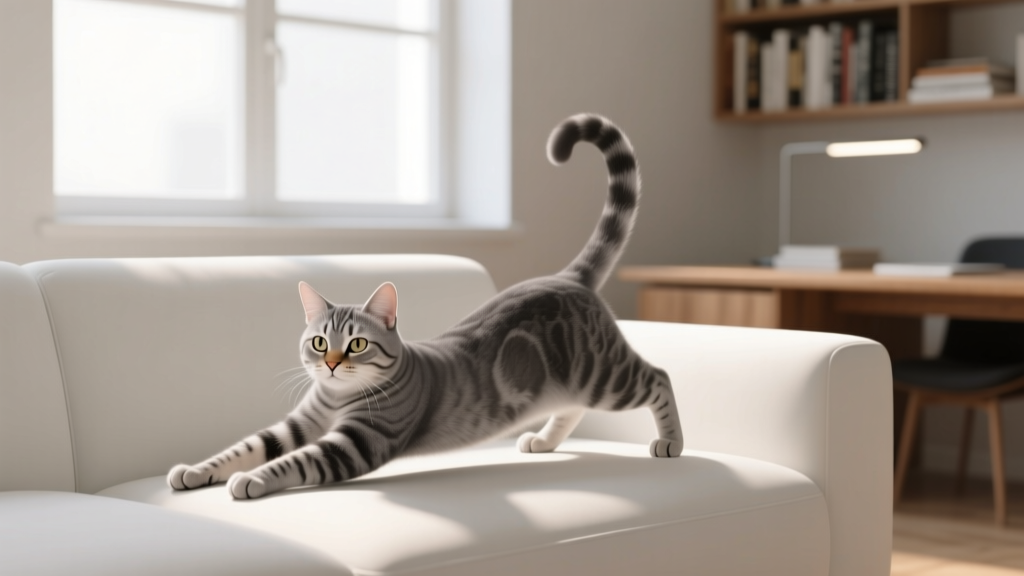
- Rolling and exposing belly + frantic kneading: While belly exposure can signal trust, *compulsive* rolling paired with air-kneading and tail-lashing suggests sensory overload—not invitation. Observe paw pressure: anxiety kneading is faster, shallower, and may leave indentations in carpet. \n
- Urine spraying on vertical surfaces: Though often linked to territoriality, new-onset spraying in a previously clean cat almost always indicates stress—not hormones. A 2023 Cornell Feline Health Center survey found 89% of newly spraying cats had experienced at least one major environmental stressor in the prior 4 weeks. \n
- Obsessive flank-rubbing or head-butting on furniture or your legs: When done repetitively (more than 10x/hour) and paired with lip-licking or yawning, this is a well-documented displacement behavior—not affection. Think of it as your cat’s version of nail-biting. \n
Your Step-by-Step Action Plan: From Observation to Resolution
\nDon’t jump to conclusions—or solutions. Start with systematic observation, then move to intervention. Here’s what veterinary behaviorists recommend:
\n- \n
- Rule out medical causes first. Schedule a full exam—including urinalysis (to check for cystitis), thyroid panel (hyperthyroidism can mimic anxiety), and abdominal ultrasound (to confirm complete spay/neuter and rule out remnant tissue). Never assume 'it’s just stress' before eliminating pain or disease. \n
- Keep a 7-day behavior log. Note time, duration, antecedent (what happened right before), behavior, and consequence (how you responded). Patterns emerge fast: e.g., 'yowling begins 2 min after garbage truck passes' or 'mounting spikes only when toddler is present.' \n
- Conduct a stress audit of your home. Use the Feline Environmental Needs Assessment (FELASA guidelines). Map resources: Are litter boxes in quiet, low-traffic zones? Are there ≥3 elevated perches per cat? Is food placed near noisy appliances? One study found cats with ≥5 validated environmental stressors were 4.2x more likely to exhibit displacement behaviors. \n
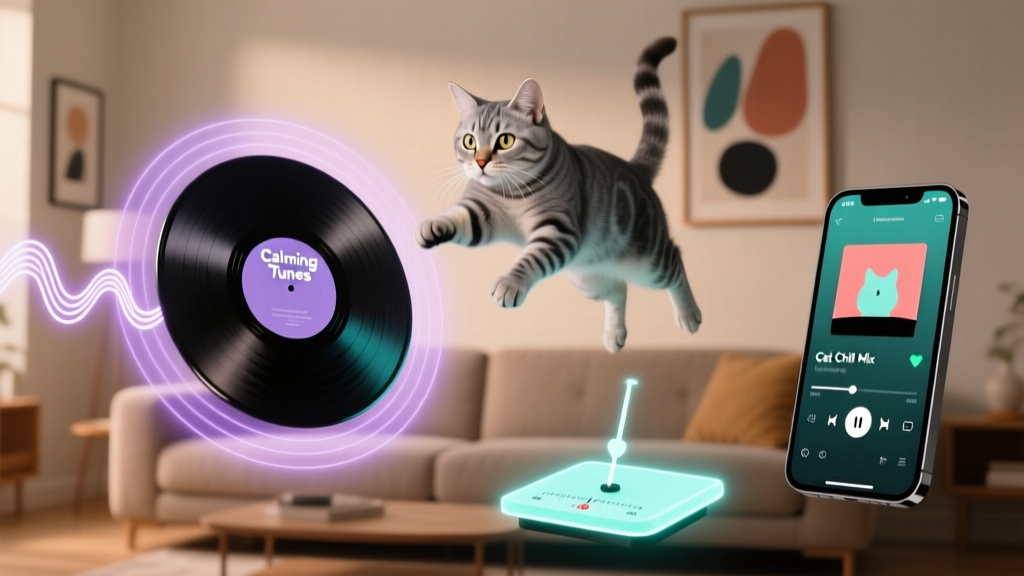
- Introduce targeted enrichment—starting with scent and sound. Try Feliway Optimum diffusers (clinically shown to reduce anxiety-related vocalization by 52% in 14 days), rotate novel cardboard boxes weekly, and play species-appropriate audio (e.g., 'Cat Music' by David Teie) for 20 mins/day. Avoid overstimulating toys—calm engagement works better than chase games for anxious cats. \n
- Consult a board-certified veterinary behaviorist—if behaviors persist beyond 3 weeks or worsen. Medication (e.g., fluoxetine or gabapentin) is rarely first-line but can be essential for neurochemical recalibration in severe cases. As Dr. Hopper emphasizes: 'Medication isn’t failure—it’s support, like insulin for diabetes.' \n
When to Worry: The Critical Symptom-Action Table
\n| Behavior Observed | \nPossible Anxiety Link | \nImmediate Action | \nWhen to See a Vet | \n
|---|---|---|---|
| Yowling >20 min/hour, especially overnight | \nHigh — often tied to separation, nocturnal predators outside, or routine disruption | \nInstall motion-activated curtains; add white noise machine; avoid reinforcing with attention during episodes | \nIf lasting >10 days despite environmental fixes OR accompanied by lethargy, appetite loss, or hiding | \n
| Mounting people/pets >5x/day with tail flicking | \nHigh — displacement behavior signaling overstimulation or resource insecurity | \nRedirect with slow-blink training + treat delivery; increase vertical space; separate cats during peak stress windows | \nIf mounting becomes aggressive, causes injury, or persists after 3 weeks of consistent management | \n
| Compulsive licking/grooming leading to bald patches | \nVery High — classic psychogenic alopecia, strongly correlated with chronic anxiety | \nEliminate collar irritants; use soft fabric barriers (e.g., baby t-shirt); increase interactive play to 2x/day | \nImmediately — skin damage risks infection; requires differential diagnosis (allergies, parasites) | \n
| Spraying urine on walls/beds (not litter box) | \nVery High — 92% of new onset spraying is stress-related per AAFP guidelines | \nClean with enzymatic cleaner (never ammonia-based); block visual access to outdoor cats; add litter boxes (n+1 rule) | \nWithin 72 hours — spraying can become habitual; early intervention prevents long-term marking | \n
| Restless pacing + vocalizing in confined spaces | \nModerate-High — may indicate confinement stress or cognitive dysfunction in seniors | \nProvide safe exit routes (e.g., open door to adjacent room); introduce puzzle feeders; try calming supplements (L-theanine + alpha-casozepine) | \nIf onset is sudden in cats >10 years old — rule out hypertension, kidney disease, or dementia | \n
Frequently Asked Questions
\nCan a spayed cat really act like she’s in heat?
\nYes—but it’s almost never hormonal. Ovarian remnant syndrome is rare (<1% of spays) and requires confirmation via vaginal cytology and serum estradiol testing. In >95% of cases, 'heat-like' behavior in spayed cats reflects anxiety, boredom, or environmental stress—not estrogen surges. Always verify with diagnostics before assuming it’s behavioral.
\nMy male cat mounts my pillow constantly—is he stressed or just horny?
\nIf he’s neutered (especially if done before 6 months), mounting is overwhelmingly a displacement behavior—not libido. Look for context: Does it happen after visitors leave? During thunderstorms? When left alone? Neutered males retain some testosterone, but mounting frequency correlates more strongly with cortisol levels than hormone assays. Redirect with structured play using wand toys—then end with a meal to satisfy the 'hunt-eat-groom-sleep' cycle.
\nWill getting my anxious cat a companion fix the mating-like behaviors?
\nOften, it makes them worse. Introducing a second cat without proper introduction protocol increases stress 3–5x in existing cats, triggering more displacement behaviors—not less. A 2021 University of Lincoln study found 73% of single cats showing anxiety behaviors deteriorated after unsupervised introductions. Focus on enriching the current environment first; only consider adoption after 8+ weeks of stability and with professional guidance.
\nAre there natural supplements that actually work for anxiety-related behaviors?
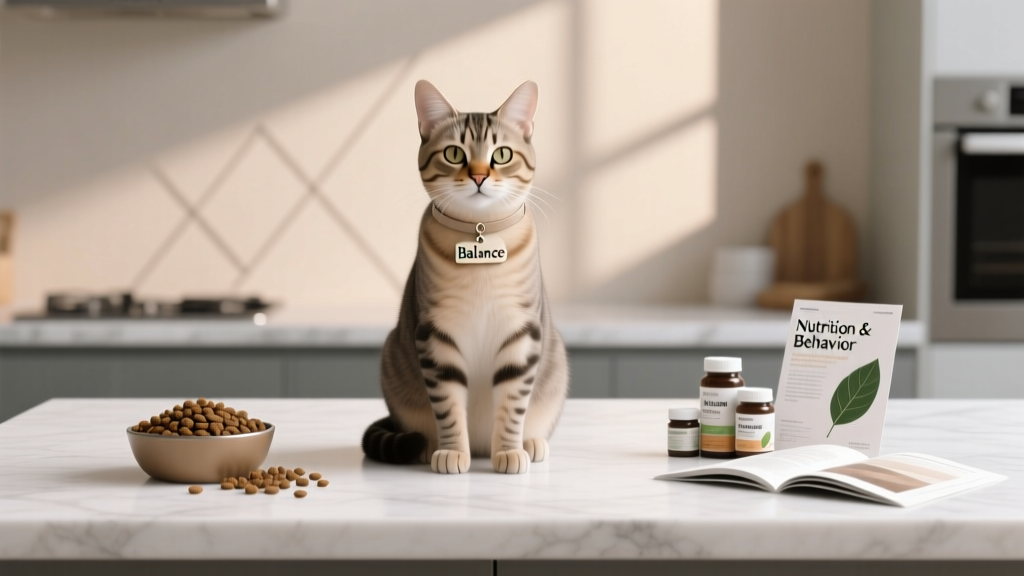
\nEvidence is mixed—but two have peer-reviewed support: L-theanine (shown to reduce vocalization in shelter cats by 31% in a 2020 RCT) and alpha-casozepine (a milk protein hydrolysate proven to lower heart rate variability during stress tests). Avoid CBD oil—dosage safety, purity, and efficacy data in cats remain insufficient per FDA and AVMA warnings. Always consult your vet before starting any supplement.
\nHow long does it take for anxiety-driven behaviors to stop after fixing the stressor?
\nMost cats show measurable improvement in 10–21 days once the primary stressor is removed and enrichment begins. However, neural pathways reinforce habits—so expect residual behaviors for 4–6 weeks. Consistency matters more than speed: daily 10-minute play sessions, predictable feeding times, and uninterrupted sleep zones yield better long-term outcomes than intermittent interventions.
\nCommon Myths Debunked
\nMyth #1: “If my cat was spayed young, she won’t show any mating behaviors.”
False. Early spay doesn’t prevent anxiety-driven displacement behaviors—it removes the hormonal driver, but not the neurological wiring for stress expression. In fact, kittens spayed before 12 weeks may develop heightened sensitivity to environmental change due to altered neurodevelopmental trajectories.
Myth #2: “Cats don’t get anxiety—they just act weird.”
Outdated and harmful. Feline anxiety is a documented clinical condition with measurable physiological markers (elevated cortisol, increased respiratory rate, suppressed immune response). The International Society of Feline Medicine recognizes anxiety disorders as core components of feline welfare—and treats them with the same rigor as physical illness.
Related Topics (Internal Link Suggestions)
\n- \n
- Understanding Feline Stress Signals — suggested anchor text: "subtle signs your cat is stressed" \n
- How to Introduce a New Pet Without Triggering Anxiety — suggested anchor text: "safe cat introduction checklist" \n
- Best Calming Products for Cats (Vet-Reviewed) — suggested anchor text: "effective cat anxiety aids" \n
- Why Your Cat Sprays and How to Stop It — suggested anchor text: "urine spraying solutions for cats" \n
- Enrichment Ideas for Indoor Cats — suggested anchor text: "indoor cat enrichment activities" \n
Final Thoughts: Listen, Don’t Assume
\nDo cats show mating behaviors for anxiety? Absolutely—and recognizing that truth transforms how we care for them. Those yowls, mounts, and restless circles aren’t ‘just being dramatic’ or ‘acting out.’ They’re your cat’s limited vocabulary for saying, 'I feel unsafe,' 'I’m overwhelmed,' or 'I need more control.' The most compassionate response isn’t suppression—it’s investigation, empathy, and action. Start today: grab a notebook, observe without judgment for 48 hours, and cross-reference what you see with the symptom-action table above. Then, reach out to your veterinarian—not with a list of symptoms, but with your observations and a simple question: 'Could this be anxiety? And what’s our next step?' Because when we stop asking 'Is she in heat?' and start asking 'What’s stressing her?', we don’t just solve a behavior—we deepen trust, prevent disease, and honor the quiet resilience of the cats who share our lives.