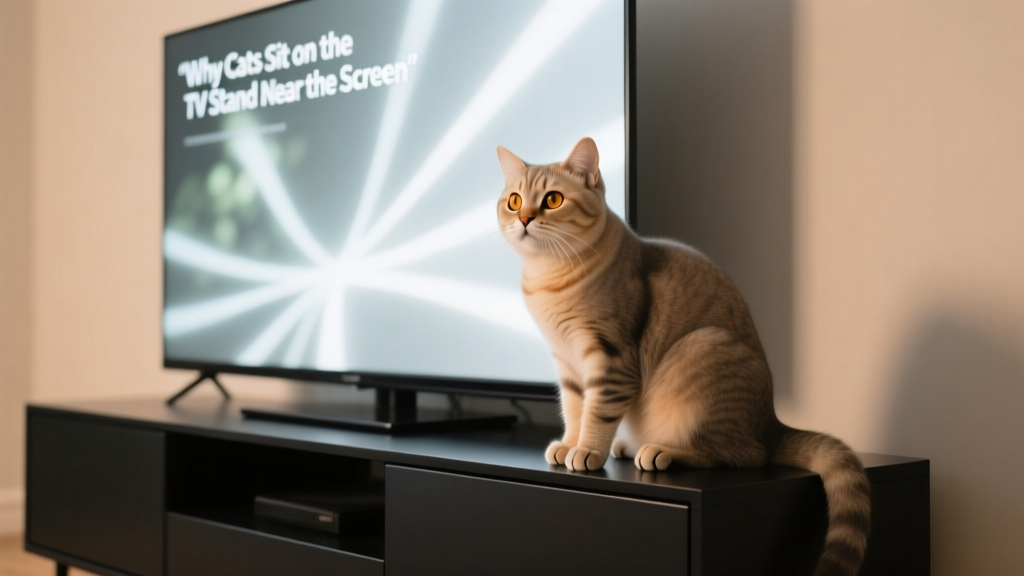
Why Cats Sit on the TV Stand Near the Screen
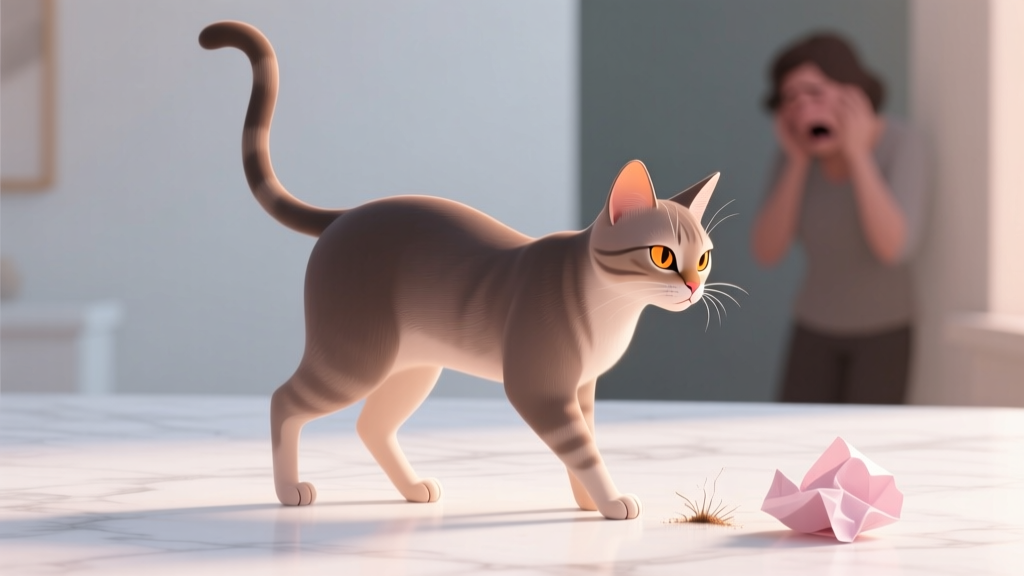
You settle in for a cozy evening: snack in hand, show queued up, volume at the perfect level. Then—soft paw steps. A flick of a tail. And there’s your cat, hopping onto the TV stand and planting themselves right beside the screen like a tiny, judgmental cinema critic. Sometimes they face you. Sometimes they face the moving picture. Sometimes they do the most dramatic thing of all: sit directly in front of the action at the exact moment a character whispers an important clue.
If you’ve ever wondered, “Why there?” and “Why now?” you’re not alone. Cats aren’t trying to ruin movie night (most of the time). Sitting near the TV screen makes a surprising amount of sense when you look at it through a cat’s eyes—an animal built for scanning territory, seeking warmth, and positioning themselves in places that feel safe and powerful.
1) The scientific (and evolutionary) reasons cats love that spot
High ground is safety. Cats are both predators and, historically, potential prey. Even a confident housecat still carries instincts that say, “A vantage point is valuable.” In the wild, a raised perch offers better sightlines, earlier threat detection, and a strategic place to rest while staying aware. A TV stand is basically an indoor lookout tower—especially if it’s near the center of the home’s activity.
Warmth and comfort are magnets. TVs, streaming boxes, game consoles, soundbars—many electronics give off gentle heat. Cats are heat-seekers by design; their thermoneutral zone (where the body doesn’t have to work hard to stay warm) is higher than ours. That means the slightly-toasty zone near electronics can feel like a premium heated lounge.
Movement triggers attention. Cats are wired to notice motion. Even if your cat doesn’t “watch TV” the way you do, shifting light, fast movements, and flickering scenes can activate their orienting response—the reflex to turn toward motion and evaluate it. Nature trained them to pay attention to scurrying, flitting things. The screen is a reliable motion source.
Territory and scent matter. Cats feel secure in familiar, scent-marked spaces. If your cat has rubbed cheeks on the stand’s corner, kneaded on the surface, or lounged there regularly, the spot becomes part of their “safe map” of the home. Perches that overlook key pathways—like the living room—become natural territory anchors.
Social proximity—on feline terms. Many cats enjoy being near their people, but not necessarily in a lap. Sitting on the TV stand lets them share space without being touched, confined, or forced into a cuddle. It’s a “together, but independent” arrangement that suits a lot of feline personalities.
2) A detailed breakdown: different contexts, different motivations
Not all TV-stand sitting is created equal. Here are common scenarios and what they usually mean:
“I sit here when you sit down.”
This is often social positioning. Your cat has learned that when you’re on the couch, your attention is more available. The stand is close enough to be included but high enough to feel in control. Some cats also prefer to be at face level rather than down by your feet—especially if the couch is tall.
“I sit here during exciting scenes (or when birds appear).”
Nature documentary fan? Your cat may be responding to rapid movement, prey-like sounds, or high-pitched vocalizations. Bird and rodent footage can trigger stalking, tail twitching, chirping, and intense staring. Even animated shows can do it—fast shapes and sudden direction changes are very “prey-like” to a cat brain.
“I sit here when the TV is off.”
Now we’re usually talking perch + territory rather than the screen itself. If the stand is sturdy, near a window, or positioned so your cat can monitor doorways, it’s ideal. Some cats also like the stand because it’s a scent hub: it smells like you, your routine, and the room’s regular activity.
“I sit here and stare at you, not the TV.”
That’s communication. Your cat might be checking in, requesting play, or waiting for a predictable routine (treats, bedtime, a lap session). Cats are masters of training humans through timing: “I sit here, you look up, then something good happens.” If it’s working, they’ll repeat it.
“I sit here and block the screen on purpose (apparently).”
This is usually reinforcement, not spite. Your reaction—laughing, talking, reaching, even gently shooing—can be attention, and attention is valuable. Cats don’t need you to be pleased; they just need you to engage. If the fastest way to get engagement is to become the main character on the screen, many cats will happily take the role.
“I sit here and knock things off.”
Now we’re in enrichment territory. Knocking objects can be play behavior (batting), exploratory behavior (“what happens if I push this?”), or attention-seeking. The stand is a stage; objects are props. If your cat is bored, that stage gets busier.
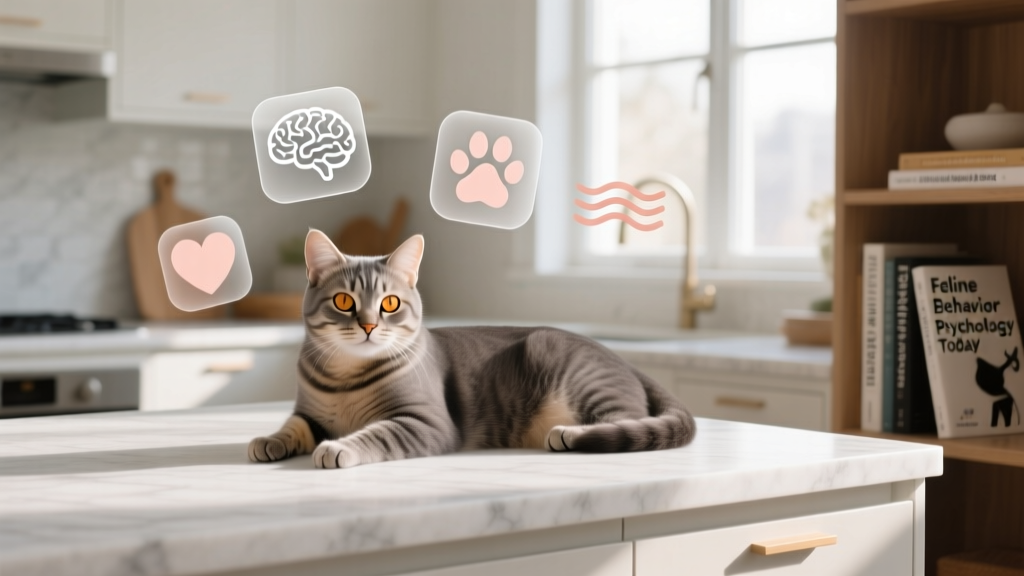
3) What this behavior says about your cat’s mood and feelings
Body language is your best translator. The location matters, but the posture matters more.
- Relaxed loaf, slow blinks, tail still: Your cat feels safe and content. The TV stand is a comfort zone.
- Upright sit, ears forward, eyes tracking movement: Curious, mentally engaged. They’re “hunting” with their eyes.
- Tail tip twitching, crouched posture, intense stare: High arousal—play/hunt mode. This can be fun, but it can also spill into pouncing on nearby feet if they’re overstimulated.
- Ears angled sideways or back, tense body, quick grooming: Mild stress or uncertainty. They may be using the stand as a safe outpost while something feels off (new guests, loud noises, another pet nearby).
- Meowing at you from the stand, hopping down and back up: Seeking interaction—play, snacks, or a routine they believe you’re late on.
Think of the TV stand as a cat’s “balcony seat.” Sometimes they’re there to relax. Sometimes to monitor. Sometimes to make sure you don’t forget they exist.
4) Related behaviors you might also notice
If your cat loves the TV stand, you may see these close cousins:
- Sitting on laptops, books, or keyboards: Warmth + attention + being at your focal point.
- Perching on the back of the couch: Elevated social proximity with a great view.
- “Helping” you watch by pawing the screen: Movement triggers a reach-and-bat response.
- Chattering or chirping at the TV: A classic prey-excitement vocalization.
- Rubbing cheeks on the TV stand corners: Scent marking to claim the area as safe and familiar.
5) When it’s normal… and when it might be a concern
Usually normal: A cat choosing a perch near the screen is common and often harmless, especially if they can get up and down easily and aren’t showing signs of distress.
Potential concerns to watch for:
- Obsessive screen-fixation: If your cat becomes difficult to redirect, stops playing with toys, or seems agitated for long periods, they may be getting overstimulated or lacking other enrichment.
- Sudden new behavior in an older cat: If a senior cat abruptly starts camping near the TV or pacing around it, consider a vet check to rule out vision changes, cognitive changes, or anxiety.
- Risky climbing/jumping: If your cat is wobbling, missing jumps, or falling, that’s not just “clumsy”—it can signal pain, arthritis, or neurological issues.
- Chewing cords or scratching the screen: This is a safety issue (electrical hazard, ingestion risk) and worth addressing right away.
- Signs of stress: Hiding more, overgrooming, litter box changes, or aggression around the TV area may indicate the stand has become a conflict zone (especially in multi-cat homes).
6) Tips for responding (without turning movie night into a showdown)
You’ve got two goals: keep everyone safe and keep the relationship friendly. Here are behaviorist-approved approaches.
Create a “yes spot” that beats the TV stand.
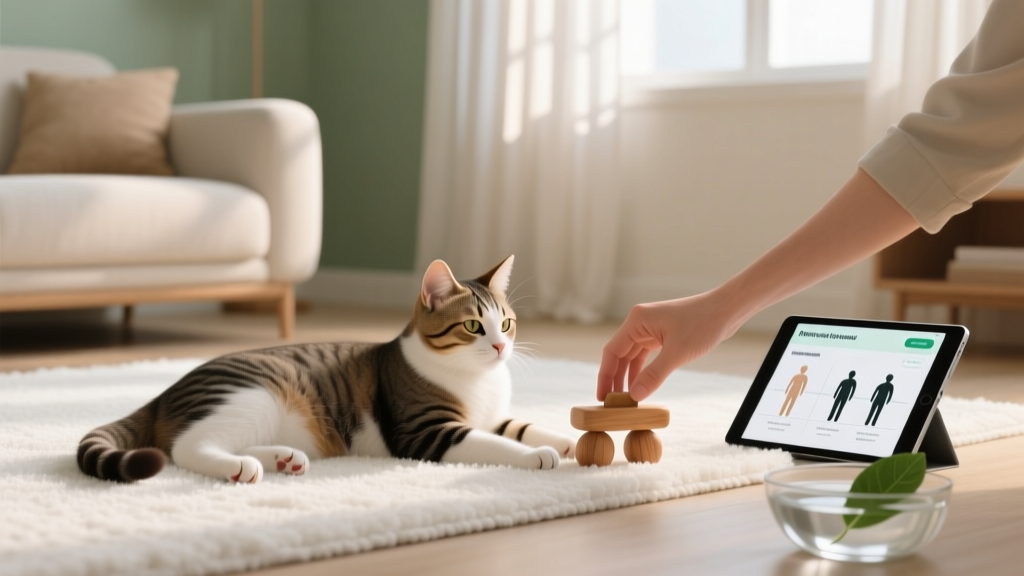
Cats choose the best seat available. Offer a taller cat tree nearby, a window perch, or a shelf with a soft pad. If your cat wants height, give them height. Place it a few feet to the side so they can still be part of the room without blocking the screen.
Add warmth legally.
If the draw is heat, provide a heated cat bed (low, pet-safe setting) or a warm blanket on their perch. Many cats will happily trade “electronics warmth” for “purpose-made warmth.”
Reinforce what you want, not what you don’t.
When your cat sits on the alternative perch, quietly reward: a treat, a few gentle strokes (if they like touch), or a wand-toy session during commercials. If blocking the screen gets a big reaction, try to keep your response calm and boring—then make the alternative spot pay better.
Make the TV stand boring and safe.
Clear tempting objects, secure unstable décor, and consider museum putty for items that must stay. Cable-manage cords with protective covers. If your cat is a serial screen-pawer, a slightly increased distance (moving the stand back or adding a barrier) can reduce opportunities.
Provide a “hunt cycle” before your show.
A 10–15 minute interactive play session (stalk → chase → pounce) followed by a small meal can reduce the urge to turn the TV into live prey theater. A satisfied cat is less likely to audition for a role in your living room.
For multi-cat homes: add more perches.
Competition over elevated spots is real. Multiple vertical options reduce tension and prevent one cat from guarding the TV stand like a tiny bouncer.
7) Fun facts and research-flavored tidbits
- Cats are built for short bursts of hunting. Fast, flickery movement on screens can press the same mental buttons as rustling grass—especially if the audio includes high-pitched sounds.
- Warmth isn’t a luxury for cats; it’s a strategy. Choosing warmer resting spots helps conserve energy, which is exactly what a small predator would do between hunts.
- Elevated resting is a common “security behavior.” Many cats prefer to rest where they can observe without being approached from behind—one reason TV stands and couch backs are so popular.
- Your attention is a powerful reward. Even “No!” can be reinforcing if it reliably produces eye contact, talking, or movement toward the cat.
FAQ
1) Is my cat jealous of the TV?
Cats don’t typically experience jealousy the way humans describe it, but they do compete for attention and resources. If the TV reliably captures your gaze, your cat may place themselves in that line of sight because it works.
2) Why does my cat sit by the TV even when it’s off?
Because the stand itself is valuable: height, a familiar scent zone, a comfy surface, and a great view of the room. The screen is optional; the perch is the prize.
3) Does my cat actually watch TV?
Some cats do track movement on screens, especially nature footage or fast animation. Others are more interested in the warmth, your attention, or the elevated position. If your cat’s ears are forward and their eyes follow motion, they’re likely engaged with what they see.
4) How do I stop my cat from blocking the screen without scaring them?
Give them a better alternative (taller/softer/warmer perch nearby) and reward its use. Keep your reaction to screen-blocking minimal and calm, then redirect with a treat toss or a wand toy toward the “yes spot.” Avoid spraying water or yelling—those methods can create stress and increase attention-seeking behavior.
5) Why does my cat paw at the screen?
Pawing is a normal predatory/play response to movement. If it becomes frequent, offer more interactive play and consider choosing calmer programming (or putting on cat TV at a specific time) so it’s not an all-evening trigger.
6) Could sitting near the TV mean my cat is anxious?
It can, depending on body language. A tense posture, pinned ears, or stress behaviors (overgrooming, hiding later, irritability) suggest they may be using the perch to feel safer. If you’re seeing broader signs of anxiety, it’s worth discussing with your vet or a qualified behavior professional.
One last thought
When your cat picks the TV stand, they’re not being weird “just because.” They’re choosing a spot that offers height, warmth, a strong view of the territory, and a front-row seat to you—the most interesting creature in the room (from their perspective, anyway).
Does your cat sit beside the screen like a tiny guardian, block the plot at the worst moment, or chirp at nature shows like they’re giving commentary? Share your funniest TV-stand stories (and what you’ve tried) with the Cat Lovers Base community at catloversbase.com.