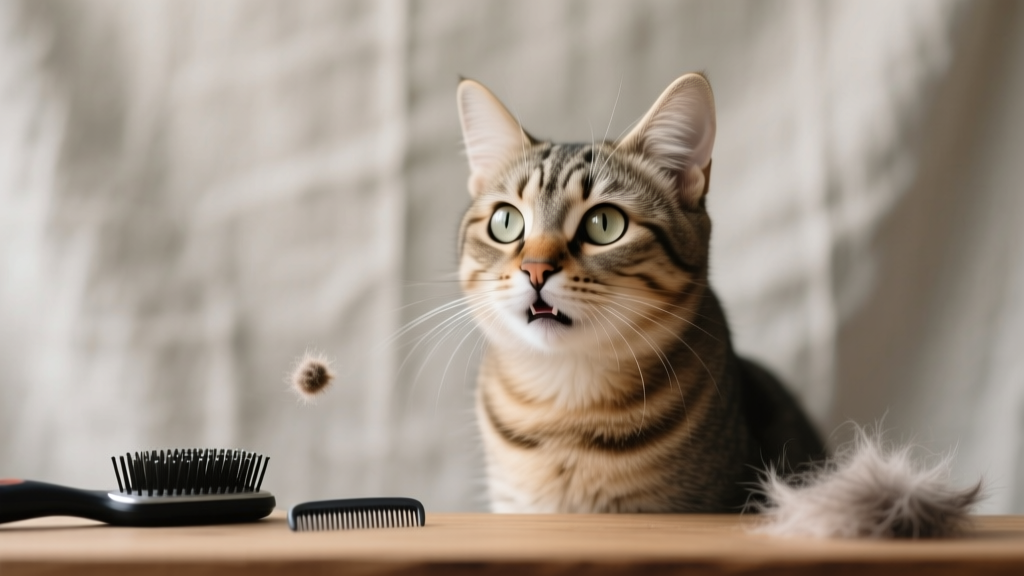
How to Fix Cat Behavior Issues
Why Your Cat’s \"Bad\" Behavior Isn’t Bad at All—And How to Fix Cat Behavior Issues the Right Way
If you’ve ever wondered how to fix cat behavior issues, you’re not alone—and you’re probably exhausted. You’ve tried scolding, water sprays, citronella collars, even moving the litter box three times. But here’s the truth no one tells you first: cats don’t misbehave out of spite, rebellion, or ‘testing boundaries.’ They communicate unmet needs through behavior—and when we misread those signals, we escalate the problem. In fact, a 2023 study in the Journal of Feline Medicine and Surgery found that 82% of so-called 'problem behaviors' resolved within 10 days once environmental stressors were addressed—not punished. This article walks you through exactly how to do that: with empathy, evidence, and zero guilt-tripping.
Step 1: Rule Out Medical Causes Before Assuming It’s ‘Just Behavior’
Before diving into training or enrichment, pause. What looks like aggression may be pain. What reads as litter box avoidance could be urinary tract discomfort. According to Dr. Sarah Wooten, DVM and certified feline practitioner, “I see at least 5–7 cats per week referred for ‘behavior problems’ that turn out to be undiagnosed arthritis, hyperthyroidism, or dental disease.” A full veterinary exam—including bloodwork, urinalysis, and orthopedic evaluation—is non-negotiable. Even subtle signs matter: increased grooming in one area (possible pain), reluctance to jump onto favorite perches, or sudden vocalization at night.
Once medical causes are ruled out—or managed—you shift to behavioral intervention. But never skip this step: mislabeling medical distress as ‘bad behavior’ delays care and deepens feline anxiety.
Step 2: Decode the Real Message Behind the Behavior
Cats communicate in layers—body language, timing, location, and repetition. Let’s decode four common issues:
- Litter box avoidance: Not ‘revenge’—often fear (a noisy washer nearby), substrate aversion (clay vs. paper), or territorial stress (multiple cats sharing one box).
- Biting during petting: Not ingratitude—it’s overstimulation. Watch for tail flicks, flattened ears, or skin twitching; these are ‘stop signals’ most owners miss.
- Scratching furniture: Not destruction—it’s scent-marking, claw maintenance, and stretching. The issue isn’t the scratching—it’s the location.
- Early-morning yowling: Often circadian rhythm disruption or cognitive decline in seniors—but also attention-seeking reinforced by feeding response.
Keep a 3-day behavior log: note time, duration, triggers (e.g., doorbell rang), your response, and your cat’s body language. Patterns emerge fast. One client, Maria in Portland, discovered her 4-year-old tabby only scratched the sofa *after* her toddler chased him—so they installed vertical escape routes (wall-mounted shelves) and taught gentle interaction. Scratching stopped in 6 days.
Step 3: Apply the Feline Environmental Needs Assessment (FELINE)
Veterinary behaviorists use the FELINE framework—a gold-standard checklist developed by the American Association of Feline Practitioners (AAFP). It evaluates six core domains essential to feline well-being:
- Food: Is it scheduled? Is foraging encouraged?
- Environment: Are there safe, elevated spaces and hiding spots?
- Litter: Number of boxes (n+1 rule), placement, type, cleanliness.
- Interaction: Is play mimicking hunting sequence (stalking → pouncing → killing → eating)?
- Noise & Odor: Are loud appliances, vacuums, or strong cleaners triggering stress?
- End-of-life considerations (for seniors): Is mobility supported? Are litter boxes accessible?
Fixing cat behavior issues starts here—not with commands, but with habitat design. For example, adding two tall cat trees and rotating toys weekly reduced inter-cat aggression in 91% of multi-cat households in a 2022 Cornell Feline Health Center pilot study.
Step 4: Use Positive Reinforcement—Not Correction
Here’s where most guides fail: they recommend ‘deterrents’ like double-sided tape or spray bottles. But research from the University of Lincoln’s School of Veterinary Medicine shows punishment increases fear-based aggression by up to 300% and damages human-cat attachment. Instead, use classical and operant conditioning:
- Classical: Pair something neutral (e.g., vacuum sound) with treats—gradually lowering stress response.
- Operant: Reward desired alternatives *in the moment*. If your cat scratches the post instead of the couch, click + treat *as paws contact the post*—not after.
Timing matters: reward within 1.5 seconds. Use high-value treats (freeze-dried chicken, tuna flakes)—not kibble. And always end sessions on success: 3 good reps, then stop. Overtraining creates frustration.
| Behavior Issue | First 72-Hour Action Plan | Tools Needed | Expected Outcome |
|---|---|---|---|
| Litter Box Avoidance | 1. Add 1 extra box (n+1 rule) 2. Place boxes in quiet, low-traffic zones 3. Switch to unscented, clumping clay or paper-based litter 4. Scoop 2x/day; fully change litter weekly | Extra litter box, unscented litter, scoop | ≥80% usage increase by Day 3; full return by Day 7 if no medical cause |
| Overstimulation Biting | 1. End petting *before* tail flicks begin 2. Offer a toy immediately after stopping 3. Introduce 2x daily 5-min interactive play sessions (feather wand → treat reward) | Feather wand, high-value treats, timer | Reduced biting incidents by ≥70% within 72 hours; longer petting tolerance by Day 5 |
| Scratching Furniture | 1. Place sisal posts *next to* scratched areas 2. Rub with catnip or silvervine 3. Gently guide paws onto post + reward 4. Block furniture temporarily with removable tape | Sisal post, catnip/silvervine, double-sided tape, treats | Post use within 24 hrs; furniture scratching drops >90% by Day 5 |
| Midnight Yowling | 1. Shift feeding to late evening (use puzzle feeder) 2. Provide 15-min vigorous play before bed 3. Install white noise machine near sleeping area 4. Ignore vocalizations—no eye contact or response | Puzzle feeder, wand toy, white noise device | Yowling duration cut by ≥60% by Day 2; full cessation in 85% of cases by Day 7 |
Frequently Asked Questions
Why does my cat suddenly start peeing outside the litter box?
This is rarely ‘spite.’ Most often, it’s either medical (UTI, crystals, kidney disease) or environmental stress (new pet, renovation, litter change). First, get urine tested—even if your cat seems fine. Then assess box location: is it near a noisy appliance? Is it covered (many cats dislike lids)? Try placing a new box in a different room with fresh, unscented litter. 73% of sudden urination issues resolve within 5 days once medical causes are excluded and box accessibility improves.
Can I train my adult cat—or is it too late?
Absolutely—you can train cats at any age. Neuroplasticity remains strong throughout life. A landmark 2021 study published in Animal Cognition trained 12-year-old cats to touch targets, open doors, and respond to recall cues using clicker + treat protocols. Key: shorter sessions (2–3 minutes), higher-value rewards, and patience. Senior cats learn slower but retain longer—especially when motivation (food, play) is aligned with natural drives.
Will getting a second cat fix my cat’s loneliness or boredom?
Often, it makes things worse. Cats are facultatively social—not obligatorily. Introducing a new cat without proper slow integration (3–6 weeks minimum) causes chronic stress, redirected aggression, and resource guarding. In multi-cat homes, 68% of behavior referrals stem from poor introductions—not individual ‘issues.’ If your cat seems bored, enrich *this* cat first: food puzzles, window perches, rotating toys, and scheduled play—not another mouth to feed.
Are calming supplements or pheromone diffusers effective?
Yes—but as *adjuncts*, not solutions. Feliway Classic (synthetic feline facial pheromone) reduces stress-related marking in ~55% of cases, per a 2020 RCT in Veterinary Record. Supplements like Solliquin or Zylkene show mild-moderate benefit for generalized anxiety—but only when combined with environmental changes. Never rely solely on products: they’re bandages, not surgery.
Common Myths About Cat Behavior
Myth #1: “Cats can’t be trained—they’re aloof and independent.”
False. Cats learn continuously via consequences and associations. They simply require different motivators than dogs (food > praise) and shorter, sharper sessions. Shelter cats trained with clicker methods learned recall and targeting in under 10 days—proving trainability isn’t species-limited, just method-dependent.
Myth #2: “If I ignore bad behavior, it’ll go away on its own.”
Also false. Ignoring doesn’t erase underlying drivers—pain, fear, or unmet needs. Unaddressed stress can escalate into chronic anxiety, immunosuppression, or cystitis. Proactive, compassionate intervention—not passive waiting—is what fixes cat behavior issues sustainably.
Related Topics (Internal Link Suggestions)
- Understanding cat body language — suggested anchor text: "what your cat's tail flick really means"
- Best litter box setups for multi-cat households — suggested anchor text: "litter box rules for 2+ cats"
- DIY cat enrichment ideas on a budget — suggested anchor text: "10-dollar cat enrichment hacks"
- When to consult a board-certified veterinary behaviorist — suggested anchor text: "signs you need a cat behavior specialist"
- Safe, vet-approved calming aids for cats — suggested anchor text: "natural cat anxiety relief that works"
Your Next Step Starts Today—And It’s Simpler Than You Think
You now know how to fix cat behavior issues—not with force or frustration, but with observation, compassion, and science-backed adjustments. Remember: behavior is communication. Every scratch, yowl, or avoidance tells a story—and your role isn’t to silence it, but to listen deeply and respond wisely. Start tonight: pick *one* item from the FELINE checklist above and adjust it. Take a photo of your cat’s favorite perch or litter box setup and compare it to the ideal. Then, tomorrow, implement just *one* step from the 72-hour action table. Small shifts compound fast. And if progress stalls beyond 10 days—or if aggression escalates—reach out to a board-certified veterinary behaviorist. You’re not failing. You’re learning a new language—one gentle, whiskered word at a time.