Cat Paw Swatting at the Mobile Above the Crib
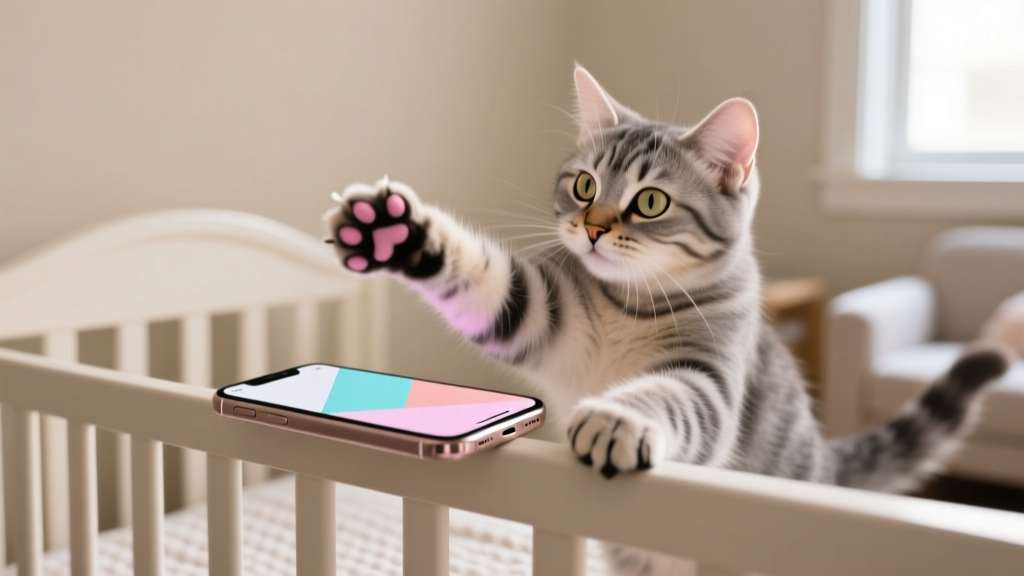
You’re walking past the nursery and you hear that familiar soft thwap-thwap—not the baby, not the fan—your cat. There they are: perched like a tiny, fuzzy guardian on the dresser or standing at the edge of the crib (hopefully not in it), casually swatting the mobile as it spins overhead. Maybe they do it with one careful paw, like they’re testing the laws of physics. Maybe they slap it with dramatic flair, sending little felt moons wobbling like startled prey. And if you’re a cat owner and a new parent, you’re probably thinking: “Is this… cute? Concerning? A sign my cat is jealous of the baby? Also, why is the nursery suddenly a cat entertainment center?”
The good news: paw-swatting at a crib mobile is one of the most understandable cat behaviors on the planet. The even better news: once you know what’s going on in your cat’s head, you can set boundaries that keep everyone safe—baby included—without making your cat feel like they’ve been fired from their self-appointed job as household quality-control officer.
Why Cats Do This: The Science and the “Tiny Hunter” Inside Your Cat
Cats are predators built for stalking and pouncing on small, moving targets. Their brains light up when something flutters, bobs, spins, or skitters. A mobile is basically a prey simulator designed by a committee of “things cats cannot resist”:
- Movement: Even slow, gentle rotation is enough to trigger a cat’s tracking instincts.
- Unpredictability: A mobile doesn’t move the same way every time—air currents, footsteps, and the cat’s own swats make it wobble.
- Dangly shapes: Hanging objects mimic birds, insects, or tails—classic feline attention magnets.
- Height and “hunt theater”: Elevated targets mimic prey perched out of reach. Cats love working for a reward, even when the reward is just the satisfaction of making it wiggle.
From an evolutionary perspective, batting at moving objects is practice. Kittens do it to refine coordination, timing, and bite inhibition. Adult cats keep the habit because it’s mentally stimulating and, frankly, fun. Your cat isn’t thinking, “This is a baby’s décor.” Your cat is thinking, “The ceiling has deployed interactive prey.”
What Paw-Swatting Looks Like in Different Contexts
Not all swats are created equal. The way your cat swats—and when—can tell you what they’re getting out of the experience.
1) The Gentle Tap: “I’m Investigating”
This is the slow-motion paw reach, maybe with the toes splayed a bit, claws usually sheathed. Your cat might watch the mobile rotate, tap it once, then pause to see what happens. This is curiosity mixed with “science experiment.”
Typical scenario: You’ve just installed the mobile, and your cat appears within minutes like they received a push notification. They tap the dangling cloud, then stare at it as if it owes them answers.
2) The Rapid-Fire Slap: “I’m Hunting”
Quick swats in succession, body slightly crouched, eyes wide, ears forward. This is play that’s very close to hunting practice.
Typical scenario: It’s evening zoomies hour. The nursery door is open. Your cat sees the mobile move and goes full “professional athlete” on it.
3) The Hook-and-Pull: “I Want to Own This”
Your cat uses a paw like a little grappling hook to pull the mobile closer. This is a common “capture” behavior—bring prey into bite range.
Typical scenario: Your cat swats, catches a string or felt piece, and tugs. You hear a suspicious rattle that says, “Something is being stolen.”
4) The Sit-and-Swat: “I’m Self-Soothing (and Entertained)”
Some cats use repetitive play as a calming ritual. If your cat sits comfortably and swats in a relaxed rhythm, it may be their version of a stress ball.
Typical scenario: The house is louder than usual (new baby life!), and your cat seeks a familiar, predictable activity.
5) The “Only When You’re Holding the Baby” Swat
This one can feel personal. Often it’s not jealousy—more commonly it’s a bid for attention or a reaction to changed routines.
Typical scenario: You’re rocking the baby, the mobile is moving, and your cat decides this is prime time to participate. They may be drawn to the motion and to being near you, their favorite resource.
What It Means About Your Cat’s Mood and Feelings
Paw-swatting at a mobile can mean a few different emotional states, and your cat’s body language will fill in the blanks.
- Playful and engaged: Loose body, tail up or gently swishing, ears forward, whiskers neutral-to-forward. This is “I’m having a great time.”
- Curious and alert: Still posture, focused gaze, slow swats. This is “I’m gathering data.”
- Overstimulated: Twitchy tail, ears rotating or flattening, rapid biting/grabbing, dilated pupils. This can flip from fun to frantic.
- Seeking comfort: Calm, repetitive swats, maybe with purring. This can be self-soothing in a busy household.
- Frustrated: Intense staring, repeated attempts to catch the unreachable, vocalizing. This can happen if the mobile is exciting but the “hunt” never resolves.
One important note for new parents: a cat engaging with the mobile is not automatically a sign they’re upset about the baby. More often, it’s simply a cat responding to movement. That said, the nursery may become emotionally “charged” as routines change—so keep an eye on overall stress signals in the household.
Related Behaviors You Might Also Notice
If your cat is a mobile-swat enthusiast, you may see them do similar things elsewhere:
- Batting at dangling strings, hoodie ties, or blinds cords (classic prey-substitute targets)
- Swatting at your phone screen when something scrolls quickly
- “Chattering” at birds outside the window (predatory excitement)
- Ambushing your feet when you walk by (movement triggers)
- Knocking objects off surfaces to create motion (gravity is a toy dispenser, apparently)
- Staring at ceiling fans or floating dust (micro-movements matter to cats)
When It’s Normal (Most of the Time) vs. When It Might Be a Concern
Normal: Occasional swatting, playful curiosity, brief bouts of attention, no signs of escalating stress. Your cat is entertaining themselves and practicing coordinated movement.
Potential concerns:
- Safety hazards: If your cat can jump into the crib, get tangled in strings, or pull parts down. Nursery items often have cords, plastic pieces, or small parts that are risky for cats and babies.
- Obsessive behavior: If your cat fixates for long periods, seems unable to disengage, or becomes agitated when prevented. This can signal stress or insufficient enrichment elsewhere.
- Aggression or redirected frustration: If your cat becomes rough, bites hard, or attacks hands/feet after being interrupted. Overarousal can spill over.
- Compulsive patterns: Repetitive swatting with a “trance-like” quality, especially if paired with overgrooming or pacing. Worth discussing with your vet or a behavior professional.
- Sudden behavior change: If an older or usually calm cat abruptly becomes hyper-fixated, consider a vet check to rule out underlying issues (pain, cognitive changes, or sensory changes).
How to Respond (and How to Encourage It Safely)
You don’t have to choose between “cat gets all the fun” and “nursery becomes a no-cat zone forever.” The goal is safe, appropriate outlets for your cat’s instincts.
1) Make the Crib and Mobile Cat-Inaccessible
- Close the nursery door when you can, especially during naps and at night.
- Use a crib canopy or cover only if it’s designed for safe infant sleep standards—always prioritize baby safety guidelines.
- Adjust the mobile height so it’s out of reach from any nearby furniture your cat could use as a launchpad.
- Remove the mobile when not in use if your cat is persistent and you can’t supervise.
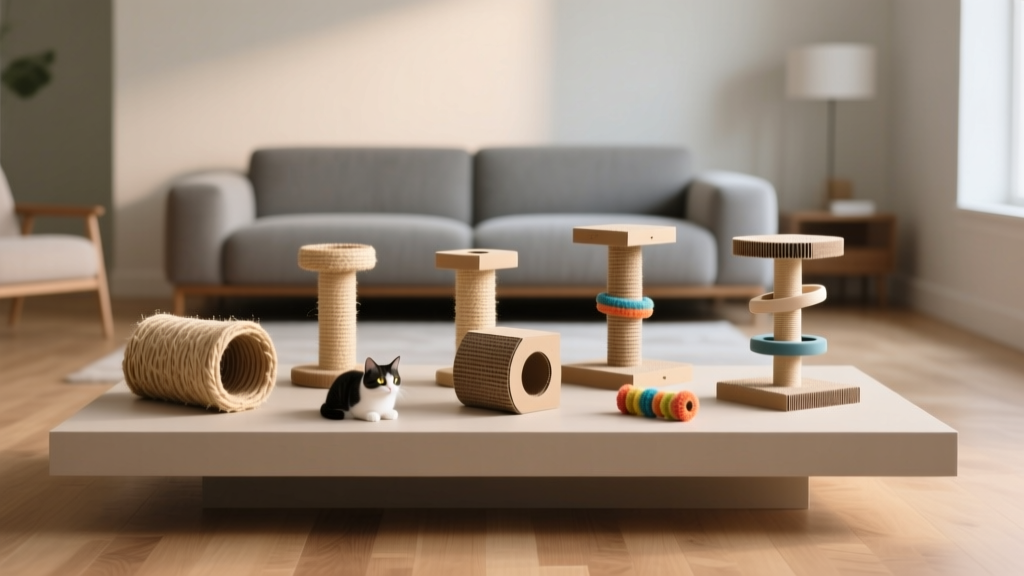
2) Provide a “Yes” Toy That Scratches the Same Itch
If your cat loves the mobile, they love dangly movement. Give them a legal version:
- Wand toys with feathers or ribbons (supervised only)
- Hanging doorway toys designed for cats (check durability and safety)
- Interactive toys that flutter or skitter unpredictably
- Food puzzles to satisfy hunting and “catch” instincts in a calmer way
3) Build a Mini “Hunt Routine” Each Day
Ten minutes of structured play can dramatically reduce “nursery entertainment patrol.” Try: stalk → chase → pounce → catch → reward (a treat or meal). Cats feel satisfied when the sequence ends with success.
4) Reward Calm Choices Near the Nursery
If your cat sits quietly outside the nursery or chooses a nearby cat tree instead of the crib area, reinforce that with calm praise or a small treat. You’re teaching them: “Good things happen when you’re near the baby area and relaxed.”
5) Avoid Punishment—It Raises the Drama
Spraying water or yelling can make the nursery feel scary or unpredictable, and it can increase stress. Stress is a known fuel for attention-seeking and compulsive behaviors. Instead, manage access and redirect to acceptable play.
Fun Facts and Research-Flavored Nuggets
- Cats are movement specialists: Their vision is tuned to detect motion, especially in lower light. A gently rotating mobile can be more compelling than a still toy.
- Whiskers help “measure” the catch: When your cat swats and leans in, whiskers act like sensory antennas to assess distance and object position.
- Paw preference is real: Many cats show a left- or right-paw preference (a bit like handedness). Watch the swats—you might discover your cat’s “dominant paw.”
- Play is practice, even for adults: While kittens play to develop skills, adult cats use play for mental enrichment and stress relief—especially in indoor environments.
FAQ: Cat Paw Swatting at the Mobile Above the Crib
1) Is my cat jealous of the baby?
Sometimes cats do feel stressed about changed routines, but swatting at a mobile is most often about movement and play, not rivalry. Look at the bigger picture: appetite, hiding, litter box habits, and overall clinginess or avoidance. If those change significantly, then you’re dealing with stress—not just “mobile mania.”
2) Should I let my cat in the nursery at all?
Many families choose controlled access when they can supervise, and no access during sleep. The safest approach depends on your cat’s behavior (jumping into the crib, chewing strings, etc.) and your household setup. If your cat is fixated on the crib or mobile, limit access and provide alternatives.
3) Why does my cat only swat the mobile at night?
Cats are naturally crepuscular—most active at dawn and dusk. Nighttime also tends to be quieter, so small motions and sounds stand out more. Plus, if your evening routine is busy, your cat may be entertaining themselves when things finally settle.
4) Can a crib mobile be dangerous for my cat?
It can be. Strings, elastic, small parts, and plastic pieces can pose choking or ingestion risks. If your cat grabs and bites or tries to pull it down, treat it like an unsafe toy—remove it when unsupervised and switch to cat-safe enrichment.
5) My cat gets worked up and bites after swatting. What should I do?
That’s often overarousal. End the interaction calmly, redirect to a wand toy away from the crib, and finish with a treat to “complete” the hunting sequence. If biting is frequent or intense, consider a consultation with your vet or a qualified cat behavior professional.
6) Will my cat grow out of it?
Some cats lose interest as the novelty fades, but many will always be attracted to dangly movement. You’ll have the best results by preventing access to the mobile and providing a consistent alternative play outlet.
Cat paws were made for batting at the world—your baby’s mobile just happens to be a world-class target. With a little management and a lot of appropriate enrichment, you can keep the nursery peaceful, keep your cat’s instincts satisfied, and avoid turning bedtime into a slapstick comedy routine.
Has your cat appointed themselves as the official crib-mobile “tester”? Share your funniest (or most puzzling) nursery-cat moments with us on catloversbase.com—we love a good story, especially the kind that includes dramatic swats and offended whiskers.