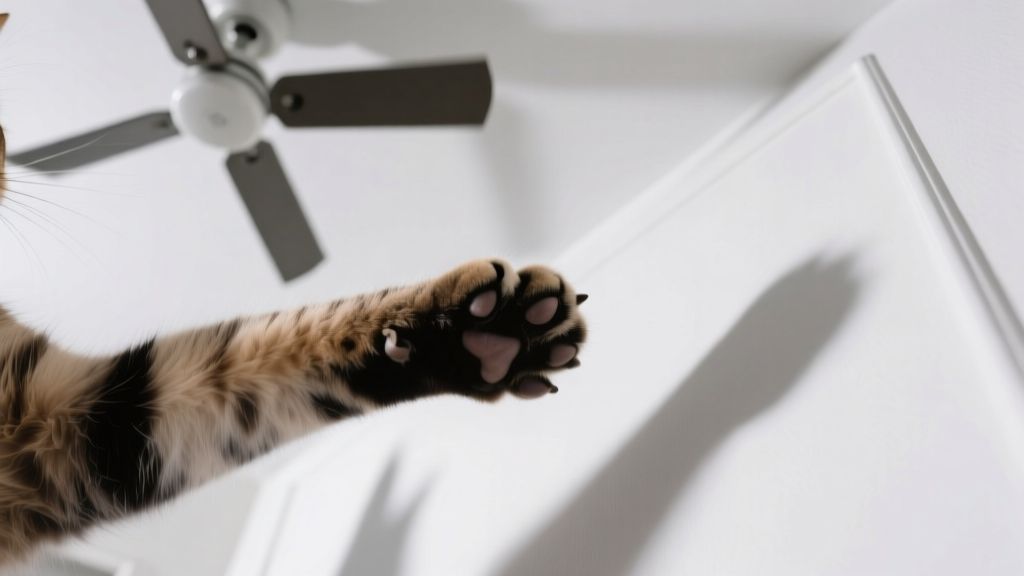
Cat Paw Swatting at Ceiling Fan Shadows
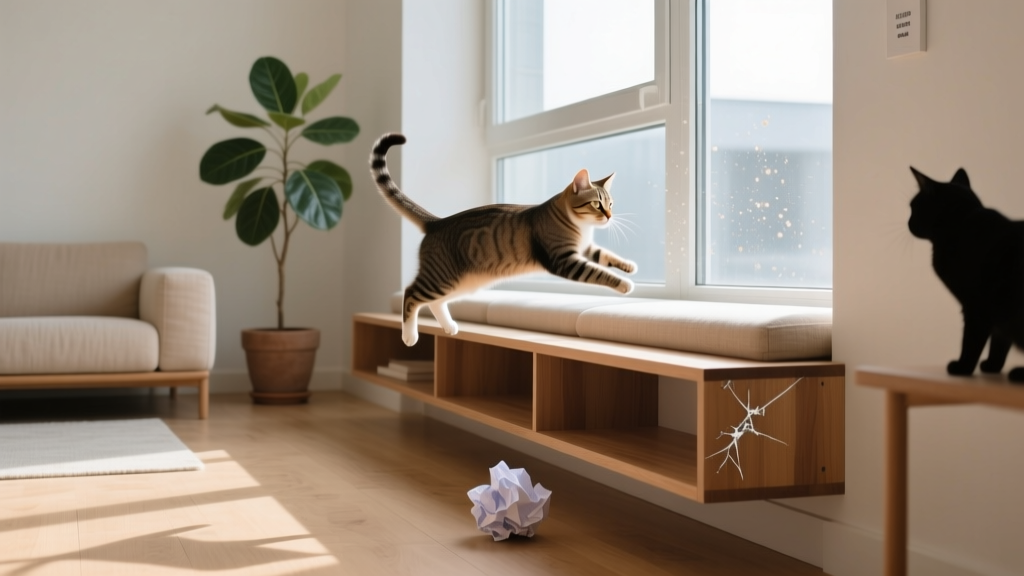
You’re sitting on the couch, minding your own business, when you hear it: thwap… thwap… thwap. You glance over and there’s your cat—eyes huge, whiskers forward, body slightly crouched—punching the air like a tiny boxer. Above them, the ceiling fan spins lazily, tossing a flickering shadow across the wall or ceiling. Your cat swats, misses, swats again, then does that adorable “I meant to do that” reset: a quick lick, a blink, a sudden look of profound innocence.
If you’ve ever wondered why a perfectly sensible feline would throw paws at something that isn’t even there, you’re in very good company. Ceiling fan shadows are one of those everyday “cat TV” moments that reveal a lot about how cats think, hunt, and manage big feelings in a small living room.
Why Cats Swat at Ceiling Fan Shadows (The Science and the Ancient Cat Brain)
At the core, this behavior is a classic blend of predatory instinct and sensory wiring. Cats evolved as small, efficient hunters. Their brains are tuned to notice movement—especially quick, irregular, fluttery movement—because in nature that often equals prey.
A ceiling fan shadow is basically a perfect prey-mimic:
- It moves. Movement is the #1 attention magnet for a predator.
- It flickers. That intermittent, strobe-like effect resembles wings, skittering legs, or a darting tail.
- It changes direction and speed. Depending on the light source and fan speed, the shadow can “zip” unexpectedly.
- It’s untouchable. Which means it triggers repeated attempts—because the “hunt” never resolves.
From a feline perspective, that shadow is suspicious. It might be a bug. It might be a small animal. It might be something worth practicing on. Cats don’t need a logical reason; they need a movement pattern that hits the “maybe prey” button in their brain.
There’s also a kitten-development angle: young cats (and playful adults) learn coordination through pouncing, tracking, and batting. Shadow-chasing is essentially a built-in training game. Your cat is doing drills.
A Behavior Breakdown: Different Contexts You Might See
Not all shadow-swatting looks the same, and the details can tell you what’s driving it.
1) The “Seated Slap” (Low-Effort Batting)
Your cat is lounging, casually reaching up to swat once or twice, then going right back to loaf mode. This is usually light play—like someone tapping a balloon. It’s entertainment, not a life mission.
2) The “Stalker Pose” (Hunt Mode)
Body low, tail tip twitching, eyes locked on the moving shadow. You may see slow-motion creeping or that butt-wiggle before a jump. This is your cat’s predatory sequence switching on: orient → stalk → pounce → swat. The shadow is fulfilling the “chase” part of the cycle.
3) The “Vertical Obsession” (Wall/Corner Fixation)
Some cats become intensely focused on a particular corner where the shadow pattern is strongest. They’ll track it repeatedly, sometimes vocalizing or chirping. This often means the movement is hitting your cat’s “tiny prey” template perfectly—especially if the light creates a crisp, fast-moving shape.
4) The “Night Shift” (Only Happens at Certain Times)
You might notice swatting spikes at dusk or nighttime when indoor lights are on and the shadow becomes sharper. Cats are naturally crepuscular (most active at dawn/dusk), so their brains are already primed for hunting practice during those hours.
5) The “Zoomies + Shadows Combo” (High Arousal)
If your cat is racing around, then suddenly stops to attack the wall-shadow like it personally insulted them, that’s often pent-up energy. The shadow becomes an outlet for a body that wants to run and pounce.
What This Behavior Says About Your Cat’s Mood
Swatting at ceiling fan shadows can mean a few different things emotionally. Watch the whole cat, not just the paw.
- Playful and engaged: Loose body, gentle swats, ears forward or neutral, relaxed tail. This is a happy “I’ve found a game.”
- Curious and investigative: Head tilts, slow blinks between swats, sniffing the wall afterward. Your cat is testing reality: “Is it alive?”
- Frustrated: Repeated intense swats, tense body, sudden tail lashing, over-and-over jumping with no pause. Shadows can be impossible to “catch,” and some cats get irritated by an unwinnable hunt.
- Overstimulated or stressed: Dilated pupils, twitchy skin, abrupt biting at nearby objects, growling, or seeming unable to disengage. This is less “fun game,” more “my nervous system is stuck on ON.”
Most of the time, ceiling-fan shadow swatting is normal enrichment. The key is whether your cat can stop and settle, or whether they spiral into agitation.
Related Quirky Behaviors You Might Also Notice
If your cat is a ceiling-fan shadow enthusiast, you may see these cousins of the same instinct:
- Laser pointer obsession: Similar issue—movement triggers hunting, but there’s no capture unless you provide one.
- Chasing reflections: Sunbeams bouncing off watches, phones, or mirrors can create “prey-like” motion.
- Chattering at birds: That rapid “ek-ek-ek” sound often shows high arousal and hunting excitement.
- Batting at dust motes: Floating particles in sunbeams are tiny, unpredictable targets.
- Ambushing feet under blankets: Motion + mystery = irresistible.
These behaviors often cluster in cats who are playful, intelligent, and easily stimulated by movement.
When It’s Normal (and When It Might Be a Concern)
Normal:
- It happens occasionally, especially during active times of day.
- Your cat can be redirected with a toy or treat.
- They stop on their own and return to normal activities (eating, grooming, resting).
- There’s no sign of panic, aggression, or compulsive repetition.
Potential concern:
- Compulsive pattern: Your cat spends long periods fixated, repeating the behavior frequently and seeming unable to disengage.
- Escalating frustration: They begin attacking people, other pets, or objects after failing to “catch” the shadow.
- Sudden change in behavior: A normally calm cat becomes intensely reactive to shadows, lights, or movement.
- Signs of anxiety: Hiding, overgrooming, appetite changes, or increased vigilance paired with the shadow-chasing.
- Possible vision or neurological issues: If your cat seems disoriented, startles excessively, or reacts oddly to normal light patterns, check in with your vet.
If you’re ever unsure, a quick video of the behavior can be incredibly helpful for your veterinarian or a qualified cat behavior professional. “Shadow swatting” can be normal, but context matters.
How to Respond (Without Accidentally Creating a Shadow Addict)
You don’t need to stop a cat from being a cat. But you can shape the experience so it stays fun and doesn’t become frustrating.
1) Offer a “Catchable” Alternative
If your cat is getting intense, redirect to a wand toy with feathers or fabric. The goal is to provide the same thrill—movement, stalking, pouncing—but with a satisfying ending: they can actually catch it.
2) Add a Hunt-Play-Food Cycle
Many cats settle best when play ends with a small snack or meal. In nature, hunting ends with eating. A few minutes of play followed by food can help your cat’s nervous system switch from “hunt mode” to “rest mode.”
3) Control the Environment if Needed
If the shadow triggers wild overarousal (especially at night), consider:
- Changing light placement to reduce sharp flicker patterns.
- Using softer lampshades or indirect lighting.
- Turning the fan off during high-energy evening hours if it’s becoming a daily battle.
4) Don’t Reinforce the “Frantic” Version
If your cat is spiraling—panting, whipping their tail, unable to stop—avoid hyping them up with loud laughter, excited voices, or constant attention right then. Instead, calmly redirect to an appropriate toy, or lower stimulation (dim lights, quiet environment) and help them settle.
5) Build Enrichment into the Day
Cats who have regular outlets for chasing and problem-solving are less likely to become fixated on “uncatchable” targets. Puzzle feeders, short play sessions, window perches, and rotating toys can make a big difference.
Fun Facts and Research-Flavored Nuggets
- Cats are movement specialists. Their visual system is especially tuned to detect motion, which is why a bland room can become fascinating the moment light starts flickering.
- Play is practice. In kittens, play behaviors (stalking, pouncing, batting) help develop hunting skills and coordination. Adult cats keep these behaviors because they’re useful—and because they’re rewarding.
- Unfinished hunts can be frustrating. With laser pointers and shadows, there’s often no “capture.” Many behaviorists recommend ending light-chasing games with a tangible toy or treat to provide closure.
- Some cats are more visually triggered than others. Personality, early experiences, energy level, and environment all influence whether a cat becomes a dedicated shadow hunter or a casual swatter.
FAQ: Cat Paw Swatting at Ceiling Fan Shadows
Is my cat bored if they swat at ceiling fan shadows?
Not always, but it can be a hint. Many cats do it simply because it’s interesting. If it happens constantly, especially with other signs of restlessness (nighttime zoomies, attention-seeking, pestering), adding more daily play and enrichment is a good idea.
Should I stop my cat from doing this?
If it’s occasional and your cat stays relaxed, it’s normal play. If your cat becomes frantic, frustrated, or starts redirecting that energy into biting or scratching, then it’s worth managing the trigger (light/fan) and offering structured play instead.
Can shadow chasing cause anxiety or OCD-like behavior?
It can contribute to compulsive patterns in a small number of cats, especially if the cat is already prone to anxiety or has limited outlets for hunting behavior. If your cat seems unable to disengage, talk to your vet and consider consulting a feline behavior professional.
Why does my cat chirp or chatter at the shadow?
Chirping/chattering often shows high arousal and hunting excitement—similar to when cats watch birds. The shadow is triggering that “prey is right there!” feeling, even though it isn’t truly catchable.
Is it okay to use a laser pointer instead?
Laser pointers can be fine if used thoughtfully: keep sessions short, avoid shining it in eyes, and always end with a physical toy or treat your cat can “catch.” Otherwise, some cats get frustrated by the never-ending chase.
My cat only does this at night—why?
Two common reasons: the shadow is sharper under indoor lighting, and cats often get their biggest burst of playful energy at dusk and evening. A short play session before bedtime can reduce nighttime shadow-hunting marathons.
A Final Thought
That ceiling fan shadow may look like nothing to you, but to your cat it’s a moving mystery—part prey, part puzzle, part workout routine. When you understand the instinct behind it, you can respond in a way that keeps your cat confident, satisfied, and just the right amount of mischievous.
Has your cat ever launched a full aerial attack on a fan shadow (or sworn vengeance on a sunbeam)? Share your funniest and strangest shadow-swatting stories with the Cat Lovers Base community at catloversbase.com.