Cat Paw Reaching Into the Laundry Hamper: Nest
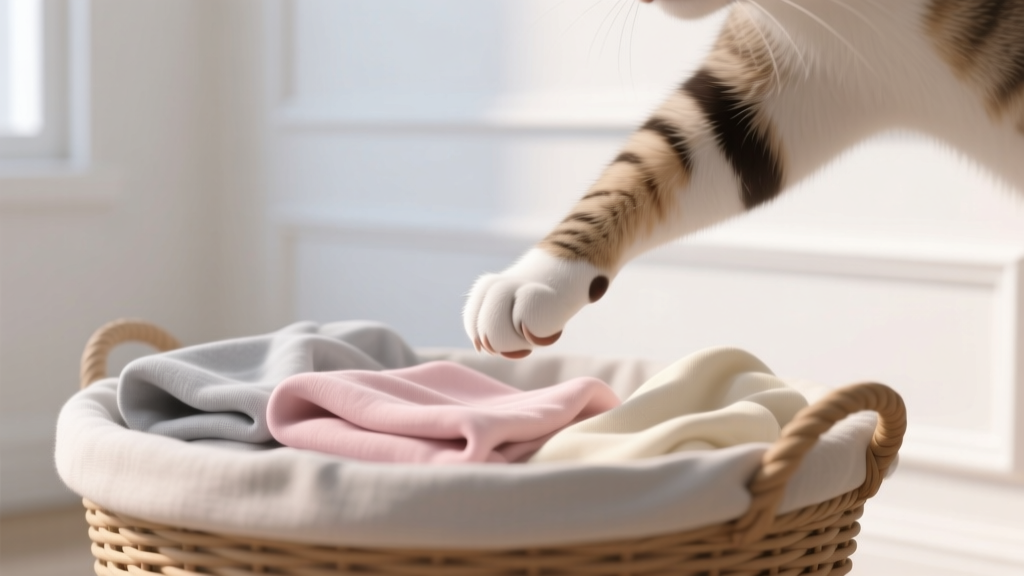
You’re folding clothes (or pretending to), and you catch a flash of fur out of the corner of your eye. Your cat is posted beside the laundry hamper like a tiny raccoon, slowly threading one paw through the holes. Scratch-scratch. Pause. Another careful reach. Then—victory—your sock gets snagged and dragged closer like a prized catch. Sometimes they even lean in, nose first, inhaling the “Eau de You,” and then curl up beside the hamper as if they’ve discovered a five-star suite.
If you’ve ever wondered why your cat is so determined to fish through dirty laundry—especially with that focused, almost surgical paw technique—you’re not alone. This behavior is common, surprisingly logical from a cat’s point of view, and often connected to a simple goal: building a cozy, safe “nest” that smells like home.
Why Cats Reach Into the Laundry Hamper (The Evolutionary Angle)
Cats are masters at creating comfort and security from whatever environment they’re in. In the wild, the ancestors of our domestic cats survived by being both predator and prey. That means they evolved strong instincts for:
- Seeking sheltered spots where they could rest without being surprised
- Testing unfamiliar spaces cautiously before fully committing their whole body
- Collecting comforting scents that signal safety and belonging
A laundry hamper checks a lot of those boxes. It’s a contained “den-like” structure (even if it’s a plastic basket from Target), often tucked in a quiet corner, and filled with soft fabric that holds scent. To a cat, that can feel like a ready-made nest site—warm, padded, and smelling strongly of their favorite humans.
The paw-reaching part is also very cat. Their paws are sensitive tools. Using a paw to explore is safer than sticking their face or whole head into a dark, enclosed space. Think of it as a built-in risk management strategy: “Let me poke around first. If it’s weird, I can pull back instantly.”
A Detailed Breakdown: Different “Laundry Hamper Paw” Contexts
Not all hamper-fishing is the same. The meaning can shift depending on what’s happening in your home and what your cat does next.
1) “I’m Nesting” Pawing
This is the classic: slow, methodical reaching, sometimes followed by kneading, circling, or settling nearby. Your cat may tug one or two items toward a preferred spot—like they’re customizing the bedding situation.
What it looks like: deliberate paw scoops, gentle grabbing, rearranging fabric, then curling up.
What it’s about: creating a comfortable resting zone that smells familiar.
2) “I’m Hunting” Pawing
Some cats treat the hamper like a mystery box full of potential prey. Socks and sleeves move unpredictably when tugged; clothing holes create “burrows” that hide intriguing things; and the whole setup rewards persistence.
What it looks like: rapid paw strikes, intense staring, pouncing at the hamper, biting clothes, bunny-kicking a T-shirt like it’s offended them personally.
What it’s about: play predation and mental stimulation.
3) “I Miss You” Pawing
This one is quietly sweet. Cats use scent as an emotional anchor. If you’ve been traveling, working long hours, or even just changed your routine, your cat may seek out your strongest scent source: worn clothing.
What it looks like: sniffing deeply, drooling a little (some cats do this when very relaxed), rubbing cheeks on the hamper edge, or choosing to nap right next to it.
What it’s about: self-soothing and reconnecting with your “family scent.”
4) “I Want Attention” Pawing
Hamper pawing can also be a reliable attention magnet. If your cat has learned that fishing out socks makes you laugh, talk to them, chase them, or engage in a playful tug-of-war, the behavior can become a repeat performance.
What it looks like: dramatic, noisy rummaging while looking back at you like, “Are you seeing this?”
What it’s about: social interaction and reinforcement—your reaction makes it worth it.
What This Behavior Says About Your Cat’s Mood
Your cat’s body language will tell you whether the hamper is a comfort project, a play zone, or something more intense.
- Relaxed and content: slow movements, soft eyes, kneading, purring, choosing to lie down near or in the laundry.
- Playful and excited: quick pawing, “butt-wiggle” before pouncing, tail swishing in a loose way, hopping sideways like a tiny weirdo (affectionate).
- Stressed or seeking security: more frequent checking of the hamper, hiding in laundry, staying close to your scent, tense posture, ears rotating back and forth, crouching.
- Overstimulated or frustrated: aggressive biting of fabric, growling if you approach, stiff tail flicks, dilated pupils for a prolonged time.
Most of the time, hamper pawing is a sign your cat feels comfortable enough to be curious—and that your scent is rewarding to them. It’s oddly flattering when you think about it: your gym shirt is, in their opinion, premium emotional support material.
Related Behaviors You Might Also Notice
If your cat loves the hamper nest, you may see a whole constellation of scent-and-comfort behaviors:
- Kneading blankets (often before settling down)
- Sleeping on your worn clothes instead of the expensive cat bed you bought with hope in your heart
- Cheek rubbing (bunting) on hamper edges, door frames, or your legs to deposit friendly pheromones
- Burrowing under sheets or into piles of laundry
- Stealing socks or underwear and relocating them to a “nest” site
- Sniffing your shoes like a serious investigator
All of these are variations on the same themes: scent, comfort, and the feline desire to control their environment.
When Hamper Pawing Is Normal… and When It Might Be a Concern
Normal: occasional rummaging, gentle nest-making, playful sock fishing, sleeping near laundry, and mild rearranging of clothes.
Potential concern:
- Eating fabric (pica): If your cat chews and swallows threads, elastic, or pieces of clothing, that’s a medical risk (intestinal blockage) and warrants a vet call promptly.
- Sudden obsession: If a cat who never cared about laundry becomes fixated overnight—especially paired with hiding more, appetite changes, or irritability—consider stress, illness, or environmental changes.
- Over-grooming near the hamper: If they lick or chew themselves excessively while nesting, it may reflect anxiety.
- Aggression around the hamper: Guarding the hamper, swatting, or growling could mean they’re feeling insecure or overly aroused by play.
If you’re unsure, take a quick video for your vet or a cat behavior professional. Context is everything, and a short clip can be incredibly informative.
How to Respond (And How to Encourage the Cute Version)
You don’t need to “correct” this behavior in most cases. Instead, you can channel it safely and make your home even more cat-friendly.
1) Offer a Safer Nest Alternative
If the hamper is a favorite because it’s cozy and smells like you, create a designated “laundry-scent” nest:
- Place a soft bed or blanket in a quiet corner
- Add a worn T-shirt or pillowcase (nothing with loose strings)
- Rotate items occasionally to refresh the scent
2) Keep Hamper Access Intentional
If you don’t want your cat inside the hamper (maybe you’re worried about accidents, chewing, or sheer chaos), choose a hamper with a secure lid or keep the laundry door closed. Consistency matters: if sometimes it’s allowed and sometimes it’s not, cats can turn the hamper into a part-time sport.
3) Turn “Hamper Hunting” Into Appropriate Play
If your cat is clearly in hunting mode, meet the need:
- Try wand toys that mimic prey movement
- Toss a soft “kicker” toy they can grab and bunny-kick
- Use puzzle feeders to satisfy foraging instincts
A good rule: hunt (play) → catch → eat → groom → sleep. If your cat only gets the “hunt” part via laundry ambush, they may stay revved up.
4) Don’t Reinforce the Wrong Version
If your cat has learned that pulling underwear out gets a big reaction, your laughter (or chasing) can act like a reward. If you want the behavior to decrease, keep your response boring: calmly replace the item, redirect to a toy, and praise/engage when they choose an approved spot.
5) Watch for String Hazards
Drawstrings, dangling elastic, and loose threads can be dangerous if swallowed. If your cat is a dedicated chewer, keep laundry secured and provide safe chew alternatives (ask your vet for suggestions if pica is suspected).
Fun Facts and Research-Style Nuggets
- Cats navigate heavily by scent. Your worn clothes carry a concentrated blend of you plus the home environment—basically a scented “safe zone” in fabric form.
- Whiskers and paws are sensory superstars. Reaching into a hamper is like using a sensitive probe: they can detect textures, movement, and space without fully entering.
- “Nesting” isn’t just for mothers. While nesting is often discussed around pregnancy or kittens, many cats (male and female) show nest-building preferences because it improves comfort and security.
- Enrichment reduces mischief. Studies on cat welfare consistently point to environmental enrichment (play, climbing, hiding, foraging) reducing unwanted behaviors—so the hamper obsession sometimes improves when their “cat needs” are met elsewhere.
FAQ: Cat Paw Reaching Into the Laundry Hamper
Why does my cat pull my socks out of the hamper?
Socks are easy to snag, strongly scented, and fun to “capture.” Your cat may be building a nest, playing hunter, or simply repeating a behavior that reliably gets attention.
Is it normal for my cat to sleep in dirty laundry?
Yes—many cats find your scent comforting and the fabric warm. It’s usually normal unless your cat is ingesting fabric, hiding excessively, or showing other stress signs.
My cat kneads the laundry after pawing it. What does that mean?
Kneading is a comfort behavior linked to kittenhood (nursing) and relaxation. In adult cats it often appears when they’re settling into a cozy, safe resting spot—basically “making the bed” to their satisfaction.
Could my cat be anxious if they’re obsessed with the hamper?
Possibly. Increased scent-seeking can happen with stress or change. Look for other clues: hiding more, appetite changes, over-grooming, or increased clinginess. If it’s new or intense, consider a vet check and review recent household changes.
How do I stop my cat from going in the hamper without upsetting them?
Give them an alternative nest with a worn shirt, make the hamper inaccessible (lid/door), and redirect play energy with daily interactive sessions. Reward them for choosing the approved cozy spot.
Should I worry about my cat eating clothing?
Yes. Chewing is one thing; swallowing is dangerous. If you see missing fabric pieces, gagging, vomiting, constipation, or lethargy, contact a vet urgently. Prevent access to laundry and ask your vet about pica and stress support.
That little paw reaching into the laundry hamper can be a window into your cat’s world: a mix of scent-based comfort, den-seeking instincts, and a playful urge to “hunt” whatever mysteries lie beneath the towels. With a few thoughtful tweaks—safer nesting spots, more enrichment, and a watchful eye for chewing—you can keep the behavior adorable (and your socks mostly where they belong).
Does your cat have a signature hamper routine—sock thief, laundry burrower, or dramatic paw-fisher? Share your story (and your best “caught in the act” moment) with the Cat Lovers Base community at catloversbase.com.