Cat Paw Pushing Doors Open: Problem Solving
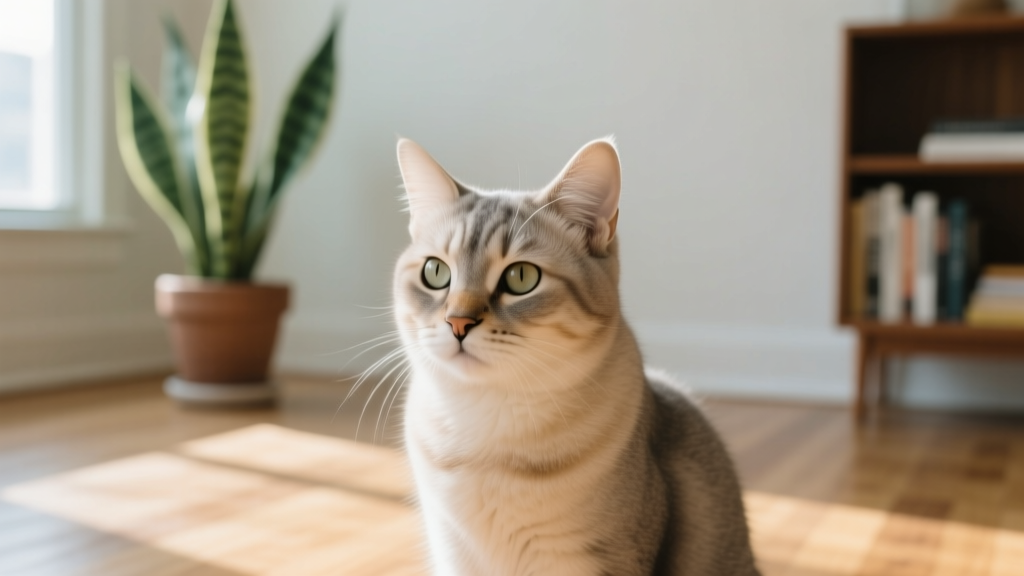
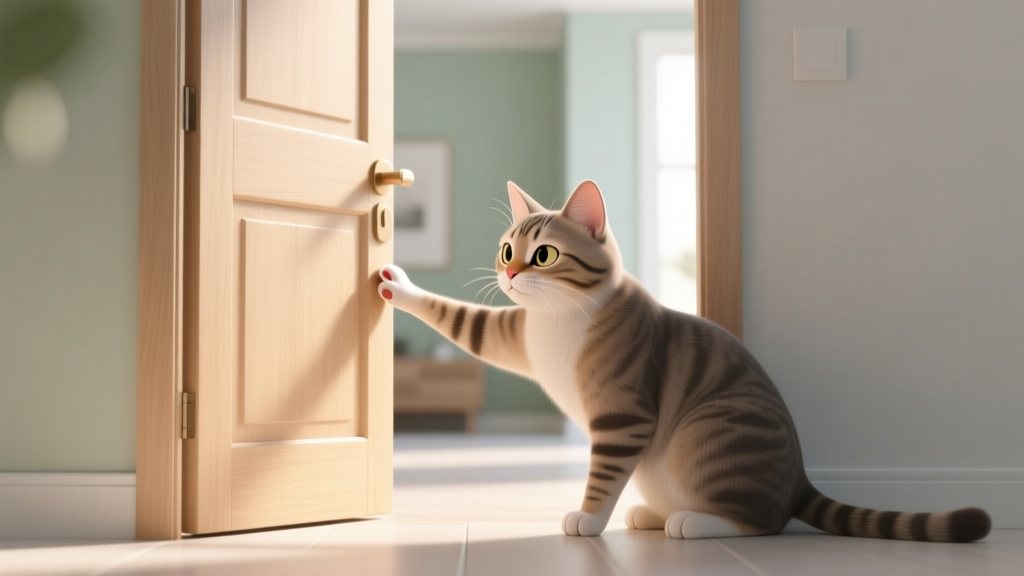
You’re finally settled. Tea? Check. Blanket? Check. Laptop open to something you swore you’d finish tonight? Check. Then you hear it: the soft thump… scrape… thump of a paw hitting the bottom of the door. The handle doesn’t move (because it’s not that kind of door), but the door itself starts to drift open—just enough for one whisker, then a nose, then two wide eyes peering in like, “Oh good, you’re in here.”
If you live with a cat, you’ve likely watched this tiny heist play out. Sometimes it’s subtle and slow, like a safecracker at work. Other times it’s a full-body shoulder-check paired with dramatic yowling. Either way, it’s not random. Door-pushing is a fascinating mix of feline physics, curiosity, social needs, and—yes—problem solving.
Why Cats Push Doors Open (Science, Evolution, and Cat Logic)
Cats are natural-born investigators. In the wild, survival depends on noticing changes in the environment: a shifting scent, a rustle in grass, a new sound in a familiar territory. A closed door is a big, suspicious change. It blocks smell, sound, access, and visibility—all things a cat uses to map their world.
From an evolutionary standpoint, cats are both predators and potential prey. That combination makes them highly motivated to keep tabs on what’s happening around them. A barrier that cuts off information can trigger a need to restore “situational awareness.” Opening a door isn’t just about getting in; it’s also about gathering data: Who’s in there? What are you doing? Is there food? Is there danger? Did a mysterious alternate universe appear behind this wood panel?
Add to that a cat’s excellent learning ability. Cats may not be famous for wanting to please humans, but they’re surprisingly good at learning cause-and-effect, especially when the reward is access, attention, warmth, novelty, or control over their space. If pawing under the door once made it budge, your cat’s brain logged that as: paw + pressure = door moves. And cats love repeatable tricks that get results.
How the Behavior Works: Common Door-Opening “Styles” and Contexts
Door-pushing can look like one behavior, but it shows up for different reasons depending on the context. Here are the most common “why” scenarios I see as a behavior-focused cat person:
1) The “You Closed the Map” Scenario (Territory Management)
Your cat treats your home like a living map made of scent trails, familiar objects, and known routines. A closed door blocks part of that map. If it’s a door that’s usually open—closet, bedroom, home office—your cat may push it open to restore access to a normal route or resource.
Example: You close the bedroom door for a work call. Your cat immediately tries to open it because the bedroom is part of their daily patrol path and preferred nap zone.
2) The “I Hear Something” Scenario (Curiosity + Sound/Smell Motivation)
Cats process the world heavily through scent and sound. If there’s an interesting noise behind the door (running water, crinkling packaging, another pet moving, your voice), it can become irresistible.
Example: You’re in the bathroom and turn on the faucet. Suddenly the paw appears under the door like a tiny plumber demanding entry.
3) The “We’re a Social Species, Actually” Scenario (Attachment + Contact Seeking)
Despite their reputation for independence, many cats form strong social bonds and prefer access to their people. A closed door can feel like unnecessary separation, especially if your cat is used to following you around or sleeping near you.
Example: You close your office door for focus time. Your cat persists because your presence is part of their comfort zone—and because you’re clearly doing something interesting without them.
4) The “Bored Genius” Scenario (Enrichment + Problem Solving)
Some cats push doors open because it’s stimulating. It’s a puzzle with a satisfying outcome. Cats with high energy or high intelligence often create their own “jobs” if we don’t provide enough play, hunting outlets, and novelty.
Example: Your cat opens the pantry door at 2 a.m. not because they’re starving, but because it’s become a hobby… that also occasionally produces snacks.
5) The “I Want What I Want” Scenario (Resource Access)
Sometimes it’s straightforward. Behind that door is food, a litter box, a favorite person, a preferred sleeping spot, or a warm appliance. Cats are excellent at remembering where the good stuff lives.
Example: You shut the door to a room with your cat’s second litter box. They paw it open because that’s a resource, not a luxury.
What Door-Pushing Says About Your Cat’s Mood and Feelings
Think of door-pushing as communication. The same action can mean different emotional states depending on your cat’s body language and intensity.
- Curious and playful: Relaxed tail, soft eyes, quiet pawing, maybe a little chirp. This cat is exploring, not distressed.
- Social and seeking connection: Waiting outside the door, rubbing the frame when it opens, immediately approaching you. The message is: “I prefer together.”
- Frustrated or demanding: Repeated paw strikes, yowling, scratching, escalating intensity. This cat feels blocked from something important or has learned that persistence works.
- Anxious about separation: Distressed vocalizing, pacing, scratching near the handle, maybe even panting in extreme cases. This can point toward separation-related stress.
- Confident and in control: Calmly opening doors as a daily routine. Some cats simply like managing access to space like a tiny security guard.
Pay attention to the first few seconds after the door opens. Does your cat stroll in and flop down (comfort seeking)? Sprint to a resource (goal-oriented)? Or check the room carefully (uncertainty)? That moment is very revealing.
Related Behaviors You Might Also Notice
Cats who push doors open often have other “hands-on” habits:
- Cabinet opening: Pawing at handles, hooking claws under edges, or bumping doors with their head.
- Turning on faucets: Especially if they enjoy running water or have learned it brings you to them.
- Object “fishing”: Reaching under furniture to retrieve toys (or your socks).
- Light scratching at barriers: Not always destructive—sometimes it’s simply tactile investigation.
- Following you everywhere: The cat who escorts you to the bathroom is often the cat who will not respect bathroom privacy.
When Door-Pushing Is Normal (and When It Might Be a Concern)
Normal: Occasional pawing, gentle pushing, curiosity when routines change, or door-opening that seems more like play than panic.
Potential concern:
- Sudden new intensity: If your cat never cared about doors but now obsessively tries to open one, consider what changed (new pet, new schedule, noise, smell, stress).
- Signs of distress: Persistent howling, destructive scratching, panting, drooling, or urinating outside the box near the closed door can indicate anxiety or frustration.
- Access to essential resources is blocked: If the door prevents litter box access, water, or safe resting areas, the behavior is a reasonable protest—and the solution is to adjust the environment.
- Compulsive patterns: Repetitive door checking for long periods with difficulty disengaging can sometimes signal stress-related behavior.
If you’re seeing distress signals, a vet check is a smart first step (pain can reduce tolerance and increase irritability), followed by a behavior plan that reduces anxiety and increases predictability.
How to Respond (and When to Encourage It)
Your response teaches your cat what “works.” The goal is to support healthy curiosity while preventing accidental training of annoying, escalating door battles.
1) Decide your door policy—and be consistent
If a door must stay closed (for safety, allergies, sleep, or protecting a room), aim for consistency. Intermittent access—sometimes the door opens when they paw, sometimes not—often increases persistence because it becomes a slot machine.
2) Meet the need behind the paw
- If it’s attention: Offer scheduled interaction (two 5–10 minute play sessions daily can work wonders). Reward calm behavior, not door-attacking.
- If it’s curiosity: Give your cat approved exploration zones and rotate enrichment: paper bags, boxes, new safe scents, puzzle feeders.
- If it’s resources: Make sure food, water, and litter are always accessible without needing to “break in.”
3) Provide a better job: hunt-play-eat-rest
A lot of “problem behaviors” melt when cats have a reliable outlet for predatory play. Use a wand toy to mimic prey, let your cat catch it, then offer a small meal. A cat who has completed their “hunt” is less likely to invent a door-opening mission at midnight.
4) Train an alternative behavior
Yes, cats can be trained. If your cat paws at the door for entry, teach them to sit on a mat nearby. Reward the mat sit with treats or attention. Over time, “sit here” can replace “slam the door with my paw.”
5) Make doors less rewarding (without scaring your cat)
- Use a secure latch or child-proof lock if safety is an issue.
- Reduce the “mystery” by keeping the door open when possible, or by adding a cat gate for partial access.
- If separation is the issue, increase calm contact time when you’re together, and make alone-time predictable and rewarding (treats, enrichment, cozy spots).
Avoid punishment (yelling, spraying water). It doesn’t teach what to do instead, and it can turn the door area into a stress hotspot—making the behavior worse.
Fun Facts and Research-Style Findings (That Match What You See at Home)
- Cats are persistent learners. When a behavior occasionally pays off, it becomes more resistant to fading. That’s why “fine, I’ll open it” after ten minutes can create a cat who tries for twelve minutes tomorrow.
- Paws are precision tools. Cats use their paws like hands for manipulating objects. Many cats prefer paw-based investigation before committing their whole body.
- Closed doors are sensory barriers. Cats rely on scent and sound to feel informed. Blocking those channels can increase checking behavior, especially in multi-pet homes.
- Some cats learn by watching. If you frequently push doors open with your hand, your cat may experiment with the same “push where it moves” concept—especially on doors that aren’t fully latched.
FAQ: Cat Paw Pushing Doors Open
Why does my cat push the door open but not come in?
Often it’s about information, not entry. Your cat may want to confirm what’s happening, improve scent flow, or reduce the feeling of being shut out—then decide the room isn’t interesting enough to enter.
Is my cat being “dominant” by opening doors?
Usually no. Door-opening is more accurately explained by curiosity, resource access, learned behavior, and a desire for control over their environment. Cats like having options; options feel safe.
How do I stop my cat from scratching under the door?
First, identify the motivation (attention, anxiety, resources, boredom). Then prevent reinforcement (don’t open the door during scratching if possible) and teach an alternative like sitting on a mat. You can also protect the door edge with a draft blocker or barrier strip while you work on the behavior plan.
My cat only does it at night—why?
Cats are naturally crepuscular (most active at dawn and dusk), and nighttime can bring extra energy plus boredom. Add an evening play session, a small bedtime meal, and make sure your cat has enrichment overnight (safe toys, puzzle feeder, cozy perch).
Can door-pushing be a sign of separation anxiety?
It can be, especially if paired with distress vocalizing, elimination outside the box, destructive behavior, or intense clinginess when you return. A vet check and a behavior plan can help, and in some cases medication support is appropriate.
Should I encourage my cat’s problem-solving?
Encourage the brain, yes—just redirect it. Puzzle feeders, clicker training, treat hunts, and “find it” games channel that cleverness into activities you’ll both enjoy, rather than into jailbreaks.
Your cat’s door-pushing isn’t just a quirky habit—it’s a tiny window into how their mind works: curious, strategic, persistent, and very invested in knowing what their favorite human is up to behind that suspiciously closed barrier.
Has your cat mastered a particular door-opening technique—paw under the crack, shoulder shove, handle-jiggle, or the dramatic full opera performance? Share your stories (and your cat’s best “break-in” moments) with the Cat Lovers Base community at catloversbase.com.