Cat Paw Patting the Faucet Handle: Water Request
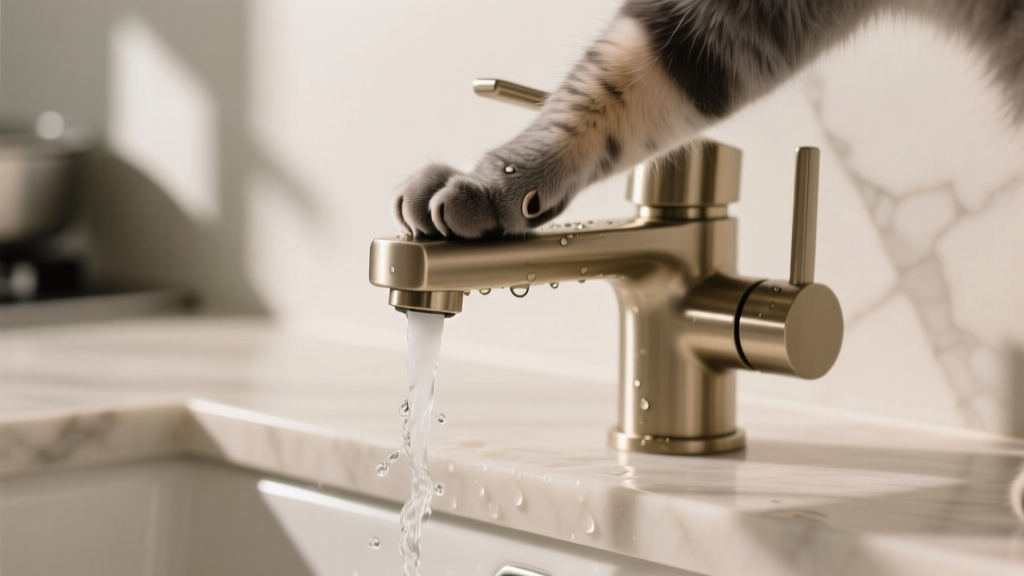
You’re brushing your teeth, half-awake, when you hear it: a soft tap… tap… tap from the sink. You turn and there’s your cat—poised like a tiny plumber—patting the faucet handle with one paw, then staring at you as if you’ve missed an obvious memo. Maybe they add a dramatic look at the empty sink basin. Maybe they chirp. Maybe they pat again, a little harder, like, “Hello? Service?”
If you’ve ever wondered whether your cat is truly asking for water (or simply messing with you), you’re not alone. Faucet fascination is one of those quirky cat behaviors that’s equal parts charming and baffling—and it makes perfect sense when you look at cats through a behaviorist lens.
Why Cats Do This: The Evolutionary (and Practical) Logic
Cats are descendants of desert-adapted animals. Their bodies are designed to conserve water, and historically, they often got much of their moisture from prey. That background shapes modern cat behavior in two big ways:
- They can be picky about water quality. In the wild, still water can be risky (it may contain bacteria or parasites). Moving water is often fresher. A faucet, from your cat’s perspective, is the gold standard: clean, cool, and flowing.
- They’re driven by movement and sound. Dripping, trickling, and splashing are “interesting” stimuli—like a tiny, controllable hunting scene right there in the sink. The sound of water can grab attention the way a rustle in the grass would.
Even if your cat has a full bowl, the faucet can still win because it checks extra boxes: novelty, movement, temperature, and sometimes the bonus of getting you to come running. Cats are excellent at learning what works.
A Detailed Breakdown: What “Paw Patting the Faucet” Can Look Like
Not all faucet-patting is created equal. The details matter. Here are common versions of the behavior and what they can indicate:
1) The Gentle Tap + Expectant Stare
This is the classic “request.” Your cat touches the handle or spout lightly, then looks at you, then back at the faucet. The body is relaxed, tail neutral or slightly upright, ears forward.
What it usually means: “Turn on the water, please.” Your cat has learned this sequence gets results.
2) The Rapid Tap-Tap-Tap (Escalation Mode)
If you don’t respond quickly, some cats increase intensity: faster paw pats, maybe a little paw hook around the handle, possibly a louder meow.
What it usually means: Your cat is motivated and impatient, not necessarily stressed—just convinced you’re being slow.
3) The “I’ll Fix This Myself” Handle Wiggle
Some cats get ambitious and attempt to move the handle. You might see them standing taller, using both paws, or bracing with their chest on the counter edge.
What it usually means: Curiosity plus problem-solving. Cats can learn cause-and-effect surprisingly well, especially if the handle is easy to nudge.
4) Patting the Faucet After You Use the Sink
Your cat waits until you’ve just washed your hands or filled a cup, then hops up and paws the faucet as if it’s “their turn.”
What it usually means: The cue is you. Your actions predict water access. Your cat is building a routine around your habits.
5) Patting the Faucet and Licking the Basin
Some cats prefer the thin film of water left behind. They may lick droplets or the cool porcelain/metal near where water drips.
What it usually means: They want water, but it’s also about temperature and “freshness.” Residual water can be cooler and more appealing than a bowl.
6) Faucet Patting as Play
A cat bats at the handle, then bats at the stream, then tries to “catch” droplets. They may get zoomy afterward.
What it usually means: Play behavior. Water movement can trigger hunting instincts—stalk, bat, pounce.
What This Behavior Says About Your Cat’s Mood and Feelings
Faucet patting is often a window into how your cat is feeling in that moment. Watch the whole cat, not just the paw.
- Relaxed and confident: Upright tail, soft eyes, ears forward, gentle taps. This is a calm request and a comfortable cat who expects you to understand.
- Frustrated (but not panicked): Faster tapping, louder vocalizing, pacing on the counter. Think “customer service escalation,” not true distress.
- Curious and playful: Crouching, wiggly butt, pouncing at the stream, batting droplets. This is enrichment in action.
- Anxious or conflicted: Ears slightly back, tense body, frequent startles at the water sound, but still drawn to it. Some cats want water yet find the noise unpredictable. They may prefer a slow trickle.
Most importantly: faucet patting often reflects a cat who has learned communication. They’re making a specific gesture to prompt a specific outcome. That’s not “naughty”—that’s your cat being socially smart.
Related Behaviors You Might Also Notice
If your cat is a faucet-patter, you may see other water-adjacent quirks:
- Dropping toys in the water bowl (some cats like to “make” movement, or they’re testing depth and sound)
- Splashing the bowl with a paw before drinking (checking water level, texture, or movement)
- Only drinking when you refresh the bowl (freshness preference and learned routine)
- Following you to the bathroom (bathrooms are sensory wonderlands: echoes, cool surfaces, water sounds, and guaranteed human attention)
- Seeking water in “forbidden” places like glasses, plant saucers, or the tub (novelty and cooler temperature)
These behaviors cluster because they share the same drivers: preference for moving/fresh water, curiosity, and the reinforcing power of your reaction.
When Faucet Patting Is Normal vs. When to Be Concerned
In many homes, faucet patting is simply a learned request and a fun ritual. But sometimes it’s a clue that something needs attention.
Normal (and common) if:
- Your cat is otherwise healthy, eating normally, and using the litter box as usual
- They drink a typical amount and just prefer “special” water sometimes
- The behavior is part of a predictable routine (morning sink visit, post-dinner faucet check)
Worth a closer look if you notice:
- Sudden increase in thirst (frequent faucet demands, draining bowls quickly)
- More urination or larger clumps in the litter box
- Weight loss, appetite changes, or low energy
- Straining to urinate (urgent medical concern, especially in male cats)
- Obsessive behavior that disrupts sleep or causes distress when water isn’t available
Increased water-seeking can be associated with medical issues like kidney disease, diabetes, or hyperthyroidism—especially in adult and senior cats. Behavior doesn’t diagnose, but it can be a helpful early signal. If your cat’s water behavior changes noticeably or comes with litter box changes, a vet visit is a smart move.
How to Respond (and Encourage Healthy Water Habits)
You don’t have to become your cat’s on-demand faucet operator—unless you want to. The goal is to meet your cat’s hydration preferences in a safe, practical way.
1) Offer a Water Fountain
Many cats love pet fountains because they mimic running water. Choose one that’s easy to clean (cleaning matters more than fancy features). Some cats prefer a gentle stream; others like a bubbling surface.
2) Refresh Water in Multiple Locations
Try at least two water stations in quiet areas. Some cats avoid drinking near food or litter. A separate spot can increase drinking.
3) Use the “Clean, Cool, Wide Bowl” Rule
- Clean daily if possible (biofilm can build up, and cats can notice)
- Cool water can be more appealing
- Wide, shallow bowls can reduce whisker stress for sensitive cats
4) If You Allow Faucet Drinks, Make It Predictable
Random faucet rewards can create persistent begging (intermittent reinforcement is powerful). If you’re okay with faucet water, consider a routine: one short trickle at set times, then redirect to the fountain or bowl.
5) Reinforce Communication You Like
If faucet patting is cute but counter-hopping isn’t, teach an alternative. For example:
- Place a small mat or stool near the sink and reward your cat for sitting there instead of on the counter.
- Turn on a fountain when they sit calmly by it.
6) Keep It Safe
Be mindful of slippery counters, hot water access, and cleaning chemicals around sinks. If your cat can turn the faucet on, consider childproof lever covers or adjusting handles, especially when you’re away.
Fun Facts and Research-Style Nuggets
- Cats often prefer moving water. This aligns with the idea that flowing water is less likely to be contaminated than stagnant sources in nature.
- Some cats use their paws to “investigate” water. Paw-dipping or patting can be a sensory strategy—cats gather information through touch, and water surfaces can be visually tricky.
- Learning plays a huge role. If your cat pawed the faucet once and you turned it on, you’ve just taught a very effective communication behavior. Cats repeat what works.
- Whisker sensitivity can influence drinking preferences. For some cats, bowl shape and depth matter enough that they’ll seek alternative water sources (like sinks) that don’t bump their whiskers.
FAQ: Cat Paw Patting the Faucet Handle
1) Is my cat really asking for water, or just playing?
Often it’s both. If your cat pats, looks at you, and then drinks when water appears, it’s a request. If they bat at the stream, chase droplets, and get playful, it’s also enrichment. Many cats combine “I want a drink” with “this is fascinating.”
2) My cat has a full bowl—why prefer the faucet?
Freshness, movement, temperature, and even the location can make the faucet more appealing. Also, bowls can develop odors or biofilm that humans don’t notice. Try cleaning the bowl more often, offering a fountain, or switching to a wide, shallow dish.
3) Will a water fountain stop the faucet patting?
Sometimes yes, sometimes it just reduces it. If your cat is motivated by the sink routine (and your attention), the fountain may not fully replace the “bathroom ritual.” But it’s still a great way to encourage hydration.
4) Is it okay to let my cat drink from the faucet?
Generally yes, if you supervise and keep the water cool (not hot), the sink is clean, and your cat isn’t at risk of slipping or getting into unsafe products nearby. If the behavior becomes demanding or disruptive, set predictable times or redirect to a fountain.
5) Could faucet obsession mean my cat is sick?
It can, especially if the behavior is new or increasing alongside more urination, weight loss, or appetite changes. Increased thirst can be a sign of medical issues. When in doubt, track water intake and litter box output for a few days and consult your veterinarian.
6) How can I tell if my cat is stressed versus just persistent?
Look for tense posture, flattened ears, wide pupils, and frantic pacing, plus stress signs in other areas (hiding more, overgrooming, litter box issues). A persistent but relaxed cat usually shows confident body language—upright tail, forward ears, and calm waiting between taps.
That little paw on the faucet handle is more than a cute quirk—it’s communication, preference, problem-solving, and a dash of feline showmanship. When you meet your cat halfway (with fresher water options and clear routines), you’re not just satisfying a thirst. You’re building trust and a shared language.
Does your cat have a signature “turn on the water” routine—polite tap, dramatic stare, or full-on plumbing apprentice? Share your story with the Cat Lovers Base community at catloversbase.com.