Cat Paw Reaching Under Doors: Curiosity Test
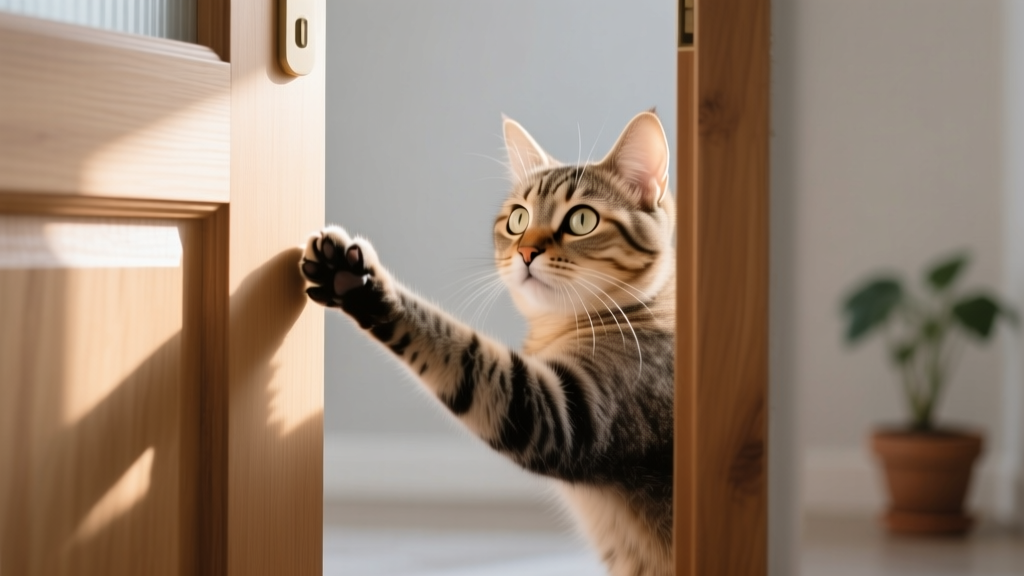
You’re in the bathroom for 30 seconds—maybe a whole luxurious minute—and suddenly there it is: a little paw, flattened like a tiny spatula, sliding under the door with the determination of a locksmith. It wiggles. It taps. It hooks at the air like it’s trying to reel you in. If you shift your feet, the paw darts toward the movement as if your toes are suspicious prey.
Most cat owners have lived this scene. Some cats do it quietly, like a polite knock. Others act like they’ve been locked out of a very important meeting. Either way, the under-the-door paw is one of those delightfully weird feline behaviors that feels personal. And in a way, it is.
Why cats reach under doors (the science and the “cat logic”)
Cats are built to investigate, capture, and control their environment. Even the most pampered indoor cat carries a predator’s toolkit: sensitive whiskers, precise hearing, and paws designed for both stealth and manipulation. That last part matters. Unlike many animals, cats use their front paws like hands—probing, patting, pulling, and testing.
A closed door is a fascinating problem for a cat because it breaks three rules of Cat World:
- Access rule: Cats prefer the ability to move freely between resources (you, food, warmth, window views). A closed door removes choice.
- Information rule: Cats feel safer when they can monitor their territory. A door blocks sight, scent flow, and sound clarity.
- Hunting rule: Anything that moves unpredictably is worth investigating. Feet shifting under a door? Shadows? The tiny airflow changes? It all registers as “potentially interesting.”
Evolutionarily, pawing at small gaps makes sense. In the wild, a cat might fish a rodent out from under brush, a crevice, or a burrow entrance. That instinct doesn’t disappear in a home; it simply re-targets. The space under your door becomes a tiny “burrow,” and you, your socks, or a moving towel become the “mystery creature.”
A closer look: different contexts and what’s driving the behavior
Not all under-door pawing is the same. The meaning changes depending on what happens before and after—and what kind of pawing your cat does.
1) “I know you’re in there” (social curiosity and attachment)
This is the classic: you close the door, and your cat immediately stations themselves outside like a fluffy security guard. The paw slips under, then withdraws, then returns, as if checking that you still exist.
What’s going on: Many cats form strong bonds and prefer proximity. A closed door interrupts contact and predictability. Your cat may not be “needy” so much as relationship-oriented: they enjoy tracking your routine and being included.
2) “Open sesame” (resource control and routine)
Some cats paw under doors at very specific times—when you’re getting ready in the morning, when it’s dinner o’clock, or when you’ve dared to close the bedroom door at night.
What’s going on: Cats are excellent pattern learners. If the door predicts a delay in food, play, or access to a favorite nap spot, they’ll try their best cat strategies. Pawing is a low-risk, high-reward behavior. If it works once, it becomes part of the routine.
3) “What’s that sound?” (sensory investigation)
Maybe your cat wasn’t interested until they heard a faint noise—running water, a drawer, a crinkle, the hair dryer. Suddenly: paw, paw, paw.
What’s going on: Cats are sound detectives. A door muffles the full picture, so they use touch and scent at the gap to gather more information. Think of it as your cat taking “samples” from the environment.
4) “I can totally catch that” (play and predatory practice)
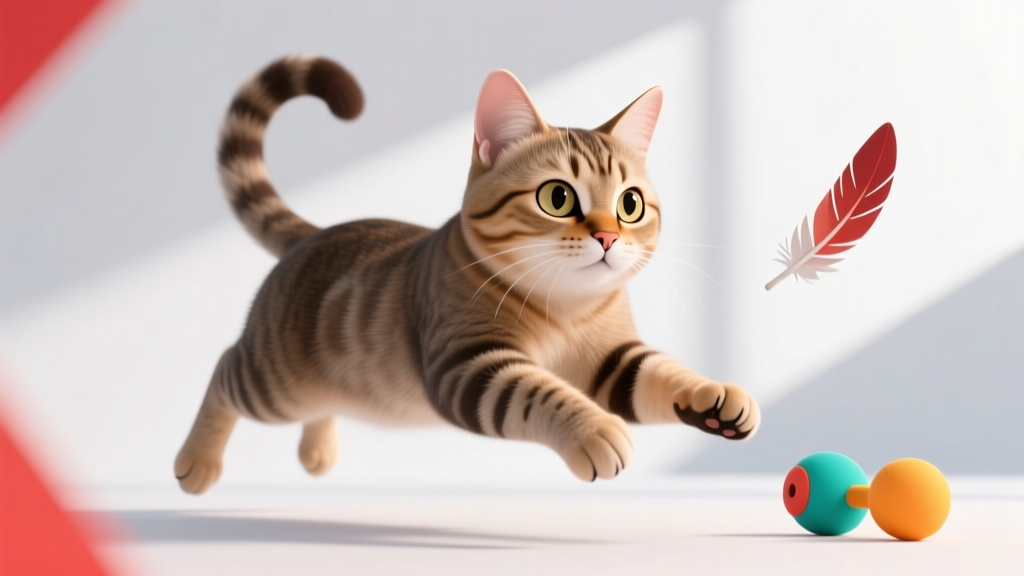
If your cat’s paw movements are fast, bouncy, and paired with a crouch, wiggly butt, or playful chirps, this is often a hunting-game moment. Your feet, a moving shadow, or a toy you slide under the door turns into a mini hunting session.
What’s going on: The gap under the door creates a perfect “prey scenario”: limited visibility, unpredictable movement, and a narrow escape route. Cats love that kind of challenge.
5) “Don’t leave me out” (frustration or FOMO)
Some cats escalate: louder pawing, scratching at the door, meowing, or rapid back-and-forth pacing.
What’s going on: This can be frustration from being excluded, especially in cats who are highly social or prone to anxiety. It can also happen in multi-cat homes if one cat is separated from a preferred person or from another cat.
What it says about your cat’s mood and feelings
Your cat’s paw is like a mood meter. Look at the whole body: ears, tail, vocalizations, speed of movement, and whether they settle afterward.
- Curious and calm: Slow pawing, sniffing at the gap, quiet waiting. Your cat is gathering information and expecting access eventually.
- Playful and energized: Quick taps, pounces at the gap, sudden bursts of movement. This is “hunt practice,” often most intense at dawn/dusk.
- Affectionate and socially motivated: Pawing plus soft meows, rubbing against the door, flopping nearby. Your cat wants connection.
- Frustrated or stressed: Repetitive scratching, loud yowling, panting, or inability to settle. This may mean the closed door feels threatening or too disruptive.
A helpful question: Does your cat look like they’re having fun, or like they’re trying to solve an urgent problem? Playful cats bounce away and return. Stressed cats stay tense and persistent.
Related behaviors you might notice (the “door gap family” of quirks)
If your cat is an under-door paw specialist, you may also see:
- Fishing toys from under furniture: Same instinct, different gap.
- Opening cabinets or sliding doors: Cats learn that paws can manipulate objects.
- Doorframe rubbing or sniffing: Scent-marking and information gathering at entry points.
- Waiting outside rooms: “Guarding” a resource (you) or tracking your movement.
- Toilet supervision: Many cats stick close during vulnerable human moments—part curiosity, part routine, part social bonding.
When under-door pawing is normal vs. a concern
In most homes, this behavior is completely normal—classic cat curiosity plus a little opportunistic play.
It’s usually normal when:
- Your cat can stop and settle after a short time.
- Pawing happens in predictable situations (you’re in the bathroom, you’re prepping food, you’re behind a closed bedroom door).
- Your cat’s body language stays loose and playful.
It may be a concern when:
- Separation distress signs appear: prolonged vocalizing, drooling, inappropriate urination, destructive scratching, or frantic pacing when separated.
- Compulsive patterns develop: your cat paws/scratches for long periods daily, seemingly unable to disengage.
- Aggression redirects occur: your cat becomes cranky or swats when you exit the room.
- Injury risk increases: broken nails, bleeding paw pads, or repeated paw swelling.
If the behavior looks panicked or is escalating over time, it’s worth checking in with your veterinarian to rule out pain or medical contributors, and a qualified behavior professional to address anxiety or compulsive patterns.
How to respond (and when to encourage it)
The goal isn’t to “stop your cat from being a cat.” It’s to meet the need underneath the paw.
1) Reward calm, not chaos
If your cat paws and you immediately open the door every time, you may accidentally train “pawing equals instant door service.” Instead, wait for a brief pause—one or two seconds of quiet—then open. You’re teaching that calm behavior works.
2) Give them a better outlet for “fishing” instincts
Try toys that mimic the under-door game in a controlled way:
- Wand toys dragged behind furniture (supervised)
- Treat puzzles or “snuffle” style mats for cats
- Balls in a track, or a toy that skitters unpredictably
A short, intense play session before times you’ll close doors (shower, work calls, bedtime) can reduce the urge to “solve the door.”
3) Manage access thoughtfully
If your cat hates closed doors, consider whether the door truly needs to be shut. If it does (privacy, safety, household rules), you can still reduce stress:
- Provide a cozy “waiting spot” outside the door (bed or mat)
- Use white noise or soft music if your cat is triggered by sounds behind the door
- Offer a high-value chew or lick treat (like a small smear of cat-safe paste on a lick mat) right before you close the door
4) Protect paws and doorframes
If scratching is part of the routine, add a scratcher near the problem door—vertical or angled—and sprinkle a little catnip on it. You’re redirecting the behavior to an appropriate surface.
5) Make it a relationship game (when your cat is playful)
If your cat is clearly in play mode, you can turn the curiosity into bonding. Slide a soft toy under the door a few inches, wiggle it, then pull it away. Keep sessions short so your cat stays excited, not frustrated. End with a “catch” and a small treat to complete the hunting sequence.
Fun facts and research-y nuggets
- Cats rely heavily on “tactile investigation.” Those front paws aren’t just for walking—they’re sensitive tools for testing textures, movement, and resistance.
- Whiskers and paws work as a team. Whiskers gather spatial info, but paws confirm it. If your cat can’t see well under the door, the paw becomes the scout.
- Small gaps are naturally compelling. In predatory behavior, partial concealment makes “prey” feel more catchable. The door gap creates the perfect illusion of a hidden target.
- Some cats learn “door physics.” Cats are capable of trial-and-error learning; many figure out that pulling, hooking, and pushing can change objects—especially if humans respond consistently.
FAQ: Cat paw reaching under doors
Why does my cat stick their paw under the door when I’m in the bathroom?
Usually it’s social curiosity plus routine. Bathrooms also have interesting sounds and smells, and your cat may be used to having access to you. The paw is their way of checking in and trying to restore normal “togetherness.”
Is my cat being anxious or just playful?
Look for body language and whether they can settle. Playful cats bounce, crouch, and pause between bursts. Anxious cats may vocalize intensely, scratch persistently, pace, or seem unable to disengage even after time passes.
How do I stop my cat from scratching and pawing at my bedroom door at night?
Build a bedtime routine: play session (5–10 minutes), small meal or treat, then a cozy setup outside the bedroom (bed + scratcher + water). If you open the door only during quiet moments, you’ll avoid reinforcing noisy pawing.
Does under-door pawing mean my cat is lonely?
Not always. Many cats simply want access and information. But if it comes with distress behaviors—constant crying, destructive scratching, or bathroom accidents—loneliness or separation-related stress could be part of the picture.
Should I play “under the door” games with my cat?
If your cat is relaxed and playful, it can be great enrichment. Keep it supervised, use soft toys, and end with a successful “catch” and reward so your cat doesn’t get frustrated.
My cat does this to other cats behind a door—what does that mean?
It can be playful curiosity, but it can also be tension. If you hear hissing, growling, or see stalking postures at the door, consider slower introductions, scent swapping, and feeding on opposite sides of the door to create positive associations.
That little paw under the door is your cat’s way of saying: “I’m curious, I’m involved, and I have questions about what’s happening in there.” Sometimes it’s affection, sometimes it’s play, sometimes it’s a mild protest against the tyranny of closed doors—but it’s almost always communication.
Does your cat have a signature under-the-door move—rapid taps, a single dramatic hook, or the slow “I’m totally not obsessed” reach? Share your stories (and your funniest door-paw moments) with the Cat Lovers Base community at catloversbase.com.