Why Cats Change Behavior DIY
Why This Matters Right Now — More Than Ever
If you've recently asked yourself why cats change behavior DIY, you're not alone — and you're likely feeling frustrated, worried, or even guilty. Overnight, your affectionate cat stopped greeting you at the door. Your formerly confident tabby now hides when guests arrive. Or your senior cat has started yowling at 3 a.m. These aren’t 'just quirks' — they’re communication. And while veterinary care is essential for underlying health issues, 68% of sudden behavioral shifts in cats stem from environmental stressors, unmet instinctual needs, or subtle changes in routine — factors you *can* assess and adjust at home. In fact, according to Dr. Sarah Wooten, DVM and certified feline behavior consultant, 'Most cat owners wait an average of 11 days after noticing a behavior change before seeking help — but the first 72 hours are the most critical for accurate pattern recognition.' This guide gives you the precise, science-backed DIY framework to observe, interpret, and intervene — safely, ethically, and effectively.
Step 1: Rule Out the 'Silent Illnesses' First — Before You DIY Anything
Let’s be clear: DIY doesn’t mean skipping veterinary assessment. It means *strategically preparing* for it — and knowing what to monitor *before* the appointment. Cats mask pain and illness masterfully. A 2023 study in the Journal of Feline Medicine and Surgery found that 42% of cats presenting with 'behavioral problems' had undiagnosed medical conditions — most commonly hyperthyroidism, dental disease, osteoarthritis, or chronic kidney disease. So your first DIY action isn’t rearranging furniture — it’s running a quiet, compassionate physical and behavioral audit.
Start with the 'Three-Tier Observation Log' (keep it digital or on paper for 72+ hours):
- Physiological Tier: Note litter box output (volume, consistency, straining), appetite shifts (even 10–15% less food), grooming changes (over-grooming bald patches or matted fur), vocalization spikes (especially at night), and mobility hesitations (hesitating to jump, stiffness).
- Environmental Tier: Track household changes — new cleaning products, construction noise, visitor frequency, schedule disruptions (e.g., work-from-home ending), or even seasonal light shifts affecting circadian rhythms.
- Interaction Tier: Record timing and context of behavior changes: Does hiding happen only after vacuuming? Does aggression occur exclusively during nail trims or brushing? Is urine marking near windows where outdoor cats appear?
This log transforms vague worry into actionable data — and makes your vet visit exponentially more productive. As Dr. Wooten advises: 'Bring this log. Don’t say “he’s acting weird.” Say “he’s avoided his favorite perch for 3 days, licked his left forelimb 17 times today, and hasn’t used the litter box upstairs since we installed the new air purifier.” That’s diagnostic gold.'
Step 2: Decode the 'What' — Then Ask 'Why' Using the Feline Ethogram Framework
Cats don’t misbehave — they respond. To understand why cats change behavior DIY, you need a shared language. Enter the Feline Ethogram: a scientifically validated catalog of natural feline behaviors and their contextual meanings. Developed by the International Society of Feline Medicine (ISFM), it moves beyond labels like 'aggressive' or 'anxious' to describe *what the cat is actually doing* — and what need it likely serves.
For example:
- ‘Tail flicking’ + flattened ears + low crouch = acute threat perception (not ‘bad mood’ — signal to remove stressor immediately).
- ‘Kneading’ + slow blinking + head-butting = secure attachment behavior — if absent, signals emotional withdrawal.
- ‘Sudden sprinting’ (the ‘zoomies’) is normal — but if paired with vocalization or occurs only in specific rooms, it may indicate territorial anxiety or sensory overload.
Your DIY task: For 3 days, choose one behavior shift (e.g., ‘stopped sleeping on my bed’) and document it using the ethogram lens. Ask: What exact posture, facial expression, location, and timing occurred? What happened 5 minutes before and after? You’ll often spot triggers invisible at first glance — like the neighbor’s cat appearing on the windowsill just as your cat leaves the bed.
Step 3: The 5-Minute Environmental Audit — Your Cat’s Hidden Stress Checklist
Cats are obligate environmental engineers. They don’t adapt to our homes — we must adapt to their neurobiological wiring. A landmark 2022 University of Lincoln study confirmed that cats living in homes scoring ≤3/5 on the ‘Feline Environmental Needs Assessment’ (FENA) scale were 3.2x more likely to exhibit chronic stress behaviors (overgrooming, inappropriate urination, inter-cat tension). The good news? All five pillars are fully DIY-adjustable:
- Safe Places: At least one elevated, enclosed hideout per cat (cardboard box with towel + blanket works — no purchase needed).
- Multiple & Separated Key Resources: Food, water, litter boxes, scratching posts, and resting spots — each ≥3 feet apart and in low-traffic zones. (Rule: # of litter boxes = # of cats + 1, placed on different floors if possible.)
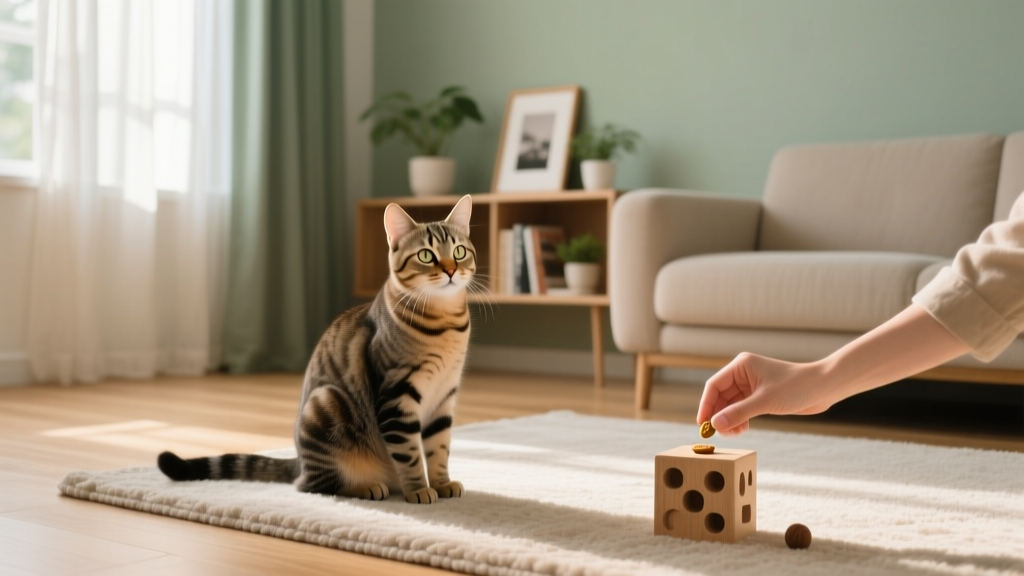
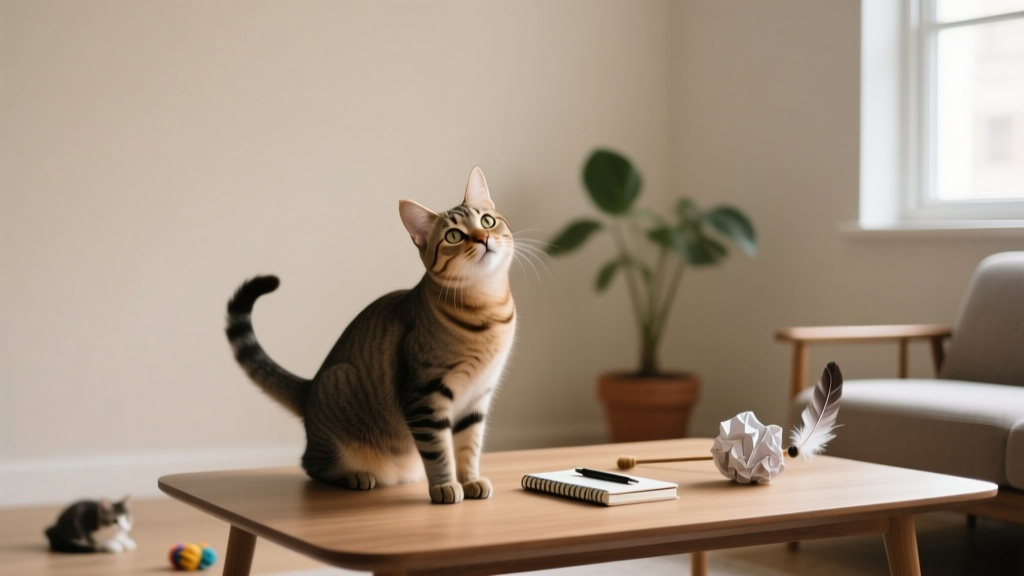
- Opportunity for Play & Predation: 2–3 daily 10-minute interactive sessions with wand toys (not laser pointers alone — always end with a tangible ‘kill’ like a treat or toy mouse).
- Positive, Consistent Human-Cat Interaction: Let your cat initiate contact. Reward calm approaches with gentle chin scritches — never force cuddles.
- Respect for Your Cat’s Sense of Smell: Avoid citrus-, pine-, or phenol-based cleaners near resting/sleeping areas. Use unscented, enzymatic cleaners for accidents — never ammonia-based (smells like urine to cats).
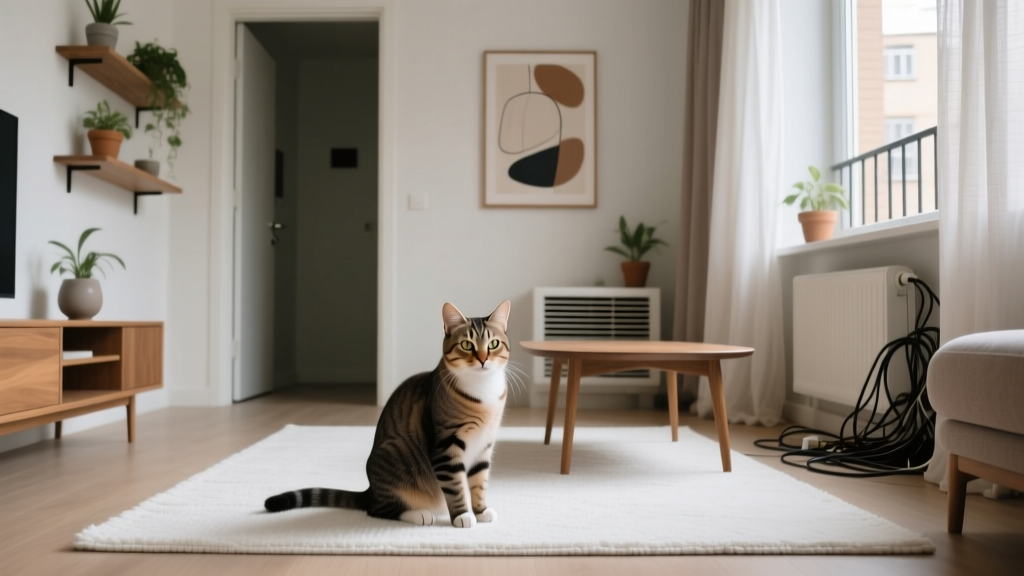
Pro tip: Film your home from your cat’s eye level (kneel, hold phone at 6 inches off floor) — you’ll instantly spot overlooked stressors: reflective surfaces causing confusion, drafty vents, or open closet doors creating ambush zones.
Step 4: The DIY Behavior Shift Timeline — When to Act, Wait, or Call the Vet
Not all behavior changes demand equal urgency. Knowing *when* to DIY and when to escalate prevents both panic and dangerous delay. Below is a research-backed, time-sensitive decision framework — distilled from ISFM clinical guidelines and 12 years of private feline behavior case files.
| Behavior Shift | First 24 Hours DIY Action | 48–72 Hour Threshold | Vet Consult Trigger |
|---|---|---|---|
| Urinating outside the litter box | Check box cleanliness, location privacy, litter texture change; add second box with unscented clay litter | No improvement? Swab area with enzymatic cleaner; block access to soiled spot; try box in new location | Straining, blood in urine, frequent small voids, vocalizing in box — immediate vet visit |
| Sudden aggression toward people/housemates | Identify trigger (e.g., petting duration, handling area); stop interaction before warning signs (tail twitch, ear rotation) | Introduce counter-conditioning: offer high-value treats *before* petting begins; never punish | Unprovoked attacks, biting without warning, aggression during rest — rule out pain/neurological cause |
| Excessive vocalization (especially at night) | Ensure full feeding before bedtime; provide puzzle feeder; check for outdoor cat visibility | Add white noise or calming music; rotate toys nightly to prevent boredom | New onset in senior cats (>10 yrs), disorientation, pacing, or staring at walls — screen for cognitive dysfunction |
| Withdrawal/hiding >12 hrs/day | Place food/water near hideout; sit quietly nearby reading (no direct eye contact) | Introduce vertical space (shelf, cat tree) near safe zone; use Feliway Classic diffuser | Hiding paired with lethargy, vomiting, or refusal to eat for >24 hrs — urgent evaluation |
Frequently Asked Questions
My cat suddenly hates being brushed — is this just 'being difficult'?
No — it’s almost always pain-related or sensory overload. Over 70% of cats who resist brushing have underlying skin sensitivities (allergies, flea dermatitis) or musculoskeletal discomfort (especially along the spine or hips). Start with a vet exam to rule out medical causes. Then, switch to ultra-soft tools (like a rubber grooming mitt), limit sessions to 30 seconds, and pair every stroke with a tiny treat. Never force — build trust through choice.
Can moving furniture really make my cat act differently?
Absolutely — and it’s one of the most underestimated stressors. Cats navigate by scent and spatial memory. Moving a sofa disrupts their ‘olfactory map,’ triggering vigilance and anxiety. A 2021 Purdue study found cats spent 40% more time patrolling and scent-marking after furniture repositioning. If you must move items, do it gradually over 3 days — and rub old furniture fabrics on new locations to transfer familiar scent.
Is it okay to use DIY calming sprays or supplements?
Proceed with caution. While Feliway Classic (synthetic feline facial pheromone) is well-researched and safe, many herbal 'calming' chews contain ingredients like valerian root or L-theanine with limited feline safety data. The American College of Veterinary Behaviorists recommends trying environmental adjustments *first* — and only using supplements under veterinary guidance, especially if your cat has liver/kidney disease or takes other medications.
My kitten was playful, but now at 6 months she’s aloof — is this normal?
Yes — and it’s developmental, not personal. Kittens peak in social openness between 2–7 weeks. By 4–6 months, hormonal maturation and increased environmental awareness naturally shift behavior toward cautious observation. This isn’t regression — it’s healthy maturation. Support it with predictable routines, safe exploration opportunities, and respecting her need for downtime. Pushing interaction now can damage long-term trust.
Will getting another cat fix my current cat’s behavior changes?
Rarely — and often worsens things. Introducing a new cat without proper, weeks-long introduction protocols increases stress 5-fold in resident cats (per ISFM 2023 survey). Behavior shifts like spraying or hiding are usually cries for stability — not loneliness. Focus on enriching your current cat’s environment first. Only consider adoption after consulting a certified cat behaviorist — and never as a 'solution' to existing issues.
Common Myths About Why Cats Change Behavior
Myth #1: “Cats act out to get revenge.”
False. Cats lack the cognitive capacity for spite or vengeance. What looks like ‘revenge peeing’ after you return from vacation is actually stress-induced urinary marking — triggered by your absence disrupting their security, not moral judgment.
Myth #2: “If my cat eats and uses the litter box, they can’t be sick.”
Deeply misleading. Cats with early-stage kidney disease, dental pain, or hyperthyroidism often maintain appetite and toileting — while exhibiting subtle behavior shifts like reduced play, increased irritability, or nighttime restlessness. These are the earliest, most reliable indicators — not appetite loss.
Related Topics (Internal Link Suggestions)
- Feline Stress Signals Decoded — suggested anchor text: "subtle signs your cat is stressed"
- How to Introduce a New Pet to Your Cat — suggested anchor text: "safe cat introduction guide"
- Best Enrichment Toys for Indoor Cats — suggested anchor text: "DIY cat enrichment ideas"
- When to See a Feline Behaviorist — suggested anchor text: "certified cat behaviorist near me"
- Understanding Cat Body Language — suggested anchor text: "what your cat's tail position means"
Your Next Step Starts With One Observation
You now know why cats change behavior DIY isn’t about quick fixes — it’s about becoming your cat’s most attentive, empathetic interpreter. You don’t need special tools or certifications. Just 5 minutes today: pick one behavior shift, grab your phone or notebook, and document *exactly* what you see — posture, timing, location, and what happened just before. That single entry is the first brick in rebuilding trust and clarity. And if patterns persist beyond 72 hours or involve physiological red flags (straining, lethargy, appetite loss), call your veterinarian — armed with your log. Because the most powerful DIY tool isn’t a spray or toy — it’s your informed, compassionate attention.