How to Stop Attention Seeking Behavior in Cats
Why This Isn’t ‘Just Being Needy’—It’s a Communication Breakdown
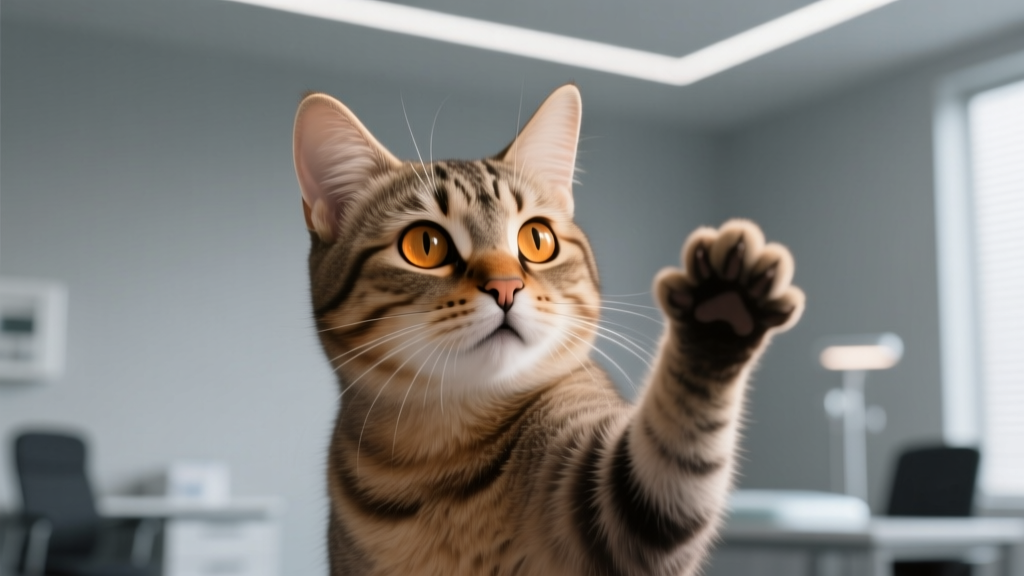
If you’ve ever wondered how to stop attention seeking behavior in cats, you’re not alone—and you’re likely exhausted. Maybe your cat wakes you at 4:17 a.m. with insistent meows, paws at your laptop mid-Zoom call, or knocks items off shelves when you're on your phone. These aren’t random acts of mischief; they’re signals—often loud, persistent, and emotionally charged—that your cat’s social, environmental, or physiological needs aren’t being met consistently. Unlike dogs, cats don’t seek attention for dominance or obedience—they do it because they’ve learned it’s the most reliable way to get food, play, comfort, or safety. And when those needs go unmet—or are inconsistently reinforced—the behavior escalates. The good news? With science-backed understanding and compassionate consistency, you can transform attention-seeking into confident, self-soothing independence—without guilt, punishment, or surrendering your sanity.
What’s Really Driving the Demand? It’s Rarely ‘Spoiling’
Before reaching for deterrents, pause and ask: What need is my cat trying to meet? According to Dr. Mikel Delgado, certified cat behavior consultant and researcher at the University of California, Davis, over 80% of so-called ‘attention-seeking’ behaviors stem from one or more of four core drivers: unmet play needs, environmental under-stimulation, anxiety-related insecurity, or medical discomfort masquerading as clinginess. A 2022 study published in Applied Animal Behaviour Science found that cats exhibiting frequent solicitation behaviors (e.g., persistent vocalization, following, pawing) were 3.2x more likely to live in homes with fewer than two daily interactive play sessions—and 57% had no vertical space or hiding options beyond floor level.
Consider Luna, a 3-year-old domestic shorthair adopted after shelter intake. Her owners reported she’d yowl for 20+ minutes every evening until fed—then repeat at 2 a.m. A veterinary behaviorist discovered Luna wasn’t hungry; she was chronically under-stimulated. Her ‘demand feeding’ was actually demand-play. After implementing structured 15-minute wand toy sessions at dusk and dawn—and adding a window perch with bird feeder access—her nighttime vocalizations dropped by 94% within 10 days. Her behavior wasn’t manipulative—it was adaptive. And yours likely is too.
Key takeaway: Attention-seeking is rarely about control. It’s about predictability, safety, and species-appropriate engagement. Your goal isn’t to silence your cat—but to teach them *how* to get what they need, reliably and calmly.
The 3-Step Reinforcement Reset: Replace, Redirect, Reward
Most well-meaning owners accidentally reinforce attention-seeking by responding *only* when the behavior peaks—giving treats when the cat cries, picking them up when they paw, or even scolding (which still delivers attention). Instead, adopt the Reinforcement Reset:
- Replace the trigger: Identify the *exact* antecedent (e.g., you sit down to work, turn off lights, open the fridge). Then insert a proactive alternative *before* the behavior starts—like offering a puzzle feeder the moment you sit at your desk.
- Redirect the energy: When solicitation begins, calmly offer an incompatible behavior—e.g., if your cat head-butts your keyboard, gently place a feather wand beside your laptop and initiate a 90-second ‘hunt’ (no chasing—let them stalk and pounce).
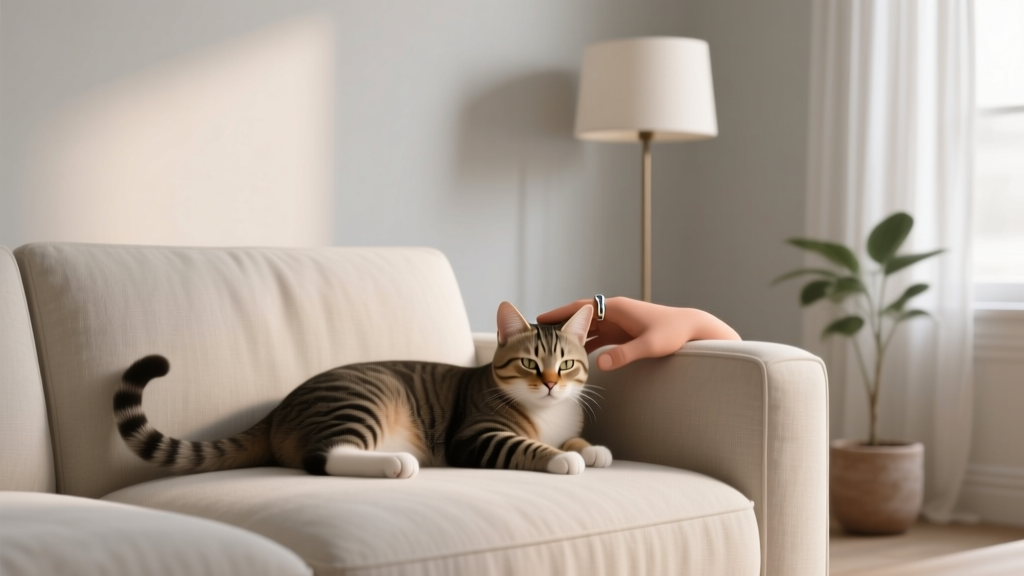
- Reward the quiet: Catch your cat being calm *near* you—not just when they’re asleep in another room. Offer gentle chin scratches or a lick of tuna water *while they’re quietly sitting beside your chair*. This builds positive association with proximity without demand.
This method works because it respects feline learning psychology: cats respond best to immediate, consistent consequences tied to specific actions—not delayed corrections or emotional reactions. As Dr. Sarah Heath, European Veterinary Specialist in Behavioral Medicine, emphasizes: “Cats don’t connect ‘yowling = getting food’ if the food arrives 47 seconds later. But they *do* connect ‘quiet sitting near owner = chin rub + treat’—and will repeat it.”
Environmental Enrichment: Your Silent Co-Parent
Think of your home as your cat’s habitat—not just their living space. Without adequate enrichment, even the most loving home feels like a sensory desert. A 2023 review in Frontiers in Veterinary Science concluded that cats with ≥5 enrichment categories (play, foraging, climbing, scratching, resting, visual stimulation, scent) showed 68% fewer attention-seeking incidents than those with ≤2 categories.
Here’s how to build it strategically:
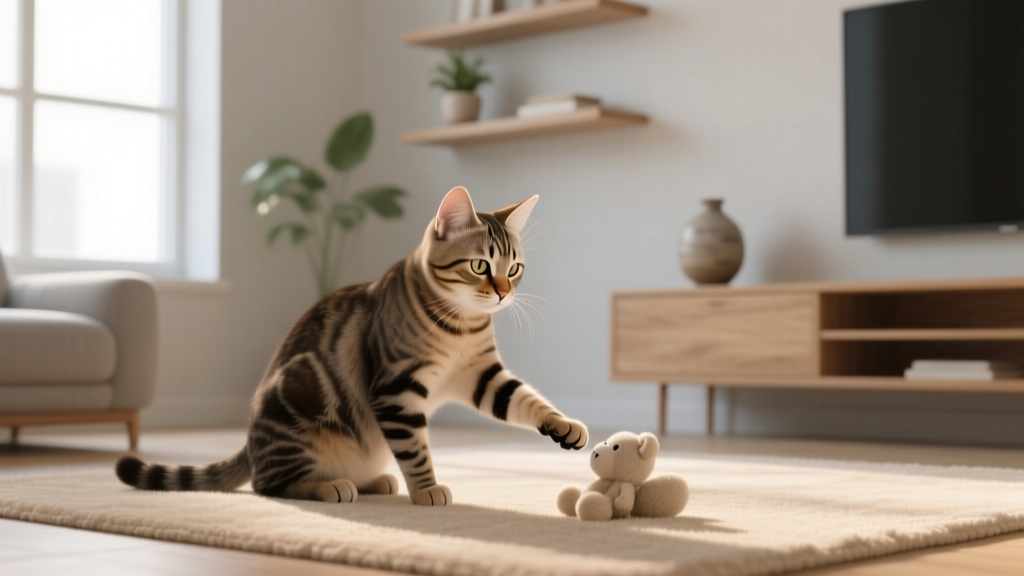
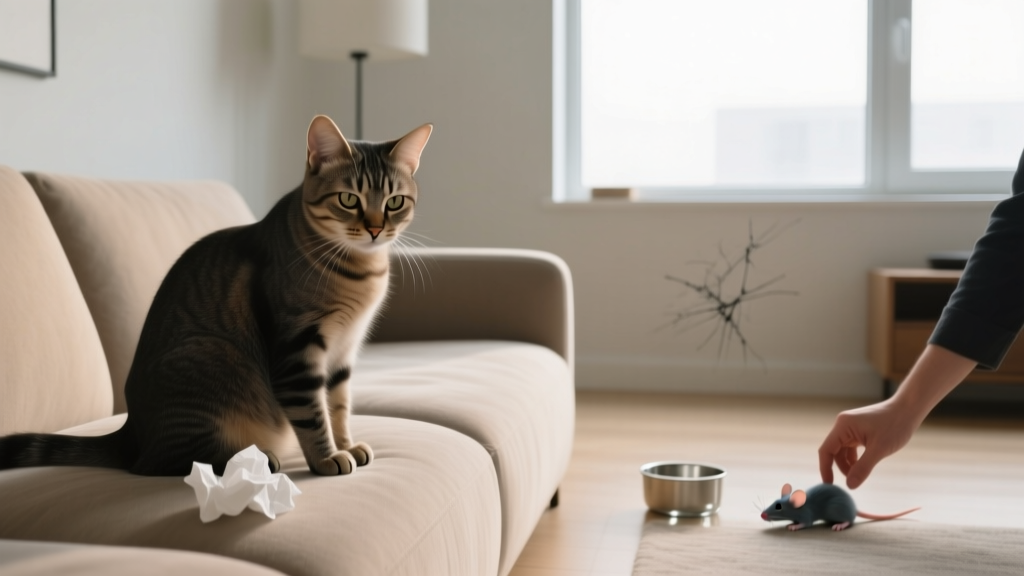
- Play ≠ petting: Interactive play mimics hunting—stalking, chasing, pouncing, killing, eating. Use wand toys (never hands or feet), rotate them weekly, and end each session with a ‘kill’—let your cat bite a plush mouse or crinkle ball, then feed a small meal or treat. This completes the predatory sequence and satisfies deep instinctual needs.
- Foraging is non-negotiable: Swap 25% of daily kibble for puzzle feeders. Start simple (a muffin tin with tennis balls covering kibble), then progress to rolling balls or snuffle mats. Never use food puzzles for 100% of meals—cats need predictable meals too.
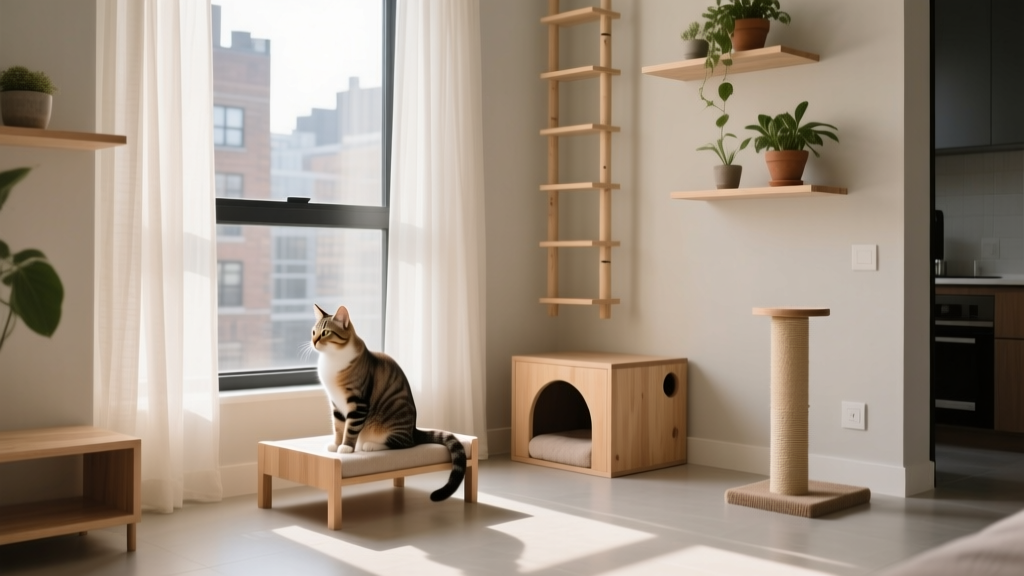
- Verticality = security: Install wall-mounted shelves, cat trees, or repurpose bookshelves with carpeted perches. Height gives cats control over their environment—and reduces stress-driven clinginess.
- ‘Cat TV’ matters: A window perch with bird activity, a fish tank (with proper filtration and no tapping), or even a nature documentary on loop (yes—studies show cats watch screens!) provides passive mental engagement.
Pro tip: Rotate enrichment elements every 3–4 days. Novelty resets interest—and prevents boredom-driven attention bids.
When to Suspect Something Deeper: Medical & Anxiety Red Flags
Sometimes, attention-seeking is the tip of an iceberg. Senior cats with early cognitive dysfunction may vocalize excessively at night due to confusion—not demand. Hyperthyroidism increases metabolism and restlessness, making cats seek warmth and contact constantly. Dental pain can cause ‘head pressing’ or persistent rubbing against owners. Anxiety disorders—especially separation-related or noise-triggered—often manifest as hyper-attachment.
Consult your veterinarian if your cat shows any of these alongside attention-seeking:
- New-onset vocalization in cats over age 10
- Increased thirst/urination or unexplained weight loss
- Excessive grooming (especially belly baldness), hiding, or flattened ears during interactions
- Vocalizing only in specific contexts (e.g., only when left alone, only near windows)
Dr. Tony Buffington, DVM and professor emeritus at Ohio State’s College of Veterinary Medicine, stresses: “If behavior change happens suddenly—or worsens despite environmental adjustments—rule out pain or disease first. Treating anxiety in a cat with arthritis is like giving anti-anxiety meds to someone with a broken leg: it masks, but doesn’t fix, the root cause.”
Effective Intervention Strategies Compared
| Strategy | How It Works | Time to See Change | Risk of Backfire | Vet/Behaviorist Recommendation Level* |
|---|---|---|---|---|
| Consistent Play Schedules | Meets predatory drive; ends with ‘kill’ and meal | 3–7 days (reduced intensity); 2–4 weeks (sustained reduction) | Low (if duration/intensity matches cat’s energy) | ★★★★★ (Universal first-line) |
| Puzzle Feeders + Scheduled Meals | Turns eating into mental work; separates food from human presence | 5–10 days (less food-begging); 3 weeks (reduced dawn/dusk yowling) | Low (avoid over-challenging—causes frustration) | ★★★★☆ |
| Clicker Training for Calm Behaviors | Reinforces quiet sitting, independent play, or ‘leave it’ on command | 1–2 weeks (initial response); 4–6 weeks (reliable cue response) | Moderate (requires consistency; inconsistent timing weakens learning) | ★★★☆☆ (Best for motivated, food-focused cats) |
| Ignoring All Solicitation | Withholds reinforcement for vocalizing/pawing | Variable (may escalate first 3–10 days—‘extinction burst’) | High (can increase anxiety; fails if owner slips once) | ★☆☆☆☆ (Not recommended alone) |
| Calming Supplements (L-theanine, Zylkene) | Supports nervous system regulation; used adjunctively | 2–4 weeks (requires vet guidance) | Low (when prescribed appropriately) | ★★★☆☆ (Only with behavioral plan) |
*Recommendation scale: ★★★★★ = strongly endorsed by >90% of board-certified veterinary behaviorists; ★☆☆☆☆ = discouraged or evidence-lacking
Frequently Asked Questions
Will ignoring my cat’s meowing make them stop—or just get louder?
Initially, it often gets louder and more intense—a phenomenon called the ‘extinction burst.’ This happens because your cat is testing whether the old pattern still works. But if you *consistently* withhold attention *during* the meowing—and *immediately reward quiet* the second it happens—you’ll see improvement within 5–10 days. However, ignoring alone is risky: it doesn’t teach your cat what *to do* instead. Pair it with scheduled play and environmental enrichment for lasting success.
Is attention-seeking behavior more common in certain breeds?
While Siamese, Burmese, and Oriental Shorthairs are often described as ‘vocal’ or ‘people-oriented,’ research shows breed accounts for only ~12% of variance in solicitation behaviors. Early life experience (kittenhood socialization), individual temperament, and home environment are far stronger predictors. A well-socialized Maine Coon may be quieter than a poorly stimulated Russian Blue—so focus on care, not genetics.
Can I use a spray bottle or loud noise to stop attention-seeking?
No—and veterinarians strongly advise against it. Spray bottles create fear-based associations (e.g., ‘my human appears with water when I’m near them’), damaging trust and potentially increasing anxiety-driven behaviors. Loud noises startle cats and raise cortisol levels, worsening underlying stress. Positive reinforcement and environmental solutions have 3x higher long-term success rates, per the 2021 ISFM Consensus Guidelines on Feline Behavior.
My cat only does this when I’m on my phone or computer. Why?
Your device represents both visual disengagement (you’re not making eye contact) and auditory distraction (you’re not hearing their cues). To your cat, it’s like you’ve vanished into a black hole. They escalate behavior to re-establish connection. Try ‘device rituals’: before opening your laptop, spend 2 minutes playing, then place a puzzle feeder nearby. This signals ‘I’m occupied, but you’re provided for.’
Does neutering/spaying reduce attention-seeking?
It can help—especially if the behavior is hormonally influenced (e.g., yowling during heat cycles, mounting). But for most adult cats, attention-seeking is learned and environmental, not hormonal. Spay/neuter is essential for health and population control, but don’t expect it to resolve established solicitation habits without concurrent behavior support.
Common Myths About Attention-Seeking in Cats
- Myth #1: “My cat is doing this to punish me.” Cats lack the cognitive framework for revenge or spite. Their behavior is always functional—designed to achieve a concrete outcome (food, play, comfort). Attributing human motives creates frustration and delays effective solutions.
- Myth #2: “If I give in just once, they’ll never stop.” While consistency matters, one accidental reinforcement won’t erase progress. What *does* break trust is inconsistency *over time*—e.g., sometimes rewarding, sometimes ignoring. Focus on building reliable patterns—not perfection.
Related Topics (Internal Link Suggestions)
- Why does my cat follow me everywhere? — suggested anchor text: "why does my cat follow me everywhere"
- Cat enrichment ideas for indoor cats — suggested anchor text: "indoor cat enrichment ideas"
- How to tell if your cat is anxious — suggested anchor text: "signs of cat anxiety"
- Interactive cat toys that actually work — suggested anchor text: "best interactive cat toys"
- Cat behaviorist vs. veterinarian: when to call whom? — suggested anchor text: "when to see a cat behaviorist"
Next Steps: Your 72-Hour Action Plan
You now know attention-seeking isn’t defiance—it’s dialogue. And you hold the tools to rewrite that conversation. Start today: 1) Block two 15-minute slots tomorrow for interactive play (dawn and dusk), 2) Place one puzzle feeder where you usually sit, and 3) Observe your cat for 10 minutes tonight—note *what they do right before* the attention bid starts. That antecedent is your golden intervention point. Small, consistent shifts compound faster than you think. In just three days, you’ll likely notice calmer greetings, longer stretches of independent play, and moments where your cat chooses quiet companionship over demand. That’s not training—it’s relationship-building. Ready to begin? Grab your wand toy, take a breath, and meet your cat where they are—not where you wish they’d be.