Cat Paw Holding the Door Handle: Exit Request
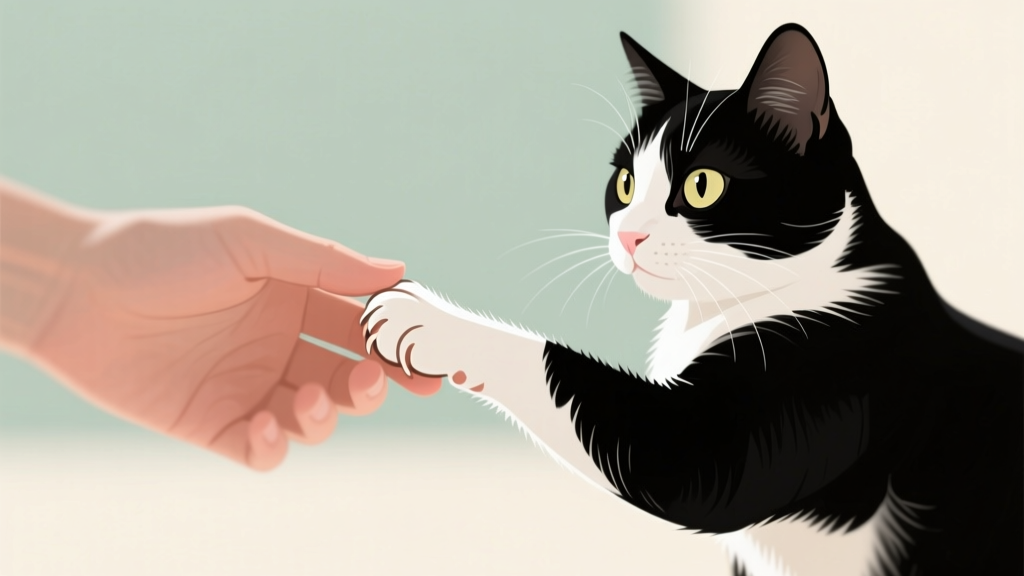
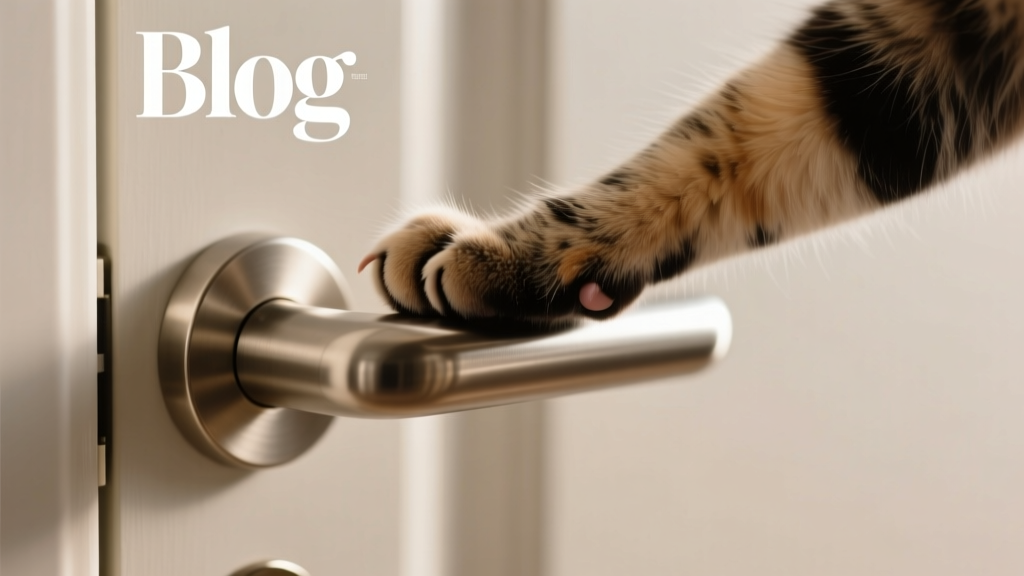
You’re in the kitchen. Your cat trots in like they own the place (because, of course, they do), looks at you with that calm little face… and then reaches up and places a paw on the door handle. Sometimes they hook it like they’re about to open the door themselves. Sometimes they just rest there, frozen in a tiny moment of feline drama, as if to say, “This is the part where you help me.”
If you’ve ever caught your cat doing this and thought, Is my cat trying to escape? Are they training me? Have they become… a small, furry locksmith?—you’re not alone. Paw-on-handle behavior is one of those quirky, clever, very cat-like ways of communicating. And yes, it usually means an exit request—but the full story is more interesting than “let me out.”
Why Cats Do This (The Scientific + Evolutionary Angle)
Cats are natural problem-solvers. In the wild, their survival depends on investigating objects, testing boundaries, and manipulating the environment—especially with their paws. Unlike many animals that primarily “do things” with their mouths, cats have surprisingly nimble front paws, with heightened sensitivity and fine motor control. Those paws are built for precise hunting moves: pinning prey, fishing it out of holes, and feeling vibrations.
Now drop that same curious, tactile hunter into a home where doors are the ultimate barriers. A door is a mysterious, solid wall that sometimes opens (magic!) and leads to another territory filled with smells, sounds, breezes, people, or possibly The Forbidden Room With The Dust Bunnies. Cats notice patterns quickly: door handle moves → door opens → new access. It’s not hard for them to connect the dots.
There’s also a learning component. Many cats discover that touching a handle gets a human’s attention fast. If paw-on-handle leads to the door opening even a few times, the behavior gets reinforced. From your cat’s perspective, it’s effective communication. From your perspective, it’s a tiny furry roommate who has figured out the “service bell.”
A Breakdown of the Behavior in Different Contexts
“Paw on the handle” can show up in a few flavors. The context helps you decode the message.
1) The Classic: “Open this door.”
This is the most common scenario. Your cat walks to the door, reaches up, touches or hooks the handle, then looks back at you. This is a clear request: access to the other side. It might be outside, a hallway, a bedroom, or a closet they believe contains treasures (or at least the laundry basket).
2) The Protest: “I disagree with this closed-door policy.”
Some cats don’t just want to go through a door—they want it to stay open on principle. If your cat places a paw on the handle and then vocalizes, scratches, or repeatedly tries again and again, the behavior can be part request, part frustration. Cats often find closed doors socially weird because they reduce access to their people and their territory.
3) The Investigative Tap: “This thing moves.”
In curious, playful cats, the behavior can be less about exiting and more about experimenting. They may bat the handle, watch it jiggle, and do it again. This is enrichment behavior—your cat is literally making their own entertainment.
4) The Attention Hack: “Look at me. Now.”
If the paw-on-handle happens when you’re on a call or busy (convenient timing, isn’t it?), your cat may be using the door as a tool to pull your focus. They’ve learned that door-related actions reliably make humans react.
5) The Routine Reminder: “It’s time.”
Cats are schedule enthusiasts. If your cat touches the handle around the same time every day—especially near feeding time, walk time, or bedtime—this can be a ritualized cue. They’re prompting you to follow the script.
What It Says About Your Cat’s Mood and Feelings
This behavior isn’t just “smart”—it’s emotional communication. Here are common emotional states that can ride along with the paw-on-handle gesture:
- Curiosity: Ears forward, relaxed body, gentle pawing. Your cat is interested in what’s beyond the door or fascinated by the handle itself.
- Confidence: A cat who calmly manipulates a handle is often comfortable in their environment and willing to try new tactics.
- Frustration: Repeated attempts, louder meowing, tail flicking, or escalating scratching suggests, “I want access and I don’t like waiting.”
- Social need: If you’re behind the door (bathroom fans, office doors, bedrooms), the paw-on-handle may be more about closeness than location. Some cats simply prefer not to be separated from their people.
- Anxiety or urgency: Sudden, intense door-fixation—especially combined with pacing, panting, or agitation—can signal stress. (More on when to worry below.)
A helpful clue: after you open the door, what does your cat do? If they stroll through and carry on, it was an access request. If they rub your legs, trill, and linger, it may have been a bid for connection. If they bolt through like they’re late for an appointment, something on the other side is highly motivating.
Related Behaviors You Might Also Notice
Paw-on-handle behavior tends to come with a whole “tool-using cat” package. You might also see:
- Door scratching or carpet scraping near the threshold (another way of demanding access).
- Meowing at doors with a very specific tone that means “Doorman, please.”
- Hanging on the handle with both paws, especially in athletic cats who have seen it move.
- Opening cabinets or drawers (same concept: paw manipulation + persistence).
- “Leading you” to the door by walking a few steps, looking back, and repeating until you follow.
- Touching objects to get attention—knocking pens off tables, pawing at blinds, tapping your shoulder at 5 a.m.
If your cat is doing any of the above, you likely live with a highly observant learner who enjoys cause-and-effect experiments. Congratulations (and… good luck with your cabinets).
When It’s Normal vs. When It Might Be a Concern
Most of the time, pawing at door handles is perfectly normal. It’s curiosity, communication, and learned behavior rolled into one neat little gesture.
It might be worth a closer look if you notice:
- Sudden onset with intensity: If your cat never cared about doors and now seems desperate to get out, consider a change in the home environment (new pet, construction noise, litter box issues, outdoor cat at the window) or a medical discomfort that’s increasing restlessness.
- Compulsive repetition: If your cat spends long periods pawing, scratching, and can’t settle even when redirected, stress or anxiety could be in play.
- Signs of pain or discomfort: Excessive vocalization, hiding, appetite changes, litter box changes, or unusual aggression alongside door-fixation should prompt a vet check.
- Escape risks: If the “exit request” is directed at an exterior door and your cat bolts outside, the main concern is safety rather than psychology—traffic, toxins, predators, and getting lost.
If you’re unsure, a good rule is: if the behavior is new, intense, and paired with other changes, consult your veterinarian and consider environmental stressors.
How to Respond (And Whether to Encourage It)
You don’t have to shut down this behavior—cats communicating clearly is a gift. But you can shape it so it works for both of you.
1) Decide what the door means
If you sometimes open the door and sometimes don’t, your cat will try harder (in behavior terms, intermittent reinforcement makes behaviors stubborn). If the door is never allowed (like outside access), be consistent and offer an alternative.
2) Offer a “yes” that’s safer
- For outdoor requests: Consider a secure catio, leash training, or supervised porch time. Many cats want smells and breezes, not necessarily freedom.
- For closed-room curiosity: If safe, schedule brief “exploration time” so the door isn’t a permanent mystery.
3) Teach a clearer cue
If the handle pawing is noisy or damaging (scratches on doors, frantic clawing), teach an alternative signal. Many cats can learn:
- Touch a target (like a sticky note) near the door
- Sit by the door for access
- Ring a bell (some cats genuinely take to this)
Reward the alternative with treats or the door opening—whichever your cat is requesting.
4) Increase enrichment so the door isn’t the only “project”
Cats who manipulate handles are often under-stimulated (or just brilliant). Add:
- Food puzzles or treat balls
- Daily interactive play (wand toys, chase games)
- Window perches for “cat TV”
- Rotate toys to keep novelty high
5) Mind the human habit loop
If your cat paws the handle when you’re working and you immediately jump up, you’ve taught them a reliable interruption strategy. If you want less of it, wait for a pause in the behavior, then calmly redirect to a toy or a perch, and reinforce the calm moment—not the paw-on-handle.
Fun Facts and Research-Adjacent Nuggets
- Cats are excellent at reading human routines. They may not understand “doors” as we do, but they understand patterns: handle turns, humans move, access happens.
- Paws are sensory tools. Cats have a high density of nerve endings in their paws, making touching and testing objects inherently rewarding—especially moving parts like handles.
- Some cats develop “ritual gestures.” Behaviors like handle touching can become a polite habit, especially if it reliably gets a predictable response (like a door opening or a human following).
- Door behavior can be territorial. Cats map their home as a network of resources (food, litter, resting spots, humans). Closed doors can feel like a resource cutoff—so they investigate and challenge the barrier.
FAQ: Cat Paw Holding the Door Handle
Why does my cat touch the door handle and then look at me?
That look-back is communication: your cat is checking whether you noticed the request. It’s often a learned “I do this, then you do that” routine.
Is my cat trying to escape or run away?
Usually no—most cats are requesting access, novelty, or outdoor smells. If your cat bolts outside every chance they get, treat it as a safety issue and consider secure alternatives like a catio or leash walks.
Should I open the door when my cat does this?
If the destination is safe and you don’t mind the behavior, opening the door is a reasonable response. If it leads to danger (outside, garage, stairwell, laundry chemicals), don’t reward it—redirect and provide a safer “yes.”
My cat does this at night. What do I do?
Nighttime door requests often come from boredom, habit, or a shifted sleep schedule. Add an active play session before bed, feed a small meal afterward, and keep nighttime boundaries consistent. If it’s a bedroom door issue, consider whether your cat is seeking closeness or routine.
Can cats actually open door handles?
Some can, especially lever-style handles. Cats learn through repetition and observation, and athletic individuals may figure out the right combination of pulling and weight. If that’s a problem, childproof latches or switching to round knobs can help.
Does this mean my cat is unusually smart?
It suggests your cat is curious, persistent, and good at noticing cause-and-effect. Intelligence in cats often shows up as problem-solving and creative attention-getting—sometimes to your inconvenience.
A Better Relationship Through Better “Door Conversations”
When your cat puts a paw on the door handle, they’re not just being quirky. They’re using the tools they have—paws, pattern recognition, and a dash of theatrical timing—to communicate with you. If you respond thoughtfully (and consistently), you can turn a potentially annoying habit into a clear little conversation: “You need something, I understand, here’s how we can do it safely.”
Has your cat tried to open a door like they pay rent? Share your funniest or most surprising door-handle stories with the Cat Lovers Base community at catloversbase.com—we’d love to hear what your clever paws are up to.