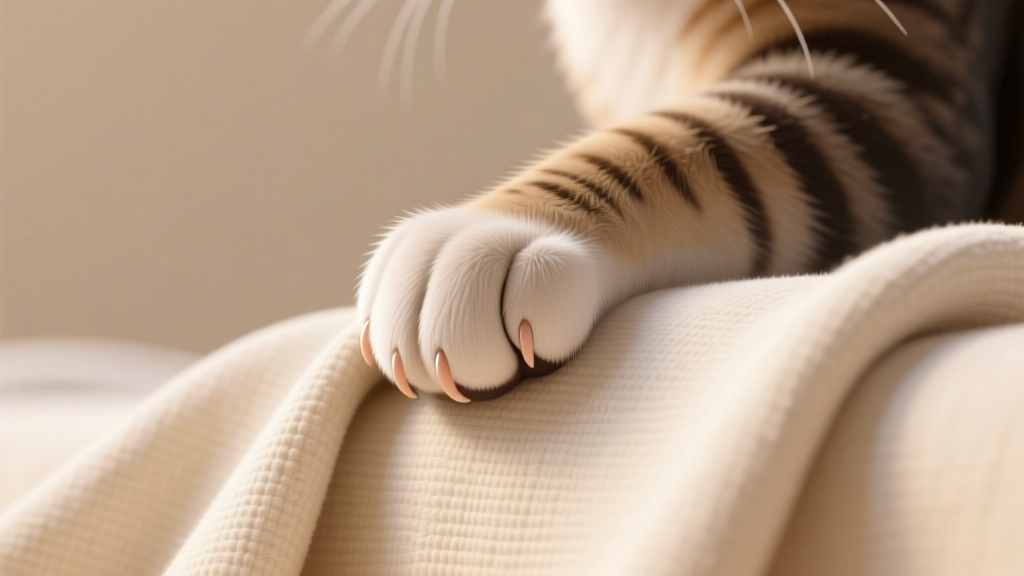
Cat Paw Holding the Blanket Corner: Security Behavior
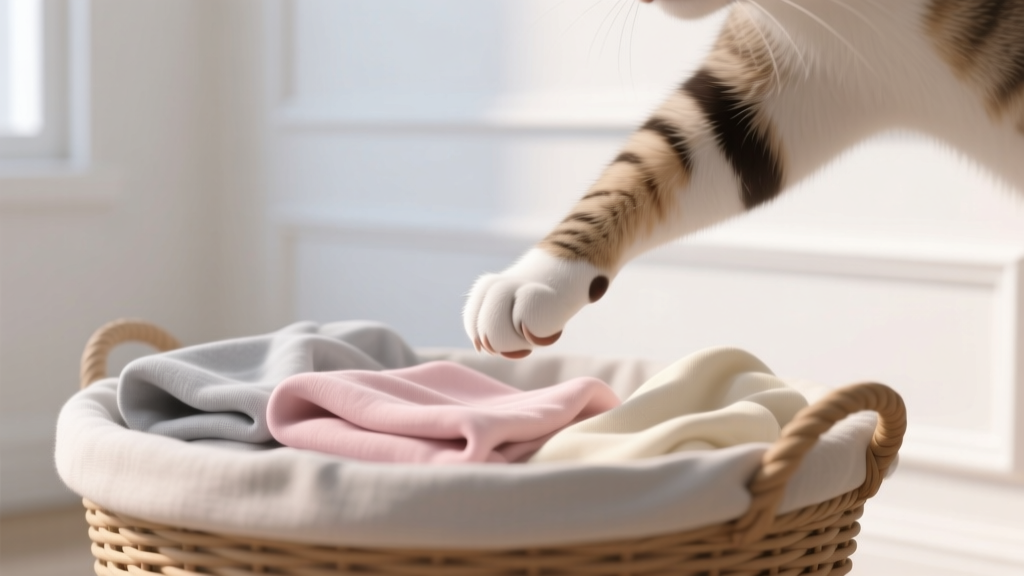
You’re finally settled in for the night. The room is quiet, your cat jumps onto the bed, turns in a neat little circle… and then you notice it: one paw reaches out and hooks the corner of the blanket like a tiny anchor. Sometimes they hold it while they loaf. Sometimes they knead first, then keep a paw planted like they’re guarding the fabric. And if you gently tug the blanket? That paw tightens, as if your cat is thinking, “Absolutely not. This is my comfort corner.”
If you’ve seen this, you’re not alone—and you’re not imagining the meaning behind it. Cats don’t grab blanket corners by accident. It’s often a security behavior, a self-soothing ritual, and occasionally a subtle “please don’t disturb me” message. The good news: most of the time, it’s normal, sweet, and tells you your cat feels safe enough to get cozy in your space.
Why Cats Hold Blanket Corners (A Scientific & Evolutionary Lens)
Domestic cats may live indoors, but their brains are still tuned by evolution to care deeply about safety, control, and predictable comfort. A blanket corner is more than fabric—it’s a stable object in an environment that can change (people moving, noises, other pets, shifting routines). When your cat pins or holds that corner, they’re creating a tiny “controlled zone.”
There are a few science-y reasons this behavior makes sense:
- Anchoring for security: In the wild, resting is risky. Cats evolved to choose protected resting spots and to maintain a sense of control over their immediate surroundings. Holding a corner can be an “I’m stable here” cue for their nervous system.
- Tactile comfort: Cats are extremely sensitive to touch. Paw pads are packed with nerve endings. Firm pressure against a blanket can be soothing, similar to how humans might clutch a pillow or tuck a foot under a heavy duvet.
- Kittenhood carryover: Many comforting behaviors trace back to nursing. Kneading and holding fabric can echo the rhythmic pawing kittens do against their mother to stimulate milk flow—later repurposed as a calming habit in adulthood.
- Scent and familiarity: Blankets often carry your scent and your cat’s scent. Familiar smells signal safety. Touching and manipulating the fabric can help them “confirm” the comforting scent landscape.
In short: blanket corners are easy to grab, reliably present, and loaded with reassuring signals. It’s the feline equivalent of grabbing the armrest in a comfy chair and thinking, “Perfect. I live here now.”
A Detailed Breakdown: Different Contexts, Different Meanings
Not all blanket-corner paw holding looks the same. Here are common variations and what may be happening in your cat’s mind.
1) The Sleep Anchor
Your cat is drowsy, eyes half-lidded, breathing slow, paw gently pinning the corner. This is classic security anchoring. The cat version of a child holding onto a favorite stuffed animal while drifting off.
What you’ll notice: relaxed whiskers, soft face, tail still, slow blinks, maybe a tiny sigh (yes, some cats do this).
2) The “Don’t Move My Bed” Hold
Your cat chooses a blanket fold as their nest. When you shift, the blanket moves, and your cat reflexively clamps down. That paw is saying, “I have arranged this to my liking.”
What you’ll notice: gentle paw pressure that increases if you tug; your cat may glance at you, then look away as if to pretend they weren’t controlling the situation.
3) The Pre-Knead Grip
Some cats hold the blanket corner before kneading, like they’re bracing the fabric. This can be a comfort ritual that includes kneading, purring, and settling into a loaf.
What you’ll notice: rhythmic kneading, purring, drooling in some cats, and a very determined expression.
4) The “I’m Not Totally Sure Yet” Cautious Hold
If your cat is in a new environment—or if something recently changed (new pet, visitors, loud construction)—they may hold the blanket corner more tightly, sometimes with a crouched posture. The blanket becomes a coping tool.
What you’ll notice: ears slightly rotated to the sides, scanning eyes, body a bit tense, paw gripping more firmly than usual.
5) The Playful Capture
Sometimes a blanket corner is just a tempting target. Your cat bats it, hooks it, kicks it, and “wins.” This is less about security and more about prey play.
What you’ll notice: dilated pupils, quick movements, bunny kicks, tail twitching, bursts of energy.
What It Says About Your Cat’s Mood and Feelings
Think of blanket-corner holding as a small emotional barometer. Pair it with body language for the most accurate read.
- Content and bonded: If your cat holds the blanket near you, purrs, and relaxes, it often means they feel safe and socially comfortable. Your presence is part of the “secure nest.”
- Self-soothing: If the behavior increases during storms, fireworks, or after visitors, it may be a calming ritual. Your cat is regulating stress in a quiet, non-destructive way.
- Possessive (mildly): A firmer grip paired with a protective posture can be a gentle “this spot is mine” signal—usually harmless unless it escalates to swatting or guarding.
- Overstimulated or conflicted: If the paw grips while the cat’s skin twitches, tail flicks sharply, or they seem tense, the blanket may be serving as an outlet while they decide whether to relax or move away.
Most of the time, it’s a good sign: your cat has found a comfort strategy that doesn’t involve chewing cords or yowling at 3 a.m.
Related Behaviors You Might Also Notice
Cats rarely have just one cozy quirk. If your cat holds blanket corners, you may also see:
- Kneading (“making biscuits”): Often paired with blanket holding, especially on soft textures.
- Suckling or wool-sucking: Some cats mouth or suck on blankets, especially if they were weaned early.
- Face rubbing: Rubbing cheeks on blankets or pillows deposits facial pheromones and marks the area as familiar.
- Burrowing: Diving under blankets to create a den-like hiding place.
- Purring during settling: Not always “happy”—sometimes a self-soothing purr—yet commonly seen with comfort rituals.
- Slow blinking: A relaxed social signal often offered to trusted humans nearby.
When Blanket-Corner Holding Is Normal vs. When to Be Concerned
In most households, this behavior is sweetly normal. It becomes worth a closer look if you notice sudden changes, intensity, or distress signs.
Likely Normal
- Your cat does it primarily during rest or cuddles.
- Their body looks relaxed (soft eyes, loose posture).
- They stop easily if distracted with a treat, toy, or gentle petting (if they enjoy petting in that moment).
- It’s consistent and part of their usual bedtime routine.
Potential Concern
- Sudden onset with anxiety signs: Hiding more, reduced appetite, overgrooming, increased startle response, or nighttime vocalizing.
- Compulsive intensity: Your cat seems “stuck” doing it for long periods, can’t settle, or becomes agitated if interrupted.
- Aggression/guarding: Growling, swatting, or biting if you approach the blanket area—especially if this is new.
- Associated pain cues: If your cat’s grip looks tense and they’re otherwise sensitive to touch, limping, or reluctant to jump, pain could be driving the need for control or comfort.
If you’re seeing the concern list, consider a vet check to rule out pain or medical stressors first. If medical issues are ruled out, a behavior professional can help you map triggers and reduce anxiety.
How to Respond (And When to Encourage It)
You don’t need to “fix” blanket-corner holding if your cat is otherwise happy and healthy. You can support it in a way that improves your relationship and your cat’s sense of safety.
- Respect the anchor: If your cat has a paw hooked and looks sleepy, avoid suddenly yanking the blanket. Slow movements help your cat stay relaxed.
- Create a designated cozy corner: Offer a soft throw blanket on the couch or bed that can be your cat’s “safe fabric.” This reduces conflict over your favorite duvet.
- Pair it with predictability: If your cat does this at bedtime, keep the routine consistent—dim lights, calm voices, same settling spot. Routine is powerful feline therapy.
- Offer alternative soothing options: Heated cat beds, plush blankets, and a covered bed can provide the same den-like comfort.
- Use gentle reinforcement: If your cat chooses their own blanket instead of clawing your bedding, reward with calm praise, a treat, or a slow blink.
- Keep nails maintained: If gripping leads to snagging or accidental scratching, regular nail trims or scratching posts nearby can help.
If the behavior seems stress-related, focus on the environment: more vertical space, predictable play sessions, and safe hiding spots can reduce the need for constant self-soothing.
Fun Facts & Research-Style Nuggets
- Paw pads are sensory super-tools: Cats rely heavily on tactile input. Pressing into fabric gives rich sensory feedback, which can be calming.
- Kneading has deep roots: Adult kneading and fabric-holding behaviors are commonly linked to early nursing patterns—an emotional “memory” of safety.
- Cats curate their sleep space: A cat’s choice of texture, warmth, and cover isn’t random. Soft, warm, and scent-rich surfaces mimic secure resting sites.
- Comfort behaviors can be social: When your cat holds the blanket while leaning against you, they may be mixing self-soothing with social bonding—like combining a security blanket with a trusted friend nearby.
FAQ: Cat Paw Holding the Blanket Corner
Why does my cat hold the blanket corner with one paw?
Usually for comfort and security. The paw acts like an anchor, giving your cat tactile reassurance and a sense of control while resting. It can also be part of a kneading routine.
Is my cat being possessive of the blanket?
Sometimes, mildly. If your cat gently grips when you move the blanket, they may be trying to keep their “nest” in place. It’s typically harmless unless it escalates into guarding behavior (hissing, swatting, biting).
My cat grips the blanket tighter during storms or when guests are over—why?
That’s a classic self-soothing pattern. Stress makes cats seek predictable sensory comfort. The blanket may smell familiar and feel safe, and gripping it can help them regulate nervous energy.
Does this mean my cat is bonded to me?
It can. If your cat does it while sitting next to you, purring, slow blinking, or choosing your bed specifically, it often indicates trust and comfort in your presence.
Should I stop my cat from doing it?
Not unless it’s causing problems (snagging, damage, or escalating anxiety). Most of the time it’s a healthy comfort behavior. If you need your blanket back, offer a similar blanket nearby and gently redirect.
What if my cat also suckles or chews the blanket?
Suckling can be normal, especially in cats weaned early, but chewing and ingesting fabric is a concern. If your cat is eating threads or fabric, talk to your veterinarian—ingesting material can cause intestinal blockages. Provide safer comfort items and increase enrichment.
Your cat’s blanket-corner paw hold is one of those small behaviors that feels oddly human—like they’re saying, “I’m safe now, and I’d like to keep it that way.” Watch the context, read the body language, and you’ll learn a lot about what comforts your cat most.
Has your cat claimed a specific blanket corner, pillow edge, or hoodie sleeve as their personal security zone? Share your stories (and the hilarious details) with our community at catloversbase.com—we love a good “my cat is weird and wonderful” report.