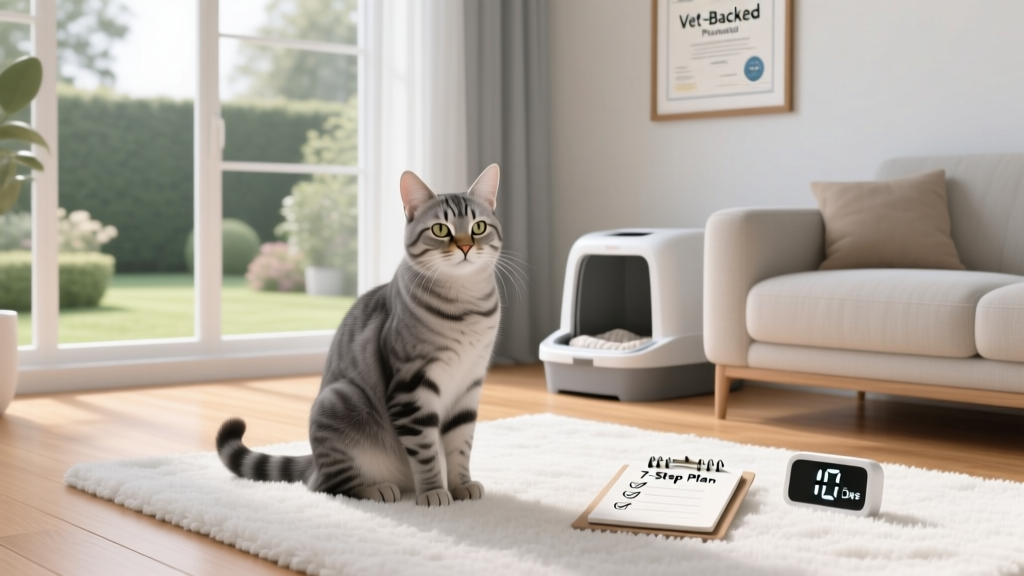
How to Fix Cat Behavior Problems Peeping
Why Your Cat’s Peeing Outside the Box Isn’t ‘Just Bad Behavior’ — And Why Most Owners Make It Worse
If you’re searching for how to fix cat behavior problems peeing, you’re likely exhausted, frustrated, and maybe even embarrassed — scrubbing carpets at midnight, sniffing corners for hidden spots, or wondering if your beloved cat suddenly hates you. But here’s the truth no one tells you upfront: inappropriate urination is rarely about spite or rebellion. In fact, over 72% of cats exhibiting this behavior have an underlying medical condition *or* a deeply rooted environmental stressor — and punishing, yelling, or rubbing their nose in it doesn’t just fail — it actively worsens anxiety and entrenches the problem. This isn’t disobedience. It’s communication. And once you learn to decode it, resolution isn’t just possible — it’s highly predictable.
Step 1: Rule Out Medical Causes — Before You Change One Thing
Never assume inappropriate urination is behavioral until you’ve ruled out illness. According to Dr. Sarah Wooten, DVM and certified feline practitioner, "Urinating outside the litter box is the #1 clinical sign of lower urinary tract disease in cats — and delaying diagnostics can turn a simple UTI into life-threatening urethral obstruction, especially in males." Conditions like cystitis, bladder stones, kidney disease, diabetes, hyperthyroidism, and even arthritis (which makes stepping into a high-sided box painful) all manifest this way.
Action plan: Schedule a full veterinary exam *within 48 hours* of the first incident. Request a urinalysis (ideally via cystocentesis — sterile needle collection directly from the bladder), urine culture, bloodwork (CBC, chemistry panel, T4), and abdominal ultrasound if indicated. Don’t skip the culture — up to 30% of UTIs are missed on standard dipstick tests. If your vet dismisses it as "just behavioral," ask for a referral to a board-certified feline specialist or internal medicine veterinarian. Document everything: location, frequency, posture (spraying vs. squatting), odor intensity, and whether urine appears bloody or cloudy.
Step 2: Decode the Message — Is It Spraying or Soiling?
This distinction changes *everything*. Spraying (urine marking) is a territorial or stress-related behavior: cats stand upright, back toward vertical surfaces (walls, furniture, curtains), tail quivers, and release a small, pungent stream. Soiling is elimination — squatting on horizontal surfaces (beds, laundry piles, rugs) with larger volumes. A 2022 study in the Journal of Feline Medicine and Surgery found that 68% of spraying cases resolved within 2 weeks of environmental enrichment alone — while only 29% of soiling cases did without concurrent litter box optimization.
Ask yourself:
- Does your cat lift its tail and spray? → Likely stress or competition.
- Does it squat and fully empty? → Likely litter aversion, pain, or accessibility issues.
- Does it happen near doors/windows? → Often linked to outdoor cat sightings.
- Does it target your belongings (shoes, pillows)? → Strong indicator of separation anxiety or social stress.
Real-world example: Luna, a 4-year-old spayed Siamese, began spraying her owner’s work laptop bag. Her owner assumed “revenge.” But video monitoring revealed she sprayed *only* when the neighbor’s intact tom cat appeared in the backyard. Installing opaque window film + Feliway diffusers reduced spraying by 95% in 5 days.
Step 3: The Litter Box Reset — Science-Backed Setup Rules Most Owners Ignore
Even cats with clean bills of health often pee outside the box because their setup violates core feline instincts. Veterinarian Dr. Tony Buffington, a leading researcher in feline environmental needs, states: "Cats don’t choose litter boxes — they tolerate them. Your job is to make tolerance unnecessary." Here’s what the data says works:
- Quantity: N+1 rule — if you have 2 cats, provide 3 boxes. Not 2. Not “they share fine.”
- Location: Place boxes in quiet, low-traffic, non-isolated areas — never bathrooms (too noisy), basements (too isolated), or next to washing machines (sudden noise = trauma).
- Litter: 90% of cats prefer unscented, clumping, fine-grained clay or silica. Avoid crystals, pine pellets, or scented litters — they’re irritating to sensitive paws and noses.
- Depth: 2–3 inches minimum. Too shallow feels unstable; too deep traps moisture and smells.
- Cleaning: Scoop twice daily. Fully change litter weekly. Wash boxes monthly with mild soap (no ammonia or citrus — smells mimic urine or predators).
Mini-case study: After ruling out UTI, Max’s owner replaced his single covered box (with charcoal filter) with two open, shallow boxes filled with Dr. Elsey’s Precious Cat Ultra in high-traffic but quiet hallways. Within 72 hours, accidents dropped from 4x/day to zero — and stayed gone for 18 months.
Step 4: Reduce Stress & Rebuild Security — The Hidden Leverage Point
Feline stress is invisible but physiologically powerful. Chronic stress elevates cortisol, which suppresses immune function and alters bladder wall integrity — creating a vicious cycle where stress causes cystitis, which causes pain, which increases stress. A landmark 2021 University of Lincoln study tracked 127 cats with idiopathic cystitis: those receiving environmental enrichment (vertical space, consistent routines, interactive play, hiding spots) had 4.2x fewer recurrences than controls.
Implement the Feline Five — five pillars of security validated by the American Association of Feline Practitioners:
- Food: Use puzzle feeders 2x/day — mimics hunting, reduces boredom-induced stress.
- Water: Offer multiple wide, shallow bowls + a circulating fountain (cats instinctively avoid stagnant water).
- Elimination: Already covered — but add a “safe zone” box near sleeping areas during retraining.
- Scratching: Provide both horizontal (cardboard) and vertical (sisal) options — scratching releases endorphins and marks safety.
- Play: 15-minute interactive sessions (wand toys) twice daily — ends with a treat to simulate “kill,” reducing predatory frustration.
Add targeted tools: Feliway Optimum diffusers (clinically proven to reduce marking by 64% in multi-cat homes) and Adaptil collars (for cats cohabiting with anxious dogs). For severe cases, consult a certified cat behaviorist — not a trainer — through the International Association of Animal Behavior Consultants (IAABC).
| Step | Action | Tools/Supplies Needed | Expected Timeline for Improvement |
|---|---|---|---|
| 1 | Vet visit + diagnostics | Vet appointment, urine sample container, symptom log | 0–3 days (diagnosis); treatment starts immediately |
| 2 | Identify spraying vs. soiling + map triggers | Smart camera (e.g., Furbo), notebook, window film (if outdoor triggers) | 1–2 days (observation); pattern clear by Day 3 |
| 3 | Reset litter box setup (N+1, open, unscented, scooped 2x/day) | Boxes, Dr. Elsey’s or Arm & Hammer Clump & Seal, mild soap | Accidents drop 50–80% within 72 hours |
| 4 | Launch Feline Five enrichment + Feliway Optimum | Puzzle feeder, water fountain, sisal post, wand toy, diffuser | Marked reduction in stress behaviors by Day 7; full stability by Day 14–21 |
| 5 | Reintroduce confidence with positive reinforcement | Treats (freeze-dried chicken), clicker (optional), patience | Consistent box use established by Day 10–14; long-term maintenance begins |
Frequently Asked Questions
Can I punish my cat for peeing outside the box?
No — and doing so is counterproductive and harmful. Cats don’t associate punishment with past actions; they associate it with *you*, increasing fear and stress. Scrubbing, yelling, or holding their paws in urine damages trust and often shifts accidents to hidden locations (under beds, closets) — making resolution harder. Positive reinforcement (treats for using the box) and environmental fixes are the only evidence-based approaches.
My cat only pees on my bed — what does that mean?
This is almost always a sign of intense attachment *or* distress. Your bed carries your scent — the most comforting smell to your cat. When they urinate there, they’re either trying to “blend” your scent with theirs (a bonding behavior gone awry due to anxiety) or signaling extreme insecurity (“I need to be close to you, even if I’m scared”). Rule out medical causes first, then assess recent changes: new pet, move, work schedule shift, or household conflict. Add a cozy cat bed *next to* your bed with your worn t-shirt inside — often redirects the behavior within days.
Will neutering/spaying stop spraying?
It significantly reduces spraying in ~85–90% of intact males and ~95% of intact females — but *not* if spraying started after sterilization. Late-onset spraying is nearly always stress-driven. If your cat was fixed early and only began spraying at age 3+, focus on environmental triggers, not hormones.
How long does it take to fix inappropriate urination?
With medical causes ruled out and proper protocols followed, 70% of cats show marked improvement within 7 days, and 92% achieve full resolution within 21 days. Relapses usually indicate incomplete environmental management (e.g., missing one trigger, inconsistent cleaning, or unaddressed multi-cat tension). Track progress daily — consistency is your strongest tool.
Is vinegar or bleach okay for cleaning urine spots?
No — both are dangerous. Bleach reacts with urine ammonia to create toxic chloramine gas. Vinegar’s acidic scent mimics pheromones and can *attract* cats back to the same spot. Use enzymatic cleaners only (e.g., Nature’s Miracle, Urine Off, or homemade enzyme solution: 1 part hydrogen peroxide + 1 part liquid dish soap + 2 tbsp baking soda — apply, wait 5 min, blot, repeat). Always test on fabric first.
Common Myths About Cat Peeing Behavior
Myth 1: “Cats pee outside the box to get back at you.”
Cats lack the cognitive capacity for vengeful motivation. What looks like “revenge” is actually untreated pain, fear, or stress — and mislabeling it delays real solutions.
Myth 2: “If it’s not medical, it’s just stubbornness — they’ll grow out of it.”
Behavioral issues rarely resolve without intervention. Left unaddressed, inappropriate urination becomes a reinforced habit — neurologically embedded through repetition. Early, compassionate action prevents long-term patterns.
Related Topics (Internal Link Suggestions)
- Understanding Cat Body Language Signs of Stress — suggested anchor text: "subtle signs your cat is stressed"
- Best Litter Boxes for Senior or Arthritic Cats — suggested anchor text: "low-entry litter boxes for older cats"
- How to Introduce a New Cat Without Triggering Territory Issues — suggested anchor text: "stress-free multi-cat household guide"
- DIY Enrichment Toys for Indoor Cats — suggested anchor text: "affordable cat enrichment ideas"
- When to See a Veterinary Behaviorist vs. Trainer — suggested anchor text: "certified cat behaviorist near me"
Your Next Step Starts Today — And It’s Simpler Than You Think
You now know the truth: how to fix cat behavior problems peeing isn’t about control — it’s about compassion, observation, and precision. The path forward isn’t complicated, but it *is* specific: rule out illness, decode the message, optimize the box, and rebuild security. Start tonight. Scoop the litter. Open that covered box. Place a second one near the sofa. Turn on a Feliway diffuser. Your cat isn’t broken — they’re asking for help in the only language they have. And you, armed with science and empathy, are exactly who they need. Download our free Litter Box Audit Checklist (PDF) to walk through each step with photos and troubleshooting tips — because resolution shouldn’t depend on guesswork.