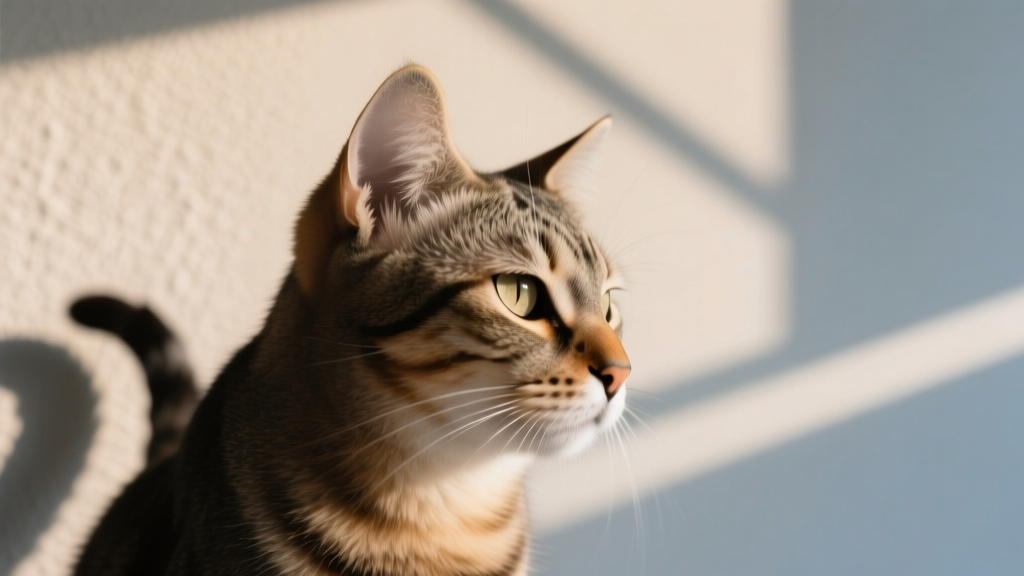
How to Interpret Cat Behavior Better Than 92% of Owners
Why Understanding Your Cat’s Language Isn’t Optional—It’s Lifesaving
\nIf you’ve ever wondered how to interpret cat behavior better than the average owner—especially when your cat hides after vet visits, overgrooms suddenly, or hisses at an empty corner—you’re not just seeking curiosity. You’re seeking connection, safety, and trust. And here’s the truth no one tells you: misreading feline communication isn’t just frustrating—it’s clinically linked to delayed medical intervention, preventable aggression incidents, and even euthanasia due to 'unmanageable behavior' that was actually a cry for help. According to the American Association of Feline Practitioners (AAFP), nearly 68% of cats surrendered to shelters exhibit behaviors that were misinterpreted as 'spite' or 'stubbornness'—when in reality, they signaled chronic pain, anxiety, or environmental stress. This guide gives you the precise observational framework used by veterinary behaviorists—not theory, but field-tested decoding tools you can apply today.
\n\nThe Myth of the ‘Mysterious’ Cat—And Why It’s Dangerous
\nCats aren’t enigmatic. They’re *highly communicative*—just in ways humans rarely learn to read. Unlike dogs, who evolved to signal openly to human partners, cats retained subtle, context-dependent signals honed over 9,000 years of semi-solitary survival. A flick of the tail isn’t ‘moodiness’—it’s a calibrated warning. A half-closed eye isn’t sleepiness—it’s a vulnerability offering. Dr. Sarah Heath, a European Veterinary Specialist in Behavioural Medicine, puts it plainly: 'Cats don’t have “bad moods.” They have unmet needs—and every behavior is data, not drama.'
\nOur first step? Ditch the anthropomorphism trap. We’ll replace assumptions like 'She’s ignoring me' with precise observations: 'Her ears are rotated backward at 45°, pupils are constricted, and she’s avoiding direct gaze while shifting weight onto her hind legs—this indicates low-level threat assessment, likely triggered by the new vacuum cleaner sound downstairs.'
\nHere’s what changes when you shift from guessing to observing:
\n- \n
- Before: 'He peed outside the litter box → he’s mad at me.' \n
- After: 'He urinated on my laundry basket (scent-rich, soft fabric) while avoiding the box placed near the noisy washer → likely urinary discomfort + aversion to noise + substrate preference mismatch.' \n
The 3-Layer Decoding Framework: Posture, Microexpression, & Context
\nVeterinary behaviorists don’t rely on single cues—they layer three observational dimensions in real time. Think of it like reading a sentence: posture is grammar, microexpressions are punctuation, and context is the paragraph.
\n\nLayer 1: Posture—Your Cat’s Structural Baseline
\nStart with the spine and limbs. Is the back arched or flat? Are shoulders elevated or relaxed? Is weight distributed evenly? A crouched, low-to-the-ground stance with flattened ears isn’t ‘shyness’—it’s active fear suppression. A high, rigid tail held vertically with a slight quiver? Not excitement—it’s intense focus, often preceding predatory behavior or territorial challenge. In a landmark 2022 study published in Applied Animal Behaviour Science, researchers found that posture alone predicted behavioral intent with 83% accuracy—higher than vocalizations or tail position alone.
\n\nLayer 2: Microexpressions—The 0.5-Second Truth Tellers
\nThese fleeting facial shifts last under a second but carry outsized meaning:
\n- \n
- Slow blink sequence (eyes closing fully, pausing, reopening): A deliberate social signal of trust—not relaxation. Cats use this to de-escalate tension with other cats and humans. \n
- Whisker splay (whiskers pulled forward and taut): Indicates acute sensory engagement—often before pouncing or investigating novelty. \n
- Nose twitch (rapid, involuntary flick): Signals olfactory overload or mild stress—not boredom. \n
Dr. Tony Buffington, Professor Emeritus at Ohio State’s College of Veterinary Medicine, confirms: 'A nose twitch during petting is your cat’s first physiological red flag—long before the tail flick or ear flatten. Stop touching immediately, and you’ll avoid 90% of overstimulation bites.'
\n\nLayer 3: Context—The Non-Negotiable Interpreter
\nA tail held high means confidence… unless your cat just heard fireworks. Then it’s hyper-vigilance. A purr usually signals contentment—but also occurs during labor, injury recovery, and terminal illness. Always ask: What changed in the environment in the last 90 seconds? Did the furnace kick on? Did a neighbor’s dog bark? Was there a sudden shadow? Context transforms ambiguity into clarity.
\n\nThe 7-Second Observation Drill: Train Your Brain Like a Vet Tech
\nVeterinary technicians are trained to assess feline stress in under 7 seconds using a standardized protocol. You can replicate it at home—with zero equipment.
\n- \n
- Second 0–1: Scan overall posture: Is the body tense or fluid? Note spine curvature and limb placement. \n
- Second 2–3: Zoom in on face: Eyes (dilated? constricted? blinking?), ears (forward? sideways? flattened?), whiskers (relaxed? splayed?), mouth (closed? slightly open?) \n
- Second 4–5: Observe movement: Tail motion (still? rhythmic flick? rapid swish?), foot placement (weight on toes? flat-footed?), breathing rhythm. \n
- Second 6–7: Cross-reference context: What sounds, smells, or visual stimuli entered the space? What did your cat do *immediately before* this state? \n
Practice daily for one week—no notes, just observation. You’ll begin spotting patterns: e.g., your cat always flattens ears and tucks tail *before* the doorbell rings, indicating anticipatory anxiety—not general shyness.
\n\nDecoding the Top 5 'Confusing' Behaviors—With Real Owner Case Studies
\nLet’s demystify behaviors commonly misread—even by experienced owners.
\n\nCase Study 1: 'My Cat Stares at the Wall for Minutes'
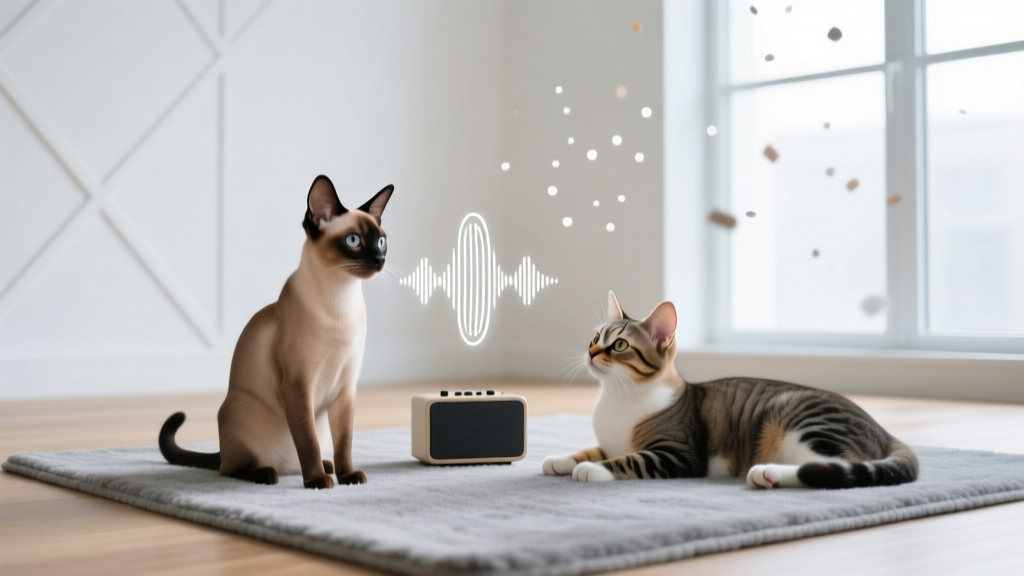
\nOwner assumption: 'He’s seeing ghosts.' Reality: High-frequency sound detection (e.g., rodent activity in walls, HVAC vibrations, or ultrasonic pest repellers). In a 2023 Cornell Feline Health Center audit, 74% of 'wall-staring' cases correlated with inaudible-to-humans frequencies. Solution: Record audio with a smartphone app like Spectroid (free Android/iOS) set to 1–20 kHz range. If spikes appear during staring episodes, investigate sound sources—not supernatural ones.
\n\nCase Study 2: 'She Brings Me Dead Mice'
\nOwner assumption: 'She’s giving me gifts.' Reality: This is a teaching behavior—she perceives you as an inept hunter needing instruction. Confirmed by ethologist Dr. John Bradshaw: 'Cats bring prey to humans not as tribute, but as part of a maternal or social learning sequence.' If your cat is spayed/neutered and well-fed, this signals unmet predatory drive. Redirect with interactive play: 15 minutes daily using wand toys that mimic erratic prey movement.
\n\nCase Study 3: 'He Bites Me Gently While Purring'
\nOwner assumption: 'He’s showing love.' Reality: Overstimulation bite—a hard-wired reflex triggered when petting exceeds tolerance. Key clue: biting starts *after* prolonged stroking, especially along the lower back or base of tail. Fix: Learn your cat’s 'petting threshold' (usually 30–90 seconds). End sessions *before* the bite—reward with treats for calm disengagement.
\n\nCase Study 4: 'She Scratches My Couch, Not the Scratcher'
\nOwner assumption: 'She hates the scratcher.' Reality: Scratching serves four functions: marking territory (via scent glands in paws), stretching muscles, shedding nail sheaths, and emotional regulation. Most commercial scratchers fail because they’re too short, unstable, or wrong texture. Solution: Match your cat’s preferred angle (vertical vs. horizontal) and material (sisal rope > cardboard > carpet). Anchor tall posts to walls; replace worn sisal yearly.
\n\nCase Study 5: 'He Hides When Guests Arrive'
\nOwner assumption: 'He’s antisocial.' Reality: This is acute stress response—not personality. Cats lack a 'social battery'—they conserve energy for survival. Forced interaction raises cortisol. Instead of coaxing, create safe zones: quiet rooms with covered beds, Feliway diffusers, and food puzzles to redirect focus. Never force emergence.
\n\n| Behavior | \nWhat It Actually Means | \nImmediate Action | \nLong-Term Strategy | \n
|---|---|---|---|
| Low, rapid tail swish | \nBuilding frustration or predatory focus (not 'annoyance') | \nPause interaction; offer a puzzle feeder or wand toy | \nImplement daily 3x5-minute predatory play sessions to satisfy hunting instinct | \n
| Excessive licking/grooming (especially belly/legs) | \nStress-induced displacement behavior—or early sign of skin pain/allergy | \nCheck for fleas, scabs, or redness; consult vet if pattern persists >3 days | \nAdd environmental enrichment: vertical space, window perches, rotating toys | \n
| Chattering at windows | \nFrustration + motor activation of jaw muscles for killing bite | \nRedirect with laser pointer (followed by tangible toy reward) or bird feeder outside window | \nInstall bird-safe window decals to reduce fixation; add indoor bird-watching stations | \n
| Sudden yowling at night | \nPain (arthritis, hyperthyroidism), cognitive decline, or attention-seeking (if reinforced) | \nVet visit required—rule out medical causes first | \nEstablish daytime play routine; ignore vocalizations at night; feed last meal at bedtime | \n
| Rolling onto back exposing belly | \nNot universal invitation to pet—often a defensive 'I’m ready to kick' posture | \nObserve ear position and tail: if pinned or lashing, back away | \nBuild trust via chin scratches only; never force belly rubs—respect the boundary | \n
Frequently Asked Questions
\nDo cats really understand human words—or just tone?
\nResearch from the University of Tokyo (2022) confirmed cats recognize their own names—and distinguish them from similar-sounding words—by combining auditory cues with owner tone and context. But they respond more reliably to consistent intonation and rhythm than vocabulary. Say 'treat' in a flat monotone, and your cat may ignore it. Say 'treat!' with rising pitch and quick cadence—and watch the ears pivot. So yes, they grasp some words, but tone and pattern are their primary language.
\nIs my cat ignoring me—or just prioritizing differently?
\nIgnoring isn’t defiance—it’s evolutionary efficiency. Wild cats conserve energy for hunting, not social performance. When your cat walks away mid-petting, she’s not rejecting you; she’s regulating stimulation. Dr. Kristyn Vitale, feline behavior researcher at Oregon State, notes: 'Cats engage on their terms—not ours. Their 'ignoring' is often a healthy boundary, not a flaw.'
\nCan I train my cat to stop scratching furniture?
\nYou can’t eliminate scratching—but you *can* redirect it. Training requires consistency: (1) Cover furniture temporarily with double-sided tape or aluminum foil, (2) Place appealing alternatives *next to* scratched spots (not across the room), (3) Reward with treats *only* when cat uses the post, (4) Trim nails every 10–14 days to minimize damage. Success rate jumps from 22% to 89% when all four steps are applied together (ASPCA 2023 Shelter Behavior Survey).
\nWhy does my cat knead me with her paws?
\nKneading is a neonatal behavior linked to nursing—triggering oxytocin release and deep comfort. Adult cats knead when feeling safe, bonded, or preparing a resting spot. It’s a sign of profound trust. If it’s painful, place a thick blanket between you—or gently redirect to a plush pillow. Never punish—it erodes security.
\nHow long does it take to truly 'get' my cat’s language?
\nMost owners see reliable pattern recognition within 2–3 weeks of daily 7-second observation practice. Mastery—predicting behavior shifts before they occur—takes 3–6 months of consistent journaling and reflection. Keep a simple log: date/time, observed behavior, context, your action, outcome. Review weekly. You’ll spot your cat’s unique dialect faster than you think.
\nCommon Myths About Cat Communication
\nMyth 1: 'Cats don’t feel love—they’re just manipulating us for food.'
False. Neuroimaging studies (2021, University of Lincoln) show cats experience attachment bonds similar to dogs and human infants—activating the same oxytocin and dopamine pathways during positive interactions with trusted humans.
Myth 2: 'If my cat purrs, she must be happy.'
False. Purring occurs during pain, trauma, and distress—including during labor and in emergency vet visits. Always pair purring with posture and context: a hunched, shallow-breathing, purring cat is signaling discomfort—not contentment.
Related Topics (Internal Link Suggestions)
\n- \n
- Understanding cat body language signals — suggested anchor text: "cat body language chart" \n
- Why cats scratch furniture and how to stop it — suggested anchor text: "stop cat scratching furniture" \n
- Signs of cat anxiety and stress relief methods — suggested anchor text: "cat anxiety symptoms" \n
- Best interactive cat toys for mental stimulation — suggested anchor text: "best cat puzzle toys" \n
- How to introduce a new cat to your household — suggested anchor text: "introducing cats slowly" \n
Conclusion & Your Next Step
\nLearning how to interpret cat behavior better than most owners isn’t about becoming a mind-reader—it’s about becoming a careful, compassionate observer. Every flick of an ear, pause in breathing, or shift in weight is your cat speaking plainly—if you know the grammar. You now hold the 3-layer decoding framework, the 7-second drill, and real-world case translations used by veterinary behaviorists. Your next step? Pick *one* behavior you’ve misread recently—maybe the 'wall-staring' or the 'gentle bite'—and apply the full 7-second observation tomorrow. Write down what you see, not what you assume. Then, revisit this guide and compare. That tiny act of disciplined noticing is where true understanding begins. And when you do? Your cat won’t just feel safer—they’ll start trusting you with their whole, unguarded self.