Cat Fence Walking: Balance and Territory Patrol
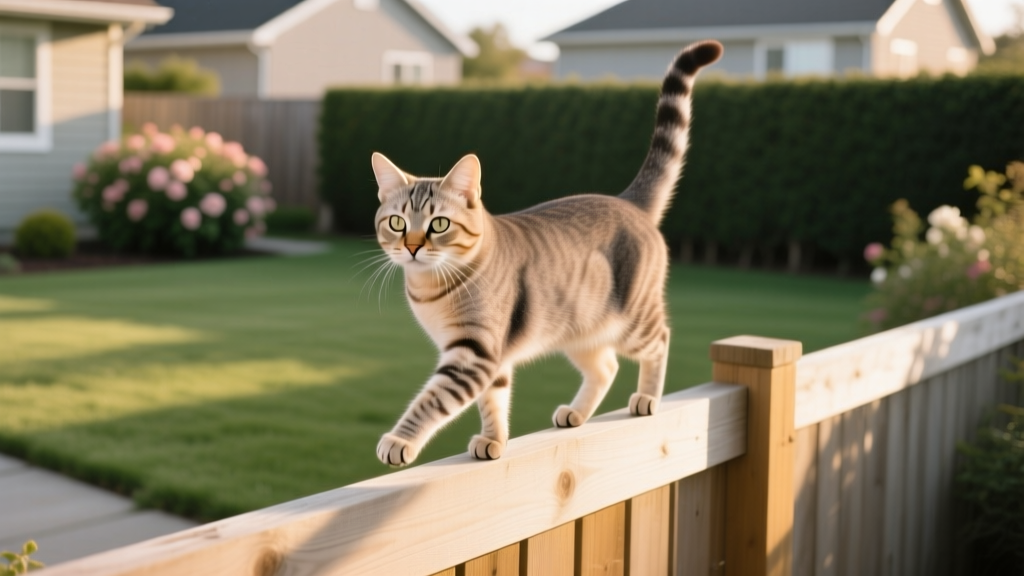
You step into the backyard with your coffee, and there’s your cat—tail held like a little flagpole—padding along the top of the fence as if they own the neighborhood. They pause to stare at a leaf. They sniff a post like it’s a headline. Then they glide forward again, calm and confident, while you hold your breath because… how are they not falling?
If you’ve ever watched your cat fence-walk and wondered whether they’re showing off, hunting, patrolling, or auditioning for a circus, you’re in good company. Fence walking is one of those “classic cat” behaviors that’s equal parts athletic skill and feline mindset. It can be normal, enriching, and even emotionally revealing—especially when you understand what your cat is really doing up there.
Why Cats Walk Fences: The Science and the Wild Roots
Cats are built for narrow places. Their skeleton and nervous system evolved for stalking prey, climbing, and moving with stealth through uneven terrain. Even our sofa-loving house cats carry the same physical upgrades as their wild cousins:
- A flexible spine that helps them make tiny corrections while they move.
- Powerful hind legs for controlled jumps and balance adjustments.
- A tail that acts like a counterbalance—think of it as a built-in tightrope pole.
- Righting reflexes that help them reorient mid-fall (not magic, but impressive physics).
- Highly sensitive paw pads that “read” texture and vibration, giving real-time feedback about footing.
On the evolutionary side, height equals advantage. A higher path can mean:
- Safety: A raised route keeps them away from perceived threats at ground level (dogs, unfamiliar people, noisy objects).
- Hunting efficiency: An elevated perch improves visibility and lets them track movement.
- Territory awareness: Cats are natural boundary-checkers. A fence line is literally a border.
Even if your cat has never hunted anything more serious than a toy mouse, their brain still runs ancient software: “High ground is valuable, borders matter, and balance skills keep me alive.”
Fence Walking in Context: What Your Cat Might Be Doing Up There
Fence walking isn’t one single behavior—it’s a whole category of “cat business,” and the context changes the meaning. Here are the most common scenarios cat owners recognize.
1) The Daily Territory Patrol
Many cats have a routine. Morning lap around the yard. Evening check of the side gate. Quick stop to stare at the neighbor’s garage like it’s suspicious. Fence tops make excellent patrol routes because they’re linear, elevated, and full of information.
Along the way, your cat may pause to sniff, rub their cheeks, or scratch a post. This isn’t random. They’re checking the neighborhood “message board.” Cats communicate through scent, and fences collect it: other cats, wildlife, and even human activity leave behind smells your cat can read like a story.
2) The “I’m Avoiding Something” Walk
Sometimes fence walking is about not being on the ground. If a dog is visiting, kids are playing loudly, or a new object appeared (a trash bin that definitely wasn’t there yesterday), a cat may choose the fence as a safer travel lane.
In these moments, their body language often looks cautious: lower posture, slower steps, frequent pauses, ears rotating like radar.
3) The Hunting and Watching Platform
A fence is a perfect observation deck. Your cat might freeze mid-walk, eyes huge, whiskers forward, tail tip twitching. They may be tracking a bird, a squirrel, or a rustling bush. Even if they never pounce, the act of watching is mentally rewarding—like feline TV, but interactive.
4) The Social Boundary Situation
If there are neighborhood cats, fences can become “border zones.” Your cat may walk the line and stare down another cat on the opposite side, or they may use the fence to avoid a confrontation while still keeping tabs.
Sometimes it’s not aggressive; it’s information gathering. Other times it’s tension management: “I’m here, I’m confident, and I’d prefer you remain over there.”
5) The Pure Athletic Joy Walk
Yes, sometimes it’s just fun. Many cats enjoy using their bodies skillfully. A young, confident cat may trot the fence with a relaxed tail and springy steps—like they’re taking a victory lap around their kingdom.
What Fence Walking Says About Your Cat’s Mood
Your cat’s posture and pacing are the real clues. Fence walking can signal very different emotional states:
- Confident and content: Tail upright or gently curved, smooth strides, casual pauses to sniff, relaxed ears.
- Curious and engaged: Frequent stops, head turning, whiskers forward, focused gaze.
- On alert: Stiffer body, slower movement, ears swiveling, tail held low or stiff, sudden freezing.
- Anxious or conflicted: Crouched posture, hesitant steps, looking back repeatedly, quick retreat to a higher perch.
- Territorial tension: Intense staring, stiff legs, puffed tail, growling/yowling, or abrupt sprinting along the fence line.
Think of fence walking as a “headline” and body language as the full article. The same action—walking the fence—can mean “I’m relaxed” or “I’m managing stress,” depending on the rest of the picture.
Related Behaviors You Might Also Notice
If your cat loves fence walking, you may see other behaviors that fit the same theme: balance, boundaries, and surveillance.
- Walking along the back of the couch or the banister like it’s a runway.
- Perching on high furniture to monitor rooms and hallways.
- Chin/cheek rubbing on corners, posts, or doorframes (scent marking with facial glands).
- Scratching near entry points like gates, doors, or fence posts (visual and scent signals).
- “Sentry mode” window watching with long periods of stillness and occasional tail-tip flicks.
All of these help a cat feel oriented and in control—two things that matter a lot in feline emotional health.
When Fence Walking Is Normal vs. When It Might Be a Concern
In most cases, fence walking is normal, enriching behavior—especially for cats who have safe outdoor access. But there are situations where it deserves a closer look.
Usually Normal
- Your cat moves smoothly and confidently.
- They can get on and off the fence easily.
- They do it as part of a routine and return home relaxed.
- No injuries, limping, or fearfulness afterward.
Potential Concerns
- Sudden increase in fence walking paired with agitation, yowling, or restlessness (could indicate stress, neighborhood cat pressure, or changes in the environment).
- Wobbliness, stumbling, or falling (especially in older cats—this can signal pain, vision issues, inner ear problems, or neurological concerns).
- Obsessive pacing along the fence line, unable to settle, especially if triggered by other cats (territorial anxiety can become chronic stress).
- Injuries such as torn nails, limps, or repeated scratches (the fence may be too narrow, unstable, or unsafe).
- Escaping risk if the fence provides easy access to roads, dogs, or areas where your cat might get trapped.
If your cat’s balance changes suddenly, or if they seem disoriented, it’s worth a call to your vet. “They’re just getting clumsy” can sometimes mask pain or medical issues.
How to Respond (and How to Encourage It Safely)
You don’t have to ban fence walking to be a responsible cat parent. The goal is to keep the experience enriching while reducing risk.
1) Make the Environment Safer
- Check the fence condition: loose boards, sharp edges, unstable posts, protruding nails—cats will find them with their paws.
- Provide safer alternatives: a sturdy cat tree near a window, outdoor shelves in a catio, or a wide “cat fence walkway” in a contained area.
- Consider containment: cat-proof fencing toppers, supervised outdoor time, or a well-designed catio can allow “patrol behavior” without roaming risks.
2) Reduce Territorial Stress
- Block visual triggers where possible (privacy screens on parts of the fence can reduce stare-downs with neighborhood cats).
- Increase indoor enrichment (food puzzles, scheduled play, vertical climbing options) so the fence isn’t their only stimulation outlet.
- Support calm routines: predictable feeding and play times can help cats feel secure when the outside world feels busy.
3) Reinforce “Coming When Called”
If your cat enjoys fence walking, teach a reliable recall. Use a consistent cue (their name or a word), reward with a high-value treat, and practice first indoors, then in the yard under supervision. This is one of the simplest ways to keep fence time from turning into “and now they’re on the neighbor’s roof.”
4) Don’t Startle Them
It’s tempting to call out loudly—especially when your heart leaps into your throat—but startling a cat on a narrow surface can increase fall risk. Use a calm voice. If you want them down, lure them to a safe exit point rather than trying to “shoo” them off.
Fun Facts and Research Tidbits
- Cat tails are serious tools: A cat’s tail helps with balance by shifting their center of gravity during precise movements—especially on narrow surfaces like fences.
- Whiskers aren’t just for cuteness: Whiskers provide spatial information and help cats judge gaps and edges, which can support confident movement along narrow paths.
- Height reduces stress for many cats: Behavioral research and shelter observations repeatedly show that access to vertical space helps cats feel safer and more in control, which can reduce conflict and anxiety.
- Fences are “scent highways”: Outdoor cats frequently use linear features—fence lines, walls, hedges—as travel routes where scent markers accumulate, making them information-rich.
FAQ: Cat Fence Walking
Why does my cat walk on the fence and meow?
Often it’s communication: they may be announcing their presence, responding to another cat, or expressing excitement. If the meowing sounds distressed or happens alongside pacing and agitation, it can indicate territorial stress.
Is fence walking a sign my cat wants to escape?
Not always. Many cats use fences as patrol routes without any desire to leave home. But if your cat routinely uses the fence to jump into new areas and doesn’t return easily, you may need better containment or supervised outdoor time.
Should I stop my cat from walking on the fence?
If the fence is stable and your cat is healthy and confident, it can be normal enrichment. You may want to redirect the behavior if it leads to roaming, conflicts with other cats, or repeated injuries.
My older cat suddenly started wobbling on the fence—what does that mean?
Sudden balance changes aren’t something to ignore. Pain, arthritis, vision decline, inner ear issues, and other medical conditions can affect stability. It’s best to schedule a vet check, especially if the change is new or worsening.
Why does my cat pace the fence line at night?
Cats are naturally more active at dawn and dusk, and nighttime can bring more wildlife and neighborhood cat activity. If the pacing seems obsessive or upset, consider whether outdoor cats are triggering a territorial response and add indoor enrichment plus visual barriers where possible.
Can indoor cats develop similar “fence walking” behavior?
Absolutely. Indoor cats often walk along narrow edges—couch backs, railings, shelves—because it fulfills the same needs: vertical territory, observation, and balance practice. Offering safe climbing options can satisfy that instinct.
Fence walking can be a charming glimpse into your cat’s inner world: part athlete, part security guard, part curious neighbor. If you pay attention to the context and body language, you’ll start to see what they’re really doing up there—and how you can support it safely.
Have a fence-walker at home? Share your cat’s funniest “tightrope patrol” story (and what they seem to be monitoring) with the Cat Lovers Base community at catloversbase.com—we’d love to hear about your little boundary inspector.