Why Cats Prefer Food Placed Away From Water Source
1) How far should I place my cat’s water from their food?
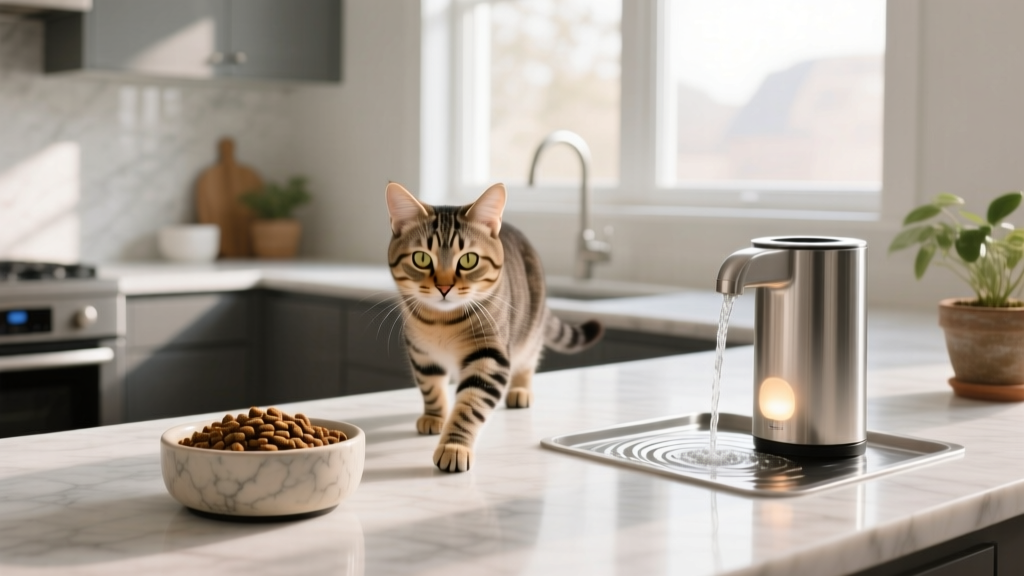
A practical starting point is 3–6 feet, then adjust based on your cat’s preference. Some cats drink best when water is in a different area or room. The best distance is the one that increases drinking without creating stress.
2) Does separating food and water really increase water intake?
For many cats, yes. It can reduce odor overlap and instinctive contamination concerns. The effect varies by individual, so it’s worth testing by adding a second water station and observing which bowl your cat uses most.
3) Should I get a water fountain?
If your cat prefers running water (drinks from faucets, showers, or dripping taps), a fountain can help. Choose a model you can clean easily. If your cat is noise-sensitive or you can’t commit to regular cleaning and filter changes, multiple bowls may work just as well.
4) Is wet food necessary for hydration?
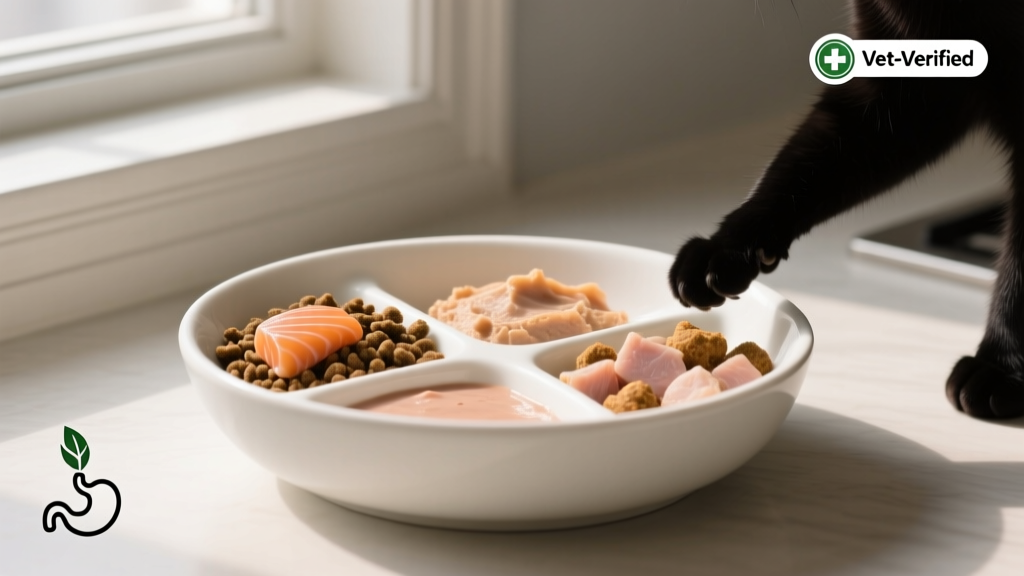
Not always, but wet food often helps cats achieve higher total water intake because it contains much more moisture than dry food. For cats with urinary issues, constipation, or low drinking behavior, wet food can be a valuable tool. Ask your veterinarian for individualized guidance, especially if your cat has kidney disease or other medical conditions.
5) My cat drinks from the sink but ignores the bowl—what does that mean?
Often it suggests a preference for fresh, cool, moving water or a dislike of the bowl (odor, material, size, or location). Try a wide ceramic/stainless bowl placed away from food, or consider a fountain.
6) When should I worry about low drinking or appetite changes?
Contact your veterinarian promptly if you notice reduced appetite, vomiting, diarrhea, lethargy, straining in the litter box, very small urine clumps, sudden increased thirst, or weight loss. Hydration and appetite changes can be early signs of illness.
Small environmental changes—like placing food away from water—can make a meaningful difference in how comfortably your cat eats and drinks. For any major diet changes or if you’re managing a medical condition, partner with your veterinarian for a plan tailored to your cat’s needs. Explore more practical feline nutrition guides and feeding strategies on catloversbase.com.