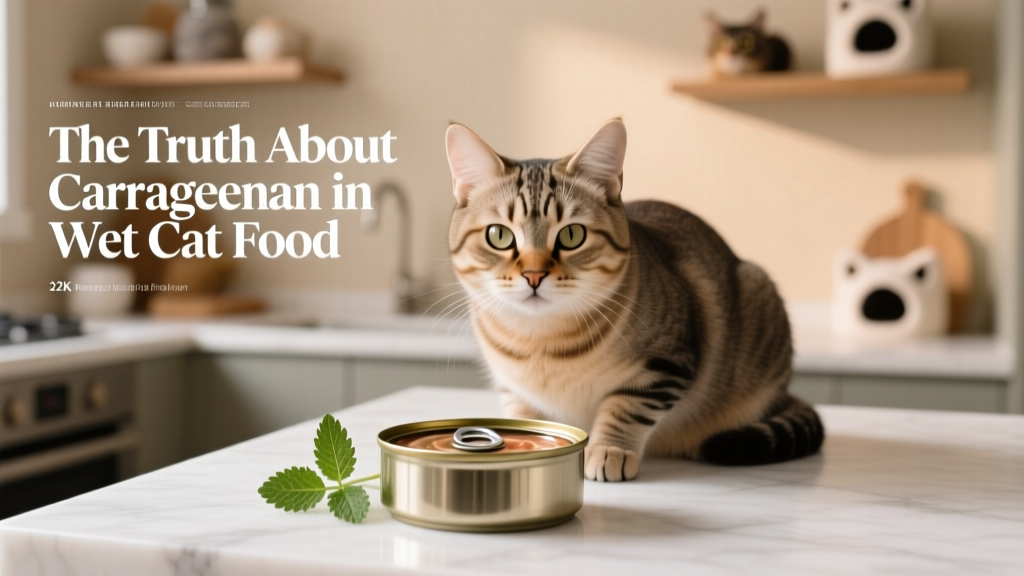
The Truth About Carrageenan in Wet Cat Food
1) Is carrageenan harmful to cats?
For many healthy cats, small amounts of food-grade carrageenan in complete and balanced wet foods are not clearly linked to disease. The concern is more relevant for cats with sensitive digestion or chronic GI conditions. If your cat has ongoing vomiting or diarrhea, ask your veterinarian whether a controlled diet trial (possibly avoiding carrageenan and other thickeners) makes sense.
2) Why do some studies say carrageenan causes inflammation?
Some research uses degraded carrageenan (poligeenan) or exposures that don’t match typical dietary intake. Those findings are often cited online without distinguishing the type used. That doesn’t mean no cat will ever react to food-grade carrageenan—just that the evidence is more nuanced than social media summaries suggest.
3) If I choose carrageenan-free wet food, will my cat’s diarrhea stop?
Sometimes, but not always. Loose stool can stem from parasites, sudden diet changes, intolerance to certain proteins or fats, overfeeding, stress, antibiotics, or underlying disease. Carrageenan might be one factor, but it’s rarely the only one. A vet-guided plan is the fastest way to identify the true cause.
4) Are other gums safer than carrageenan?
Not automatically. Guar gum, xanthan gum, and locust bean gum can also affect stool quality in some cats, especially at higher amounts or in sensitive individuals. The best choice is the formula your cat reliably thrives on, with veterinary guidance if there are medical issues.
5) Should I avoid all additives in wet food?
A “short ingredient list” can be helpful when troubleshooting sensitivities, but additives aren’t inherently bad. Many serve functional roles and are compatible with good nutrition. Focus on nutritional adequacy, appropriate calories, and your cat’s tolerance and medical needs.
6) How can I tell if carrageenan is a problem for my cat?
The most practical approach is a structured diet trial: pick a nutritionally complete wet food without carrageenan (and ideally keep the protein source consistent), transition slowly, and track stool, vomiting, skin/ear signs, and appetite for several weeks. Do this with your veterinarian—especially if your cat has weight loss, blood in stool, dehydration, or any chronic condition.
Bottom line: Carrageenan is a common thickener in wet cat food. For many cats it’s tolerated, but for cats with GI sensitivity, minimizing certain additives may be worth a vet-guided trial. Any time you’re making major dietary changes—especially for kittens, seniors, or cats with medical conditions—consult your veterinarian for individualized advice.
For more practical, evidence-based feeding help, explore the nutrition guides and wet food strategies here on catloversbase.com.