The Role of Resveratrol in Feline Longevity Nutrition
1) Why this nutrition topic matters for cat health
Many cat owners want to support “healthy aging” long before gray whiskers appear. Nutrition plays a central role because a cat’s body is constantly managing oxidative stress (cellular wear-and-tear), inflammation, metabolism, and immune function. These processes influence how well organs function over time—especially the kidneys, heart, joints, brain, and liver.
Resveratrol is a plant-derived polyphenol best known from grape skins and Japanese knotweed. It’s often marketed as a longevity supplement for humans, and it has attracted interest for pets because of its antioxidant and anti-inflammatory actions in lab studies. The question for cat owners is practical: does resveratrol meaningfully improve feline healthspan, is it safe, and how does it compare to proven nutrition strategies?
This article breaks down what science suggests, what’s still uncertain, and how to make safe, evidence-based decisions with your veterinarian.
2) Scientific background: feline nutritional needs and obligate carnivore biology
Cats are obligate carnivores with metabolic adaptations that differ from dogs and humans. This matters because many “longevity” compounds come from plants, and cats may process certain plant chemicals differently.
- High protein requirement: Cats rely heavily on amino acids for energy and have higher baseline protein needs than omnivores.
- Essential nutrients from animal sources: Taurine, arachidonic acid, preformed vitamin A (retinol), and vitamin D are dietary necessities.
- Limited carbohydrate requirement: Cats can digest starch but do not have a nutritional requirement for carbohydrates.
- Unique liver metabolism: Cats have species-specific differences in detoxification pathways, making them more sensitive to some compounds compared with other animals.
Longevity-focused feline nutrition starts with fundamentals:
- Complete-and-balanced diet that meets AAFCO/FEDIAF standards for the cat’s life stage
- Lean body condition (preventing obesity is one of the strongest “longevity interventions” we have)
- High moisture intake (wet food or hydration strategies) to support urinary and kidney health
- Targeted nutrients with stronger evidence in cats (omega-3s, appropriate phosphorus control in CKD, dental and joint support where needed)
3) Detailed analysis: what resveratrol does, what evidence exists, and what we don’t know
What is resveratrol?
Resveratrol is a polyphenol found in plants such as grapes, peanuts, and Japanese knotweed. In research settings, it’s studied for effects on oxidative stress, inflammatory signaling, mitochondrial function, insulin sensitivity, and cellular pathways associated with aging.
Proposed “longevity” mechanisms (mostly from non-feline research)
| Proposed effect | What it could mean for aging | Strength of direct evidence in cats |
|---|---|---|
| Antioxidant activity | May reduce oxidative damage to cells | Limited |
| Anti-inflammatory signaling | May help modulate chronic, low-grade inflammation | Limited |
| Metabolic effects (insulin sensitivity) | Potential support for metabolic health | Very limited |
| Cellular stress-response pathways | Studied in the context of “healthspan” in lab models | Very limited |
Resveratrol is biologically active, but “active” doesn’t automatically mean “useful” or “safe” as a supplement for cats. The key issues are:
- Species differences: Cats are not small humans. Effects and safety profiles do not reliably translate.
- Bioavailability: Resveratrol is rapidly metabolized in many species. The amount reaching target tissues can be low and variable.
- Clinical outcomes: There’s a big gap between cellular/rodent findings and demonstrated benefits in real cats living longer or healthier lives.
Potential benefits that are plausible but not proven in cats
- Oxidative stress support: Senior cats and cats with chronic diseases can experience higher oxidative burden. Antioxidant support is a reasonable goal, but resveratrol is only one of many options.
- Inflammation modulation: Chronic inflammation is involved in arthritis, dental disease, obesity-related changes, and other age-associated conditions. The most proven nutritional anti-inflammatory tools in cats remain omega-3 fatty acids (EPA/DHA), weight management, and disease-specific diets.
- Metabolic support: If resveratrol improves insulin sensitivity in some species, it might sound relevant for overweight cats. In practice, calorie control, high-protein/low-carbohydrate dietary approaches (when appropriate), and veterinary management are more reliable.
Safety considerations for cats
Because feline-specific clinical data are limited, safety deserves extra attention. Concerns include:
- GI upset: Supplements can trigger vomiting or diarrhea, especially if started abruptly.
- Drug interactions: Resveratrol may influence platelet function and drug metabolism pathways in some species. Cats on medications (for hyperthyroidism, heart disease, pain control, seizure disorders, etc.) should not be supplemented without veterinary oversight.
- Product quality: Over-the-counter supplements vary widely in purity and dosage accuracy. Contamination or mislabeling is a real risk.
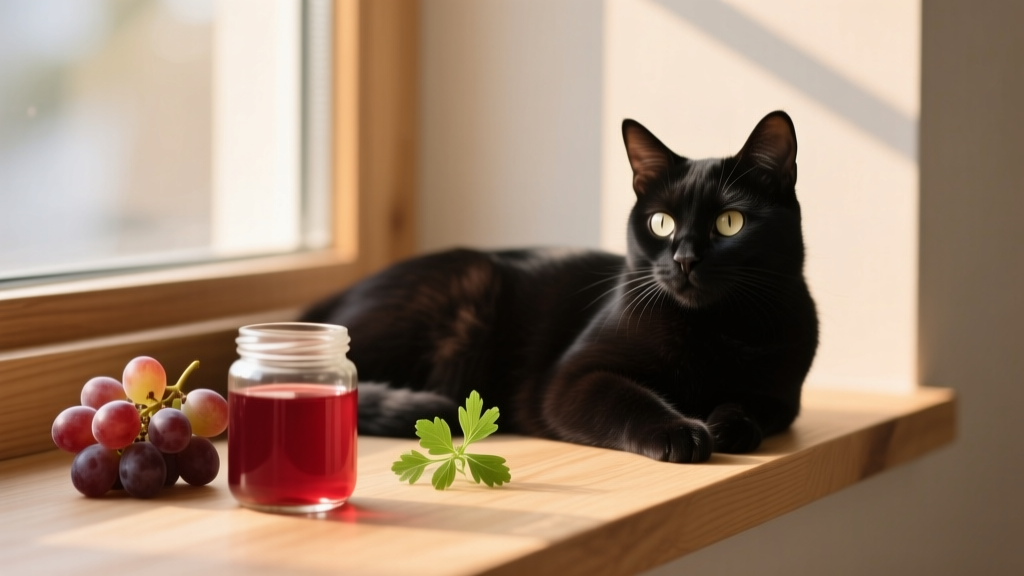
- Grapes/raisins are unsafe: Resveratrol is associated with grapes, but cats should never be fed grapes, raisins, or grape extracts intended as food. Use only veterinarian-approved products, if any.
What the evidence realistically supports
Current veterinary nutrition science supports a cautious view: resveratrol is an interesting compound with promising mechanisms in experimental models, but it is not a cornerstone of feline longevity nutrition. For most cats, the biggest, most proven lifespan and healthspan gains come from maintaining ideal body condition, feeding a complete-and-balanced diet, optimizing hydration, and addressing diseases early.
4) Practical recommendations for cat owners
If you’re considering resveratrol as part of a “longevity plan,” use this decision framework:
| Priority | Action | Why it matters more than supplements |
|---|---|---|
| 1 | Keep your cat lean (BCS 4–5/9) | Obesity increases risk of diabetes, arthritis, urinary issues, and reduces quality of life |
| 2 | Feed a complete-and-balanced diet matched to life stage | Prevents deficiencies/excesses that accumulate over time |
| 3 | Support hydration (wet food, water stations) | Helps urinary tract health and may support kidney function |
| 4 | Use targeted nutrition for diagnosed conditions (kidney, dental, GI) | Therapeutic diets have the strongest clinical evidence |
| 5 | Discuss supplements (including resveratrol) with your vet | Ensures safety, dosing rationale, and monitoring |
If your veterinarian agrees resveratrol is worth trying for your individual cat, ask these practical questions:
- What is the specific goal (mobility, cognitive support, metabolic support)?
- How will we measure response (weight, activity, lab values, mobility scoring)?
- What dose is appropriate for my cat’s size and health status?
- Which product is trustworthy (third-party testing, clear labeling, veterinary brand)?
- What side effects should I watch for, and when should I stop?
5) Comparison of options: resveratrol vs. more established longevity nutrition tools
| Approach | Evidence for cats | Best use | Main cautions |
|---|---|---|---|
| Complete-and-balanced senior or adult diet | Strong | Foundation for health, nutrient adequacy | Choose reputable manufacturers; avoid unbalanced homemade feeding unless formulated by a veterinary nutritionist |
| Weight management (calorie control, measured meals) | Strong | Most impactful “longevity” move for many indoor cats | Avoid rapid weight loss; monitor for hepatic lipidosis risk |
| Omega-3 fatty acids (EPA/DHA) | Moderate to strong | Joint, skin, inflammation modulation | GI upset, calorie load, product quality, bleeding risk in high doses |
| Therapeutic kidney diets (for CKD) | Strong | Improves quality of life and can extend survival in CKD | Use only under veterinary guidance; monitor phosphorus, hydration, appetite |
| Resveratrol supplement | Limited | Possible adjunct in select cases under vet supervision | Unknown optimal dosing in cats, drug interactions, inconsistent supplement quality |
6) Common mistakes and misconceptions to avoid
- Myth: “Resveratrol is natural, so it’s automatically safe.”
Natural compounds can be pharmacologically active. Cats have unique metabolism and can be sensitive to substances tolerated by people. - Myth: “Feeding grapes or red wine compounds provides resveratrol benefits.”
Grapes and raisins are unsafe for pets, and alcohol is toxic to cats. Do not attempt “food-based resveratrol” strategies. - Mistake: Using human supplements without veterinary direction.
Human products may contain ingredients not evaluated for cats (sweeteners, fillers, botanicals) and may deliver inappropriate doses. - Mistake: Skipping the basics while adding supplements.
A supplement cannot compensate for overfeeding, nutrient-imbalanced diets, or unmanaged disease. - Myth: “Antioxidants always help and can’t hurt.”
Redox balance is complex. Excessive or inappropriate supplementation may be unhelpful or risky, especially with certain medications or conditions.
7) How to implement changes safely (transition tips)
Whether you’re improving the base diet, adding omega-3s, or trialing a veterinarian-approved resveratrol product, slow change protects your cat’s GI tract and reduces food refusal.
- Diet transitions: Mix the new food into the old over 7–10 days (longer for sensitive cats). Increase the new portion every 2–3 days.
- Supplement introduction: Start with a fraction of the target dose if your vet approves (for example 25–50% for several days), then increase as tolerated.
- One change at a time: Don’t switch foods and add multiple supplements in the same week. If vomiting/diarrhea occurs, you’ll want to identify the cause.
- Monitor closely: Track appetite, stool quality, vomiting, energy, water intake, and weight.
- Stop and call your vet: If you see repeated vomiting, diarrhea lasting more than 24 hours, appetite drop, lethargy, behavior changes, bruising/bleeding, or any sudden worsening of a chronic condition.
8) Special considerations (age, health conditions, activity level)
Kittens (0–12 months)
- Focus on growth-appropriate complete-and-balanced kitten food.
- Longevity supplementation is rarely a priority; inappropriate supplements may disrupt nutrient balance.
- Discuss any supplement with your vet first.
Healthy adult cats (1–7 years)
- Best “anti-aging” targets: ideal body condition, dental care, play/activity, and hydration.
- If considering resveratrol, do it only with a clear goal and a veterinary plan to monitor response.
Senior cats (7+ years, and especially 10+)
- Prioritize regular wellness labs (kidney values, thyroid, glucose) and nutrition adjustments based on results.
- Many seniors benefit from higher palatability foods, targeted protein quality, and moisture-rich diets.
- Supplements should be chosen carefully due to medication use and organ sensitivity.
Chronic kidney disease (CKD)
- Kidney diets and phosphorus management are the proven nutritional levers.
- Do not add supplements without veterinary approval; cats with CKD may have altered handling of various compounds.
Diabetes or obesity
- Calorie control, measured meals, and veterinary-guided macronutrient strategy matter most.
- Any supplement that could influence metabolism should be discussed with your vet to avoid destabilizing glucose control.
Heart disease or cats on blood thinners/pain meds
- Because resveratrol may affect platelet function or interact with drugs in some species, extra caution is warranted.
- Only proceed with veterinary supervision and monitoring.
9) FAQ
Can resveratrol help my cat live longer?
There’s no strong clinical proof that resveratrol extends lifespan in cats. The most reliable ways to support longevity are keeping your cat lean, feeding a complete-and-balanced diet, supporting hydration, and treating problems early with your veterinarian.
Is resveratrol safe for cats?
Safety data in cats are limited, and cats can respond differently than people. Potential issues include GI upset and possible interactions with medications. Always consult your veterinarian before using resveratrol or any supplement.
Should I give my cat foods that contain resveratrol, like grapes?
No. Do not feed grapes or raisins, and never give alcohol. If a veterinarian recommends resveratrol, it should come from a cat-appropriate, vetted product—not from human foods associated with resveratrol.
What supplements have better evidence for feline aging than resveratrol?
Depending on the cat, omega-3 fatty acids (EPA/DHA), therapeutic diets for diagnosed diseases (especially kidney disease), and targeted joint support strategies often have better practical support. Your vet can help prioritize based on your cat’s health status.
How will I know if a supplement is helping?
Choose measurable outcomes: weight and body condition, activity and mobility, coat quality, appetite, stool consistency, and (when appropriate) lab values. If there’s no measurable benefit after a veterinarian-defined trial period—or side effects occur—reassess.
Can I combine resveratrol with other supplements?
Combining supplements increases the risk of interactions and makes it harder to identify the cause of side effects. If your vet approves resveratrol, introduce it alone first and keep the plan simple.
Resveratrol is an intriguing compound, but feline longevity nutrition still revolves around species-appropriate fundamentals and veterinary-guided, evidence-based choices. If you want to build a smarter nutrition plan for your cat’s life stage, explore more practical feeding guides and supplement deep-dives on catloversbase.com.