The Role of Eggshell Membrane in Cat Joint Nutrition
1) Why this nutrition topic matters for cat health
Cats are masters at hiding discomfort. Early joint stress or arthritis may show up as “subtle” behavior changes—hesitating before jumping, taking stairs slowly, missing the litter box edge, grooming less around the hips, or becoming cranky when handled. Because joint disease can progress quietly, cat owners who care about long-term mobility are increasingly looking for nutrition strategies that support cartilage, connective tissue, and healthy inflammation balance.
Eggshell membrane (ESM) has gained attention as a joint-support ingredient in pet supplements and some functional diets. It’s not a magic cure and it won’t replace pain control or weight management, but it may be a useful piece of a broader plan—especially for older cats, cats with early osteoarthritis signs, or cats with high activity demands.
Always talk with your veterinarian before starting joint supplements, especially if your cat has kidney disease, urinary issues, is on medication (like NSAIDs), or has multiple health conditions.
2) Scientific background: feline nutritional needs (obligate carnivore biology)
Cats are obligate carnivores. Their metabolism and nutrient requirements evolved around prey-based diets that naturally provide:
- High-quality animal protein to maintain lean muscle (critical for joint stability).
- Taurine and specific amino acids that cats cannot synthesize adequately.
- Preformed vitamin A and arachidonic acid (an essential omega-6 fatty acid for cats).
- Moisture (natural prey is water-rich), supporting urinary health and overall physiology.
Joint health nutrition in cats works best when it supports the whole musculoskeletal system:
- Muscle (protein intake, adequate calories, resistance-like activity through play)
- Connective tissue (collagen matrix, glycosaminoglycans, supportive micronutrients)
- Healthy body condition (excess fat tissue increases mechanical load and inflammatory signaling)
- Inflammation balance (omega-3 EPA/DHA from marine sources is the best-supported nutritional tool)
Supplements such as eggshell membrane, glucosamine/chondroitin, and omega-3s are adjuncts. They work best alongside a complete and balanced diet that meets AAFCO/FEDIAF standards, appropriate calorie control, and veterinary guidance.
3) Detailed analysis: what eggshell membrane is and how it may support joints
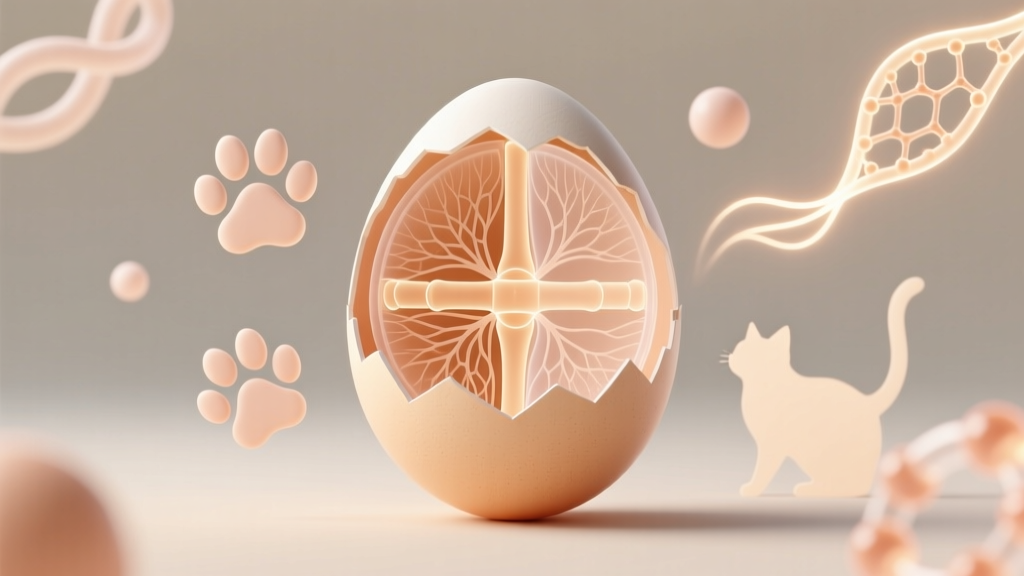
Eggshell membrane is the thin layer between the eggshell and the egg white. In supplements, it’s typically processed, dried, and standardized. ESM is not the same as eggshell (calcium carbonate). Eggshell membrane is a complex biological matrix that can contain:
- Collagen (often types I, V, and X)
- Glycosaminoglycans (GAGs) such as chondroitin sulfate and dermatan sulfate
- Hyaluronic acid (a key component of joint fluid and cartilage)
- Elastin and other structural proteins
- Bioactive proteins that may influence inflammatory signaling
How joint degeneration happens (simple overview)
Osteoarthritis and chronic joint degeneration involve multiple changes:
- Cartilage loses resiliency and smoothness
- Inflammatory mediators increase in the joint
- Joint fluid quality may decline
- Bone remodeling and pain sensitivity can increase
- Muscle weakness develops from reduced activity, worsening joint support
Nutritional joint support aims to reduce discomfort, support cartilage matrix components, and improve function over time.
What the evidence suggests (and what it doesn’t)
Most published research on ESM is in humans and dogs. While cats are not small dogs (and not little humans), the proposed mechanisms—supporting connective tissue and modulating inflammation—are biologically plausible across mammals. In dogs and humans, some studies report improvements in joint comfort and function over weeks. Evidence in cats is more limited, so expectations should be realistic.
What ESM can reasonably be used for:
- As an adjunct to a veterinary-guided arthritis plan
- For early or mild mobility changes where owners want nutritional support
- For cats who can’t tolerate certain supplements or need a multi-ingredient approach
What ESM is not:
- A replacement for pain relief when pain is significant
- A substitute for weight loss in overweight cats (weight control often yields the biggest improvement)
- A cure for hip dysplasia, severe arthritis, fractures, or immune-mediated joint disease
Potential benefits for cats (practical outcomes owners may notice)
If ESM helps a cat, changes are usually gradual, not overnight. Owners may report:
- Improved willingness to jump or climb
- More play, better stamina
- Less stiffness after rest
- Improved grooming and comfort with handling
Because cats are subtle, tracking is helpful (see the “Implementation” section).
Safety considerations
- Egg allergy sensitivity: True egg allergy is uncommon but possible. Cats with food allergy histories should be introduced cautiously under veterinary guidance.
- Quality control: Choose reputable brands with clear sourcing and contaminant testing (heavy metals, microbes). Avoid products with vague labeling.
- Calories and extras: Some chews are calorie-dense or include flavorings that don’t fit your cat’s needs.
- Medical complexity: Cats with chronic kidney disease (CKD), pancreatitis history, or inflammatory bowel disease (IBD) should only start supplements with a veterinarian’s input.
4) Practical recommendations for cat owners
Think of eggshell membrane as one tool in a joint-support “stack,” not a standalone solution.
Joint-support foundations (high impact)
- Ideal body condition: Even small weight loss can reduce joint load. Ask your vet for a target weight and calorie plan.
- Protein adequacy: Maintain muscle to stabilize joints. Use a complete and balanced diet, not a home recipe unless formulated by a veterinary nutritionist.
- Omega-3s (EPA/DHA): Strong evidence for supporting inflammation balance. Use veterinary-approved fish oil dosing; avoid “human” dosing guesses.
- Environmental support: Steps/ramps, soft bedding, non-slip mats, lower-sided litter boxes.
Where eggshell membrane fits
- Consider ESM if your cat has mild mobility changes, or as part of a veterinarian-approved supplement plan.
- Choose products designed for cats (palatability and appropriate dosing).
- Expect a trial period of 4–8 weeks to judge response, unless your veterinarian advises otherwise.
What to look for on the label
- “Eggshell membrane” clearly listed (not just “eggshell”)
- Amount per serving in milligrams (mg)
- Company contact info, lot numbers, quality testing statements
- Clear feeding instructions for cats by weight
5) Comparison of options/products/approaches
| Option | Main goal | Evidence strength (cats) | Pros | Cons / cautions |
|---|---|---|---|---|
| Eggshell membrane (ESM) | Connective tissue support; comfort | Emerging/limited | Multi-component (collagen, GAGs, HA); generally well tolerated | Cat-specific data limited; egg sensitivity possible; quality varies |
| Omega-3s (EPA/DHA from fish oil) | Inflammation balance; mobility support | Moderate to strong (broader veterinary support) | Well-studied; supports skin/coat too | Must dose correctly; GI upset possible; not all oils are equal |
| Glucosamine/chondroitin | Cartilage matrix support | Mixed/limited | Common; many combination products available | Variable formulations; may not help every cat; takes time |
| Green-lipped mussel (GLM) | Joint comfort; omega-3s + bioactives | Limited to moderate | Some cats respond well; multi-modal | Shellfish sensitivity possible; quality and stability matter |
| Prescription/therapeutic joint diets | Weight control + targeted nutrients | Moderate (depends on diet) | Complete nutrition + joint-focused design; easy compliance | May be costly; not every cat accepts the diet |
Single-ingredient vs. combination products
- Single-ingredient ESM is useful if you want to test response and avoid unnecessary additives.
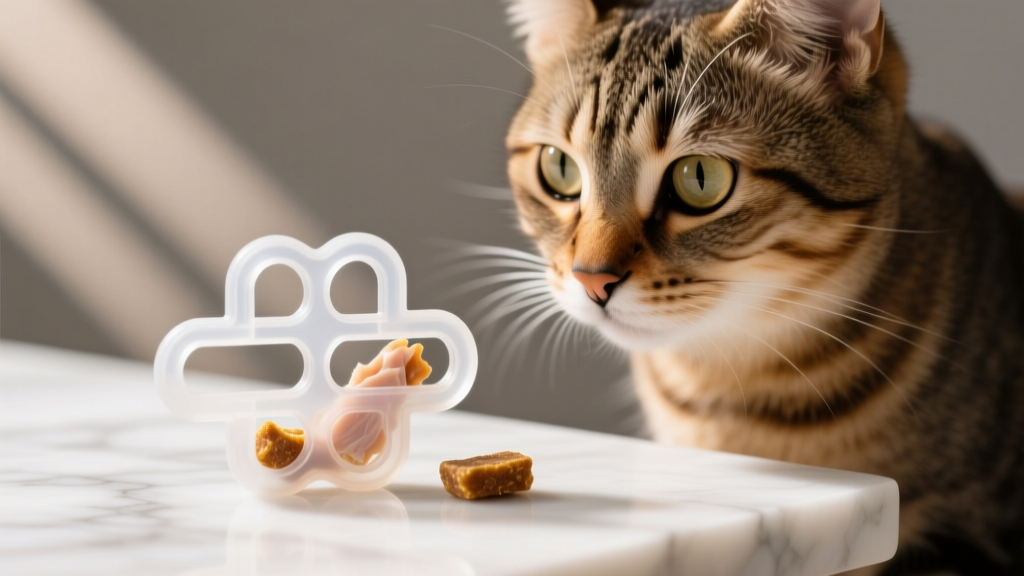
- Combination joint chews/powders may include ESM + omega-3s + glucosamine, etc. These can be convenient but make it harder to identify what helps (or what causes side effects).
6) Common mistakes and misconceptions to avoid
- Myth: “Eggshell membrane is the same as eggshell calcium.”
Fact: Eggshell is mostly calcium carbonate. Eggshell membrane is the protein-rich layer containing collagen and GAGs. They are not interchangeable. - Mistake: Using crushed eggshells as a “joint supplement.”
Crushed eggshell primarily adds calcium and can unbalance a diet if used improperly. It does not provide the same joint-support components as ESM. - Myth: “If it’s natural, it’s automatically safe.”
Natural products can still cause GI upset, allergies, or interact with medical conditions. Quality control matters. - Mistake: Expecting instant results.
Joint supplements typically require weeks. If pain is significant, delaying proper analgesia reduces quality of life. - Mistake: Ignoring weight management.
Supplements rarely overcome the mechanical and inflammatory burden of excess weight. - Myth: “More is better.”
Over-supplementing can increase side effects without improving outcomes. Use veterinarian-guided dosing.
7) How to implement changes safely (transition tips)
Whether you’re adding an ESM supplement or switching to a joint-support diet, changes should be gradual and tracked.
Step-by-step plan
- Start with a vet check: Ask about pain control, weight goals, and whether supplements are appropriate for your cat’s medical history.
- Pick one change at a time: Add ESM or change diet first. Multiple changes at once make it hard to judge results.
- Go slow: Introduce small amounts for 3–5 days, then increase to the target dose if stools remain normal.
- Track objectively: Note jump height, stair use, play duration, grooming, litter box behavior, and “good/bad days.” Short weekly videos can reveal improvements you might miss day-to-day.
- Reassess at 4–8 weeks: If no improvement, ask your vet about adjusting the plan (diet, omega-3 dosing, pain relief, physical therapy, or different supplements).
Signs you should pause and call your vet
- Vomiting, diarrhea lasting more than 24–48 hours, or lethargy
- Refusal to eat
- Worsening mobility or obvious pain
- Facial itching, swelling, or hives (urgent)
8) Special considerations (age, health conditions, activity level)
| Cat type | Primary focus | How ESM may fit | Extra cautions |
|---|---|---|---|
| Kittens and young adults | Healthy growth, lean muscle, injury prevention | Usually not necessary unless vet-directed (injury or congenital issues) | Avoid unnecessary supplementation; ensure complete growth diet |
| Middle-aged cats | Prevent weight gain, maintain activity | May be reasonable for early stiffness or reduced jumping | Rule out other causes (dental pain, obesity, heart disease) |
| Senior cats | Mobility, comfort, muscle maintenance | Often a good “trial” candidate as part of a broader arthritis plan | Screen for CKD, hyperthyroidism, hypertension; monitor appetite and stools |
| Overweight cats | Weight loss + pain control | Adjunct only; weight plan matters most | Calorie control; avoid high-calorie chews |
| Cats with CKD | Kidney-friendly nutrition, maintain appetite | Possible, but only with vet approval | Be cautious with added sodium, phosphorus, and unknown ingredients |
| IBD/food sensitivities | Stable digestion, controlled ingredients | Choose minimal-ingredient products; trial carefully | Stop if GI signs flare; consider allergy history to egg proteins |
9) FAQ: common questions cat owners ask
1) Can I give my cat eggshell membrane from my kitchen eggs?
Not recommended. Food-safety risks (bacteria), inconsistent dosing, and variable processing make DIY approaches unreliable. Commercial pet products are designed for safety and standardized amounts. If you’re interested in homemade diets or supplements, ask your veterinarian or a board-certified veterinary nutritionist for guidance.
2) How long does eggshell membrane take to work in cats?
If it helps, owners typically notice gradual changes over 4–8 weeks. Some cats may show earlier improvements, while others won’t respond. Use a defined trial period and track mobility signs to judge benefit.
3) Is eggshell membrane safe with fish oil or other joint supplements?
Often yes, but combination use should be veterinarian-guided to avoid excessive dosing, unnecessary ingredients, and GI upset. Cats with medical conditions or those taking pain medication should have a tailored plan.
4) What’s the difference between eggshell membrane and collagen powder?
Collagen powders usually provide collagen peptides. Eggshell membrane can provide collagen plus additional components such as GAGs and hyaluronic acid. They’re related but not identical, and product quality varies widely.
5) Should I use a joint diet or a supplement?
It depends on your cat’s needs. A therapeutic joint diet can be a convenient “all-in-one” approach (especially if weight loss is also needed). Supplements may be useful if your cat refuses a new diet or needs a more targeted add-on. Your veterinarian can help choose the best route.
6) My cat is stiff—should I start supplements first or ask about pain relief?
Ask your vet about pain control early. Supplements may support comfort, but cats with arthritis often benefit from medical pain management, environmental modifications, and a weight plan. Delaying pain relief can reduce quality of life.
Best takeaway: Eggshell membrane may support feline joint comfort as part of a bigger, evidence-based plan—ideal body condition, high-quality complete nutrition, omega-3s when appropriate, and veterinary-directed arthritis care. For personalized dosing, product selection, and monitoring, consult your veterinarian.
If you want more practical, cat-health-focused nutrition guidance, explore the other feeding and supplement articles on catloversbase.com.