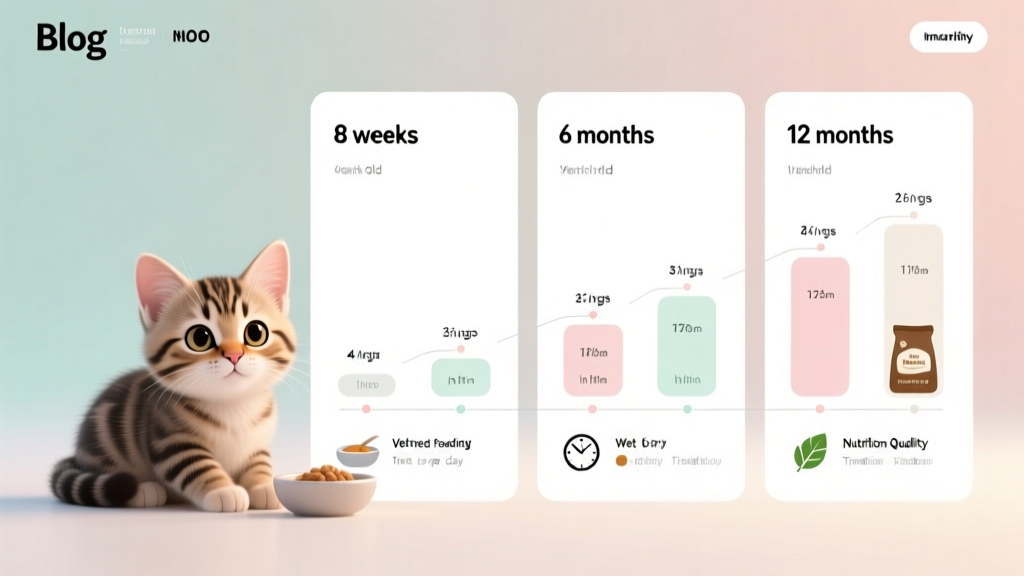
Kitten Feeding Schedule by Age (2026)
Weeks 4–6: Transitioning from Mother’s Milk
At 4 weeks, kittens begin showing interest in solid food but still rely heavily on maternal milk or kitten milk replacer (KMR). Introduce gruel—mix high-quality kitten formula like PetAg KMR with warm water and a small amount of Royal Canin Babycat Ultra-Soft Mousse—to encourage lapping. Feed every 3–4 hours, totaling 5–6 meals daily. Kittens at this stage typically weigh 180–250 g and consume ~15–20 mL of formula per 100 g body weight per day, per the 2026 American College of Veterinary Nutrition (ACVN) guidelines.
Weeks 7–12: Weaning and Solid Food Introduction
Weaning accelerates between weeks 7 and 12. By week 8, most kittens eat moistened kibble 4 times daily. Use Hill’s Science Diet Kitten canned food mixed 1:1 with warm water; gradually reduce liquid over 2 weeks. Monitor stool consistency—loose stools signal overfeeding or abrupt diet change. A 2026 study published in Journal of Feline Medicine and Surgery found that kittens weaned before week 8 had a 37% higher incidence of digestive upset versus those weaned after week 7.
Months 3–4: Establishing Consistent Meal Routines
Kittens now thrive on 3–4 scheduled meals per day using a complete-and-balanced dry/wet combo. Feed 1/4 cup of Blue Buffalo Wilderness Kitten Dry Food plus 2 oz of Wellness Complete Health Kitten Wet Food per meal. At 12 weeks, average weight is 1.2–1.8 kg. Dr. Lena Torres, DVM, DACVN, emphasizes in her 2026 ACVN webinar: “Consistency in timing and portion size during months 3–4 supports stable blood glucose and reduces stress-related anorexia.”
Months 5–6: Adjusting for Growth Spurts and Activity
Growth peaks between months 5 and 6. Increase daily calories by ~10% if activity level rises (e.g., multi-cat households or outdoor access). A 2026 Cornell Feline Health Center case study tracked ‘Mochi,’ a male domestic shorthair: his intake rose from 300 kcal/day at 4 months to 335 kcal/day at 5.5 months, aligning with AAFCO 2026 energy requirements for growing kittens. Avoid free-feeding dry food during this phase—overnight weight gain can predispose to obesity later.
Months 7–12: Preparing for Adult Nutrition
By month 7, transition toward adult food begins—start mixing 25% adult formula (e.g., Orijen Adult) with 75% kitten food. Complete transition by month 12. During months 9–12, reduce meals to twice daily. Weight gain slows significantly: average 6-month-old kittens weigh 2.5–3.5 kg, while 12-month-olds reach 3.8–5.2 kg depending on breed. As Dr. Arjun Patel, board-certified feline nutritionist and author of Nutrition Across the Feline Lifespan (2026), states: “Premature switching to adult food before month 10 risks inadequate taurine and DHA intake—both critical for retinal and cardiac development.”
A real-world example is ‘Luna,’ a rescue kitten adopted at 5 weeks in March 2026. Her foster used the schedule outlined here: gruel at 4 weeks, full wet food by week 10, and completed transition to adult food by November 2026. Luna reached ideal weight at 11 months without dental or GI issues.
Another case: ‘Toby,’ a Maine Coon kitten born in January 2026, required extended kitten feeding due to slower maturation. His veterinarian recommended continuing kitten food until 14 months—validated by his 2026 UC Davis Feline Growth Chart percentile data showing delayed skeletal closure.
Always weigh kittens weekly using a digital gram scale (e.g., AWS 1000B) and log intake. Sudden weight loss >5% in 48 hours warrants immediate veterinary consultation.
Hydration remains vital—offer fresh water with each meal. Add water to wet food to support urinary tract health, especially in males.
Supplements are unnecessary if feeding AAFCO-approved diets. Over-supplementation (e.g., excess vitamin A or calcium) can cause developmental orthopedic disease.
| Age Range | Daily Meals | Sample Daily Calories (kg) | Key Food Type | Weight Range (kg) |
|---|---|---|---|---|
| 4–6 weeks | 5–6 | 120–160 kcal/kg | Gruel + KMR | 0.18–0.25 |
| 7–12 weeks | 4 | 180–220 kcal/kg | Mixed wet/dry | 0.3–0.7 |
| 3–4 months | 3–4 | 200–240 kcal/kg | Wet-focused diet | 0.8–1.8 |
| 5–6 months | 3 | 210–230 kcal/kg | Balanced wet/dry | 1.9–2.8 |
| 7–12 months | 2 | 180–200 kcal/kg | Transitioning to adult | 2.5–5.2 |
Consult your veterinarian before modifying any feeding plan—especially for orphaned, underweight, or medically fragile kittens. The 2026 WSAVA Global Nutrition Guidelines reaffirm that individualized assessment trumps rigid timelines.