How to Take Care of a Kitten on a Grain-Free Diet
Why 'How to Take Care of a Kitten Grain Free' Is More Complicated Than It Sounds
If you’ve searched how to take care kitten grain free, you’re likely motivated by love—and maybe some anxiety. Maybe your kitten had soft stools after eating a mainstream kibble. Or your vet mentioned possible sensitivities. Or you saw an influencer praising grain-free diets as 'more natural.' But here’s the truth most blogs won’t tell you: switching to grain-free without understanding feline developmental nutrition can unintentionally stunt growth, weaken heart muscle development, or trigger nutrient imbalances. Kittens aren’t small adults—they’re biological construction zones, building organs, immune systems, and neural pathways at lightning speed. And unlike dogs or humans, cats are obligate carnivores with zero dietary requirement for grains—but also zero tolerance for poorly formulated alternatives.
This guide isn’t about pushing grain-free. It’s about doing it *right*—or knowing when it’s truly unnecessary. Backed by board-certified veterinary nutritionists and the latest AAFCO (Association of American Feed Control Officials) 2024 Kitten Nutrient Profiles, we’ll walk you through every science-backed decision point—from label decoding to stool monitoring—so your kitten thrives, not just tolerates.
Step 1: Verify If Grain-Free Is Actually Needed (Spoiler: Most Kittens Don’t)
Let’s start with the biggest misconception: that ‘grain-free’ equals ‘healthier.’ According to Dr. Sarah Wooten, DVM, CVJ, a certified veterinary journalist and clinical advisor for the World Small Animal Veterinary Association, ‘Less than 1% of diagnosed food allergies in kittens involve grains like rice or oats. Far more common triggers are beef, dairy, egg, or chicken—ingredients frequently found in grain-free formulas.’ In fact, a 2023 retrospective study published in the Journal of Feline Medicine and Surgery reviewed 217 kitten allergy cases and found only 3 confirmed grain sensitivities—all linked to wheat gluten, not whole grains like brown rice or barley.
So before you switch, ask yourself:
- Has your kitten shown *consistent*, veterinarian-diagnosed symptoms (e.g., chronic diarrhea >2 weeks, facial pruritus, recurrent otitis) that improved on an elimination diet?
- Has a vet ruled out parasites (like Giardia), viral infections (e.g., feline panleukopenia), or environmental stressors (e.g., multi-cat household tension)?
- Are you currently feeding a formula that fails AAFCO Kitten requirements—even if it contains grains?
If the answer to all three is ‘no,’ grain-free may be solving a problem that doesn’t exist. Worse—it could introduce new ones. Many budget grain-free brands replace grains with high-glycemic starches like potato or tapioca, which spike blood glucose and strain immature pancreatic function. Others over-rely on legumes (peas, lentils), now under FDA investigation for potential links to dilated cardiomyopathy (DCM) in cats due to taurine-binding compounds.
Step 2: Choose a Grain-Free Formula That Meets Kitten-Specific Nutrient Thresholds
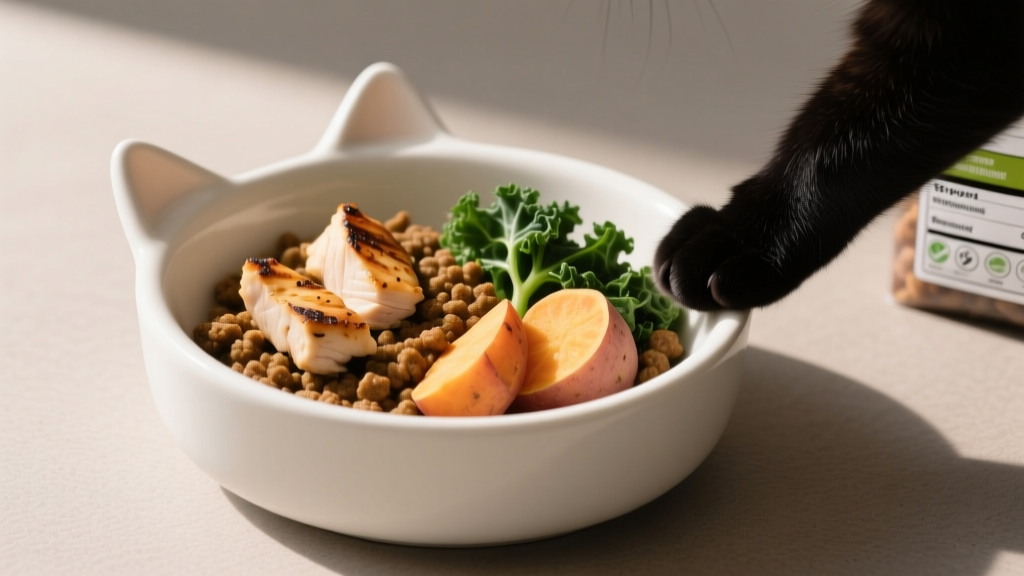
Not all grain-free foods are created equal—especially for kittens. A formula labeled ‘grain-free’ tells you *what’s absent*, not what’s present. What matters is whether it delivers the precise nutrient ratios required for rapid growth.
Kittens need:
- Minimum 35% crude protein (dry matter basis), ideally from multiple animal sources (e.g., chicken, turkey, salmon) to ensure full amino acid profiles;
- Taurine ≥0.25% (not just ‘taurine added’—check guaranteed analysis);
- Calcium:phosphorus ratio between 1.1:1 and 1.3:1—critical for skeletal mineralization;
- DHA (docosahexaenoic acid) ≥0.05% for brain and retinal development;
- Vitamin A ≥10,000 IU/kg and vitamin E ≥250 IU/kg to support immune maturation.
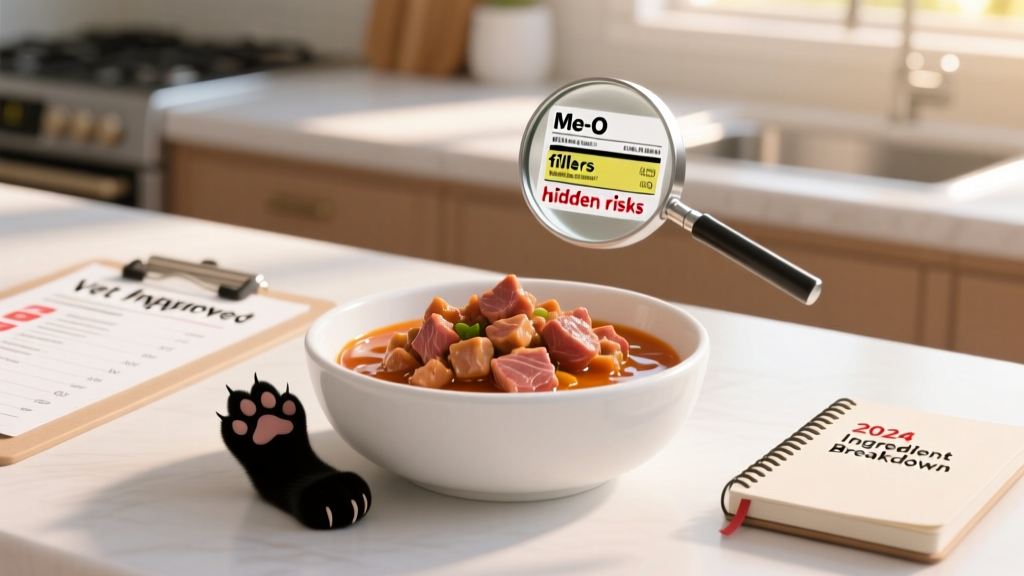
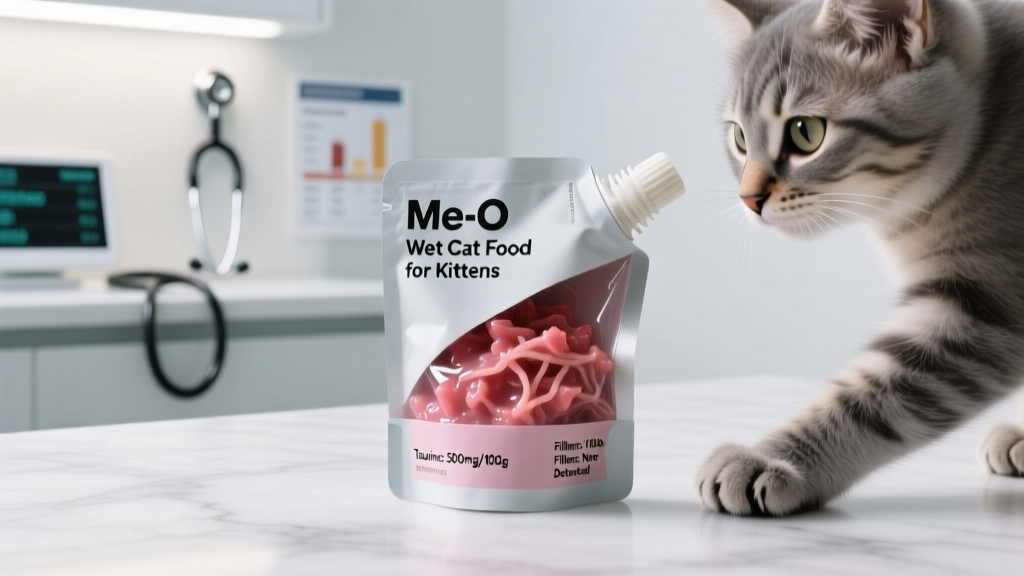
Here’s where label literacy becomes non-negotiable. Look past marketing terms like ‘holistic’ or ‘raw-inspired.’ Go straight to the Guaranteed Analysis panel—and then cross-check with the manufacturer’s website for *dry matter basis* values (since moisture content skews percentages). For example, a wet food listing ‘10% protein’ may actually deliver 48% protein on dry matter basis—making it far more suitable than a dry kibble showing ‘40% protein’ but containing 10% moisture and 35% starchy fillers.
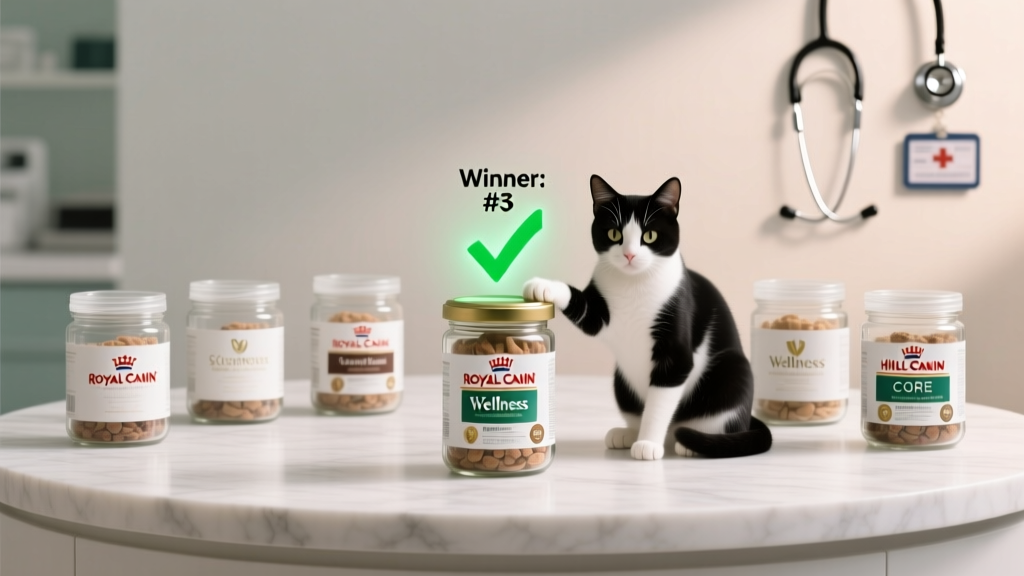
Pro tip: Contact the company directly and ask, ‘Can you provide the AAFCO feeding trial summary and full nutrient profile (including taurine, DHA, and choline) for your kitten-specific grain-free formula?’ Reputable brands (e.g., Smalls, Tiki Cat Baby, Wellness CORE Grain-Free Kitten) publish these documents publicly—or will email them within 24 hours. If they hesitate? Walk away.
Step 3: Transition Gradually—And Monitor Like a Scientist
Switching diets too fast is the #1 cause of post-transition vomiting and diarrhea in kittens—even with high-quality grain-free food. Their gastrointestinal microbiome is still colonizing, and abrupt changes disrupt delicate bacterial balance.
Follow this 10-day transition protocol (validated by Cornell Feline Health Center):
- Days 1–2: 90% old food + 10% new food
- Days 3–4: 75% old + 25% new
- Days 5–6: 50% old + 50% new
- Days 7–8: 25% old + 75% new
- Days 9–10: 100% new food
But don’t just count days—track outcomes. Keep a simple log:
- Stool consistency (scale: 1 = watery, 4 = ideal firm sausage, 7 = hard/constipated)
- Energy level (playful vs. lethargy vs. clinginess)
- Coat sheen and shedding (dullness or excessive flaking signals fatty acid deficiency)
- Appetite persistence (refusal >2 meals warrants vet consult)
One real-world case: Luna, a 10-week-old Bengal mix, developed mucoid stools and decreased nursing vigor after a rushed 3-day switch to a pea-based grain-free kibble. Her owner reverted to the original food, implemented the 10-day plan, and added a veterinary-approved probiotic (FortiFlora®). By day 12, stools normalized—and her weight gain accelerated by 18% week-over-week.
Step 4: Supplement Strategically—Or Not At All
Most healthy kittens on complete-and-balanced grain-free diets require zero supplementation. In fact, over-supplementation—especially with calcium, vitamin D, or zinc—can cause severe developmental harm. Yet many well-meaning owners add fish oil, bone broth powders, or ‘kitten boosters’ without realizing they may unbalance critical ratios.
When supplementation *is* evidence-based:
- Omega-3s (DHA/EPA): Only if the food contains <0.05% DHA. Look for algae-derived DHA (vegan-safe) or sustainably sourced krill oil—not generic ‘fish oil’ (often rancid and low in DHA).
- Probiotics: Clinically studied strains like Bacillus coagulans or Enterococcus faecium (SF68®) during/after antibiotic use or GI upset.
- Taurine: Only if prescribed by a board-certified veterinary nutritionist after plasma taurine testing confirms deficiency—a rare scenario in commercial kitten foods meeting AAFCO standards.
Never supplement iodine, copper, or vitamin A without diagnostics. Excess preformed vitamin A causes painful skeletal deformities in growing kittens. As Dr. Jennifer Coates, DVM, notes in her textbook Feline Clinical Nutrition: ‘If the food is AAFCO-approved for kittens, adding nutrients is rarely beneficial—and frequently dangerous.’
| Nutrient Parameter | AAFCO Minimum (Kitten) | High-Risk Grain-Free Pitfall | Vet-Recommended Minimum for Safety Margin |
|---|---|---|---|
| Taurine | 0.10% (dry matter) | Legume-heavy formulas bind taurine; heat processing degrades it | ≥0.25% (dry matter) |
| Crude Protein | 30% (dry matter) | Low-cost grain-free uses poultry by-product meal with incomplete amino acids | ≥35% (dry matter), with ≥2 named animal proteins in top 3 ingredients |
| Calcium:Phosphorus Ratio | 1.0:1 – 2.0:1 | Excess calcium in ‘bone meal’ supplements disrupts PTH regulation | 1.1:1 – 1.3:1 (narrow optimal band for growth plates) |
| DHA | Not specified (but strongly recommended) | Absent in 68% of grain-free kitten foods (2023 Feline Nutrition Survey) | ≥0.05% (dry matter) |
| Moisture Content (Wet Food) | Not regulated—but physiologically critical | Dry grain-free kibble dehydrates kittens; renal stress begins as early as 12 weeks | ≥75% moisture for wet formulas; dry food should be fed alongside 60mL water per 100g food |
Frequently Asked Questions
Is grain-free food safe for kittens with sensitive stomachs?
It *can* be—but only if the sensitivity is truly grain-related (rare) and the replacement formula avoids common irritants like pea protein, carrageenan, or artificial preservatives. More often, ‘sensitive stomach’ reflects enzyme immaturity or dysbiosis. A hydrolyzed novel-protein diet (e.g., duck & green pea *hydrolysate*) is clinically superior to grain-free for true GI intolerance. Always rule out parasites and pancreatitis first with fecal PCR and serum trypsin-like immunoreactivity (TLI) testing.
Can I feed my kitten grain-free adult cat food?
No—absolutely not. Adult formulas lack sufficient calories, protein, DHA, and calcium for growth. Feeding adult food to kittens risks failure-to-thrive, delayed dentition, and secondary hyperparathyroidism. AAFCO requires distinct nutrient profiles for ‘Growth’ (kittens/pregnant/lactating) vs. ‘Maintenance’ (adults). Check the label: it must say ‘Formulated for growth’ or ‘All life stages’ (which meets growth standards).
Do grain-free diets cause heart disease in kittens?
There is no direct evidence linking grain-free diets to DCM in kittens *yet*—but the FDA’s ongoing investigation includes cases in young cats fed legume-rich grain-free foods. The concern isn’t grains themselves, but how their removal shifts formulation priorities: reduced taurine bioavailability, altered amino acid profiles, and inconsistent processing. Until long-term studies conclude, prioritize grain-free formulas with verified taurine levels and no legumes in top 5 ingredients.
How much grain-free food should I feed my kitten daily?
Portion size depends on calorie density, age, and activity—not just weight. General guideline: 200–300 kcal/day for 8–12 week olds; 300–400 kcal/day for 3–6 months. But caloric needs vary wildly: a Siamese kitten may need 25% more than a Ragdoll of same weight. Use a gram scale (not cup measures!) and adjust weekly based on body condition scoring (BCS 4–5/9 is ideal). Overfeeding—even high-quality grain-free food—causes obesity, which doubles diabetes risk by adulthood.
Should I rotate grain-free brands to prevent allergies?
No. Rotation increases GI upset and makes allergy diagnosis impossible. Veterinary dermatologists recommend feeding one consistent, limited-ingredient formula for ≥12 weeks to establish baseline health—then changing only if clinically indicated. Rotating ‘for variety’ is a human projection, not a feline need.
Common Myths About Grain-Free Kitten Diets
Myth 1: ‘Grains cause inflammation in cats.’
False. Whole grains like oats, barley, and brown rice contain beta-glucans and antioxidants that *support* gut immunity and reduce systemic inflammation. The inflammatory response occurs with *refined* carbohydrates (e.g., corn syrup, white rice flour)—not whole grains. Eliminating grains without replacing them with appropriate fiber sources (e.g., pumpkin, psyllium) often worsens constipation.
Myth 2: ‘All grain-free foods are higher in protein.’
Also false. Some grain-free formulas substitute grains with 40%+ potato or tapioca—driving carbohydrate content *higher* than grain-containing counterparts. Always compare dry matter protein *and* carb percentages. A grain-inclusive food with 50% protein and 15% carbs may be nutritionally superior to a grain-free food with 32% protein and 38% carbs.
Related Topics (Internal Link Suggestions)
- Best Wet Foods for Kittens — suggested anchor text: "top-rated wet kitten foods with high moisture and DHA"
- Kitten Vaccination Schedule — suggested anchor text: "vaccination timeline for indoor vs. outdoor kittens"
- How to Socialize a Kitten — suggested anchor text: "science-backed kitten socialization window (2–7 weeks)"
- Signs of Kitten Dehydration — suggested anchor text: "how to check for dehydration and rehydrate safely"
- Homemade Kitten Food Recipes — suggested anchor text: "veterinarian-formulated homemade kitten meals (with calcium & taurine calculators)"
Your Next Step Starts With One Label Check
You now know that how to take care kitten grain free isn’t about swapping bags—it’s about aligning every choice with developmental biology. Your kitten’s first year sets metabolic, immune, and neurological trajectories that last decades. So before you click ‘add to cart,’ pull out that bag or can and verify: Does the Guaranteed Analysis meet AAFCO Kitten minimums *on dry matter basis*? Is taurine listed *numerically*—not just ‘added’? Are the first three ingredients named animal proteins, not ‘meat meal’ or ‘legume blend’? If you’re uncertain, snap a photo and send it to a boarded veterinary nutritionist (many offer 15-minute consults for $45–$75). That single step prevents months of troubleshooting—and gives your kitten the strongest possible foundation. Ready to compare 5 vet-vetted grain-free kitten foods side-by-side? Download our free Kitten Food Label Decoder Checklist—complete with fill-in tables and red-flag alerts.