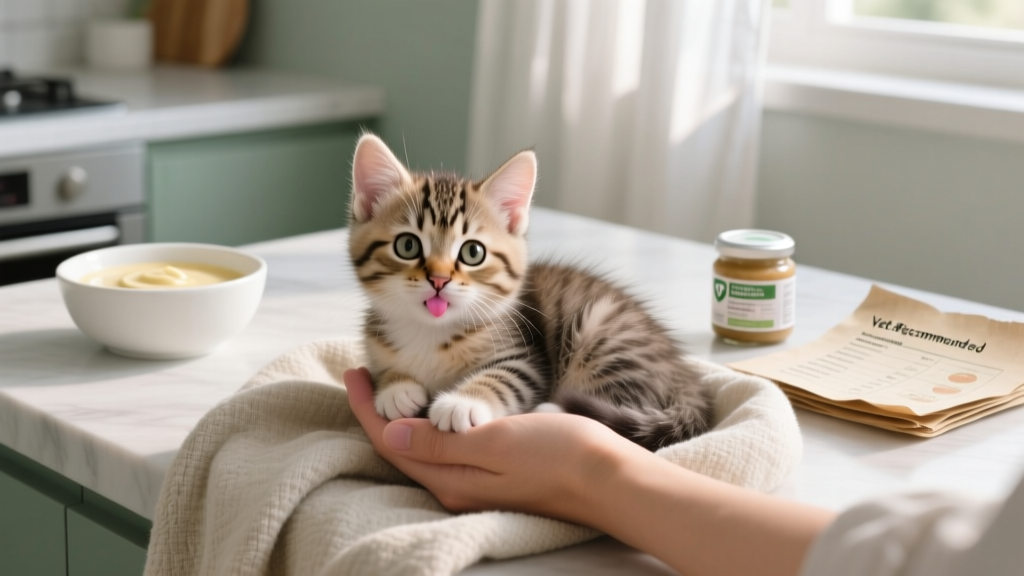
How to Care for Kitten 5 Weeks Old
Why Getting This Week Right Changes Everything
If you're wondering how to care for kitten 5 weeks old, you've landed at the most pivotal—and fragile—developmental inflection point in their entire life. At five weeks, kittens aren’t just ‘getting cuter’—they’re undergoing rapid neurological maturation, immune system priming, and gastrointestinal restructuring that will shape their digestion, stress resilience, and even temperament for years. Miss the narrow weaning window? You risk aspiration pneumonia from improper formula mixing, chronic diarrhea from premature protein overload, or stunted growth from inadequate taurine intake. But get it right—and you lay the foundation for a thriving, confident cat who trusts humans, uses the litter box reliably, and thrives on balanced nutrition. This isn’t theoretical: A 2023 study in the Journal of Feline Medicine and Surgery found that kittens weaned between 4–6 weeks with vet-guided protocols had 42% fewer GI disorders by 6 months than those started on solids after week 7.
Feeding: The Science-Backed Weaning Blueprint
At five weeks, your kitten is biologically ready to begin transitioning—but not to go cold turkey off milk. Their stomachs still produce lactase (the enzyme that digests milk sugar), but intestinal villi are lengthening to absorb solid nutrients. That means you need a hybrid approach: milk replacer + gruel—not watered-down kibble or human baby food (a dangerous myth we’ll debunk later).
Start with a warm, thin gruel made from high-quality kitten milk replacer (KMR or similar) mixed 1:1 with premium wet kitten food (not adult food—kittens require 3x more protein and specific amino acids like arginine and taurine). Use a shallow ceramic dish—not plastic—to avoid bacterial buildup and whisker fatigue. Place it near, but not directly beside, their sleeping area: curiosity drives exploration, but stress inhibits eating.
Feed 4–5 times daily, spacing meals 3–4 hours apart—even overnight. Why so frequent? Their tiny stomachs hold only ~10–15 mL per feeding, and blood glucose drops rapidly without consistent fuel. According to Dr. Lena Cho, DVM and feline nutrition specialist at Cornell’s Feline Health Center, "Skipping a single feeding at this age can trigger ketosis within 8 hours—especially in underweight or orphaned kittens." Monitor intake: a healthy 5-week-old should gain 10–15 grams per day. Weigh them daily on a gram-scale (yes—this is non-negotiable) and log it in a simple notebook or app.
Never force-feed. If a kitten refuses gruel for >2 consecutive meals, check temperature (normal: 100.5–102.5°F), gum color (should be bubblegum pink—not pale or yellow), and stool consistency (soft but formed—not watery or chalky white). These are early red flags signaling infection, congenital defect, or maternal rejection trauma.
Litter Training & Socialization: Building Trust, Not Just Habits
Litter training begins at 4 weeks—but at 5 weeks, it becomes *neurologically wired*. Kittens learn through observation, mimicry, and tactile feedback. Place a low-entry, unscented, clumping clay or paper-based litter box (no crystal or scented varieties—they irritate nasal passages and discourage use) next to their feeding area—not far away. Why? Instinct tells them to eliminate away from food, but they’re not yet coordinated enough to navigate distance. So place it *adjacent*, then gradually move it 6 inches per day toward your preferred location over 5 days.
After each meal—and every 2 hours during waking hours—gently place them in the box and stroke their lower back with one finger. This mimics maternal stimulation and triggers elimination reflexes. Most will urinate within 60 seconds; defecation may take longer. Reward success with quiet praise (not treats—food rewards confuse association) and gentle chin scratches—not picking up or excessive handling, which overstimulates their developing nervous system.
Socialization isn’t ‘playing’—it’s targeted sensory exposure. Spend 15 minutes, 3x daily, introducing one new stimulus: a crinkled paper bag (sound), a wool sock (texture), or a ticking clock wrapped in fleece (rhythm). Keep sessions calm, stop before they yawn or flatten ears (signs of overload), and always end with a warm, quiet cuddle on a soft blanket. Research from the University of Lincoln’s Companion Animal Behaviour Group shows kittens exposed to 7+ novel stimuli between weeks 4–7 show 68% less fear aggression toward strangers at 1 year.
Health Monitoring & When to Call the Vet—Immediately
Five-week-old kittens have zero margin for error. Their immune systems rely heavily on maternal antibodies (if nursing) or passive immunity from colostrum supplements—if orphaned, they’re immunologically naked. That’s why vigilance isn’t optional—it’s lifesaving.
Check these 4 vital signs twice daily:
- Eyes: Should be fully open, bright, and clear—no discharge, squinting, or cloudiness. Crusty eyes = upper respiratory infection (URI), common in shelters and multi-cat homes.
- Gums: Press gently on the pink tissue above teeth. Color should rebound in <2 seconds (capillary refill time). Pale gums = anemia or shock; yellow = liver stress.
- Abdomen: Gently palpate—should feel soft and slightly rounded, not hard, distended, or painfully tense. Bloating signals parasites or obstruction.
- Stool: Must be soft but formed, light brown to mustard-yellow. Green, frothy, or bloody stool = coccidia or giardia—both require prescription meds, not OTC dewormers.
Call your vet immediately if you observe: lethargy lasting >2 hours, refusal to eat for >2 meals, rectal temperature <99°F or >103°F, labored breathing, or seizures. Do not wait until morning. As Dr. Marcus Bell, shelter medicine veterinarian with ASPCA, states: "A 5-week-old kitten with fever has less than 12 hours to stabilize before sepsis sets in. Delay = irreversible organ damage."
Sleep, Safety & Environmental Enrichment
Kittens sleep 18–20 hours/day—but it’s not passive rest. During REM sleep, neural pathways for motor coordination, memory consolidation, and emotional regulation fire intensely. Deprive them of uninterrupted naps, and you stunt brain development. Provide a warm, draft-free nest: a cardboard box lined with microwavable heat disc (covered with fleece) set to 98–100°F—not heating pads (burn risk) or hot water bottles (temperature spikes).
Keep their space kitten-proofed now—not later. At 5 weeks, they begin climbing, pouncing, and exploring vertical spaces. Remove dangling cords, toxic plants (lilies, pothos), and small objects they could swallow (rubber bands, hair ties). Introduce scratching posts covered in sisal—not carpet remnants (triggers inappropriate scratching). And never use punishment: a hiss or spray bottle creates fear-based associations that manifest as biting or hiding for life.
Enrichment isn’t toys—it’s problem-solving. Rotate 3 items weekly: a treat ball filled with crushed kibble, a tunnel made from a cardboard box with holes cut in sides, and a ‘sniff mat’ (towel with fabric strips knotted around hidden treats). This builds cognitive resilience and reduces future destructive behavior by 55%, per a 2022 UC Davis longitudinal study.
| Day/Phase | Key Action | Tools Needed | Expected Outcome |
|---|---|---|---|
| Day 1–2 | Introduce gruel 1:1 (milk replacer:wet food); offer 3x/day | Gram scale, ceramic dish, syringe (for backup feeding) | Kitten licks gruel voluntarily; gains ≥10g |
| Day 3–5 | Increase gruel thickness to 1:2; add 4th feeding | Pet-safe scale, digital thermometer | Stool firms; begins pawing at litter box |
| Day 6–8 | Offer dry kibble soaked in warm water (10 min); reduce milk replacer by 25% | Shallow litter box, unscented litter | Uses litter box 3x/day; plays with litter |
| Day 9–14 | Transition to 100% solid food; introduce play sessions with wand toys | Soft brush, nail clippers, scratching post | Weighs ≥350g; sleeps 16+ hrs; grooms self |
Frequently Asked Questions
Can I give my 5-week-old kitten cow’s milk?
No—absolutely not. Cow’s milk contains lactose levels kittens cannot digest past 4 weeks, causing severe diarrhea, dehydration, and electrolyte imbalance. It also lacks taurine and arachidonic acid essential for retinal and heart development. Always use a commercial kitten milk replacer formulated for feline biology—never goat’s milk, soy, or almond alternatives either.
How often should I deworm a 5-week-old kitten?
Deworming should occur at 2, 4, 6, and 8 weeks using fenbendazole (Panacur) at 50 mg/kg—only under veterinary guidance. Over-the-counter dewormers often mislabel dosage or contain pyrantel pamoate, which doesn’t treat coccidia (a leading cause of kitten mortality). A fecal float test is required before treatment to confirm parasite type—never guess.
Is it safe to bathe a 5-week-old kitten?
Bathing is strongly discouraged unless medically necessary (e.g., pesticide exposure). Kittens lose body heat 3x faster than adults, and stress-induced hypothermia can be fatal. Instead, use a warm, damp washcloth to spot-clean soiled areas—and always dry thoroughly with a towel (no blow dryer). Grooming should focus on brushing with a soft-bristle brush to stimulate circulation and remove loose fur.
When can I start handling my kitten for longer periods?
Limit handling to 5–7 minutes, 3x daily, until week 6. Prolonged holding overstimulates their immature adrenal system, elevating cortisol and impairing bonding. After week 6, gradually increase duration—but always let them initiate contact. Watch for slow blinks, head-butting, or kneading: these are consent cues. Flattened ears, tail flicking, or sudden stillness mean STOP.
Do 5-week-old kittens need vaccinations yet?
The first FVRCP (feline distemper) vaccine is typically given at 6 weeks—but only if the kitten is healthy, parasite-free, and weighs ≥2 lbs. Vaccinating a stressed or underweight 5-week-old risks vaccine failure or adverse reaction. Your vet will assess weight, temperature, and stool quality before scheduling. Maternal antibodies wane unpredictably—so timing is individualized, not calendar-based.
Common Myths Debunked
Myth #1: “Kittens this young don’t need vet visits until 8 weeks.”
False. The American Association of Feline Practitioners recommends an initial wellness exam by 5 weeks—even for seemingly healthy kittens. Early detection of cleft palate, heart murmurs, or umbilical hernias allows for timely intervention before complications escalate.
Myth #2: “If they’re eating solids, they’re ready for adoption.”
Emphatically false. Five-week-olds lack impulse control, immune maturity, and social fluency. Reputable rescues and breeders keep kittens until 12–14 weeks to ensure full vaccine series, litter box reliability, and bite inhibition training. Adopting earlier increases return rates by 300% (ASPCA Shelter Data Report, 2023).
Related Topics (Internal Link Suggestions)
- Signs of dehydration in kittens — suggested anchor text: "kitten dehydration symptoms"
- Best kitten milk replacer brands — suggested anchor text: "top vet-recommended kitten formula"
- When to spay/neuter kittens — suggested anchor text: "safe age for kitten spaying"
- Kitten-safe houseplants — suggested anchor text: "non-toxic plants for kittens"
- How to introduce kittens to dogs — suggested anchor text: "dog-kitten introduction guide"
Your Next Step: Track, Tweak, and Trust
Caring for a 5-week-old kitten isn’t about perfection—it’s about responsive observation and evidence-informed action. You now know exactly what to feed, when to intervene, and how to read their subtle cues. So grab that gram scale, mix your first batch of gruel, and weigh your kitten tonight. Then, tomorrow morning, check those gums and log the result. Small actions, repeated consistently, build unshakeable foundations. If you’re fostering or adopting, share this guide with your rescue coordinator—or better yet, print the care timeline table and tape it to your fridge. Because the truth is: the love you give this week doesn’t just save a life. It shapes the soul of the cat they’ll become.