Feeding Cats With Renal Failure: Phosphorus Binder Use
1) Why this topic matters for cat health
Chronic kidney disease (CKD) and kidney failure are among the most common serious conditions affecting older cats. While kidney damage can’t usually be reversed, nutrition can meaningfully improve how a cat feels and may slow progression. One of the biggest nutrition levers in feline renal care is controlling dietary phosphorus.
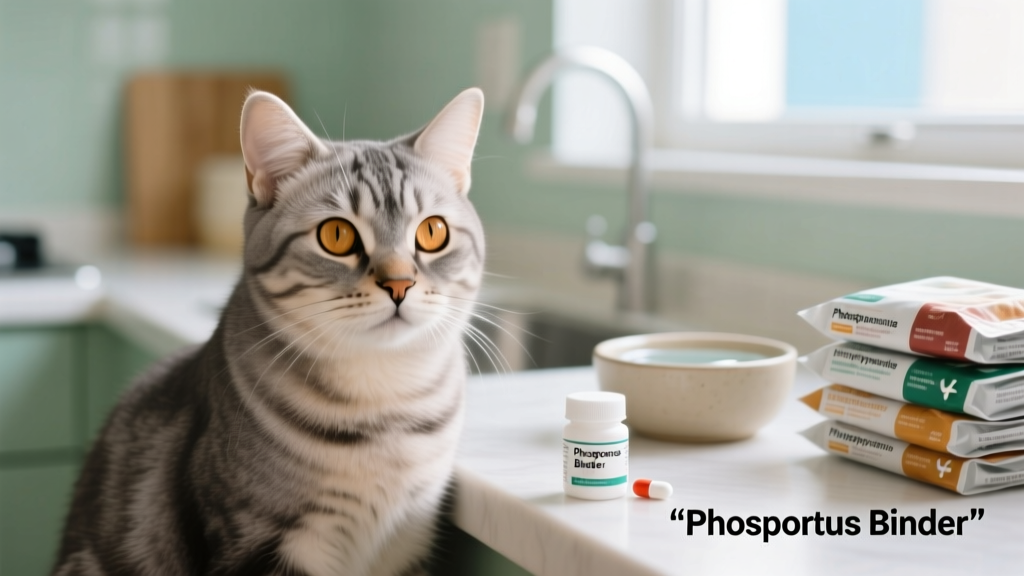
When kidneys lose filtering capacity, phosphorus tends to rise in the bloodstream. Elevated phosphorus contributes to nausea, poor appetite, weight loss, weakness, and a damaging hormonal chain reaction that worsens kidney function over time. A renal diet is typically the first nutrition tool to lower phosphorus, but some cats won’t eat it or still have high blood phosphorus despite dietary changes. That’s where phosphorus binders can help: they reduce the amount of phosphorus absorbed from food, supporting better blood phosphorus control while you continue feeding a diet your cat will actually eat.
2) Scientific background: feline nutrition and obligate carnivore biology
Cats are obligate carnivores, adapted to thrive on animal-based protein and fat with relatively low carbohydrate needs. Their metabolism is geared toward:
- High protein requirement compared with omnivores (they use amino acids continuously for energy and nitrogen metabolism).
- Higher need for certain nutrients found richly in animal tissues (taurine, arachidonic acid, vitamin A in active form, vitamin B12).
- Lower thirst drive and a natural preference for moisture-rich prey, making hydration and canned diets especially relevant in kidney disease.
Kidney disease nutrition can feel counterintuitive for carnivore owners because some renal diets reduce protein. Modern renal nutrition focuses less on “low protein at all costs” and more on:
- Reducing phosphorus (a key driver of CKD-related complications).
- Feeding highly digestible, high-quality protein to preserve muscle while minimizing waste products.
- Maintaining calorie intake (poor intake is a major risk factor for muscle loss and decline).
- Supporting hydration and electrolyte balance.
- Adding omega-3 fatty acids (EPA/DHA) in many cases to support anti-inflammatory pathways.
3) Detailed analysis: phosphorus, CKD, and how binders work
What phosphorus does in the body
Phosphorus is essential for energy metabolism (ATP), cell membranes, and bone mineralization. The goal is not “phosphorus-free,” but “appropriate phosphorus.” In CKD, the problem is reduced excretion.
Why high phosphorus is harmful in renal failure
As kidney function declines, phosphorus can accumulate. This contributes to:
- Secondary renal hyperparathyroidism (a hormonal response that can worsen bone and kidney health).
- Soft tissue mineralization in severe cases.
- Uremic signs such as nausea, reduced appetite, and lethargy.
- Faster CKD progression associated with persistently elevated phosphorus.
Food phosphorus vs. blood phosphorus
Food contains phosphorus in protein-rich ingredients and in added mineral salts. Not all phosphorus sources are equal:
- Highly bioavailable forms (often inorganic phosphate additives) can raise absorbed phosphorus more than naturally occurring forms.
- Animal-based proteins carry phosphorus, but protein is also vital for muscle maintenance. The aim is a better phosphorus-to-calorie balance, not protein elimination.
What phosphorus binders do
Phosphorus binders are compounds that bind dietary phosphorus in the gastrointestinal tract so it passes out in stool rather than being absorbed. They do not “clean” phosphorus out of the blood directly; they reduce new absorption, which helps blood phosphorus levels come down over time when paired with appropriate diet and medical management.
When binders are typically considered
Veterinarians commonly consider binders when:
- Blood phosphorus is above target for the cat’s CKD stage despite diet changes.
- The cat won’t eat renal diets and needs a more palatable diet to maintain calories, while using a binder to control phosphorus.
- Phosphorus rises during later-stage CKD even on an appropriate renal diet.
Binders should be used under veterinary guidance with periodic lab checks. Over-suppression or inappropriate product choice can cause complications.
Common binder types (general overview)
| Binder type | How it binds phosphorus | Potential pros | Potential cons / cautions |
|---|---|---|---|
| Aluminum-based | Binds phosphate effectively in the gut | Often effective at lower doses; widely used in veterinary practice | Long-term aluminum exposure concerns; must be dosed correctly and monitored by a vet |
| Calcium-based (e.g., calcium carbonate) | Calcium binds phosphate | Accessible; can be effective in some cases | Risk of high calcium levels in some cats; not ideal if blood calcium is elevated |
| Lanthanum-based | Forms insoluble complexes with phosphate | Strong binding; can be an option when others aren’t suitable | Cost; dosing and formulation issues; use only with veterinary oversight |
| Iron-based | Binds phosphate in the gut | May be useful in select cases | Not appropriate for every cat; potential GI effects; needs vet direction and monitoring |
| “Natural” binders (variable products) | Depends on ingredients | Marketed as gentle | Inconsistent binding, dosing uncertainty, and limited evidence compared with medical binders |
Evidence-based focus: diet first, then binder if needed
Veterinary nutrition guidelines generally prioritize a therapeutic renal diet because it addresses multiple CKD needs simultaneously: lower phosphorus, controlled protein quality/quantity, added omega-3s, adjusted electrolytes, and higher calorie density. Binders can be an excellent add-on when diet alone doesn’t achieve phosphorus targets or when maintaining food intake requires a different diet.
4) Practical recommendations for cat owners
- Work with your veterinarian to stage CKD, review lab work (phosphorus, calcium, creatinine, SDMA, potassium, bicarbonate/CO2, urine specific gravity), and set target phosphorus goals.
- Prioritize calories and appetite. A cat that won’t eat is at high risk for muscle wasting and hepatic lipidosis. The “best” renal plan is the one your cat reliably eats.
- Use binders only with meals. Binders must mix with food in the gut to bind phosphorus. Giving a binder on an empty stomach is far less effective.
- Measure accurately. Use the exact measuring spoon/syringe and follow your vet’s dose instructions. Binder dosing often depends on dietary phosphorus and body weight, and it may change over time.
- Schedule rechecks. Blood phosphorus (and calcium) should be monitored after diet/binder changes. Your vet may adjust dose based on response and CKD stage.
- Watch stool quality. Some binders cause constipation or GI upset. Report changes promptly so your vet can adjust the plan.
5) Comparing approaches: renal diet vs. binder vs. both
| Approach | Best for | Advantages | Limitations |
|---|---|---|---|
| Therapeutic renal diet alone | Many cats with stable appetite who accept the food | Targets multiple CKD needs; predictable nutrient profile | Some cats refuse; may not be enough in later-stage CKD |
| Non-renal diet + phosphorus binder | Cats refusing renal food; cats needing higher palatability | Can maintain intake; flexible food choices | Doesn’t automatically address all renal nutrition goals; requires careful monitoring and accurate dosing |
| Renal diet + phosphorus binder | Cats whose phosphorus remains high despite renal diet | Often the strongest phosphorus-lowering combination | Higher risk of over-lowering phosphorus or affecting calcium balance if not monitored |
6) Common mistakes and misconceptions to avoid
- Myth: “All protein is bad for kidney cats.”
Reality: Protein restriction is not a one-size-fits-all rule. Many CKD cats benefit from controlled phosphorus and high-quality, digestible protein to help maintain lean mass. Your vet will consider stage, body condition, and lab trends. - Mistake: Using a binder without lab work.
Binders should be guided by blood phosphorus (and calcium) levels and rechecked after changes. Guessing can lead to poor control or mineral imbalances. - Myth: “A binder replaces a renal diet.”
Reality: Binders target phosphorus absorption only. Renal diets often also address sodium, omega-3s, calorie density, acid-base balance, and overall mineral profile. - Mistake: Giving binder away from food.
Binders need to be present in the gut with dietary phosphorus. Mix into meals as directed. - Mistake: Switching foods too fast.
Sudden diet changes can cause food refusal or GI upset. CKD cats are especially sensitive to appetite disruptions. - Myth: “Over-the-counter ‘kidney supplements’ are always safer than prescription options.”
Reality: “Natural” doesn’t guarantee effective binding, consistent dosing, or safety for cats with altered mineral balance. Use products vetted by your veterinarian.
7) How to implement changes safely (transition tips)
- Make one change at a time: If you’re starting a new food and a binder, ask your vet whether to stagger changes so you can identify what helps (or causes side effects).
- Transition slowly: Mix increasing amounts of the new food over 7–14 days if your cat tolerates it. For picky CKD cats, even slower transitions may work better.
- Protect appetite: Warm food slightly, offer small frequent meals, and avoid strong stressors around feeding. Ask your vet about appetite stimulants or anti-nausea meds if needed.
- Mix binder thoroughly: Powder binders are often easiest to blend into wet food. If using capsules or tablets, follow your vet’s guidance on administration.
- Recheck labs: Many vets recheck phosphorus and calcium a few weeks after a binder change, then adjust as needed.
8) Special considerations: age, other conditions, activity level
- Senior cats: Older cats are more prone to muscle loss (sarcopenia). If your cat is thin or losing muscle, discuss protein quality, calorie density, and phosphate control strategies with your vet rather than focusing only on “lower protein.”
- Constipation-prone cats: Some binders can worsen constipation. Your vet may recommend hydration strategies, added water to food, stool softeners, or alternative binder types.
- Hypercalcemia or high-normal calcium: Calcium-based binders may be inappropriate. Cats with CKD can have complex calcium-phosphorus balance issues that require individualized planning.
- Hypertension and heart disease: Sodium content and fluid strategy matter. Renal diets typically consider sodium, but your vet may tailor choices based on blood pressure and cardiac status.
- Diabetes: Some renal foods differ in carbohydrate content. If your cat is diabetic, coordinate renal nutrition with glucose control and insulin dosing under veterinary supervision.
- Active vs. sedentary cats: Activity affects calorie needs. Underfeeding is common in CKD due to reduced appetite, so portioning should be based on body weight, body condition score, and weekly trends.
FAQ: Phosphorus binders for cats with renal failure
1) How do I know if my cat needs a phosphorus binder?
Your veterinarian will use bloodwork (especially serum phosphorus, and often calcium) alongside CKD staging and diet history. If phosphorus is above the target range for your cat’s stage or rising over time, a binder may be recommended.
2) Can I just give a phosphorus binder and keep feeding my cat’s regular food?
Sometimes a binder plus a non-renal diet is used when a cat refuses renal food, but it should be a veterinary-guided plan with monitoring. Regular diets may be higher in phosphorus and may not support other CKD needs (omega-3s, electrolyte balance, appropriate protein strategy). For many cats, a renal diet is still the foundation.
3) Do phosphorus binders have side effects?
They can. GI upset, constipation, and changes in mineral balance are possible depending on the binder type and the cat’s lab values. This is why dosing accuracy and recheck bloodwork matter.
4) Should I stop the binder if my cat skips a meal?
Binders work best with food. If your cat doesn’t eat, contact your veterinarian for specific instructions. As a general concept, giving a binder without food is usually unhelpful and can increase the chance of GI upset.
5) Are “low phosphorus” homemade diets safer if I add a binder?
Homemade renal diets can be risky if not formulated by a veterinary nutritionist because cats require precise amino acids, minerals, and vitamins. Adding a binder doesn’t fix a nutritionally unbalanced recipe. If you want to feed homemade, ask your vet for a referral to a board-certified veterinary nutritionist (DACVIM Nutrition or ECVCN).
6) How quickly will phosphorus levels improve after starting a binder?
It varies with CKD stage, the phosphorus content of the diet, the binder type/dose, and how consistently your cat eats. Many cats are rechecked within a few weeks to assess response and adjust the plan.
Final thoughts for caring, nutrition-focused cat owners
Phosphorus control is one of the most impactful nutrition strategies for cats with renal failure, and phosphorus binders can be a valuable tool when diet alone isn’t enough or when maintaining appetite requires flexibility. The safest path is a vet-guided plan that balances phosphorus targets with what your cat will reliably eat, plus regular lab monitoring.
If you want more practical, science-based feeding help for every life stage and health condition, explore our nutrition guides on catloversbase.com.