Feeding Cats With Lymphoma: Appetite Stimulation Diet
1) Why this nutrition topic matters for cat health
Lymphoma is one of the most common cancers in cats, and it often brings the same day-to-day challenge for caregivers: poor appetite, weight loss, nausea, and muscle wasting. When a cat stops eating well, their body quickly shifts into a catabolic state (breaking down muscle for fuel), and that can reduce strength, lower immune function, and make recovery from illness or treatment harder. In cats, prolonged inadequate intake also raises the risk of hepatic lipidosis (fatty liver disease), especially in overweight cats who suddenly stop eating.
Nutrition can’t “cure” lymphoma, but it can strongly influence quality of life and resilience during treatment. A smart appetite-support diet aims to:
- Encourage eating with highly palatable, aromatic foods
- Provide enough calories in small volumes (energy-dense feeding)
- Protect lean body mass with highly digestible animal protein
- Support hydration and gut comfort
- Reduce food aversion and mealtime stress
Because lymphoma can affect the GI tract, lymph nodes, kidneys, liver, or mediastinum, there is no single perfect diet for every cat. The best plan is individualized with your veterinarian or a board-certified veterinary nutritionist, especially if your cat is undergoing chemotherapy, steroids, or has concurrent disease.
2) Scientific background: feline nutritional needs (obligate carnivore biology)
Cats are obligate carnivores. Their metabolism is adapted to a prey-based diet with high protein, moderate fat, very low carbohydrate, and high moisture. Key biology points that matter for lymphoma nutrition and appetite support:
- Higher protein needs: Cats require more dietary protein than omnivores and rely on amino acids (like taurine, arginine, methionine) that are naturally abundant in animal tissues.
- Limited carbohydrate requirement: Cats have no nutritional requirement for carbohydrates and often do better with lower-carbohydrate, higher-protein diets when appetite is reduced.
- Strong reliance on scent and texture: Cats choose foods heavily by aroma and mouthfeel. Warming food can increase volatile aromas and improve intake.
- Moisture matters: Cats have a naturally low thirst drive. Wet foods help maintain hydration, which supports circulation, kidney function, and GI motility—important when illness or medications cause nausea or constipation.
- Small stomach capacity: Many sick cats do better with smaller, frequent meals rather than large portions.
When lymphoma affects the GI tract, inflammation and malabsorption can further complicate nutrition, making digestibility and tolerance as important as the nutrient “targets.”
3) Detailed analysis: what an appetite-stimulation diet should do (evidence-based)
Primary goal: prevent weight and muscle loss
In feline cancer patients, maintaining body weight is helpful, but preserving lean body mass (muscle) is even more protective. Muscle loss can occur even when weight looks stable (fat replacing muscle), so your vet may monitor body condition score (BCS) and muscle condition score (MCS).
Diet strategies that support muscle:
- Highly digestible animal protein in appropriate amounts for the cat’s overall health status
- Energy density so your cat can meet calorie needs with less volume
- Anti-nausea and appetite medication support as prescribed (diet works best when nausea is controlled)
Palatability is a medical tool
With lymphoma, anorexia is often driven by nausea, pain, altered smell, mouth discomfort, constipation, or stress. Appetite stimulants (medications) can help, but diet still plays a central role.
Evidence-based palatability boosters:
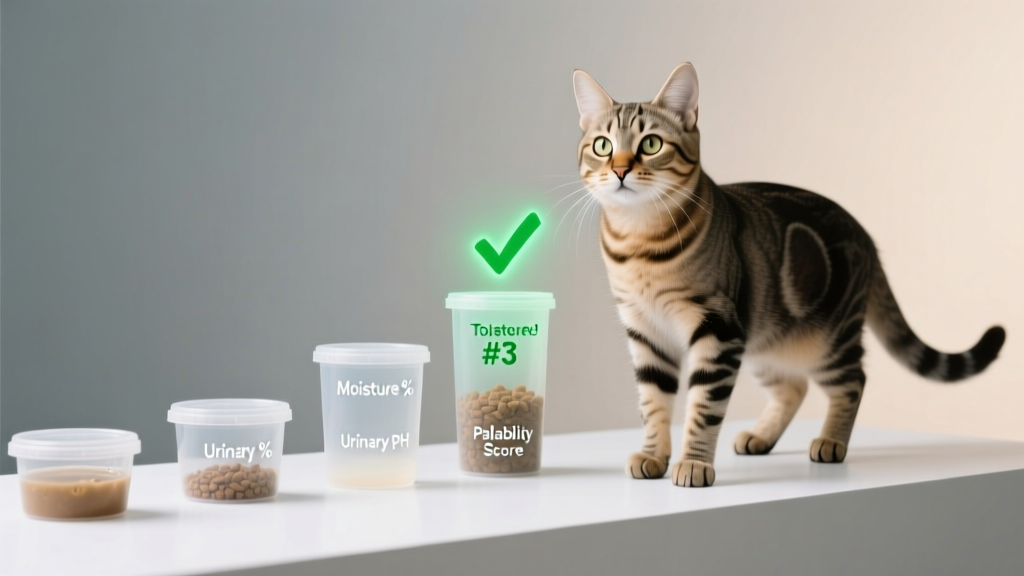
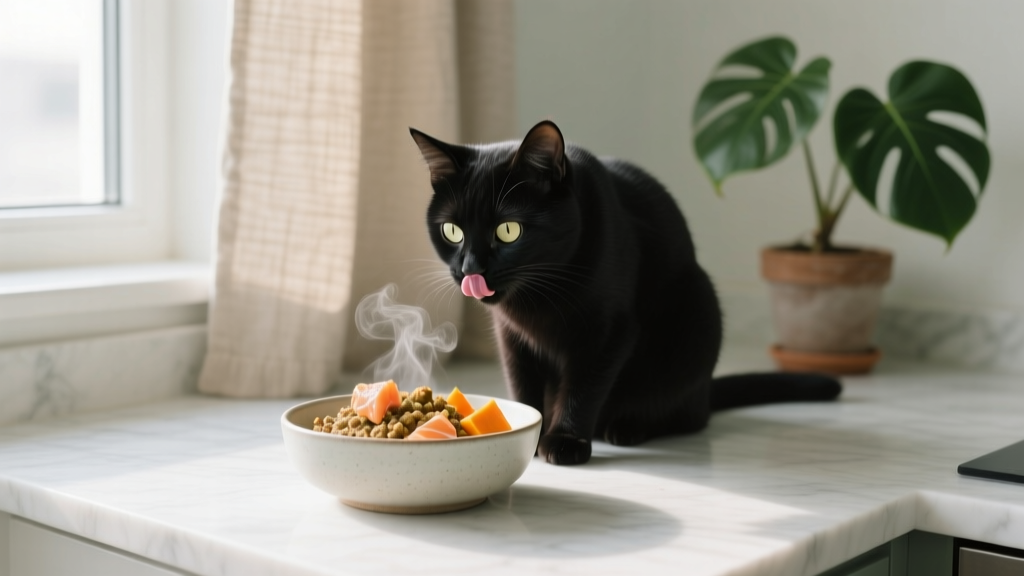
- Warm wet food to roughly body temperature (not hot) to enhance aroma
- Strong-smelling proteins (fish-based canned foods can work for some cats)
- Texture matching: pate vs. shredded vs. mousse; many cats have strong preferences
- High-fat options (fat is calorie-dense and often palatable), as tolerated
Manage GI upset and food aversion
Many cats with lymphoma experience nausea, vomiting, diarrhea, constipation, or abdominal discomfort. When a cat feels sick after eating a certain food, they can develop a learned food aversion—even to a food they previously loved. This can happen quickly, especially around chemotherapy days or other stressful events.
Diet tactics to reduce aversion risk:
- Offer a “safe food” (highly accepted) that you do not feed around treatments or stressful vet visits
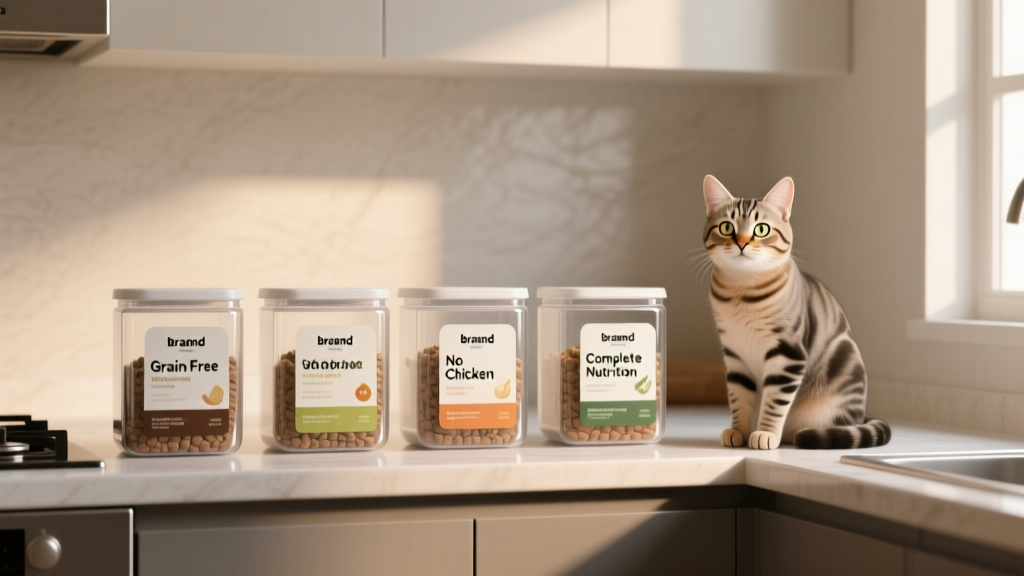
- Rotate between a small set of tolerated foods, rather than relying on only one flavor
- Use small, frequent meals to reduce nausea and GI load
Carbohydrates, cancer, and what the science supports
You may see claims that “sugar feeds cancer” and that cutting all carbohydrates will stop tumor growth. Cancer cells can use glucose, but so do normal cells, including the brain and red blood cells. Current veterinary nutrition science does not support extreme dietary manipulation as a standalone cancer therapy. What is supported is focusing on:
- Consistent calorie intake (a cat that eats is better than a cat refusing a “perfect” formula)
- High-quality, digestible protein to reduce muscle loss
- Appropriate fat levels for energy density, if tolerated
Some cats do well on lower-carbohydrate wet diets simply because they are meat-forward and palatable, not because carbs are “poison.” If your cat has diabetes or other conditions, carb level becomes more clinically important—work with your vet.
Omega-3s and supportive nutrients
Long-chain omega-3 fatty acids (EPA and DHA) may support inflammatory balance and are often used as part of a broader supportive plan in cancer patients. They are not a cure, and dosing should be veterinary-guided because too much can cause GI upset or interfere with clotting in sensitive patients. Other supplements should be chosen carefully—some are unnecessary, and others can be unsafe with certain chemotherapies or organ disease.
4) Practical recommendations for cat owners
Use this as a starting framework, then personalize with your veterinarian:
| Goal | What to do | Why it helps |
|---|---|---|
| Boost appetite | Warm wet food; offer strong aromas; try multiple textures | Enhances scent and acceptance; respects feline preferences |
| Increase calories | Choose energy-dense canned foods; add vet-approved toppers | More calories in fewer bites for low-appetite cats |
| Support hydration | Feed primarily wet food; add warm water or broth (no onion/garlic) | Helps kidney support, stool quality, and overall comfort |
| Improve tolerance | Small, frequent meals; avoid sudden diet changes; control nausea | Reduces GI load and food aversion risk |
| Protect muscle | Prioritize animal protein; monitor muscle condition with your vet | Supports lean body mass and strength |
High-value appetite “toppers” (vet-friendly options)
- Warm water mixed into pate to create a fragrant “gravy”
- Freeze-dried meat crumbled on top (single-ingredient, no seasoning)
- Meat-only baby food (verify no onion/garlic powders; use short-term)
- Bonito flakes (tiny amounts for aroma; watch sodium if medically relevant)
- FortiFlora-style probiotics (some cats like the flavor; ask your vet if appropriate)
Skip any topper containing onion, garlic, chives, heavy salt, xylitol, or essential oils.
5) Comparison of options/products/approaches
| Approach | Pros | Cons / Cautions | Best use case |
|---|---|---|---|
| Commercial complete & balanced wet food | Reliable nutrition; high moisture; many textures | Some cats become picky; may need rotation | Most lymphoma cats needing easy, consistent feeding |
| Veterinary therapeutic GI diets (wet) | Highly digestible; often lower residue; may reduce vomiting/diarrhea | May be less exciting for some cats; cost | GI lymphoma, chronic vomiting/diarrhea, suspected malabsorption |
| Prescription recovery/critical care diets (wet) | Very energy-dense; designed for poor appetite; smooth textures | Not always ideal long-term; may require vet guidance | Short-term calorie rescue, post-hospitalization, very low intake |
| Home-cooked (vet-formulated) | Customizable texture and flavor; can be very palatable | High risk of imbalance without a nutritionist; time and cost | Cats refusing commercial diets, multiple comorbidities, picky eaters |
| Raw diets | Some cats find it palatable | Higher pathogen risk; not recommended for immunocompromised cats; nutrient balance issues | Generally not advised for lymphoma cats, especially on chemo/steroids |
6) Common mistakes and misconceptions to avoid
- Myth: “If my cat won’t eat their healthy food, they’ll eat when hungry.”
Cats with illness can spiral into dangerous anorexia. If your cat is eating poorly for more than 24 hours (or eating nothing), contact your veterinarian promptly. - Myth: “Cutting all carbs will starve the cancer.”
Nutrition is supportive care. The priority is adequate calories and complete, balanced nutrition. Extreme restriction can reduce intake and worsen weight loss. - Mistake: Switching foods repeatedly in one day.
Rapid changes can trigger GI upset and reinforce food refusal. Use structured trials and keep a small “menu” of accepted foods. - Mistake: Feeding unbalanced home-cooked diets long-term.
Plain chicken/tuna may get calories in temporarily, but it’s not nutritionally complete and can lead to deficiencies. If home-cooking, use a recipe formulated by a veterinary nutritionist. - Mistake: Offering human foods with hidden toxins.
Onion/garlic powders are common in broths, meats, and baby foods. Always check labels.
7) How to implement changes safely (transition tips)
Sick cats need gentle transitions, but you also can’t wait weeks if intake is low. Use a “fast-but-safe” approach:
- If your cat is eating: Mix in the new food gradually over 3–7 days (more slowly if diarrhea occurs).
- If your cat is barely eating: Prioritize calories now. Offer the most accepted complete wet food immediately, then stabilize and refine later with your vet.
- Control nausea first: Ask your veterinarian about anti-nausea meds (commonly used options include maropitant or ondansetron) and appetite stimulants where appropriate. Diet works far better when nausea is addressed.
- Use micro-meals: 1–2 tablespoons every 2–4 hours can outperform two large meals.
- Reduce stress: Quiet feeding area, clean bowls, and avoid hovering. Some cats eat better from flat plates to reduce whisker stress.
Urgent safety note: If your cat has eaten little to nothing for 24 hours, or is vomiting repeatedly, seems painful, or is lethargic, contact your veterinarian or an emergency clinic. Feeding plans may need to include assisted feeding or a feeding tube, which can be a quality-of-life tool, not a failure.
8) Special considerations (age, health conditions, activity level)
Kittens and young cats
Lymphoma is less common in kittens, but if it occurs, growth needs make adequate calories and complete nutrition critical. Work closely with a veterinarian; do not improvise with unbalanced diets.
Seniors
Older cats often have concurrent issues (kidney disease, dental pain, arthritis). Appetite can be limited by pain, nausea, or reduced smell. Softer textures, warmed foods, and pain management can dramatically improve intake.
GI lymphoma vs. other forms
- GI involvement: Highly digestible wet diets, careful fat tolerance, and possibly novel protein or hydrolyzed diets if inflammatory bowel disease (IBD) overlap is suspected.
- Mediastinal or multicentric lymphoma: Appetite issues may be more medication-related or systemic; palatability and calorie density remain key.
Kidney disease (CKD)
If your cat has CKD and lymphoma, diet becomes more complex. Traditional kidney diets are lower in protein and phosphorus, but cancer and weight loss increase the importance of maintaining muscle. Your veterinarian may recommend a compromise plan (for example: a kidney-friendly base diet plus targeted calorie support) based on lab work, staging, and your cat’s current body condition.
Diabetes
Carbohydrate level matters more. Many diabetic cats do best with low-carb wet foods, but medication and appetite fluctuations from cancer treatment can change insulin needs quickly. Coordinate diet changes with your vet to reduce hypoglycemia risk.
Pancreatitis history
Some cats with pancreatitis do poorly with very high-fat foods. If vomiting or abdominal pain worsens after richer meals, ask your vet about a more moderate-fat, highly digestible plan.
Low activity level
When cats feel unwell, they move less. That doesn’t mean they need fewer calories—illness can increase energy needs while appetite drops. Let weight trend and muscle condition guide calorie targets, not activity alone.
9) FAQ: common questions cat owners ask
How long can a cat with lymphoma go without eating?
Not long safely. If your cat eats nothing for 24 hours (or significantly less than normal for more than a day), call your veterinarian. Cats are prone to hepatic lipidosis when intake is poor, and early intervention is safer than waiting.
What’s the best food for a cat with lymphoma?
The best food is the one your cat will reliably eat that is complete and balanced, while also matching their medical needs (GI sensitivity, kidney values, diabetes, pancreatitis history). Many lymphoma cats do well with palatable canned foods, therapeutic GI diets, or short-term recovery diets. Your veterinarian can help you choose based on symptoms and lab results.
Should I feed raw to “boost the immune system”?
Raw diets are generally not recommended for cats with lymphoma, especially those on chemotherapy or steroids, because immunosuppression increases the risk from foodborne pathogens. Nutrient imbalance is another concern. Discuss safer alternatives with your vet.
Do appetite stimulants replace the need for diet changes?
No. Appetite stimulants can help a cat feel interested in food, but they don’t guarantee adequate calorie intake or good nutrient balance. The strongest plan pairs nausea control (when needed), appetite support, and a palatable, energy-dense diet.
Can I syringe-feed my cat if they won’t eat?
Only under veterinary guidance. Syringe-feeding can increase stress and aspiration risk, and it may worsen food aversion. If intake is inadequate, ask your veterinarian about assisted-feeding strategies, including feeding tubes, which can be temporary and can improve comfort and nutrition delivery.
Is tuna a good choice for tempting my cat to eat?
Tuna can be useful as a short-term appetite enticer, but it should not become the main diet. Tuna-only feeding can lead to nutritional imbalances and may contribute to picky eating. Use tiny amounts as a topper, or choose complete canned foods with fish flavors.
Practical feeding checklist (print-friendly)
- Offer 4–6 small meals per day (or more micro-meals if needed)
- Feed primarily wet food; warm slightly to enhance aroma
- Keep a rotating “menu” of 2–4 accepted complete foods
- Track intake, weight trend, stool quality, and vomiting episodes
- Ask your vet about nausea control and appetite stimulants early
- Avoid raw diets and avoid onion/garlic in any broth or topper
Your veterinarian is your best partner for tailoring a lymphoma nutrition plan—especially if your cat is on chemotherapy, steroids, or has kidney disease, diabetes, or pancreatitis. With the right mix of medical support and strategic feeding, many cats eat better, maintain strength longer, and feel more like themselves.
For more cat-feeding strategies, symptom-friendly diet guides, and practical nutrition tips, explore the nutrition articles on catloversbase.com.