Feeding Cats With Exocrine Pancreatic Insufficiency: Enzyme
1) Why this topic matters for cat health
Exocrine pancreatic insufficiency (EPI) is a digestive disorder where the pancreas doesn’t produce enough digestive enzymes to break down food. For cats, that can mean the nutrients in even a high-quality diet simply pass through unused. The result is often weight loss, chronic diarrhea or soft stools, greasy stool, flatulence, poor coat quality, increased appetite (or sometimes poor appetite), and a cat that never seems to “thrive.”
Feeding a cat with EPI is less about finding a single “perfect food” and more about rebuilding digestion: replacing missing enzymes, improving nutrient absorption, and correcting deficiencies (especially cobalamin/vitamin B12). Done well, diet and enzyme therapy can dramatically improve body condition, energy, stool quality, and long-term comfort.
This article focuses on enzyme strategies and nutrition choices that support cats with EPI. Work closely with your veterinarian (and ideally a board-certified veterinary nutritionist) because cats with EPI frequently have other issues like chronic pancreatitis, inflammatory bowel disease (IBD), diabetes, or small intestinal bacterial overgrowth/dysbiosis.
2) Scientific background: feline nutritional needs and obligate carnivore biology
Cats are obligate carnivores with a digestive system and metabolism designed around animal-based protein and fat.
- Protein: Cats have high baseline protein needs and use amino acids for energy more than omnivores do. They require certain amino acids (e.g., taurine) that must come from animal tissues.
- Fat: Dietary fat is a concentrated energy source and supports absorption of fat-soluble vitamins (A, D, E, K). Fat digestion relies heavily on pancreatic enzymes and bile acids.
- Carbohydrates: Cats can digest some carbohydrates, but they have limited adaptive enzyme changes compared to omnivores. Carb-heavy diets are not inherently “bad,” but they’re rarely necessary and may complicate feeding for some EPI cats depending on stool response and comorbidities.
- Micronutrients: Many vitamins and minerals are absorbed in the small intestine. When digestion is impaired, deficiencies can develop even when intake looks adequate on paper.
With EPI, the main problem is maldigestion (not breaking food down) leading to malabsorption (not absorbing nutrients). Pancreatic enzymes include:
- Lipase (fat digestion)
- Proteases (protein digestion)
- Amylase (starch digestion)
Because cats often rely on fat and protein as primary calorie sources, insufficient lipase and proteases can hit them particularly hard, contributing to weight loss, bulky stools, and a dull coat.
3) Detailed, evidence-based analysis: how enzyme therapy and diet work together
What EPI changes in the body
When the pancreas doesn’t secrete enough enzymes, food isn’t fully digested in the small intestine. Undigested nutrients then move into the colon, where they can be fermented by bacteria, causing gas and loose stool. Over time, cats may develop:
- Weight loss despite normal or increased appetite
- Chronic diarrhea or frequent soft stool
- Steatorrhea (fatty/greasy stool) in some cases
- Poor coat and muscle wasting
- Cobalamin (B12) deficiency (common in feline EPI)
The core of treatment: pancreatic enzyme replacement
For most cats with EPI, pancreatic enzyme supplementation is the foundation. Diet tweaks can help, but enzymes are usually non-negotiable. Enzyme products supply lipase, protease, and amylase to digest food before it reaches the intestines.
| Therapy Component | Why It Helps | What Owners Usually Notice |
|---|---|---|
| Pancreatic enzyme powder/granules | Replaces missing enzymes to digest fat, protein, and starch | Firmer stool, less volume, weight gain, improved coat |
| Cobalamin (vitamin B12) supplementation | Corrects a common deficiency that can worsen GI signs and appetite | Better appetite, energy, stool quality; improved response to enzymes |
| Diet selection (highly digestible, appropriate fat/protein) | Reduces GI workload and supports consistent nutrient absorption | Less diarrhea, fewer flare-ups, steadier weight |
| Management of comorbidities (IBD, pancreatitis, diabetes) | Many EPI cats have overlapping disease that influences diet choice | More predictable stool and appetite; fewer relapses |
Powder vs tablets vs capsules: what tends to work best
Veterinary experience and clinical guidance generally favor powdered pancreatic enzymes mixed with food because they contact the meal more thoroughly. Tablets and enteric-coated forms may be less consistent for some cats (and harder to dose precisely), though individual response varies.
| Format | Pros | Cons | Best For |
|---|---|---|---|
| Powder / granules | Even distribution in food; adjustable dosing; often most effective | Can irritate mouth if not mixed well; smell may reduce palatability | Most cats starting EPI therapy |
| Capsules (opened and sprinkled) | Convenient; less odor until opened | Still needs good mixing; may cost more | Cats who eat poorly with loose powder |
| Tablets | Easy handling | May not mix with food; variable effectiveness; hard for some cats to take | Selected cases under veterinary direction |
| Raw pancreas / “glandular” supplements | Historically used; may provide enzymes | Safety concerns; inconsistent potency; pathogen risk with raw feeding | Not a first-line choice; discuss with your vet |
Do you need to “incubate” enzymes in food?
Some caregivers mix enzyme powder into wet food and let it sit for 10–20 minutes before offering it. This may help start digestion early, but it can also reduce palatability. Many cats do well with enzymes mixed thoroughly and fed immediately. The best approach is the one your cat will reliably eat and that produces good stool quality and weight gain. If your vet recommends incubation, follow their timing and dosing instructions.
Cobalamin (B12): the often-missed piece
Cobalamin deficiency is common in cats with chronic intestinal disease and in cats with EPI. Low B12 can worsen diarrhea, weight loss, and poor appetite, and can reduce response to enzyme therapy. Your veterinarian can test serum cobalamin and recommend supplementation (oral or injectable). Don’t guess—dose and route matter.
Fat, fiber, and digestibility: what the evidence-based approach looks like
Nutrition goals for EPI typically include:
- Highly digestible diet to reduce undigested residue
- Adequate calories to rebuild weight and muscle
- Reasonable fat level chosen based on stool response and comorbidities
- Controlled fiber (too much can bind nutrients and interfere with enzyme action in some cases)
- Consistent formula to avoid frequent GI upsets
Some cats with EPI tolerate moderate fat well once enzymes are properly dosed; others need lower fat if diarrhea persists or if pancreatitis is active. This is why monitoring and veterinary oversight are essential.
4) Practical recommendations for cat owners
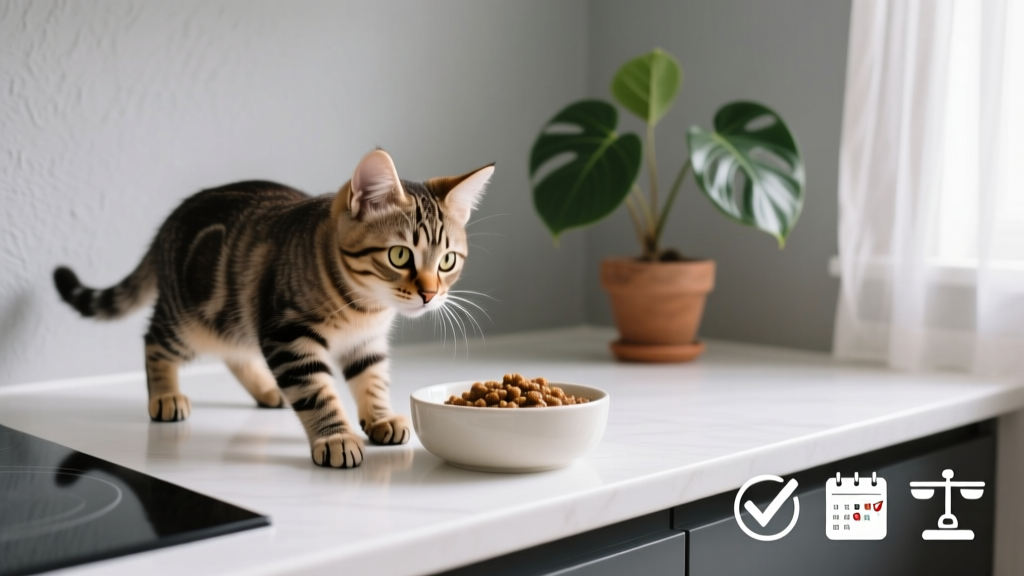
Daily feeding checklist for EPI cats
- Feed a complete and balanced diet (AAFCO/FEDIAF compliant) unless your vet has prescribed a therapeutic plan.
- Use pancreatic enzyme supplementation exactly as prescribed.
- Mix enzymes thoroughly into each meal to reduce mouth irritation and improve efficacy.
- Feed multiple small meals (often 3–5/day) if possible to improve tolerance and calorie intake.
- Weigh your cat weekly (use a baby scale for precision).
- Track stool quality with a simple log (frequency, firmness, odor, volume).
- Ask your vet about B12 testing/supplementation and follow-up labs.
How to minimize mouth irritation from enzymes
- Mix powder very well into moist food (enzymes on dry kibble can contact oral tissues more directly).
- Add a small amount of water or broth (vet-approved, low sodium, no onion/garlic) to create a slurry.
- Feed promptly once mixed if your cat refuses incubated food.
- Contact your vet if you see drooling, pawing at the mouth, oral ulcers, or sudden food refusal—dose adjustments or a different product format may be needed.
5) Comparison of options: diets and approaches that commonly help
Commercial therapeutic diets vs over-the-counter diets
Many cats with EPI do well on highly digestible veterinary gastrointestinal (GI) diets. These are designed to be easy to digest and consistent batch-to-batch. Some cats do fine on carefully chosen over-the-counter foods, but the margin for error can be smaller.
| Approach | Pros | Potential Downsides | When It Makes Sense |
|---|---|---|---|
| Veterinary GI highly digestible diet | Predictable digestion; often well-studied; helpful for diarrhea | Cost; may not match every cat’s preferences | Newly diagnosed EPI; ongoing GI signs |
| Hydrolyzed/novel protein diet | Helpful if food sensitivity/IBD overlaps | Not always necessary; may require trial period | Persistent diarrhea despite enzymes; suspected IBD |
| Carefully selected OTC wet food (high animal protein, moderate fat, low-moderate fiber) | Palatable; high moisture; variety of textures | Variable digestibility; may trigger relapses with frequent switching | Stable EPI cats; owners able to monitor closely |
| Raw or home-cooked diets | Owner-controlled ingredients | Nutrient imbalance risk; pathogen risk; enzyme dosing complexity | Only with veterinary nutritionist formulation and strict hygiene |
Wet vs dry food for EPI cats
- Wet food: Often easier to mix enzymes into; supports hydration; can be more palatable for picky cats.
- Dry food: Convenient, but enzyme distribution can be less uniform; some cats do fine if you add water and mix thoroughly.
Many EPI cats do best with mostly or all wet food, but the “best” choice is the one your cat digests well and will consistently eat.
6) Common mistakes and misconceptions to avoid
- Myth: “Switching to grain-free will fix EPI.”
Fact: EPI is an enzyme deficiency problem, not a grain problem. Diet changes alone rarely control EPI without enzyme replacement. - Mistake: Underdosing enzymes to save money.
Inadequate enzyme dosing can lead to ongoing malnutrition, continued diarrhea, and weight loss. If cost is an issue, ask your vet about different brands, dosing strategies, or pharmacy options—don’t guess. - Mistake: Frequent food switching.
Cats with GI disease often do worse with constant diet rotation. Pick one plan, track response for several weeks, then adjust with your vet. - Myth: “If stools improve, enzymes can be stopped.”
Most EPI cases require lifelong enzyme supplementation. Stopping often causes relapse. - Mistake: Ignoring B12.
Cobalamin deficiency can keep symptoms going even when enzymes are used correctly. - Myth: “More fiber always helps diarrhea.”
Some fiber can help certain GI conditions, but high fiber may reduce digestibility and interfere with nutrient absorption in EPI. Fiber choice should be individualized.
7) How to implement changes safely (transition tips)
Because EPI cats can lose weight quickly, changes should be methodical and monitored.
Step-by-step transition plan
- Confirm the treatment plan with your vet: enzyme product, dosing method, meal frequency, and whether B12 is needed.
- Choose one baseline diet: ideally a highly digestible veterinary GI diet or a vet-approved OTC option.
- Transition over 7–10 days (or longer if your cat is sensitive): mix increasing amounts of the new food into the old.
- Introduce enzymes exactly as directed with every meal. Don’t “trial” enzymes sporadically.
- Monitor daily: appetite, stool, body weight trend, energy, vomiting, and coat quality.
- Recheck with your veterinarian if stool doesn’t improve within a reasonable timeframe, weight loss continues, or appetite drops.
When to call your veterinarian promptly
- Refusal to eat for >24 hours (or sooner for kittens/seniors)
- Vomiting repeatedly, dehydration, lethargy
- Blood in stool, black/tarry stool
- Rapid weight loss or worsening diarrhea despite enzymes
- Signs of mouth pain after starting enzymes
8) Special considerations (age, health conditions, activity level)
Kittens and young cats
EPI is less common in kittens but can occur. Young cats have higher calorie and protein needs for growth. Work with a veterinarian to ensure the diet remains complete for growth and that weight gain is steady. Enzyme dosing may need frequent adjustment as body weight changes.
Senior cats
Older cats often have concurrent disease (kidney disease, hyperthyroidism, arthritis). These conditions can affect food choice and feeding logistics. Seniors may also have dental disease, making wet food and smooth textures easier, especially when mixed with enzymes.
Chronic pancreatitis
Many cats with EPI have a history of pancreatitis. During flare-ups, appetite can drop and nausea may increase. Your veterinarian may recommend a specific fat level, anti-nausea medication, pain control, and a temporary feeding strategy to keep calories consistent.
Inflammatory bowel disease (IBD) or food sensitivity
If diarrhea persists despite appropriate enzyme dosing and B12 support, comorbid intestinal disease becomes more likely. A hydrolyzed or novel-protein diet trial may help, guided by your veterinarian.
Diabetes
If your cat has diabetes, diet composition and meal timing matter for glucose control. Never change diet type (especially carbohydrate level) without veterinary guidance, as insulin needs may change.
Low activity vs high activity
EPI cats rebuilding from weight loss may need higher calorie density. More active cats may need larger portions, while sedentary cats may need careful calorie control once stabilized to avoid overshooting into weight gain. The goal is lean muscle, stable stool, and steady energy.
9) FAQ: common questions from cat owners
1) How long does it take for enzymes to work in cats with EPI?
Some cats show stool improvement within days, while others take a few weeks to stabilize. Weight gain often lags behind stool improvement. If there’s no meaningful progress after a reasonable trial with correct dosing, your vet may reassess dosing, B12 status, diet choice, and concurrent disease.
2) Can I just feed a “sensitive stomach” food without enzymes?
Most cats with true EPI need enzyme replacement because the core problem is inadequate pancreatic enzyme secretion. A gentle diet may reduce symptoms slightly, but it usually won’t correct maldigestion or prevent nutrient deficits. Always follow your veterinarian’s plan.
3) What’s the best food type for an EPI cat: low-fat, high-protein, grain-free?
There isn’t one universal best formula. Many EPI cats do well with highly digestible diets, adequate animal protein, and a fat level tailored to stool response and pancreatitis status. Grain-free is not a treatment for EPI. Work with your veterinarian to choose a diet that your cat digests well and will consistently eat.
4) My cat’s stool improved, but weight gain is slow. Why?
Common reasons include insufficient calories, ongoing B12 deficiency, concurrent IBD/pancreatitis, inaccurate portion measurement, or underdosing enzymes. Your vet can help calculate calorie targets, check labs, and adjust therapy.
5) Are probiotics helpful for EPI cats?
Some cats may benefit, especially if dysbiosis is suspected, but probiotics aren’t a substitute for enzymes or B12. Product quality varies widely. Ask your veterinarian which strains and doses have evidence in cats and whether a trial makes sense.
6) Is raw pancreas a good enzyme replacement?
Raw pancreas has been used historically, but potency is inconsistent and raw foods carry pathogen risk for cats and humans in the household. For most cats, veterinary pancreatic enzyme products are safer and more reliable. Discuss any alternative approach with your vet before trying it.
Bottom line: For feline EPI, enzyme replacement plus a highly digestible, consistent diet—and careful attention to vitamin B12—offers the best chance at normal stools and healthy weight. Every cat’s response is individual, so partner with your veterinarian for dosing, monitoring, and safe adjustments.
If you want more practical feeding strategies, label-reading help, and condition-specific nutrition guides, explore the cat nutrition articles at catloversbase.com.