Feeding Cats With Bile Acid Malabsorption: Fat Diet
1) Why this nutrition topic matters for cat health
When a cat has chronic diarrhea, greasy stools, weight loss, or unpredictable appetite, the problem is often blamed on “food sensitivity” or a random intolerance. One under-discussed contributor is bile acid malabsorption (sometimes called bile acid diarrhea). Bile acids are essential for digesting fats and absorbing fat-soluble vitamins. If bile acids are not handled properly in the gut, cats can end up with ongoing gastrointestinal upset and poor nutrient absorption—despite eating a diet that looks “complete and balanced” on the label.
Diet can play a meaningful role in controlling symptoms. The challenge is that fat is both: (1) nutritionally valuable for cats and (2) a common trigger for diarrhea when bile acid handling is impaired. A carefully designed fat strategy—not always “as low as possible,” but “as appropriate as possible”—can help many cats feel better while still meeting the needs of an obligate carnivore.
Always involve your veterinarian (and ideally a board-certified veterinary nutritionist) before changing fat levels, adding supplements, or using therapeutic diets. Similar symptoms can be caused by parasites, inflammatory bowel disease (IBD), pancreatitis, exocrine pancreatic insufficiency (EPI), liver disease, hyperthyroidism, infections, or diet-responsive enteropathy, and those conditions require targeted treatment.
2) Scientific background: feline nutritional needs and obligate carnivore biology
Cats are obligate carnivores with unique nutritional requirements shaped by evolution. That matters when adjusting fat intake, because a diet that “works” for some dogs or humans can be inappropriate for cats.
- High protein requirement: Cats have a high baseline need for animal protein and specific amino acids (taurine, arginine, methionine, cysteine). Protein restriction is rarely a first-line tool for GI issues unless directed by a veterinarian for a specific diagnosis.
- Fat as a key energy source: Dietary fat provides concentrated calories and essential fatty acids, and it supports skin/coat health and absorption of vitamins A, D, E, and K.
- Limited carbohydrate “need”: Cats can digest some carbs, but they do not require them and do best when carbohydrate does not displace needed animal protein.
- Fat-soluble vitamin sensitivity: Because bile acids support absorption of fat-soluble vitamins, malabsorption can increase the risk of deficiency even if the diet contains adequate levels on paper.
What bile acids do: Bile acids are produced by the liver, stored in the gallbladder (in most cats), released into the small intestine after meals, and help emulsify fats so digestive enzymes can break them down. Most bile acids are normally reabsorbed in the lower small intestine (ileum) and recycled back to the liver (enterohepatic circulation). If reabsorption is impaired or the bile acid pool is disrupted, bile acids can spill into the colon where they draw water and stimulate motility—leading to loose stools.
3) Detailed analysis: bile acid malabsorption and dietary fat
What “bile acid malabsorption” can mean in cats
In clinical practice, bile acid-related diarrhea may occur due to:
- Ileal disease (inflammation, thickening, IBD, lymphoma) reducing bile acid reabsorption
- Dysbiosis (microbiome imbalance) altering bile acid metabolism
- Post-infectious changes after enteritis
- Motility disorders where transit time is too fast for reabsorption
Diagnosis in cats can be challenging. Some veterinarians use response to treatment trials (diet changes, specific medications, or fiber adjustments) along with imaging, stool testing, bloodwork, and sometimes intestinal biopsy depending on severity and chronicity.
Why fat can worsen stools when bile acids aren’t handled correctly
When fat is not digested or absorbed efficiently, more fat reaches the colon. Combined with excess bile acids entering the colon, this can result in:
- Watery diarrhea or large-volume soft stools
- Greasy or shiny stools (steatorrhea-like appearance)
- Urgency and increased frequency
- Weight loss due to lost calories and nutrients
The goal: “fat-appropriate” rather than “fat-phobic”
Many owners assume the best approach is always the lowest-fat food available. For some cats, a moderate fat reduction is enough to improve stool quality while keeping the diet palatable and energy-dense. Going too low in fat can create other problems:
- Insufficient calories (cats may lose weight or become hungry and stressed)
- Poor palatability leading to food refusal
- Essential fatty acid imbalance if the diet is not properly formulated
- Risky “DIY” modifications where vitamins/minerals are no longer balanced
Dietary fiber and bile acids: a useful tool
Specific fibers can bind bile acids and help normalize stool. This is not a universal fix, and cats vary in tolerance, but it can be helpful under veterinary guidance.
| Fiber type | How it may help | Potential downsides |
|---|---|---|
| Soluble/gel-forming (e.g., psyllium) | Can improve stool consistency; may reduce diarrhea by holding water and binding irritants | Too much can cause gas, bloating, constipation, or reduced appetite |
| Moderately fermentable fibers | Support short-chain fatty acid production, potentially benefiting colon health | May worsen stools in some cats with sensitive guts |
| Insoluble fiber | Can add bulk and help motility in select cases | May not help bile acid diarrhea; can worsen volume/frequency in some cats |
Medium-chain triglycerides (MCTs): not a simple “swap” in cats
MCTs are sometimes discussed in malabsorption because they can be absorbed differently than long-chain fats. In cats, evidence is more limited, and MCT oil can cause GI upset. If considered, it should be done only with veterinary direction and careful dosing.
Why medication may still be part of the plan
Diet is powerful, but bile acid diarrhea often needs a combined strategy. Your veterinarian may consider options such as bile acid sequestrants (which bind bile acids in the gut) or therapies aimed at underlying intestinal inflammation/dysbiosis. Do not add human medications or supplements without veterinary approval.
4) Practical recommendations for cat owners
Diet goals for many cats with suspected bile acid malabsorption
- Highly digestible animal-based protein (to maintain lean mass and GI tolerance)
- Moderate fat rather than very high fat; in some cases, a veterinary low-fat therapeutic diet is appropriate
- Consistent feeding schedule to reduce GI swings
- Controlled treats (treats are a common source of hidden fat)
- Veterinary-guided fiber if stool consistency is poor
Label-reading tips (without getting lost in the weeds)
Pet food labels don’t make fat comparisons straightforward because canned and dry foods have different moisture levels. Ask your vet to help compare diets using dry matter basis (DMB) and the cat’s calorie needs. Practical takeaways:
- Many “rich,” very palatable foods are higher in fat and may worsen diarrhea in sensitive cats.
- “Grain-free” does not mean “low-fat.” Some grain-free foods are relatively high in fat.
- If you use treats, pick low-fat, single-ingredient options in tiny amounts and track the response.
Food format: wet vs dry
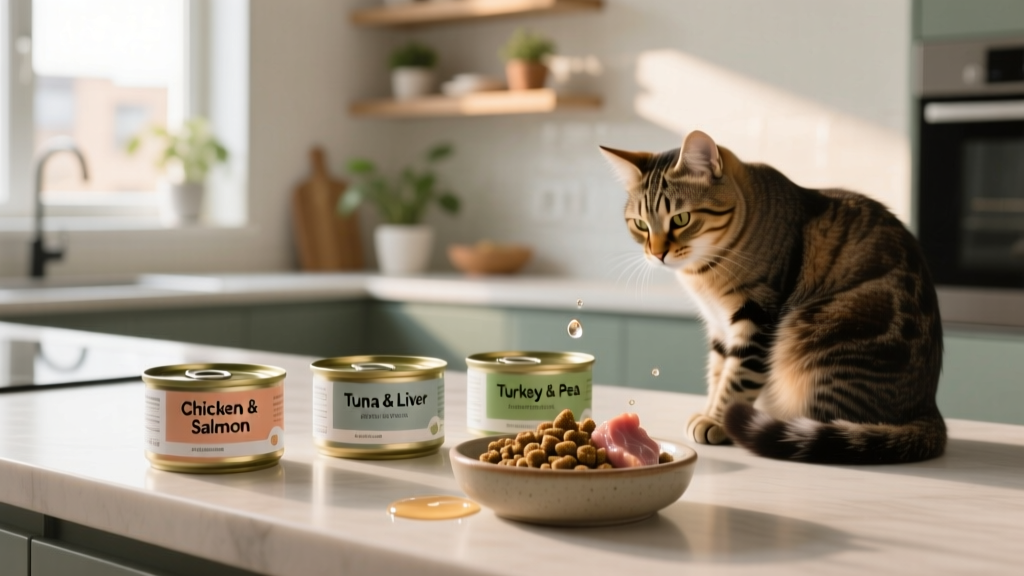
- Wet food often supports hydration and may be easier to digest for some cats; it also makes it easier to offer frequent small meals.
- Dry food can be convenient, but some formulas are energy-dense and may be higher in fat. If using dry, measure precisely and avoid free-feeding in diarrhea cases.
5) Comparing options and approaches
| Approach | Best for | Pros | Cons / cautions |
|---|---|---|---|
| Veterinary therapeutic GI diet (highly digestible, controlled fat) | Chronic diarrhea, weight loss, suspected malabsorption | Balanced nutrition, predictable formula, often tested in feeding trials | Cost; some cats dislike certain textures; requires vet guidance |
| Veterinary low-fat diet (if recommended) | Fat-triggered diarrhea, concurrent pancreatitis risk, very greasy stools | Reduces fat load that can worsen symptoms | May be less calorie-dense; some cats lose weight if portions aren’t adjusted |
| Over-the-counter “sensitive stomach” diet | Mild, intermittent signs; budget-limited households (with vet approval) | Easier to obtain; may help some cats | Fat levels vary widely; less consistent evidence; may not address bile acids |
| Hydrolyzed protein or novel protein trial | Suspected food-responsive enteropathy/IBD overlap | Can reduce immune-driven GI inflammation | Doesn’t automatically equal low-fat; strict adherence needed (no flavored meds/treats) |
| Home-cooked diet formulated by a veterinary nutritionist | Complex cases needing specific fat targets and ingredient control | Customizable fat level and fiber type; can improve acceptance | Risky if not professionally formulated; nutrient deficiencies are common in DIY recipes |
6) Common mistakes and misconceptions to avoid
- Myth: “Low-fat is always better for GI issues.”
Reality: Some cats need moderate fat, not ultra-low. Too little fat can reduce calorie intake and worsen weight loss. - Mistake: Treat overload and “tiny extras.”
A couple of high-fat treats, lickable tubes, cheese, or table scraps can undo the benefits of a carefully chosen diet. - Myth: “If it’s prescription, it’s automatically the right choice.”
Reality: Therapeutic diets are tools. The best choice depends on body condition, stool quality, concurrent disease, and response over time. - Mistake: Switching foods too often.
Frequent changes can perpetuate diarrhea and make it hard to tell what’s helping. - Myth: “A raw diet will fix malabsorption.”
Reality: Raw diets can be high in fat and carry pathogen risks (Salmonella, Campylobacter) for cats and humans. They are not a proven solution for bile acid-related diarrhea and may complicate GI disease management.
7) How to implement changes safely (transition tips)
Cats with chronic diarrhea can be sensitive to abrupt change. Use a structured transition, and involve your veterinarian if your cat is losing weight, dehydrated, lethargic, or has blood in stool.
- Transition gradually over 7–14 days (or longer if your vet advises): start with 10–25% new food mixed into the old, increasing every few days.
- Feed smaller, more frequent meals to reduce fat load per sitting and smooth bile acid release patterns.
- Track daily stool quality (frequency, consistency, urgency, mucus) and body weight weekly.
- Hold variables steady: keep treats, toppers, and flavored supplements constant (or remove them) during the diet trial.
- Hydration support: offer wet food, fresh water, and ask your vet about electrolyte support if diarrhea is significant.
If diarrhea worsens dramatically, your cat stops eating, or vomiting increases, pause the transition and contact your veterinarian promptly. Cats are at risk for hepatic lipidosis if they stop eating.
8) Special considerations (age, health conditions, activity level)
Kittens
- Kittens need higher energy intake and should not be placed on low-fat diets without veterinary direction.
- Chronic diarrhea in kittens also raises concern for parasites or infections; testing is essential.
Senior cats
- Older cats may have concurrent kidney disease, hyperthyroidism, dental disease, or sarcopenia (muscle loss).
- Maintaining adequate calories and highly digestible protein becomes a priority; overly aggressive fat restriction can backfire.
Overweight or obese cats
- Weight loss must be slow and supervised. Rapid calorie cuts increase risk of hepatic lipidosis.
- A veterinary weight-loss plan may still be compatible with GI management, but it requires careful balancing of fat, calories, and satiety.
Pancreatitis, IBD, EPI, liver disease
- These conditions can overlap with bile acid-related diarrhea signs.
- Some cats with pancreatitis do better with controlled fat; others need individualized targets.
- EPI requires enzyme replacement; diet changes alone are not sufficient.
Highly active cats vs indoor sedentary cats
- Active cats may need more calorie density; moderate fat can help meet energy needs without large meal volume.
- Sedentary cats may tolerate a slightly lower-fat approach if it helps stool quality, but protein adequacy remains critical.
9) FAQ
1) How do I know if my cat’s diarrhea is related to bile acids?
You can’t confirm bile acid malabsorption at home. Clues include chronic watery stools, urgency, and poor response to multiple food switches, sometimes with greasy-looking stool or weight loss. Your veterinarian may recommend fecal testing, bloodwork, ultrasound, diet trials, and sometimes medications that target bile acids to assess response.
2) Should I choose a low-fat or moderate-fat diet?
The best fat level depends on your cat’s body condition, symptom severity, and other diagnoses (like pancreatitis or IBD). Many cats improve on a highly digestible GI diet with controlled/moderate fat; some need a specifically low-fat therapeutic diet. Your vet can help compare options on a dry matter and calorie basis.
3) Can I just add fiber like psyllium to fix the problem?
Fiber can help stool consistency and may bind bile acids, but it’s not a guaranteed fix and too much can cause constipation or appetite loss. If your vet recommends it, dose carefully and introduce it slowly.
4) Are fish oil or omega-3 supplements safe for cats with bile acid malabsorption?
Omega-3s can be beneficial for inflammation, but they are still fat and may worsen diarrhea in some cats if started aggressively. Use only veterinary-recommended products and dosing, and monitor stool response.
5) Is a homemade diet a good idea for bile acid malabsorption?
Homemade diets can work well when formulated by a board-certified veterinary nutritionist to hit a precise fat target and ensure vitamin/mineral balance. DIY recipes from the internet are a common cause of nutrient deficiencies and can worsen GI disease.
6) How long should I trial a new diet before deciding it didn’t work?
Many diet trials need 2–4 weeks for a meaningful stool response, sometimes longer if the gut is inflamed. If your cat is losing weight, dehydrated, or worsening, contact your veterinarian sooner rather than “waiting it out.”
Next step: If your cat has ongoing diarrhea or suspected malabsorption, partner with your veterinarian to choose a fat strategy and a complete diet that supports both gut health and obligate carnivore needs. For more practical, science-based feeding guidance, explore the nutrition guides and cat health articles on catloversbase.com.