Cat Food Starch Gelatinization: Extrusion Temperature Effects
1) Why this topic matters for cat health
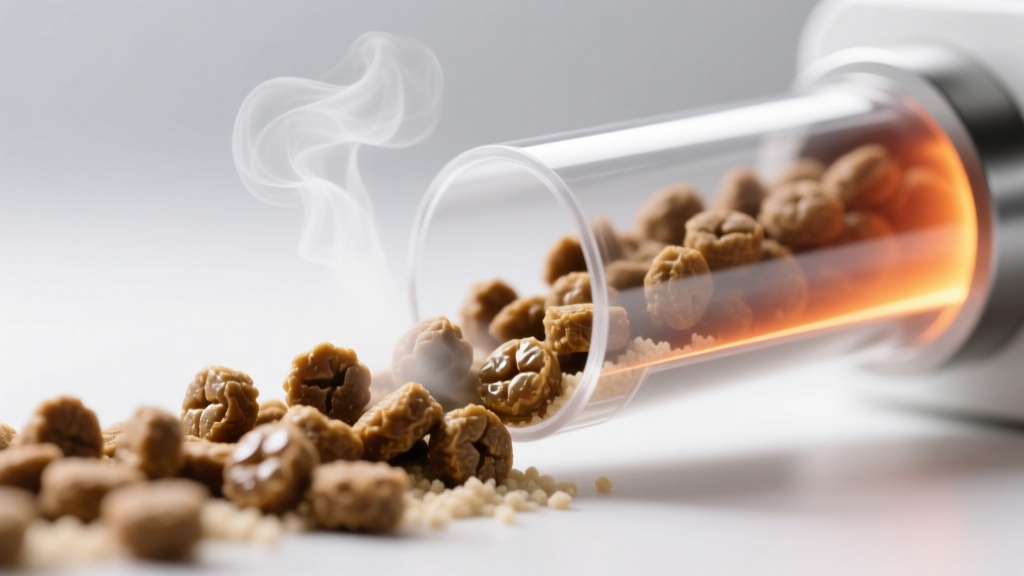
Most dry cat foods (kibble) are made using extrusion, a process that mixes ingredients with water and heat, then forces the dough through a die to create shapes. During extrusion, starches can “gelatinize,” meaning they absorb water, swell, and become more digestible. For cat owners trying to choose the best diet, this matters because:
- Digestibility and stool quality can change depending on how well starch is cooked.
- Blood sugar response may be influenced by processing and starch type, especially in cats prone to overweight or diabetes.
- Food tolerance (gas, loose stool, picky eating) can sometimes relate to starch cooking and overall formula design.
- Safety and consistency of kibble depend on proper processing. Under-processed kibble may be harder to digest; over-processing can reduce some heat-sensitive nutrients if not compensated.
Cats are obligate carnivores and do not have a strict dietary requirement for starch. Still, starch is commonly used in kibble for structure and manufacturing. Understanding gelatinization helps you evaluate dry foods more intelligently and balance them appropriately within a cat-centered diet plan. For any significant diet change—especially for cats with medical conditions—consult your veterinarian.
2) Scientific background: feline nutritional needs and obligate carnivore biology
Cats evolved to thrive on prey: high-protein, moderate fat, minimal carbohydrate, and moisture-rich. Several biological traits shape how cats handle nutrients:
- High protein needs: Cats have high requirements for dietary protein and specific amino acids (notably taurine) because of their metabolism and limited ability to down-regulate protein breakdown.
- Fat as a key energy source: Fats provide energy and essential fatty acids (like arachidonic acid) that cats cannot synthesize efficiently.
- No dietary carbohydrate requirement: Cats can digest and use carbohydrates, but they do not need them for health if adequate protein and fat are provided.
- Moisture matters: Many cats naturally have low thirst drive. Diet moisture (wet vs dry) can influence water intake and urinary health for some cats.
Where starch fits: kibble generally relies on starch for expansion and crunch. Without enough gelatinized starch, kibble may not form properly and can be less digestible. So while starch is not “needed” by cats, it is often a practical component of dry foods—and how it is cooked can affect how cats tolerate and utilize it.
3) Detailed analysis: starch gelatinization and extrusion temperature effects
What is starch gelatinization?
Starch granules (from ingredients like corn, wheat, rice, peas, potatoes, tapioca) are semi-crystalline structures. When heated in the presence of water, they absorb water, swell, lose crystallinity, and become more accessible to digestive enzymes. This transformation is called gelatinization.
Why extrusion temperature is only part of the story
Temperature strongly influences gelatinization, but it’s not the only driver. In extrusion, gelatinization depends on:
- Temperature (heat applied during preconditioning and in the extruder barrel)
- Moisture content (water and steam; needed for starch swelling)
- Mechanical shear (mixing and compression forces; can disrupt granules and promote cooking)
- Residence time (how long the dough is exposed to heat/shear)
- Starch type (grain vs tuber vs legume; amylose/amylopectin ratio influences behavior)
- Particle size and milling (finer particles hydrate/cook more easily)
- Formula makeup (protein, fiber, fat can limit water availability and reduce gelatinization)
What happens when extrusion temperature is too low?
If the process does not deliver enough heat, moisture, and shear, starch may remain partially ungelatinized. Potential consequences include:
- Lower starch digestibility, which can lead to larger stool volume, softer stools, or more gas in some cats.
- Reduced kibble expansion, creating denser kibble that may be harder to chew for some cats (especially seniors with dental issues).
- Less consistent product quality between batches if processing is not well controlled.
For most cats, moderate under-cooking is more likely to show up as gastrointestinal (GI) signs than as major nutrient deficiencies. Reputable manufacturers monitor processing to avoid this.
What happens when extrusion temperature is very high?
Higher temperatures (combined with shear) generally increase gelatinization and can increase starch digestibility. However, excessive heat exposure can have trade-offs:
- Maillard reactions (browning reactions between amino acids and sugars) can reduce the bioavailability of some amino acids, especially lysine, unless the formula is designed to compensate.
- Loss of some heat-sensitive nutrients (certain vitamins), which is why complete-and-balanced kibbles use vitamin premixes and post-extrusion fat coatings to meet standards.
- Changes in fat quality if fats are not protected from oxidation. Quality brands mitigate this using antioxidants, careful storage, and appropriate packaging.
Well-managed extrusion aims for sufficient cooking to improve digestibility and kibble structure without unnecessary nutrient damage. Temperature is controlled alongside moisture and time to hit a target outcome.
Does more gelatinization always mean “better” for cats?
Not always. A key nuance is that highly gelatinized starch can be rapidly digestible, which may increase post-meal blood glucose. Cats vary in their tolerance, and overall diet composition matters more than starch alone. A high-protein, moderate-fat diet with controlled calories can still work well even if the starch fraction is well cooked—particularly if total carbohydrate is not excessive.
Starch sources: differences that matter
| Starch source | Common in | Typical processing behavior | Owner-relevant considerations |
|---|---|---|---|
| Rice | Many “sensitive stomach” kibbles | Often gelatinizes readily; generally digestible | May be better tolerated for some cats; still a carb source |
| Corn/Wheat | Mainstream kibbles | Can gelatinize well with proper extrusion | Not inherently “bad”; sensitivity is individual |
| Potato/Tapioca | Grain-free kibbles | Often gelatinizes strongly and can be very rapidly digestible | May contribute to higher glycemic impact in some formulas |
| Peas/Legumes | Many grain-free formulas | Starch may be less digestible; fiber/protein can limit gelatinization | May cause gas or loose stool in some cats; not universal |
Evidence-based perspective: what veterinary nutrition focuses on
Veterinary nutrition science emphasizes measurable outcomes and formulation standards rather than “processing fear.” For dry foods, the most relevant points for owners are:
- Nutritional adequacy: Look for AAFCO nutritional adequacy statements (or equivalent regional standards) and ideally feeding trials.
- Digestibility and tolerability: Stable stool, good coat, steady weight, and good appetite often matter more than a single processing parameter.
- Health status alignment: Weight management, diabetes risk, kidney disease, urinary issues, and food allergies often require targeted nutrition beyond general kibble selection.
4) Practical recommendations for cat owners
- Prioritize complete-and-balanced diets from reputable manufacturers with strong quality control.
- For kibble-fed cats, choose higher-protein, moderate-fat formulas that don’t rely heavily on starch to deliver calories.
- Watch your cat’s response: stool quality, frequency, gas, itchiness, energy, coat shine, and body condition score.
- Support hydration: add wet food meals, use water fountains, or add water/broth (no onion/garlic) to food if your cat accepts it.
- If your cat is overweight or at risk for diabetes, discuss diet strategy with your vet—often higher protein, controlled calories, and appropriate meal planning are key.
5) Comparing options and approaches
| Approach | Pros | Cons/Watch-outs | Best fit for |
|---|---|---|---|
| Dry kibble only | Convenient, cost-effective, easy to measure | Lower moisture; may be higher in carbs; processing relies on gelatinized starch | Healthy cats with good hydration habits and stable weight |
| Mixed feeding (wet + dry) | Improves moisture intake; can reduce overall carb load depending on wet food choice | Needs portion control to avoid weight gain | Many indoor cats; cats with constipation tendency (ask vet) |
| Wet food focused | High moisture; often lower carbohydrate; supports urinary hydration goals | Higher cost; dental care still needed; picky eaters may resist | Cats needing more water intake; weight management plans (vet-guided) |
| Therapeutic veterinary diets | Evidence-based targets (urinary, kidney, GI, diabetes, weight) | Should be used under veterinary guidance; may be less “trendy” ingredients | Cats with diagnosed medical conditions |
Gelatinization specifically matters most when comparing kibble to kibble. If you’re choosing between dry foods and your cat has chronic GI issues, a veterinary GI diet can be a more direct path than chasing processing theories.
6) Common mistakes and misconceptions to avoid
- Myth: “All grains are harmful to cats.”
Fact: Grains are not inherently toxic to cats. The bigger issue is overall carbohydrate level, ingredient quality, and whether the food is complete-and-balanced and well tolerated. - Myth: “Grain-free automatically means low-carb.”
Fact: Grain-free kibbles often replace grains with potatoes, tapioca, or legumes—still starch sources that require gelatinization to form kibble. - Myth: “More heat always ruins nutrition.”
Fact: Extrusion is a controlled process. While excessive heat can reduce some nutrient availability, reputable manufacturers account for this with formulation and testing. - Mistake: Switching foods too fast.
Sudden changes can cause vomiting, diarrhea, or food refusal—often blamed on the new food when the transition speed was the real problem. - Mistake: Judging quality by one label claim.
“High meat,” “premium,” “human-grade,” or “ancestral” claims don’t guarantee nutrient balance or suitability for your individual cat.
7) How to implement changes safely (transition tips)
When changing foods—whether to a different kibble with different starch sources or to a wet/mixed plan—use a gradual transition:
- Days 1–3: 75% old food + 25% new food
- Days 4–6: 50% old + 50% new
- Days 7–9: 25% old + 75% new
- Day 10+: 100% new food
Adjust slower for sensitive cats (2–3 weeks total). Monitor:
- Stool form (too soft, too hard, mucus)
- Appetite and enthusiasm for meals
- Vomiting frequency (hairballs vs food-related)
- Itching/ear debris (possible allergy clues)
If your cat stops eating for more than 24 hours, contact your veterinarian promptly. Cats can develop hepatic lipidosis (fatty liver) with prolonged anorexia.
8) Special considerations: age, health conditions, activity level
Kittens
- Need higher energy density and specific nutrient levels for growth.
- Choose kitten-formulated foods; avoid unbalanced homemade diets unless formulated by a veterinary nutritionist.
- Stool changes are common during transitions—go slowly.
Adult indoor cats
- Often need careful calorie control more than they need novel ingredients.
- Consider mixed feeding to support hydration and satiety while managing calories.
Seniors
- May have dental disease, reduced appetite, or chronic conditions.
- Wet food or softened kibble (with water) can help, but consult your vet if weight loss occurs.
Overweight cats and diabetes risk
- Discuss a weight loss plan with your veterinarian.
- Many cats do well on higher-protein, controlled-carbohydrate strategies; processing and gelatinization may affect glycemic response, but total diet design is the priority.
GI-sensitive cats
- Some cats react to certain starch sources (e.g., legumes) or higher fermentable fiber.
- A veterinary GI diet can offer highly digestible ingredients and consistent processing.
Chronic kidney disease (CKD) or urinary disease
- These conditions often benefit from targeted diets and moisture strategies.
- Do not switch to a “high-protein” plan for CKD without veterinary guidance; therapeutic diets are formulated for a reason.
9) FAQ: common questions cat owners ask
1) Can I tell from the label whether starch is properly gelatinized?
No. Gelatinization level is a processing outcome and isn’t listed on pet food labels. Instead, assess brand quality control, nutritional adequacy statements, and your cat’s results (stool quality, body condition, coat, energy). If you want more certainty, ask the manufacturer about digestibility testing and quality assurance practices.
2) Does “grain-free” mean fewer carbs and better digestion?
Not necessarily. Grain-free kibble commonly uses potato, tapioca, peas, or lentils—still starchy ingredients that must be cooked and gelatinized. Some cats do great on grain-free; others get gas or loose stool. Choose based on your cat’s tolerance and veterinary guidance, not the marketing term.
3) Is kibble bad for cats because it contains starch?
Kibble isn’t automatically “bad,” but it is typically lower in moisture and often higher in carbohydrates than wet food. Many cats can live healthy lives on an appropriate dry diet, especially when owners manage calories and encourage water intake. For some cats (urinary issues, constipation, diabetes risk), wet or mixed feeding may be preferable—ask your veterinarian.
4) Does higher extrusion temperature make kibble unsafe?
Commercial extrusion is designed to be safe and consistent. The goal is adequate cooking for digestibility and product stability. Excessive heat can affect certain nutrients, but reputable manufacturers formulate and test diets to meet nutrient standards after processing.
5) My cat has soft stool on a new kibble—should I assume the starch wasn’t cooked correctly?
Soft stool is more commonly related to abrupt diet changes, ingredient differences (fiber type, fat level, protein source), portion size, or individual sensitivity—not just starch gelatinization. Transition more slowly and consult your veterinarian if diarrhea persists, there’s blood/mucus, or your cat seems unwell.
6) What’s the best feeding strategy if I want “low-carb” without sacrificing balance?
Many complete-and-balanced wet foods are naturally lower in carbohydrates than kibble. A practical approach for many households is mixed feeding: at least one wet meal daily, with measured kibble if needed. Work with your veterinarian to match calories, protein, and therapeutic needs for your individual cat.
Vet partnership reminder: If you’re changing your cat’s diet for weight loss, diabetes prevention/management, urinary health, kidney disease, GI disease, or suspected allergies, involve your veterinarian. Nutrition can be powerful—precision matters.
If you found this guide helpful, explore more cat nutrition and feeding strategy articles on catloversbase.com to build a diet plan that supports your cat’s health for the long haul.