Cat Food Moisture Migration in Bags: Quality Degradation
1) Why Moisture Migration Matters for Cat Health
When cat owners think about food quality, they often focus on ingredients, protein percentage, or brand reputation. Far fewer people think about what happens after the bag is opened: moisture moving in and out of the kibble, changes in texture and smell, and gradual nutrient and fat breakdown. This process—moisture migration—can quietly turn a “good” diet into a less nutritious, less palatable, and sometimes risky one.
For cats, diet consistency matters more than many realize. A small drop in appetite can quickly lead to inadequate calorie intake, especially in picky eaters, seniors, and cats with chronic disease. Food that becomes stale, rancid, or unevenly hydrated may trigger food refusal, vomiting, or diarrhea. Even when a cat continues to eat it, oxidative damage to fats and vitamins can reduce the nutritional value over time.
Moisture migration also affects food safety. Dry cat food is designed to stay shelf-stable because its low water activity discourages microbial growth. When moisture levels rise—through humid air exposure, poor storage, or temperature fluctuations—kibble can become more vulnerable to mold, spoilage organisms, and quality loss.
2) Scientific Background: Feline Nutritional Needs and Why Food Stability Matters
Cats are obligate carnivores. Their metabolism is adapted to a prey-based diet: high in animal protein, moderate fat, and low carbohydrate. This biology drives several non-negotiable nutrient needs:
- High-quality animal protein to supply essential amino acids (including taurine) and support lean body mass.
- Dietary fat as a dense energy source plus essential fatty acids (like arachidonic acid, which cats require preformed from animal tissues).
- Micronutrients such as vitamin A (preformed retinol), B vitamins, and minerals (calcium, phosphorus, zinc, etc.) balanced to meet standards such as AAFCO or FEDIAF nutrient profiles.
Why bring this up in a moisture migration article? Because the nutrients cats rely on can degrade when food quality declines:
- Fats oxidize, producing rancid odors and reducing essential fatty acid availability.
- Fat-soluble vitamins (A, D, E) and some B vitamins can be sensitive to heat, oxygen, and storage conditions.
- Palatability drops as aromatic compounds dissipate or oxidize—cats are highly smell-driven eaters.
Most reputable dry foods are formulated with a safety margin and include antioxidants to protect fats, but storage conditions still matter. Moisture migration accelerates staling and can undermine the intended nutrient delivery—especially in large bags stored for weeks to months.
3) Moisture Migration in Dry Cat Food: What It Is and How It Degrades Quality
What “moisture migration” means in a bag of kibble
Dry cat food is manufactured to a low moisture content (often roughly 6–12%). The key is not just “moisture percentage,” but water activity (aw)—how much unbound water is available for chemical reactions and microbial growth. Even if kibble still feels “dry,” changes in water activity can affect crispness, aroma, and stability.
Moisture can move:
- From the environment into the kibble in humid conditions or when the bag is left open.
- From kibble to the environment in very dry air, increasing brittleness and staleness.
- Within the bag due to temperature swings, where warmer air holds more moisture and cooler areas may encourage condensation.
Why bags don’t fully “seal” freshness once opened
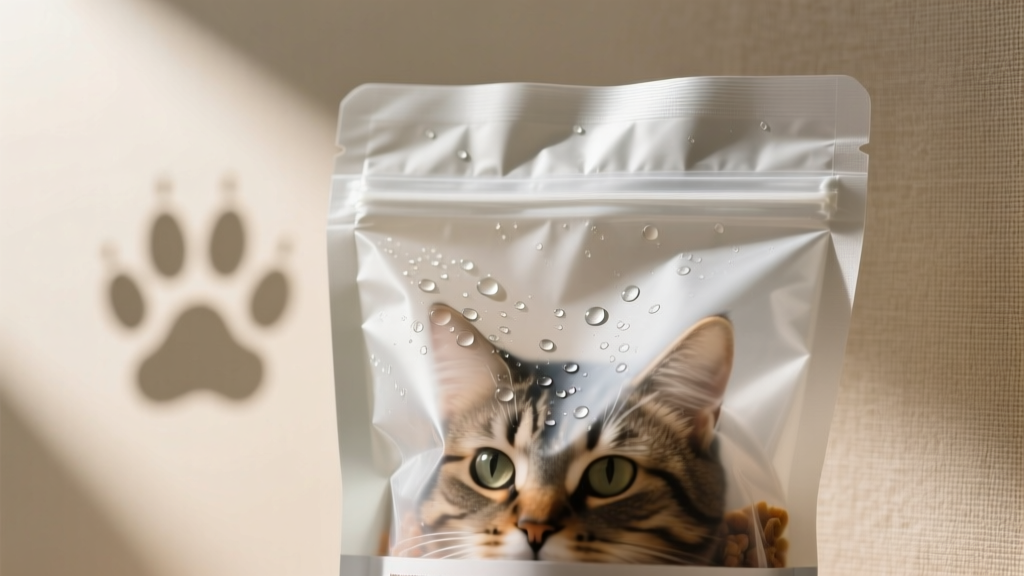
Many pet food bags are designed for shipping strength and basic barrier protection, not for repeated opening and closing in a home environment. After opening, the bag becomes a semi-open system: oxygen and humidity can enter, and volatile aroma compounds can escape.
Main quality problems caused or worsened by moisture migration
| Quality issue | What you may notice | Why it matters for cats |
|---|---|---|
| Staling | Less smell, less “crunch,” cat seems less interested | Reduced intake can lead to weight loss or appetite battles; picky cats may refuse |
| Fat oxidation (rancidity) | Off odor (paint-like, cardboard, “old oil”), greasy feel | Lower palatability; potential GI upset; reduced essential fatty acid quality |
| Vitamin degradation | No obvious visual change | Nutrient delivery may drift over long storage; more concerning for cats with limited diets |
| Texture changes / clumping | Soft pieces, clumps, powdery dust, uneven kibble hardness | Some cats reject altered texture; dust may irritate sensitive cats |
| Mold risk (in severe humidity exposure) | Musty smell, visible fuzz, clumps with discoloration | Potential toxin risk; food should be discarded immediately |
Evidence-based drivers of degradation
- Humidity and temperature: Higher humidity encourages moisture uptake; heat accelerates oxidation and nutrient loss.
- Oxygen exposure: Oxidation is a major pathway for fat degradation; each time a bag is opened, oxygen refreshes inside.
- Time: Even with good packaging, quality declines gradually after opening.
- Fat content and fat type: Foods with higher fat and more polyunsaturated fatty acids can be more oxidation-prone without robust antioxidant systems.
- Handling: Scooping with wet hands, storing near dishwashers, or leaving bags open invites moisture.
How moisture migration can affect feline hydration habits
Dry food’s moisture content is low by design. Cats also tend to have a lower thirst drive than dogs, an adaptation from desert-dwelling ancestors. If a cat eats mostly dry food, hydration depends on drinking behavior. Moisture migration does not meaningfully “rehydrate” kibble in a controlled, safe way. Instead, it creates uneven moisture pockets that can reduce stability without improving hydration status. If increasing moisture intake is a goal, it is safer to add moisture through wet food or controlled water addition right before feeding.
4) Practical Recommendations for Cat Owners
Storage best practices (simple and effective)
- Keep kibble in its original bag (the bag provides the intended barrier and includes lot/expiration info), then place the entire bag inside an airtight container.
- Use a tight seal after every use: roll down the top and clip it, or transfer daily portions to a smaller sealed bin.
- Store cool and dry: away from ovens, laundry rooms, sunny windows, and garages. Aim for stable room temperature.
- Avoid moisture contamination: use a dry scoop; don’t store food next to sinks or humidifiers.
- Buy the right bag size: choose a size your cat will finish within a reasonable timeframe (often 3–6 weeks after opening, depending on household conditions and the food’s fat content).
Quality checks at home
- Smell test: a noticeable “off,” sour, musty, or oily smell is a red flag.
- Texture: new kibble is consistent; mixed soft/hard pieces or clumping suggests moisture exposure.
- Dust level: excess crumb/dust can mean rough handling or staling; it can also worsen palatability.
- Your cat’s response: a sudden drop in enthusiasm (with no health explanation) can be a freshness issue.
If you suspect spoilage or mold, discard the food and clean the container thoroughly. If your cat has vomiting, diarrhea, lethargy, or won’t eat, contact your veterinarian promptly.
5) Comparing Options: Bags, Bins, Wet Food, and Hybrid Feeding
| Approach | Pros | Cons / Watch-outs | Best for |
|---|---|---|---|
| Dry food stored in original bag + airtight container | Good barrier protection; preserves lot/expiry info; reduces moisture uptake | Needs consistent sealing; container must be cleaned between bags | Most dry-food households |
| Dry food poured directly into a plastic bin | Convenient | Loses packaging protection; oils can coat bin and go rancid; hard to track recalls/lot numbers | Only if bin is food-grade, airtight, and cleaned thoroughly between refills |
| Smaller bags more often | Fresher product; less time open | Higher cost per pound; more packaging waste | Picky cats, humid climates, slow eaters |
| All-wet or wet-forward feeding | Higher moisture intake; often very palatable; less “staling” risk once portioned | Cost; dental calculus myths aside, wet food still requires dental care; must refrigerate leftovers safely | Cats needing more water intake, urinary concerns (vet-guided), picky eaters |
| Hybrid feeding (some wet, some dry) | Balances convenience and hydration; can reduce reliance on stored kibble | Needs calorie accounting to prevent weight gain | Many multi-cat homes; cats that like variety |
6) Common Mistakes and Misconceptions (Myths Debunked)
- Myth: “If it’s dry, it can’t spoil.”
Fact: Dry foods are less likely to support bacterial growth, but they can still become rancid, stale, or moldy if moisture rises and storage is poor. - Myth: “Freezing kibble is always best.”
Fact: Freezing can slow oxidation, but it also introduces condensation risk when repeatedly removed and returned to room temperature. If you freeze, portion the food into smaller sealed bags so each portion is thawed once. - Myth: “Pouring kibble into a bin keeps it fresher.”
Fact: Many bins are not true oxygen/moisture barriers, and old oils left behind can contaminate the next batch. Keeping kibble in the original bag inside an airtight container is often safer. - Myth: “Stale kibble is fine if my cat still eats it.”
Fact: Cats may eat food that has reduced nutrient quality or oxidized fats. Appetite is not a perfect freshness detector. - Myth: “Adding water to the whole bag improves freshness.”
Fact: Adding water increases water activity and spoilage risk. If you add water, do it to the portion in the bowl and discard leftovers promptly.
7) How to Implement Changes Safely (Transition Tips)
Switching storage methods or changing the diet (dry to wet, new brand, new formula) should be done in a controlled way to minimize digestive upset.
- Food transition schedule: mix old and new over 7–10 days (longer for sensitive cats). Example: 75/25 for 2–3 days, 50/50 for 2–3 days, 25/75 for 2–3 days, then 100% new.
- Make one change at a time: if you’re adjusting both the brand and the feeding format (dry to wet), stagger changes so you can identify what your cat tolerates.
- Watch the litter box: soft stool, constipation, or vomiting can mean the transition is too fast or the food doesn’t agree with your cat.
- Track calories: use feeding guides as a starting point and adjust based on body condition score. Your veterinarian can help you calculate ideal calories.
If your cat refuses food for 24 hours (or less in kittens), call your veterinarian. Cats are at risk for hepatic lipidosis (fatty liver) with prolonged anorexia, especially if overweight.
8) Special Considerations: Age, Health Conditions, Activity Level
| Cat type | Why moisture migration matters more | Practical focus |
|---|---|---|
| Kittens | Higher energy and nutrient needs; small intake changes matter | Buy smaller bags; store carefully; consider wet food for palatability and hydration |
| Seniors | Reduced smell sensitivity, dental issues, and appetite fluctuations | Prioritize fresh aroma; consider wet-forward diets; monitor weight and muscle |
| Overweight cats | Food refusal during diet changes can be risky; precise calories needed | Use measured meals; avoid stale food that triggers begging then refusal; vet-guided plan |
| Diabetic cats | Diet consistency supports glucose control; many do better with lower-carb wet diets (vet-guided) | Don’t change foods abruptly; coordinate with vet for insulin adjustments |
| CKD (kidney disease) | Hydration and tailored phosphorus/protein approach often needed | Use prescription renal diets if recommended; keep food fresh to support appetite |
| Urinary tract issues | Water intake and urine dilution can be key; special diets may be prescribed | Discuss wet feeding and urinary diets with vet; avoid “half-spoiled” kibble that reduces intake |
For cats with chronic disease, diet is a medical tool. Any changes—new storage routine, new food type, or supplements—should be discussed with your veterinarian or a board-certified veterinary nutritionist (DACVIM-Nutrition / ECVCN), especially if your cat is on a therapeutic diet.
9) FAQ: Common Questions About Moisture Migration and Kibble Quality
How long does dry cat food stay fresh after opening?
Quality typically declines gradually after opening due to oxygen and humidity exposure. Many households aim to use an opened bag within a few weeks. The best timeframe depends on bag size, storage conditions (humidity/heat), and the food’s fat content. If you need longer storage, buy smaller bags or portion and freeze (thaw once per portion).
Is it safe to store kibble in a plastic container?
Yes, if it’s clean, food-grade, airtight, and kept in a cool, dry place. For best results, place the original bag inside the container rather than pouring kibble directly in. Clean and fully dry the container between bags to prevent old oils and moisture from affecting the new food.
Can moisture migration cause mold, and what should I do if I see clumps?
Yes—high humidity or condensation can raise water activity and allow mold growth. Clumping alone doesn’t prove mold, but it’s a warning sign. If you detect a musty odor, discoloration, or any visible growth, discard the food immediately and wash the container with hot soapy water, then dry completely. If your cat has eaten questionable food and seems ill, contact your veterinarian.
Does “grain-free” or “high-protein” kibble resist moisture migration better?
No. Moisture migration is mostly about packaging, storage conditions, and the kibble’s physical properties—not whether it contains grains. Higher-fat foods may be more prone to rancid odors if oxidation occurs, but any kibble can stale or degrade if stored poorly.
Should I add water or broth to kibble to help my cat drink more?
Adding water to the meal right before serving can increase moisture intake for some cats, but don’t moisten the whole bag or store pre-moistened kibble. Use plain water or a veterinarian-approved low-sodium broth, offer small portions, and discard leftovers within a reasonable time to reduce spoilage risk. For many cats, shifting part of the diet to wet food is a more reliable hydration strategy—ask your veterinarian what’s appropriate for your cat.
My cat suddenly refuses a food they used to love—could freshness be the reason?
Yes. Cats are sensitive to odor changes from oxidation and staling. Before assuming “pickiness,” check the smell, texture, and storage method, and confirm the bag is within its best-by date. Also consider medical causes (dental pain, nausea, kidney disease). If refusal lasts more than 24 hours (or sooner in kittens), call your veterinarian.
Veterinary guidance reminder: If you’re considering changing your cat’s diet format (dry to wet), switching brands, or using a therapeutic diet for urinary, kidney, GI, or metabolic issues, consult your veterinarian for individualized recommendations.
For more practical, cat-health-focused nutrition guides—covering food labels, wet vs. dry feeding, protein quality, hydration strategies, and safe transitions—explore the growing library at catloversbase.com.