Cat Food Extrusion Moisture Content: Process Parameter Effect
1) Why extrusion moisture content matters for cat health
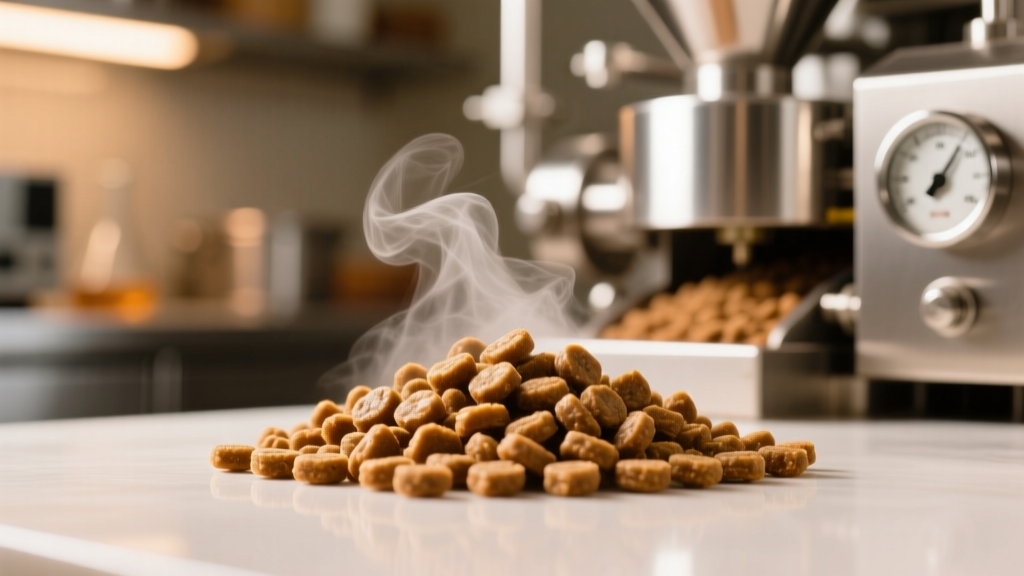
Most dry cat foods are made using extrusion: a high-temperature, short-time cooking process that turns a dough into kibble. One of the most influential settings in this process is moisture content—how much water (and sometimes steam) is present in the mix before and during cooking.
Moisture in extrusion isn’t just a manufacturing detail. It can affect:
- Nutrient quality (amino acids like taurine, heat-sensitive vitamins)
- Digestibility (how well proteins and starches are cooked and absorbed)
- Kibble texture and density (which influences satiety, palatability, and how fast a cat eats)
- Food safety and shelf stability (final water activity and mold risk)
- Urinary and hydration outcomes indirectly, by shaping how “dry” the final diet is and how much water a cat gets from food
For cat owners trying to choose the best diet, understanding how extrusion and moisture interact helps you interpret labels, marketing claims (“gently cooked,” “low-ash,” “high-protein”), and the real-world performance of a kibble (stool quality, coat condition, appetite, weight control). For any cat with kidney disease, urinary crystals, constipation, obesity, or diabetes risk, these factors can become even more relevant.
2) Scientific background: feline nutrition and obligate carnivore biology
Cats are obligate carnivores. Their metabolism and nutrient requirements reflect a long evolution of eating prey that is high in animal protein, moderate in fat, low in carbohydrate, and naturally high in moisture.
Core biological points that influence diet choices
- High protein requirement: Cats have a higher baseline need for dietary protein than many omnivores. They continuously use amino acids for energy and have limited ability to downshift protein metabolism.
- Essential amino acids: Cats require dietary taurine and adequate arginine. Taurine is critical for heart health, vision, and reproduction.
- Fat and essential fatty acids: Dietary fat supports energy needs and palatability. Cats need essential fatty acids, including arachidonic acid (typically from animal sources).
- Limited carbohydrate handling: Cats can digest starch when it is cooked/gelatinized, but they are not nutritionally dependent on carbs. High-carb diets may make weight control harder for some cats.
- Low thirst drive: Many cats do not drink enough water to compensate for very dry diets. Moisture intake is a major theme in feline urinary and kidney health discussions.
What this means for extruded kibble
Extruded diets can be complete and balanced when properly formulated (look for AAFCO/FEDIAF nutritional adequacy statements). The challenge is that extrusion often requires starch and controlled moisture to create a stable kibble structure. Those process needs can push formulas toward higher carbohydrate content than many wet foods, and the final product remains low-moisture compared with a cat’s natural prey diet.
3) Detailed analysis: how extrusion moisture affects the final food
“Extrusion moisture” generally refers to the water present in the mix entering the extruder, along with water/steam added in the preconditioner and barrel. Manufacturers adjust it to control cooking, expansion, texture, and throughput.
Where moisture acts during extrusion
- Preconditioning: Water and steam hydrate ingredients, begin starch gelatinization, and start protein denaturation.
- Extruder barrel: Mechanical shear + heat + moisture “cook” the dough. Moisture affects viscosity and friction (and therefore temperature).
- Die and expansion: Pressure drops as product exits; water flashes to steam and expands the kibble. Moisture level influences how much puffing occurs.
- Drying: Kibble is dried down to a safe final moisture level to prevent spoilage.
Moisture content and digestibility
Appropriate moisture supports even cooking and starch gelatinization, which improves starch digestibility. While cats do not require starch, extruded kibble often includes it for structure. If starch is undercooked, it may ferment more in the colon, potentially contributing to gas or loose stools in sensitive cats.
Moisture also affects protein changes. Heat and shear denature proteins (which can improve digestibility), but excessive heat exposure can reduce availability of certain amino acids through reactions like Maillard browning (binding amino acids, especially lysine, with sugars). Moisture can either mitigate or intensify these effects depending on the overall thermal load and formulation.
Moisture, nutrient stability, and supplementation
Extrusion is a harsh environment for some nutrients. Reputable manufacturers account for this by using vitamin premixes, stable forms of vitamins, and post-extrusion coating (applying fats, palatants, and sometimes heat-sensitive additives after drying).
Moisture influences:
- Thermal exposure: Different moisture levels alter friction and barrel temperature, changing nutrient degradation risk.
- Uniform mixing: Proper hydration helps ingredients blend consistently, supporting nutrient uniformity.
- Palatability coatings: Final kibble porosity (linked to moisture/expansion) affects how well fats and palatants adhere.
Moisture and kibble structure (density, crunch, satiety)
Moisture content in the dough affects expansion at the die. In general:
- Lower in-barrel moisture can increase dough viscosity and shear, sometimes increasing expansion and creating lighter, more porous kibble (depending on starch type and settings).
- Higher in-barrel moisture often reduces viscosity and shear, potentially yielding denser kibble with less expansion.
For cat owners, structure matters because it affects:
- Calorie density per cup: Denser kibble may pack more calories in the same volume, which can lead to accidental overfeeding.
- Eating speed: Very palatable, airy kibble may be eaten quickly; some cats benefit from puzzle feeders regardless of kibble type.
- Stool quality: Overly rapid diet changes, not kibble “hardness,” are a common cause of digestive upset—but structure and recipe both play roles.
Moisture and safety: final moisture vs water activity
Extruded kibble is dried to a low moisture content (commonly around 8–12% moisture, though values vary). What matters for microbial stability is water activity (aw), a measure of how much water is available for microbial growth. Proper drying and packaging keep water activity low enough to inhibit molds and many bacteria.
Practical takeaway: kibble can be “low moisture” yet still become unsafe if stored poorly (humidity exposure) or used past its freshness window.
Moisture and the cat’s total water intake
Even if extrusion moisture is well-managed, dry food remains dry. Most kibble contains about 8–12% moisture, while canned foods often contain 75–80% moisture. Cats commonly fail to drink enough to compensate for a very dry diet, especially if they eat mostly kibble.
This doesn’t mean all kibble is “bad,” but it does mean that cats prone to urinary issues, constipation, or kidney disease often do better with higher moisture intake. Always discuss individualized plans with your veterinarian, especially if your cat has urinary tract disease or CKD.
Table: how extrusion moisture choices can influence kibble outcomes
| Process factor | Typical effect on kibble | Why it matters to cat owners | What you can observe at home |
|---|---|---|---|
| Higher moisture entering extruder | Often denser, less expanded kibble; different cooking profile | May change calories per cup and palatability | Heavier kibble pieces; some cats eat more slowly or less enthusiastically |
| Lower moisture entering extruder | Often more shear/heat; potentially more expanded/porous kibble (formula-dependent) | Can influence texture, coating uptake, and possibly nutrient impacts | Lighter kibble; stronger aroma/fat coating; some cats overeat if very palatable |
| Inadequate drying after extrusion | Higher final moisture/water activity | Higher spoilage risk | Stale smell early, soft kibble, clumping, visible mold (discard immediately) |
| Appropriate drying + good packaging | Stable shelf life | Better safety and nutrient retention over time | Consistent crunch, stable smell, fewer crumbs and less rancidity |
4) Practical recommendations for cat owners
You can’t control extrusion parameters at home, but you can choose foods and feeding strategies that work with feline biology.
How to evaluate a dry food beyond marketing
- Look for a nutritional adequacy statement (AAFCO/FEDIAF) appropriate for your cat’s life stage.
- Prioritize animal protein sources high in the ingredient list (named meats/meals). Plant proteins may inflate crude protein numbers without matching feline amino acid needs as well as animal sources.
- Check calorie density (kcal/cup or kcal/kg) to prevent overfeeding. Denser kibble can lead to “portion creep.”
- Prefer brands with strong quality control and veterinary nutrition expertise (feeding trials, digestibility data, transparency, recalls history).
Moisture-support strategies when feeding kibble
- Offer multiple water stations, wide bowls, and fresh water daily.
- Consider a cat water fountain if your cat prefers running water.
- Add moisture thoughtfully (if your vet agrees): mix kibble with a small amount of warm water, or offer wet food alongside kibble. Discard moistened kibble after 20–30 minutes to reduce spoilage risk.
- Use wet treats strategically (meat-based toppers, broth without onion/garlic) to increase water intake.
5) Comparison of options: kibble vs wet vs mixed feeding
| Approach | Pros | Cons | Best fit for |
|---|---|---|---|
| Dry-only (extruded kibble) | Convenient, cost-effective, easy to measure, works with timed feeders | Low moisture; some formulas higher in carbohydrate; easy to overfeed | Healthy cats with good hydration habits; owners who can measure portions carefully |
| Wet-only | High moisture; often lower carbohydrate; can support urinary health and weight control | Higher cost; spoilage if left out; dental benefits are limited (myth-busting below) | Cats prone to urinary issues, constipation, CKD (vet-guided), weight management cases |
| Mixed feeding (wet + dry) | Balances moisture with convenience; flexible for picky cats | Needs calorie tracking to avoid “double feeding” | Most households; a practical middle ground |
6) Common mistakes and misconceptions to avoid
-
Myth: “Crunchy kibble cleans teeth.”
Reality: Most kibble shatters too easily to provide meaningful dental cleaning. Dental health is better supported with vet-approved dental diets/treats (VOHC-accepted products), brushing, and professional cleanings when needed. -
Myth: “Lower moisture during extrusion means higher protein quality.”
Reality: Protein quality depends on ingredient selection, amino acid balance, digestibility, and overall processing control—not a single moisture setting. Reputable manufacturers design the full process to protect nutrients and then supplement appropriately. -
Mistake: Judging food quality by stool volume alone.
Smaller stools can reflect higher digestibility, but it can also reflect low fiber. What you want is normal stool consistency, stable appetite, good body condition, and a healthy coat. -
Mistake: Free-feeding calorie-dense kibble.
Many indoor cats gain weight easily. Use measured portions, track treats, and adjust based on body condition score with your vet’s guidance. -
Mistake: Adding water to kibble and leaving it out all day.
Moist food spoils faster. Offer small portions and discard leftovers promptly.
7) How to implement changes safely (transition tips)
Sudden changes can cause vomiting, diarrhea, or food refusal. Plan a gradual transition over 7–14 days (longer for sensitive cats).
Simple transition schedule
| Days | Old food | New food |
|---|---|---|
| 1–3 | 75% | 25% |
| 4–6 | 50% | 50% |
| 7–9 | 25% | 75% |
| 10+ | 0% | 100% |
Transition safety tips
- Track appetite and litter box output (stool consistency, urine clumps, frequency).
- Keep treats consistent during the transition to reduce variables.
- For multi-cat homes, feed separately so you know who is eating what.
- If your cat refuses food for 24 hours or is at risk of hepatic lipidosis (especially overweight cats), contact your veterinarian promptly.
8) Special considerations: age, health conditions, activity level
Kittens
- Need energy-dense, highly digestible diets formulated for growth.
- Moisture intake is still beneficial; many kittens do well on mixed feeding.
- Choose foods labeled for “growth” or “all life stages,” and confirm feeding amounts with your vet.
Adult indoor cats
- Weight control is often the main issue. Calorie density per cup matters more than kibble size.
- Use puzzle feeders, portion control, and consider adding wet meals to support hydration and satiety.
Senior cats
- May have reduced thirst drive, dental disease, arthritis (making it harder to reach water bowls), or early kidney changes.
- Wet or mixed feeding can help maintain hydration; ask your vet about kidney values and urine concentration trends.
Urinary tract disease (FLUTD, crystals, stones)
- Moisture intake is often a key part of management, but diet type depends on diagnosis (struvite vs calcium oxalate, idiopathic cystitis, etc.).
- Prescription urinary diets are formulated for specific urinary targets; don’t substitute based on moisture alone.
- Consult your veterinarian before changing foods, especially if your cat has a history of blockage.
Chronic kidney disease (CKD)
- Diet strategy often includes controlled phosphorus, appropriate protein, and increased moisture intake.
- Many CKD cats benefit from veterinary therapeutic diets; discuss wet vs dry options and appetite strategies with your vet.
Diabetes or obesity-prone cats
- Many do better with higher-protein, lower-carbohydrate patterns and careful calorie control; wet diets can be helpful.
- Any major diet change for a diabetic cat should be done with veterinary supervision because insulin needs may change.
9) FAQ: common questions about extrusion moisture and cat nutrition
1) Can I tell extrusion moisture content from the label?
Not directly. Pet food labels don’t list extrusion settings. You can see final moisture on the guaranteed analysis sometimes, but it’s not always included. What you can compare reliably are calorie density, ingredient list, adequacy statement, and the brand’s quality control transparency.
2) Does higher moisture during processing mean the kibble is “healthier”?
No single extrusion parameter guarantees better nutrition. Health outcomes depend on the complete formulation (amino acids, minerals, fatty acids), digestibility, safety controls, and whether the diet matches your cat’s needs. If you’re unsure, your veterinarian can help you evaluate options based on your cat’s body condition, stool quality, coat, and any lab work.
3) Is it safe to add water to kibble to increase hydration?
Often yes, but do it safely: add warm water shortly before serving, offer small portions, and discard leftovers within 20–30 minutes. If your cat has dental disease, immune compromise, or a history of digestive sensitivity, ask your vet for personalized guidance.
4) Does extrusion destroy taurine?
Extrusion can impact nutrients, but reputable manufacturers formulate to meet standards after processing, using supplementation and process controls. Taurine adequacy is critical in cat foods; choose diets from established companies that meet AAFCO/FEDIAF requirements and have good quality assurance.
5) If my cat drinks a lot of water on kibble, do I still need wet food?
Not always. Some cats maintain excellent hydration and urinary health on dry food. Others don’t. A practical approach is to monitor urine clump size/frequency, constipation tendency, and veterinary urinalysis results. If your cat has urinary or kidney risk factors, discuss whether increasing dietary moisture could help.
6) Are “air-dried” or “baked” foods better than extruded kibble?
They can be good options, but “different process” doesn’t automatically mean “better.” Compare complete-and-balanced status, calorie density, fat content, and company testing standards. Some alternative processes produce very calorie-dense foods that are easy to overfeed.
Vet guidance matters: If you’re considering a major diet change—especially for a cat with urinary issues, kidney disease, diabetes, food allergies, chronic GI signs, or frequent vomiting—consult your veterinarian (and ideally a board-certified veterinary nutritionist) for individualized recommendations.
If you want more cat-health-focused feeding advice, explore the nutrition guides and food comparison resources on catloversbase.com.