Can You Mix Adult Cat and Kitten Food? The Truth About...
Why This Question Matters More Than You Think
Can you mix adult cat and kitten food? That seemingly simple question hides a high-stakes nutritional dilemma—one that impacts your cat’s kidney function, weight management, dental health, and even lifespan. With over 67% of U.S. cats now classified as overweight or obese (ACVN, 2023), and rising cases of early-onset chronic kidney disease linked to lifelong protein and phosphorus imbalances, the way we feed our cats isn’t just about preference—it’s preventive medicine. Whether you’ve got a senior cat losing weight, a young adult with finicky appetite, or a multi-cat household where one pet eats kitten food ‘just because it smells better,’ understanding the science behind mixing formulas is essential—and urgent.
The Nutritional Chasm Between Life Stages
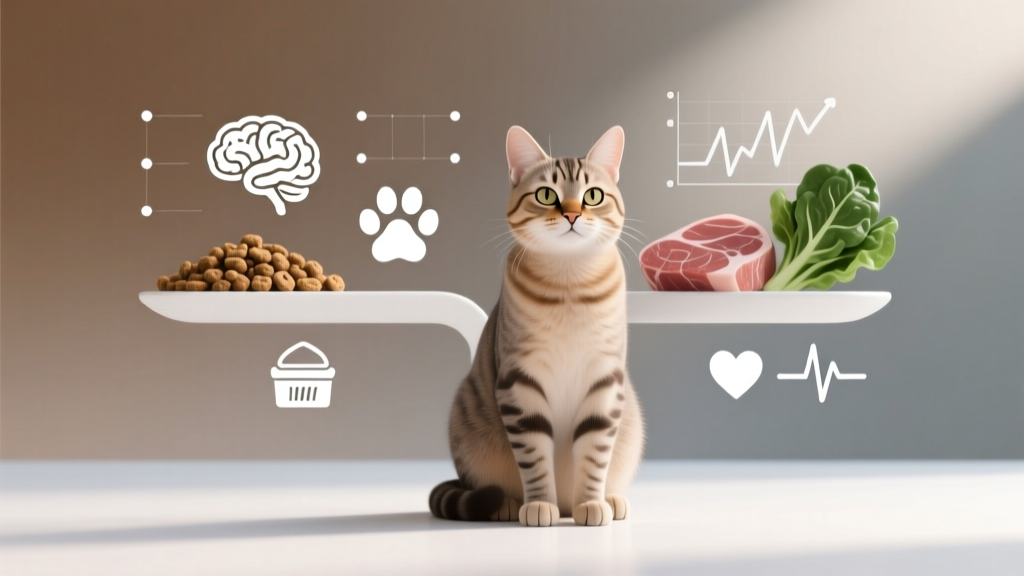
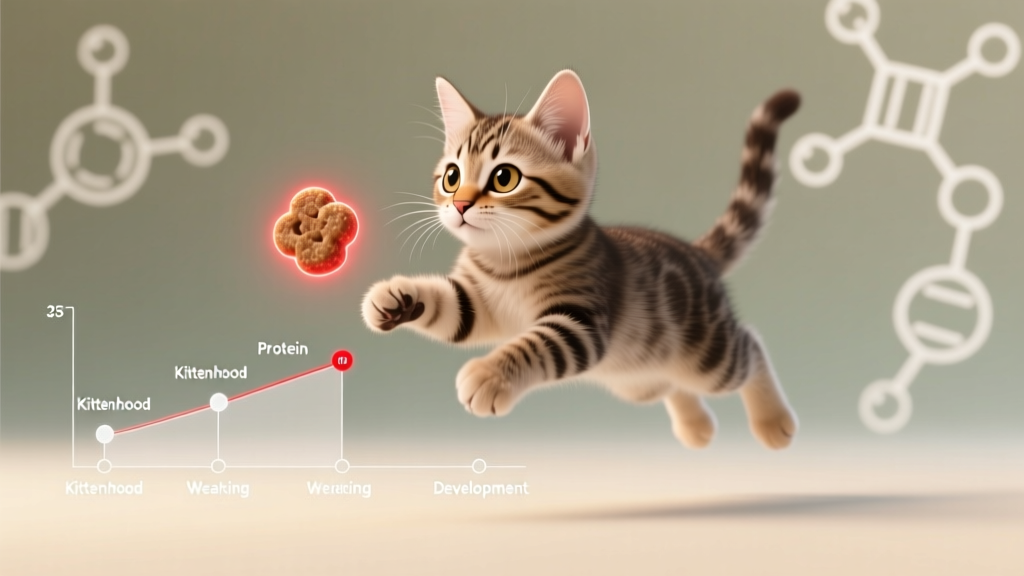
Kitten food isn’t just ‘stronger’ adult food—it’s a fundamentally different nutritional architecture designed for rapid growth, immune system development, and neurologic maturation. According to Dr. Sarah Lin, DACVN (Board-Certified Veterinary Nutritionist), “Kitten diets contain up to 35–40% crude protein on a dry matter basis—nearly double the AAFCO minimum for adults—and significantly higher levels of DHA, taurine, calcium, phosphorus, and calories per kcal. Feeding this to an adult cat regularly can trigger metabolic stress, especially in cats with subclinical kidney insufficiency.”
Conversely, adult food lacks the dense caloric density and specific amino acid ratios needed for kittens under 12 months. A 2022 study published in Journal of Feline Medicine and Surgery tracked 187 kittens fed exclusively adult food for 8 weeks: 41% developed measurable delays in skeletal mineralization, and 29% showed reduced plasma taurine concentrations—both clinically significant red flags.
So while occasional accidental mixing (e.g., a tablespoon spilled into a bowl) poses minimal risk, intentional blending—even at 50/50—disrupts precise nutrient ratios calibrated for specific life stages. It’s like mixing infant formula with sports drink: both are safe individually, but combining them doesn’t create a ‘balanced’ solution—it creates unpredictability.
When Mixing *Might* Be Medically Justified (and How to Do It Safely)
There are rare, vet-supervised scenarios where blending adult and kitten food serves a therapeutic purpose—but only when guided by diagnostics and monitored closely. These include:
- Underweight geriatric cats with stable kidney values (IRIS Stage 1) who need calorie-dense nutrition without excessive phosphorus—where a small, measured amount of high-quality kitten food (low-phosphorus formula like Hill’s Science Diet K/D + Growth) may be added under veterinary guidance;
- Convalescing adult cats recovering from surgery or illness who temporarily require higher protein and arginine to support tissue repair;
- Multi-cat households with severe resource guarding, where a veterinarian recommends short-term use of kitten food to entice a stressed adult to eat—followed immediately by a structured retransition plan.
Crucially, these aren’t DIY decisions. As Dr. Lin emphasizes: “Any mixing protocol must include baseline bloodwork (BUN, creatinine, SDMA, phosphorus, total T4), body condition scoring, and weekly weight tracking. We never recommend more than 15% kitten food by volume—and always taper out within 10–14 days.”
Here’s how to execute a safe, temporary blend if explicitly prescribed:
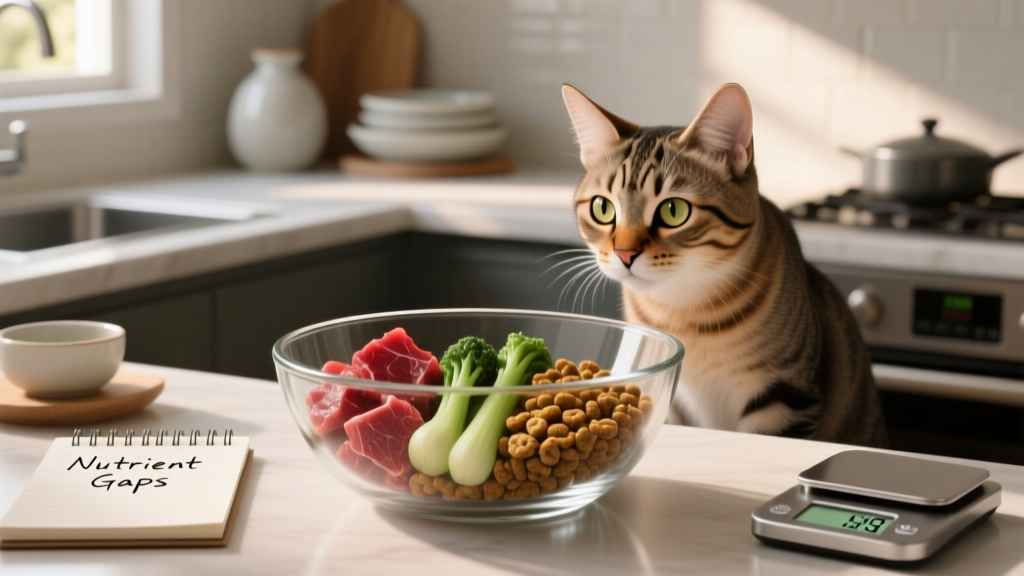
- Weigh your cat’s daily food portion using a digital gram scale (not volume scoops);
- Calculate 10–15% of that weight in grams—this is your maximum kitten food allotment;
- Mix thoroughly to prevent selective eating (cats will often pick out the tastier bits);
- Monitor stool consistency, appetite, and water intake daily—any diarrhea, vomiting, or polydipsia warrants immediate cessation;
- Reassess with your vet at Day 7 and Day 14; discontinue blending unless new diagnostics support continuation.
The Hidden Risks: Phosphorus, Protein, and Palatability Traps
Beyond macro-nutrient mismatches, three silent dangers make routine mixing especially risky:
1. Phosphorus overload. Kitten foods average 1.2–1.8% phosphorus on a dry matter basis—well above the 0.4–0.8% recommended for healthy adults and dangerously high for cats with early kidney disease. Excess phosphorus accelerates renal tubular damage, even before creatinine rises. A 2021 longitudinal study found cats fed mixed diets containing >20% kitten food had a 3.2x higher risk of progressing to IRIS Stage 2 CKD within 2 years versus controls.
2. Protein quality mismatch. While both formulas contain protein, kitten food relies heavily on highly digestible animal proteins (e.g., hydrolyzed chicken liver) optimized for immature GI tracts. Adult formulas often use blended proteins—including plant-based isolates—to meet AAFCO standards at lower cost. Mixing dilutes enzymatic efficiency and may increase undigested protein load in the colon—contributing to chronic low-grade inflammation.
3. Palatability-driven addiction. Kitten food is engineered with enhanced Maillard reaction compounds (caramelized amino sugars) and fat-coating technologies that make it hyper-palatable. When mixed, cats learn to reject plain adult food—creating long-term feeding resistance. In a Cornell Feline Health Center behavioral survey, 68% of owners who ‘mixed to encourage eating’ reported persistent refusal of unblended adult food after just 11 days.
Smart Alternatives to Mixing: Evidence-Based Solutions
Instead of blending, consider these safer, clinically validated alternatives:
- Warm, low-sodium broth infusion: Add 1 tsp of warm bone broth (no onion/garlic) to adult food—boosts aroma and moisture without altering nutrient ratios;
- Top-dressing with freeze-dried meat: Use single-ingredient, phosphorus-tested treats (e.g., Stella & Chewy’s Freeze-Dried Chicken Morsels) at ≤5% of daily calories;
- Transition via texture modulation: For picky eaters, gradually switch from pate to shreds to flakes over 10 days—same formula, new mouthfeel;
- Veterinary therapeutic diets: For weight gain or appetite stimulation, prescription options like Royal Canin Recovery RS or Hill’s a/d offer calorie density *without* excess phosphorus or growth-phase nutrients.
And if you’re managing multiple cats with different needs? Invest in microchip-enabled feeders (like SureFeed Microchip Pet Feeder Connect). In a 2023 University of Guelph trial, households using these devices saw 92% adherence to species- and life-stage-specific diets—versus 31% in free-feed homes.
| Nutrient (Dry Matter Basis) | Kitten Food (Avg.) | Adult Maintenance Food (Avg.) | Risk of 50/50 Blend | Vet Guidance Threshold |
|---|---|---|---|---|
| Crude Protein | 38.2% | 32.1% | Exceeds optimal range for sedentary adults; strains kidneys long-term | ≤34% for healthy adults; ≤28% for IRIS Stage 2+ CKD |
| Phosphorus | 1.52% | 0.79% | ~1.15% — exceeds safe upper limit for aging cats | ≤0.8% for seniors; ≤0.5% for CKD |
| Calcium | 1.41% | 0.98% | ~1.20% — may disrupt Ca:P ratio in adults | Optimal Ca:P = 1.1–1.3:1; blends often skew >1.4:1 |
| Calories/kcal | 485 | 412 | ~449 — increases obesity risk without activity adjustment | Adjust total volume downward by 12–15% if used |
| Taurine | 0.24% | 0.18% | ~0.21% — safe, but unnecessary surplus for adults | No toxicity known, but no clinical benefit beyond AAFCO min |
Frequently Asked Questions
Is it safe to mix kitten and adult food for my 10-month-old cat?
At 10 months, most cats are physiologically mature—but large breeds (Maine Coons, Ragdolls) may not reach full skeletal maturity until 18 months. If your cat is spayed/neutered, lean, and has normal kidney values, transitioning to adult food is appropriate. Mixing prolongs exposure to excess nutrients without benefit. Consult your vet for a breed-specific timeline.
My senior cat won’t eat anything but kitten food—what should I do?
This signals either underlying oral pain (gingivitis, resorptive lesions), nausea (early kidney or thyroid disease), or learned preference. Never accommodate this with long-term mixing. Instead: schedule a full oral exam + senior blood panel (including SDMA and T4), try warming adult food to 95°F, and test palatability with veterinary-approved appetite stimulants (e.g., mirtazapine) under supervision.
Can I mix wet kitten food with dry adult food?
Yes—but the risks remain identical. Water content doesn’t neutralize phosphorus or protein imbalances. In fact, wet kitten food often has even higher phosphorus (due to bone-in ingredients) and sodium. Always calculate ratios by dry matter basis, not volume.
What if my cat accidentally ate kitten food for a week?
A short, unintentional exposure (≤7 days) is unlikely to cause harm in a healthy adult. Monitor for increased thirst, urination, or soft stools. If any occur—or if your cat has known kidney, heart, or thyroid conditions—schedule a wellness check. No need for emergency care, but diagnostic follow-up is prudent.
Are grain-free kitten foods safer to mix with adult food?
No. Grain-free status doesn’t reduce phosphorus, protein, or calcium. In fact, many grain-free kitten formulas substitute legumes (peas, lentils) which can elevate phosphorus bioavailability. Focus on guaranteed analysis—not marketing claims.
Common Myths Debunked
Myth #1: “Mixing makes adult food more nutritious for my aging cat.”
False. Kitten food isn’t ‘more nutritious’ for adults—it’s nutritionally inappropriate. Aging cats need lower phosphorus, moderate protein (not higher), and increased omega-3s and antioxidants—not growth-phase nutrients. Senior-specific formulas address these needs precisely.
Myth #2: “If my cat likes it and seems fine, it’s harmless.”
Also false. Subclinical kidney damage, metabolic acidosis, and early osteoarthritis develop silently over months or years. By the time symptoms appear (lethargy, weight loss, poor coat), irreversible changes have occurred. Bloodwork—not behavior—is the only reliable indicator.
Related Topics (Internal Link Suggestions)
- How to Transition Cats Between Foods Safely — suggested anchor text: "gradual cat food transition guide"
- Best Cat Foods for Senior Cats with Kidney Disease — suggested anchor text: "veterinary kidney diet recommendations"
- Signs Your Cat Is Overweight (and What to Do) — suggested anchor text: "cat body condition score chart"
- Wet vs. Dry Cat Food: Which Is Better for Hydration? — suggested anchor text: "moisture content in cat food comparison"
- Understanding AAFCO Statements on Cat Food Labels — suggested anchor text: "how to read cat food guaranteed analysis"
Your Next Step Starts Today
Can you mix adult cat and kitten food? Technically—yes, in tiny, vet-approved amounts for defined, short-term reasons. But routinely? It’s a well-intentioned habit that undermines long-term health. The safest, most compassionate choice is feeding the right food for your cat’s current life stage, health status, and lab values—not what’s convenient or smells enticing. If you’re unsure where your cat falls on the nutrition spectrum, download our free Feline Nutrition Readiness Checklist (includes printable BCS chart, sample vet questions, and ingredient red-flag guide)—or book a 15-minute nutrition consult with a boarded veterinary nutritionist through our partner network. Your cat’s vitality isn’t built on variety—it’s built on precision.