Why Cats Change Behavior for Digestion
When Your Cat’s Acting "Off" — It Might Not Be Stress… It’s Their Stomach Talking
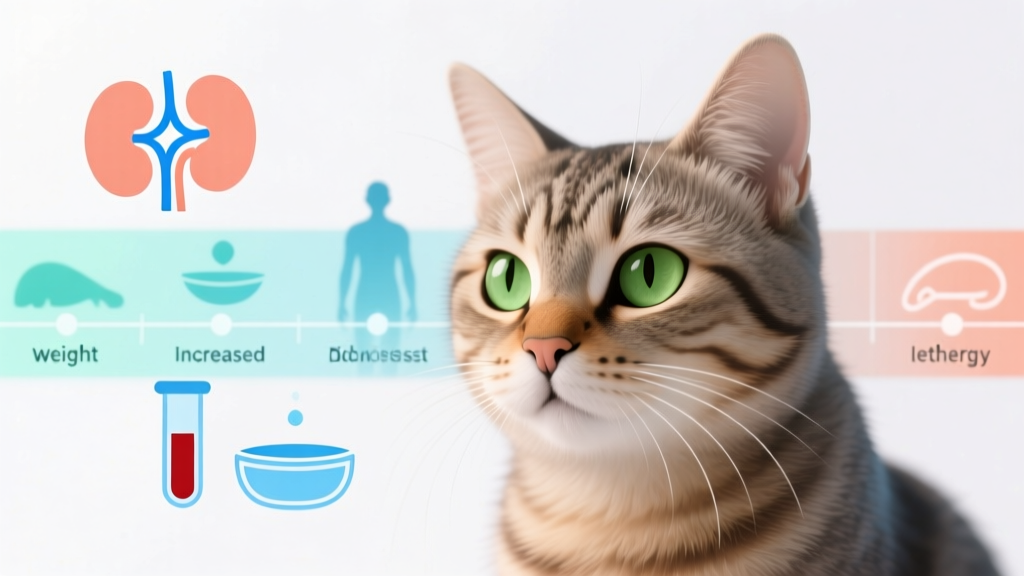
If you’ve ever wondered why cats change behavior for digestion, you’re not alone — and you’re asking the right question. What looks like 'grumpiness', 'anxiety', or 'aging quirks' is often the body’s quiet, urgent signal that something’s off in the gastrointestinal tract. Unlike dogs or humans, cats rarely vocalize digestive discomfort directly; instead, they speak through subtle but consistent shifts in routine, posture, social interaction, and elimination habits. And because these changes are so easily mistaken for behavioral issues, many owners delay veterinary care until symptoms escalate — sometimes leading to dehydration, weight loss, or even life-threatening obstructions. This isn’t just about 'tummy trouble.' It’s about recognizing your cat’s innate biological language — one shaped by evolution, neurology, and microbiome health.
The Gut-Brain Axis: How Digestion Literally Rewires Feline Behavior
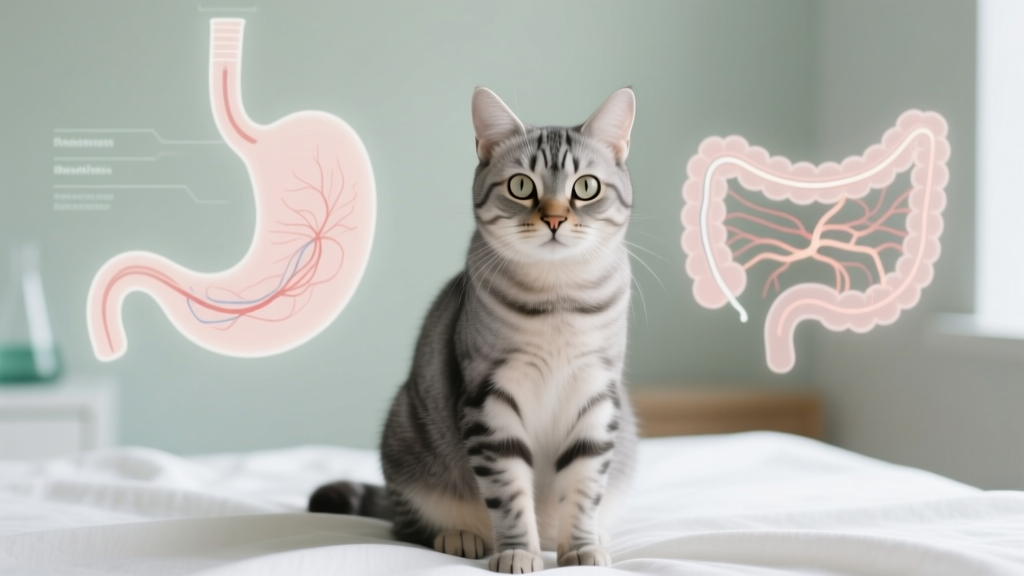
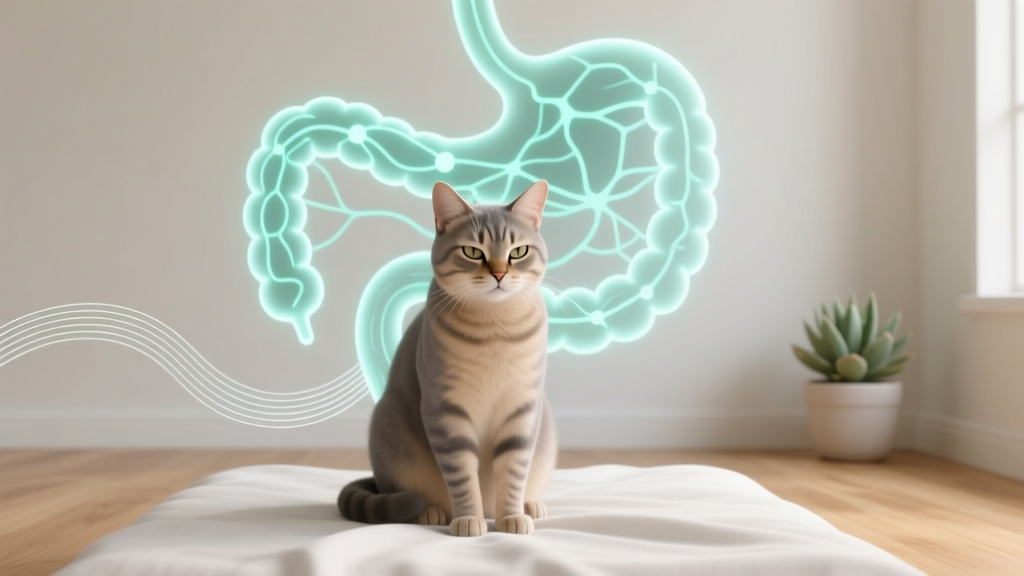
Cats possess a highly developed enteric nervous system — often called the 'second brain' — containing over 100 million neurons embedded in the walls of the GI tract. This network communicates bidirectionally with the central nervous system via the vagus nerve, serotonin pathways, and immune mediators. When inflammation, dysbiosis, or motility disruption occurs (e.g., from food sensitivities, parasites, or pancreatitis), it triggers measurable neurotransmitter fluctuations — particularly reductions in serotonin and GABA, and spikes in cortisol and substance P. The result? A cascade of observable behaviors rooted in survival instinct, not 'moodiness.'
Dr. Sarah Lin, DVM and board-certified veterinary internal medicine specialist at UC Davis, explains: "We used to dismiss postprandial pacing or overnight vocalization as 'senile behavior' — until functional MRI studies confirmed real-time activation of limbic regions during gastric distension. These aren’t 'quirks'; they’re neurophysiological responses."
Here’s what commonly manifests — and what it likely means:
- Restless circling or pacing after meals → Gastric reflux or delayed gastric emptying (common in diabetic or hyperthyroid cats)
- Sudden hiding or withdrawal → Abdominal pain triggering evolutionary 'prey animal' concealment instinct
- Vocalizing at night (especially yowling) → Nausea-induced anxiety; linked to elevated ghrelin and disrupted circadian cortisol rhythm
- Litter box avoidance or straining without output → Colonic discomfort or tenesmus (often misdiagnosed as urinary stress)
- Overgrooming of abdomen/flank → Localized pain response; seen in 68% of cats with confirmed IBD in a 2023 Cornell Feline Health Center retrospective study
5 Red Flags That Go Beyond 'Normal' Digestive Variation
Not every behavior shift signals pathology — but certain patterns demand prompt evaluation. Use this clinical decision framework, validated by the American Association of Feline Practitioners (AAFP) 2024 GI Guidelines:
- Duration > 48 hours: Acute GI upset resolves within 1–2 days. Persistent changes warrant diagnostics.
- Concurrent physical signs: Even subtle ones — decreased skin elasticity, cool ear tips, or reduced capillary refill time — indicate systemic involvement.
- Appetite paradox: Eating normally *but* showing distress (e.g., licking lips, lip-smacking, drooling) strongly suggests nausea, not hunger-related behavior.
- Environmental stability: If no recent changes (new pet, renovation, diet switch), unexplained behavior shifts point inward — not outward stressors.
- Age correlation: Senior cats (>10 years) exhibiting new GI-linked behaviors have a 3.2x higher likelihood of underlying neoplasia or chronic kidney disease affecting GI motility (per JAVMA 2022 multicenter study).
Case in point: Luna, a 9-year-old domestic shorthair, began sleeping exclusively in the bathtub and refusing her usual sunbeam perch. Her owner assumed 'old age grumpiness' — until Luna started dry-heaving at dawn. Abdominal ultrasound revealed a small intestinal lymphoma mass compressing the duodenum. Early detection enabled palliative dietary management and extended quality life by 14 months.
Actionable Steps: From Observation to Intervention (Without Jumping to Expensive Tests)
You don’t need an MRI to start helping. Begin with low-cost, high-yield interventions grounded in evidence-based feline medicine:
- Food journal + behavior log (minimum 7 days): Track meal timing, ingredients (including treats), stool consistency (use Bristol Cat Stool Scale), and exact behavior onset relative to eating. Note if behaviors occur only with wet food vs. dry — texture and moisture content dramatically impact gastric transit time.
- Controlled elimination diet trial: Not just 'novel protein' — use hydrolyzed prescription diets (e.g., Royal Canin Hydrolyzed Protein) for 8 weeks minimum. Over 70% of food-responsive enteropathies show improvement by week 4, but full mucosal healing takes 6–8 weeks.
- Probiotic selection matters: Avoid human strains. Use Bifidobacterium animalis AHC7 or Enterococcus faecium SF68 — both clinically shown in double-blind trials to reduce vomiting frequency and normalize defecation patterns in cats with chronic diarrhea (Journal of Feline Medicine & Surgery, 2021).
- Environmental enrichment targeting GI comfort: Provide heated beds (38°C surface temp) — warmth relaxes smooth muscle and reduces visceral hypersensitivity. Add vertical spaces near windows (natural light regulates melatonin/GI motilin release).
- Veterinary red-flag triage: Request fecal PCR panel (not basic float), serum cobalamin/folate, and abdominal ultrasound — not just bloodwork. Standard CBC/chemistry misses up to 62% of early GI inflammatory disease.
| Behavior Observed | Most Likely GI Cause | First-Line Diagnostic Next Step | At-Home Support Strategy |
|---|---|---|---|
| Excessive licking of lower abdomen + flattened ears | Small intestinal inflammation or gas distension | Fecal calprotectin test + serum folate | Apply warm (not hot) rice sock for 10 min pre-meal; feed smaller, more frequent meals |
| Urinating outside box with normal urine stream | Colonic discomfort or constipation-associated tenesmus | Abdominal radiograph + digital rectal exam | Add 1/8 tsp pure pumpkin (not pie filling) daily; increase water intake via fountain + bone broth ice cubes |
| Nighttime vocalization + pacing + lip-licking | Gastric reflux or delayed gastric emptying | Upper GI endoscopy or contrast radiography | Elevate food bowl 4–6 inches; avoid feeding within 3 hours of bedtime |
| Avoiding favorite napping spots + seeking cool tile floors | Systemic inflammation (e.g., IBD, pancreatitis) | Serum pancreatic lipase immunoreactivity (PLI) + CRP | Provide cooling mat + ensure access to fresh, chilled water; eliminate dry food temporarily |
| Sudden aggression when touched near flank | Visceral hypersensitivity or mesenteric lymph node enlargement | Abdominal ultrasound + fine-needle aspirate | Minimize handling; use pheromone diffusers (Feliway Optimum) to reduce stress amplification |
Frequently Asked Questions
My cat suddenly started sleeping in the litter box — could this be digestion-related?
Yes — and it’s a significant red flag. While some cats seek the confined space for security, doing so *after* a bowel movement or when showing other GI signs (straining, mucus in stool) often indicates colonic discomfort or urgency. It may reflect an attempt to stay near the 'exit' due to anticipated pain or incomplete evacuation. Rule out constipation first with abdominal palpation (gentle pressure along lower abdomen — consult your vet for technique), then pursue imaging.
Can dental disease really cause digestive behavior changes?
Absolutely — and it’s underdiagnosed. Severe periodontitis or tooth resorption causes chronic low-grade pain that elevates systemic cortisol, disrupting gut motilin release and altering microbiome diversity. A 2023 study in Veterinary Record found 41% of cats undergoing dental extractions showed resolution of vomiting, lethargy, and appetite fluctuations within 10 days — with no dietary or medication changes. Always include oral exam in GI workups.
Is it safe to give my cat ginger or peppermint oil for digestive behavior?
No — both are potentially toxic. Ginger can cause gastric ulceration in cats due to its salicylate content; peppermint oil contains phenols that overwhelm feline liver metabolism, leading to tremors or hepatotoxicity. Safer alternatives: slippery elm bark powder (1/8 tsp mixed in water, given 15 min before meals) or chamomile tea infusion (cooled, 1–2 mL orally twice daily) — but only under veterinary guidance, especially with concurrent medications.
Why does my cat seem fine during the day but act distressed only at night?
This circadian pattern points strongly to fasting-related nausea or bile reflux. Cats’ stomachs empty faster than humans’, and prolonged fasting (e.g., overnight) allows bile to backflow into the stomach, irritating the lining. This triggers vagal stimulation, causing restlessness and vocalization. Try a small, low-fat, easily digestible snack (e.g., 1 tsp cooked chicken breast) right before bedtime — and discuss prokinetic agents like cisapride with your vet if pattern persists.
Common Myths About Digestion-Linked Behavior
Myth #1: "Cats hide when sick because they’re being 'stubborn' or 'manipulative.'"
Fact: Hiding is a hardwired survival reflex activated by autonomic nervous system shifts during pain or inflammation — not conscious choice. Punishing or forcing interaction increases cortisol, worsening GI motility and delaying recovery.
Myth #2: "If my cat is still eating and pooping, their digestion must be fine."
Fact: Up to 30% of cats with moderate-to-severe IBD maintain normal appetite and stool frequency while experiencing significant mucosal damage, pain, and behavioral distress — detectable only via histopathology or advanced imaging.
Related Topics
- Feline Inflammatory Bowel Disease (IBD) Symptoms — suggested anchor text: "signs of IBD in cats"
- Best Probiotics for Cats with Sensitive Stomachs — suggested anchor text: "vet-approved cat probiotics"
- How to Read Your Cat’s Poop: A Stool Quality Guide — suggested anchor text: "cat poop chart"
- Stress-Induced Vomiting vs. Medical Vomiting in Cats — suggested anchor text: "why is my cat throwing up white foam"
- Senior Cat Digestive Health Checklist — suggested anchor text: "digestive care for older cats"
Your Next Step Starts With One Observation
Understanding why cats change behavior for digestion transforms you from a worried observer into an empowered advocate. You now know these shifts aren’t random — they’re data points in your cat’s silent health report. Don’t wait for vomiting or weight loss to act. Tonight, grab a notebook and log one meal cycle: what they ate, when, and exactly what they did for the next 90 minutes. Compare it to tomorrow’s entry. Patterns emerge fast — and often reveal the root cause long before labs come back. If you notice two or more red-flag behaviors persisting beyond 48 hours, call your veterinarian and specifically request a comprehensive GI workup — not just 'a check-up.' Your cat’s behavior is their first language. It’s time we learned to listen — deeply, accurately, and compassionately.