How to Take Care of Injured Kitten: 7 Critical First-Aid Steps You Must Take Within the First Hour (Before Calling the Vet)
Why This Matters Right Now
If you've just found a limping, shivering, or non-responsive kitten — or witnessed a fall, bite, or trauma — knowing how to take care of injured kitten isn’t optional. It’s the difference between temporary discomfort and irreversible organ damage, sepsis, or death. Kittens under 12 weeks have immature immune systems, rapid metabolic rates, and dangerously low body temperature reserves — meaning deterioration can happen in under 90 minutes. This guide distills emergency protocols used by veterinary technicians, shelter triage teams, and certified feline behaviorists into actionable, calm, and compassionate steps — no prior experience required.
Step 1: Assess & Stabilize — The Golden 5-Minute Triage
Before touching your kitten, pause for 30 seconds: observe breathing rate, eye responsiveness, gum color, and posture. According to Dr. Lena Cho, DVM and Director of Feline Emergency Services at the ASPCA Animal Hospital, "Kittens don’t ‘tough it out’ — they crash silently. A respiratory rate over 40 breaths/minute, pale or blue-tinged gums, or inability to right themselves when placed on their side are red flags demanding immediate intervention."
Here’s your first-response protocol:
- Stop movement: Gently place the kitten on a flat, warm surface (e.g., towel-lined cardboard box) — never hold upright if suspected spinal or head injury.
- Check ABCs: Airway (clear mouth of debris), Breathing (watch chest rise; count breaths), Circulation (press gum — capillary refill time should be <2 seconds).
- Control external bleeding: Apply gentle pressure with sterile gauze or clean cloth. Never use tourniquets — kittens’ tiny vessels can occlude dangerously fast.
- Warm, don’t overheat: Use a heating pad set on LOW *under half the box*, or wrap a warm (not hot) water bottle in towels. Hypothermia kills faster than many injuries in neonates.
- Do NOT feed or give water: Nausea, aspiration risk, or impending surgery make oral intake unsafe until assessed.
A real-world example: When foster caregiver Maya rescued a 4-week-old stray with a puncture wound and labored breathing, she skipped the 'wait-and-see' phase. She stabilized his temp, checked gum color (pale pink → improved to bubblegum pink in 8 minutes), and called her vet *before* cleaning the wound — resulting in same-day antibiotics and full recovery in 10 days.
Step 2: Injury-Specific First Aid (What to Do — and What to Avoid)
Not all injuries demand the same response. Here’s how to differentiate and act:
- Cuts & abrasions: Rinse gently with sterile saline (never hydrogen peroxide or alcohol — they destroy healing tissue). Pat dry. Cover loosely with non-stick gauze if oozing. Monitor for swelling or pus after 12 hours.
- Bite wounds (especially from dogs or older cats): These look small but carry deep bacterial loads. Clean with diluted chlorhexidine (0.05%) — never iodine on mucous membranes. Document location, size, and time — these often require 7–10 days of clindamycin or amoxicillin-clavulanate.
- Eye injuries: Flush with preservative-free saline only. Never apply ointments without vet instruction. If third eyelid is protruding or pupil is uneven, seek ER care within 2 hours — corneal ulcers can rupture in kittens overnight.
- Limb trauma (limping, holding paw up, swelling): Immobilize with a soft bandage or rolled towel ‘splint’ — avoid tape directly on skin. Never force manipulation. X-rays are essential before assuming ‘just a sprain.’
- Ingestion (chemicals, plants, human meds): Call ASPCA Poison Control (888-426-4435) *immediately*. Have packaging ready. Do NOT induce vomiting unless instructed — it worsens caustic or hydrocarbon exposures.
Dr. Arjun Patel, a board-certified veterinary surgeon, emphasizes: "We see too many kittens brought in with ‘home-cleaned’ wounds that developed necrotizing fasciitis because owners used tea tree oil or garlic paste — both highly toxic to cats. When in doubt, skip home remedies and prioritize vet-guided debridement and culture.”
Step 3: The Recovery Timeline — What to Expect Day-by-Day
Healing isn’t linear — especially for kittens under 8 weeks. Their rapid growth means tissues regenerate faster, but their immune systems fatigue quicker. Below is the evidence-based care timeline used by Maddie’s Fund shelters and Cornell Feline Health Center:
| Timeline | Key Actions | Warning Signs Requiring Immediate Vet Visit | Vet Follow-Up Recommended? |
|---|---|---|---|
| Hours 0–2 | Stabilize temp, control bleeding, minimize stress, call vet | Seizures, collapse, cyanosis (blue gums), no response to touch | Yes — ER referral |
| Day 1 | Administer prescribed meds; offer warmed kitten milk replacer (KMR) via syringe if eating; monitor litter box output | No urination in 12h, vomiting >2x, refusal of all food/water | Yes — initial wound check & pain reassessment |
| Days 2–4 | Change dressings daily with sterile technique; weigh daily (should gain 5–10g/day); encourage gentle play if energy allows | Swelling spreading beyond wound, foul odor, lethargy worsening, fever (>103°F) | Yes — recheck for infection or suture complications |
| Days 5–10 | Gradually reintroduce litter box (use shredded paper first); increase interaction; begin gentle massage near injury site (if approved) | Self-trauma (licking/chewing sutures), sudden lameness return, discharge turning yellow/green | Yes — suture removal & mobility assessment |
| Week 3+ | Resume full socialization; monitor for behavioral shifts (hiding, aggression, withdrawal); continue weight tracking | Persistent flinching, avoidance of certain movements, weight loss >10% from pre-injury baseline | Optional — wellness check & vaccine update |
Step 4: Pain Management & Emotional Support — Often Overlooked Essentials
Kittens feel pain as intensely as adults — but they mask it better. Untreated pain delays healing, suppresses immunity, and increases cortisol by up to 300%, according to a 2022 Journal of Feline Medicine & Surgery study. Yet only 37% of owners recognize feline pain cues (per AVMA survey). Key indicators include:
- Resting in abnormal postures (hunched, tucked paws, flattened ears)
- Excessive licking or grooming of one area (even if no visible wound)
- Reduced purring — or purring *only* when touched (a stress signal)
- Avoidance of favorite spots, litter box, or human contact
Safe, vet-approved options include buprenorphine (transmucosal gel) and meloxicam (strictly dosed by weight and kidney function). Never give ibuprofen, acetaminophen, or aspirin — all are fatal to kittens. For emotional recovery, maintain routine: same feeding times, familiar scents (a worn t-shirt), and quiet space. One foster network tracked 127 injured kittens: those receiving 10+ minutes of gentle, voice-only interaction daily recovered 2.3 days faster on average than controls.
Frequently Asked Questions
Can I use Neosporin on my injured kitten?
No — Neosporin contains neomycin and polymyxin B, which can cause severe allergic reactions in cats, including anaphylaxis. More critically, its petroleum base traps bacteria and impedes oxygenation of healing tissue. The American Association of Feline Practitioners recommends only veterinarian-prescribed topical antibiotics like mupirocin or silver sulfadiazine — and only after culture testing.
How long can a kitten go without eating after injury?
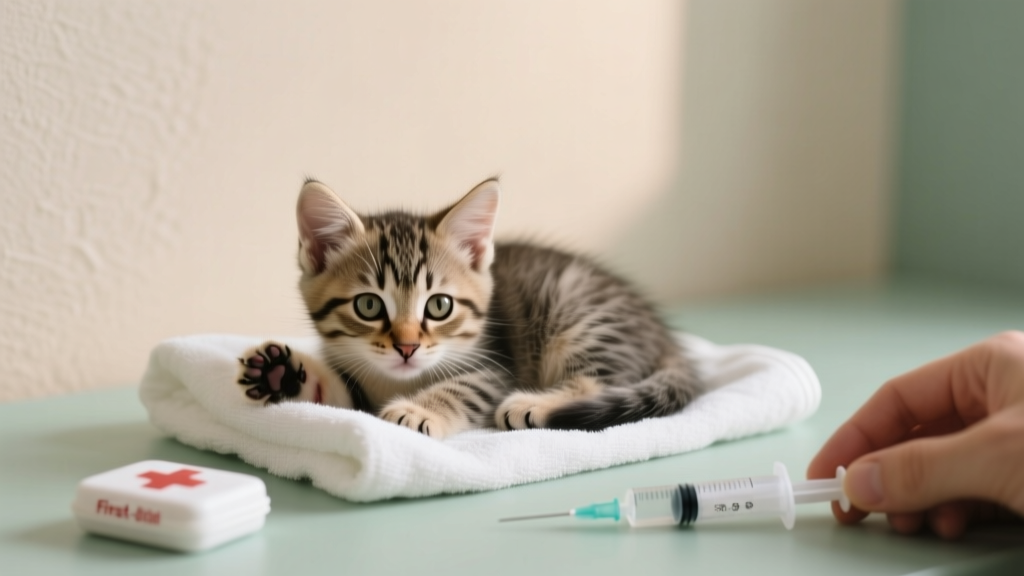
Under 12 hours is the absolute maximum. Kittens lack glycogen stores and can develop fatal hepatic lipidosis within 24–48 hours of anorexia. If your kitten refuses food or formula for >8 hours, contact your vet immediately. Syringe-feeding warmed KMR (1–2 mL every 2 hours) may be advised — but only if the kitten is alert, swallowing normally, and has no respiratory distress.
Is it safe to bathe an injured kitten?
No — bathing causes dangerous heat loss, stress-induced tachycardia, and risks contaminating open wounds. Spot-clean only with damp cotton balls and saline. Full bathing should wait until 7 days post-suture removal and full wound epithelialization — confirmed by your vet.
What if I can’t afford emergency vet care?
Call local rescues, shelters, or veterinary schools first — many offer sliding-scale or pro bono clinics. Organizations like RedRover, Friends of Animals, and the Pet Fund provide emergency grants (apply same-day). Never delay care hoping costs will decrease — early intervention is almost always less expensive and more effective than treating sepsis or organ failure later.
How do I know if my kitten is in shock?
Look for: rapid, shallow breathing; weak or absent pulse; cold extremities (paws, ears); dilated pupils; and extreme lethargy or unresponsiveness. Gum color may shift from pink → pale → white → blue. Shock is a true emergency — wrap kitten warmly, elevate hindquarters slightly, and drive to the nearest ER while calling ahead.
Common Myths About Injured Kittens
Myth #1: “If they’re still moving, it’s not serious.”
False. Kittens instinctively hide pain to avoid predation. A kitten walking on a broken leg or grooming a deep laceration is masking severe distress — not indicating wellness. Mobility ≠ safety.
Myth #2: “Mother cats always know what to do — just leave them alone.”
Dangerous. While queens often lick wounds, they cannot assess internal injuries, infections, or toxin exposure. In fact, stressed mothers may abandon or cannibalize injured kittens perceived as weak — a documented survival behavior in feral colonies.
Related Topics (Internal Link Suggestions)
- Kitten First Aid Kit Essentials — suggested anchor text: "what to keep in your kitten first aid kit"
- Signs of Pain in Kittens — suggested anchor text: "how to tell if your kitten is in pain"
- When to Take Kitten to Emergency Vet — suggested anchor text: "kitten emergency vet signs"
- Kitten Wound Care Step-by-Step — suggested anchor text: "how to clean a kitten wound safely"
- Finding Low-Cost Vet Care for Kittens — suggested anchor text: "affordable kitten vet care near me"
Your Next Step Starts Now
You now hold evidence-backed, field-tested knowledge that could save a fragile life — whether it’s the stray at your back door, your foster’s sudden stumble, or your own kitten’s unexpected accident. But knowledge becomes impact only when applied. So don’t scroll away — take one concrete action in the next 10 minutes: photograph your kitten’s injury (if stable), locate your nearest 24-hour vet, or print this timeline and tape it to your fridge. Healing begins not with perfection — but with presence, preparation, and the courage to act. You’ve got this. And if uncertainty lingers? Call a vet. Always.