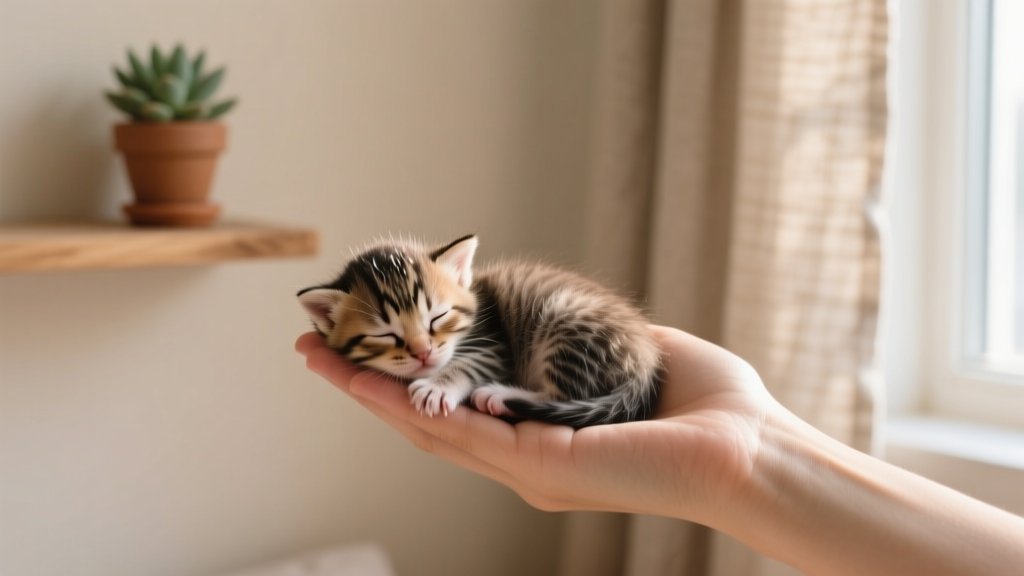
How to Take Care of a Stray Newborn Kitten: The First 72 Hours Are Critical — Here’s Exactly What to Do (and What NOT to Do) to Save Their Life
Why This Matters Right Now
If you’ve just found a shivering, silent, unresponsive newborn kitten abandoned outdoors — especially in cool or damp weather — every minute counts. How to take care of a stray newborn kitten isn’t just about compassion; it’s an emergency medical protocol. Neonatal kittens (0–4 weeks old) cannot regulate their own body temperature, digest food without stimulation, or fight infection — making them among the most vulnerable mammals on Earth. Without intervention, over 50% of orphaned kittens die within the first 72 hours (Journal of Feline Medicine and Surgery, 2021). But here’s the hopeful truth: with precise, evidence-based care, survival rates jump to 83–92% when caregivers follow standardized neonatal protocols used by shelter veterinarians and foster coordinators.
Step 1: Stabilize — Warmth Is Non-Negotiable (Before Feeding!)
Contrary to instinct, your first action should never be to feed. Hypothermia kills faster than hunger. A kitten’s normal rectal temperature is 95–99°F (35–37.2°C); below 94°F (34.4°C), they’re in crisis — unable to swallow, digest, or absorb nutrients. Dr. Susan Little, DVM and feline specialist, emphasizes: “Feeding a cold kitten risks aspiration pneumonia or fatal gut stasis — warming must precede all nutrition.”
Here’s how to safely rewarm:
- Use gradual, controlled heat: Wrap a microwavable rice sock (heated 20 sec, tested on your inner wrist) or warm water bottle in two layers of thin towel. Place it beside — not under — the kitten in a small box lined with soft fleece.
- Avoid direct heat sources: Never use heating pads (risk of burns), hair dryers (dehydration + stress), or lamps (uneven heating).
- Monitor closely: Check rectal temp every 15 minutes using a digital thermometer lubricated with KY jelly. Goal: reach 96°F within 30–60 minutes, then 98°F within 2 hours.
- Humidity matters: Place a damp (not dripping) washcloth nearby to prevent respiratory drying — neonates lose moisture rapidly through skin and breathing.
Once stable at ≥97°F, move to feeding. If the kitten remains lethargy, weak cries, or blue gums after 90 minutes of warming, seek emergency vet care immediately — this signals sepsis or hypoglycemia.
Step 2: Feed Correctly — Formula, Frequency & Technique
Human baby formula, cow’s milk, or goat’s milk are dangerous — they cause severe diarrhea, dehydration, and metabolic acidosis. Only use a commercial kitten milk replacer (KMR) or similar (e.g., Breeder’s Edge, Just Born). These are scientifically balanced for lactose tolerance, protein ratios, and taurine levels essential for retinal and cardiac development.
Feeding schedule by age (0–14 days):
- 0–1 week: Every 2–3 hours (including overnight). That’s 8–12 feedings per day.
- 1–2 weeks: Every 3–4 hours. Begin introducing gentle play-stimulation between feeds.
- Always weigh daily using a gram-scale — healthy gain is 7–10g/day. No gain or weight loss = immediate red flag.
Proper bottle-feeding technique:
- Hold kitten upright or slightly reclined (never on back — risk of aspiration).
- Angle nipple downward so formula fills the teat tip only — prevents air gulping.
- Let kitten suckle at their pace; never force-feed or squeeze the bottle.
- Stop when belly feels taut but not hard — overfeeding causes bloat and regurgitation.
After each feeding, stimulate elimination (see next section) and gently burp by holding upright against your shoulder and patting lightly. Sterilize bottles and nipples after every use — neonates have zero immune defense against E. coli or Salmonella.
Step 3: Stimulate Elimination & Maintain Hygiene
Newborn kittens cannot urinate or defecate without physical stimulation — a reflex triggered by maternal licking. Skipping this leads to urinary retention, bladder rupture, or fatal constipation within 48 hours. Use a warm, damp cotton ball or soft tissue to gently stroke the genital and anal area in circular motions for 30–60 seconds before and after *every* feeding — until urine and stool appear.
What to expect:
- Urine: Pale yellow, clear, and plentiful by Day 2. Cloudy, bloody, or absent urine = UTI or kidney issue.
- Stool: Mustard-yellow, seedy, semi-formed by Day 3–4. Green, watery, or black tarry stool indicates infection or internal bleeding.
Keep bedding changed daily. Use unscented, dye-free baby wipes for cleaning soiled fur — avoid alcohol or disinfectants. Never bathe — evaporative cooling is deadly. Trim tiny claws weekly with human baby nail clippers to prevent self-scratching.
Step 4: Monitor for Red Flags — When to Call a Vet Immediately
Neonatal kittens deteriorate silently. Watch for these 5 non-negotiable warning signs — any one demands same-day veterinary evaluation:
- Crying continuously for >5 minutes (indicates pain, hunger, or distress)
- No suck reflex (won’t latch or suckle even when warmed and offered formula)
- Body temp <95°F or >102°F (hyperthermia suggests infection)
- No stool/urine for >24 hours despite proper stimulation
- Labored breathing, nasal discharge, or gum pallor (signs of pneumonia or anemia)
Dr. Jennifer Coates, veterinary advisor for PetMD, notes: “Many caregivers wait ‘just one more day’ — but in kittens, 24 hours is the difference between treatable dehydration and irreversible organ failure.” Keep your nearest 24-hour emergency clinic number saved. Also ask about deworming: roundworms are nearly universal in strays and can cause fatal intestinal blockage by Day 10. A vet will prescribe safe, weight-based pyrantel pamoate — never use over-the-counter dog/cat dewormers.
| Age Range | Key Milestones | Critical Actions | When to Worry |
|---|---|---|---|
| 0–24 hours | First warming, initial feeding, stimulation | Rectal temp check; sterile bottle prep; weigh & record baseline | No movement, no cry, blue gums, limp posture |
| 1–3 days | First stool/urine; steady weight gain begins | Daily weighing; log intake/output; clean bedding | No stool/urine ×24h; weight loss >5%; refusal to feed |
| 4–7 days | Eyes begin to open (usually Day 7–10); ear canals open | Introduce gentle handling; monitor eye clarity (no discharge/swelling) | Swollen, sealed, or pus-filled eyes; head tilt; tremors |
| 8–14 days | Eyes fully open; attempts to crawl; teeth emerge | Begin socialization (soft talking, hand scenting); start deworming if vet-approved | No crawling by Day 12; no vocalizations; persistent diarrhea |
| 15–21 days | Walking wobbly; playing with littermates; hearing sharpens | Introduce shallow dish of formula (supervised); add probiotic paste (vet-approved) | No interest in surroundings; isolation from littermates; seizures |
Frequently Asked Questions
Can I use cow’s milk or almond milk if I can’t get kitten formula right away?
No — absolutely not. Cow’s milk contains lactose and casein proteins that newborn kittens cannot digest, causing explosive diarrhea, dehydration, and metabolic imbalance within hours. Almond or soy “milk” lacks essential amino acids (like taurine) and fats needed for brain development and can trigger allergic reactions. In true emergencies, a temporary substitute is 1 part plain whole yogurt + 2 parts warm water + pinch of corn syrup (for quick glucose), but this is only for one feeding while you source proper formula. Contact a local shelter or vet clinic — many provide free KMR for emergency rescues.
How do I know if the kitten is getting enough to eat?
Weigh daily on a gram scale (kitchen scales work). Healthy gain is 7–10g per day — e.g., a 100g kitten should weigh 107–110g tomorrow. Other signs: rounded, soft belly (not tight or sunken); contented purring or quiet sleep post-feeding; pale pink gums (not white or yellow); regular urine/stool output. If weight stalls for 2 days or drops, reassess feeding volume, temperature, and technique — and consult a vet before Day 5.
Should I try to find the mother? How long should I wait before intervening?
Yes — but only if safe and brief. Observe from >10 feet away for 1–2 hours. Mother cats often leave kittens briefly to hunt or rest. Signs she’s returning: fresh nesting material, grooming residue, or her presence at dusk/dawn. However, intervene immediately if: kittens are cold (<94°F), crying nonstop, covered in flies/ants, injured, or found in rain, snow, or extreme heat. Neonates cannot survive >2 hours in temps <70°F or >90°F without mom. If you remove them, leave a note with your contact info — many moms return within hours looking for their young.
Do newborn kittens need vaccinations or flea treatment?
No — and doing either can be lethal. Vaccines require a mature immune system (first shots at 6–8 weeks). Flea treatments labeled for kittens <8 weeks are highly toxic — even topical “kitten-safe” products like Advantage II are unsafe for neonates. Instead, comb daily with a fine-tooth flea comb over white paper; drown fleas in soapy water. Wash bedding in hot water + vinegar rinse. If heavy infestation is present, consult a vet for safe, off-label options — never DIY.
Can I raise a single kitten alone, or do they need siblings?
You can raise a singleton — but you’ll need to replicate social learning they’d get from littermates. This includes gentle wrestling, bite inhibition practice (offer soft toys, not fingers), and shared warmth. Singletons are prone to “wool sucking” or over-grooming later in life due to missing tactile cues. Introduce supervised play with calm adult cats after Week 3 if possible. Most importantly: handle for 2+ hours daily across multiple short sessions to build confidence and reduce fearfulness.
Common Myths About Stray Newborn Kittens
Myth #1: “They’ll be fine if I just leave them outside — mom will come back.”
Reality: While mothers sometimes return, environmental threats are immediate and severe — predators, traffic, hypothermia, parasites, and abandonment are common. Studies show only ~35% of visibly orphaned litters are reclaimed by mothers within 12 hours (ASPCA Shelter Medicine Report, 2022). If kittens are cold, wet, or crying, act now.
Myth #2: “I should feed them every hour — more is better.”
Reality: Overfeeding causes bloat, aspiration, and fatal gut stasis. Neonates have tiny stomachs (≈1–2 mL per feeding at Day 1). Follow weight-based guidelines: 13 mL per 100g body weight per day, divided into 8–12 feeds. For a 100g kitten: ~13 mL total/day → ~1.5 mL per feeding, 8x daily.
Related Topics (Internal Link Suggestions)
- Kitten deworming schedule — suggested anchor text: "safe deworming for newborn kittens"
- When to start weaning kittens — suggested anchor text: "when to introduce solid food to kittens"
- How to socialize feral kittens — suggested anchor text: "taming stray kittens for adoption"
- Signs of kitten fading kitten syndrome — suggested anchor text: "fading kitten syndrome symptoms and treatment"
- Best kitten milk replacers reviewed — suggested anchor text: "top vet-recommended kitten formulas"
Your Next Step Starts Today
You’ve just absorbed life-saving knowledge — but knowledge becomes impact only when applied. If you’re holding a stray newborn kitten right now, pause and do this within the next 10 minutes: 1) Check its temperature with a digital thermometer, 2) Warm it gradually using the rice-sock method, and 3) Call your nearest no-kill shelter or 24-hour vet to ask: “Do you offer emergency neonatal kitten support or foster referrals?” Many do — and they’ll walk you through the first feeding. Remember: You don’t need to be a vet to save a life. You just need to act with calm precision, warmth, and this guide in hand. Share this page with someone who might find a kitten tonight — because preparedness, not luck, saves lives.