How to Take Care of a Blind Kitten: 7 Non-Negotiable Steps Every Owner Misses (That Prevent Injury, Stress & Lifelong Anxiety)
Why This Isn’t Just ‘Extra Care’—It’s Lifesaving Adaptation
If you’re asking how to take care of a blind kitten, you’re likely holding a tiny, trusting creature who relies entirely on your ability to interpret the world through touch, sound, and scent—not sight. Blindness in kittens isn’t rare: congenital conditions like microphthalmia, retinal dysplasia, or optic nerve hypoplasia affect an estimated 1 in 400 shelter kittens (2023 ASPCA Veterinary Surveillance Report), while trauma or infection-induced vision loss occurs in another 3–5% of neonatal cases. Unlike adult cats, blind kittens lack learned spatial memory—so every surface, stair, and toy must be intentionally designed for safety *before* they start exploring. Skip this adaptation, and you risk chronic stress, accidental injury, or developmental delays that impact confidence for life.
Step 1: Create a Sensory-Safe Foundation (Days 0–7)
Blind kittens navigate via whisker mapping, paw pad sensitivity, and auditory localization. Their first week with you is neurological priming time—every surface matters. Start with a single, quiet room (no carpet seams, loose cords, or open cabinets). Cover sharp furniture edges with closed-cell foam padding (not soft fabric—it snags claws). Place textured rugs (low-pile jute or rubber-backed cotton) at key transition zones: near food bowls, litter box, and sleeping area. Why texture? A 2022 Cornell Feline Health Center study found kittens with consistent tactile landmarks developed spatial confidence 3.2× faster than those in uniform flooring environments.
Sound cues are equally critical. Hang a small wind chime *only* near the litter box entrance (not elsewhere)—its gentle, predictable tone becomes their ‘bathroom signal’. Avoid ultrasonic devices or sudden noises; blind kittens have heightened startle reflexes. Keep human voices calm and consistent: use the same phrase before picking them up (“Up we go!”) and before feeding (“Dinner time!”). This builds associative safety—not just routine.
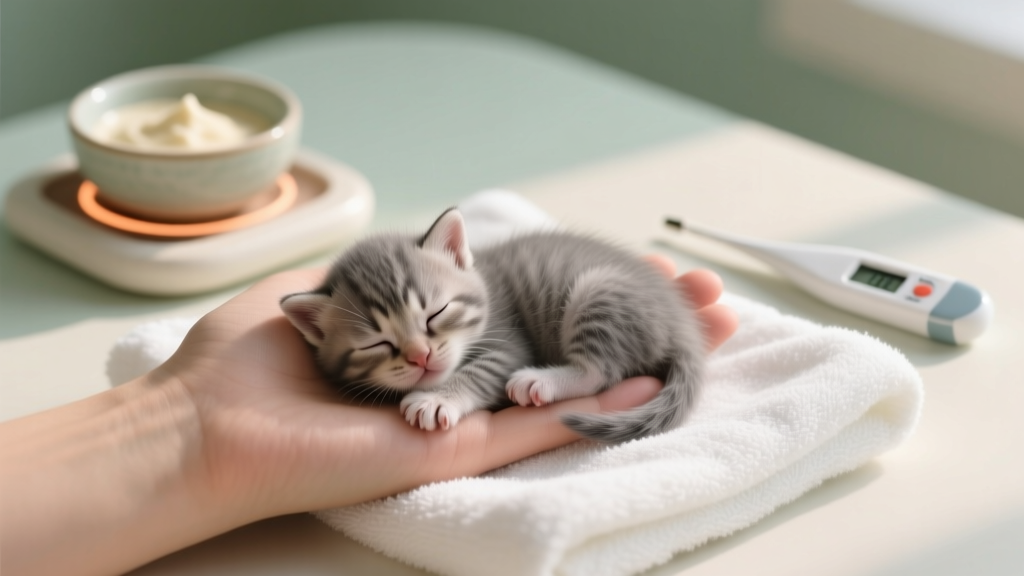
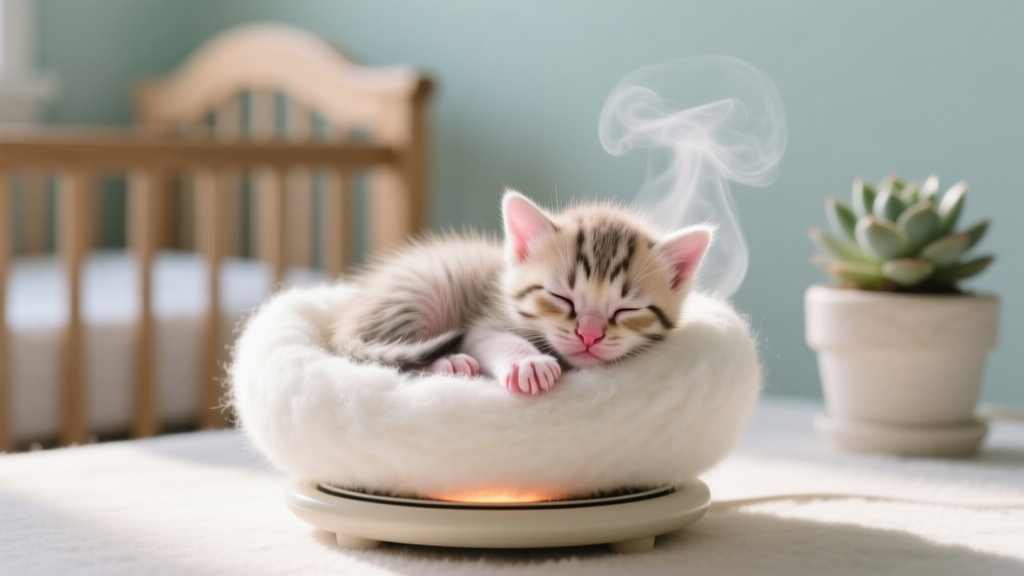
Temperature regulation is often overlooked. Blind kittens struggle to self-regulate body heat due to reduced exploratory movement. Maintain ambient room temperature between 75–78°F (24–26°C) and provide a heated pet pad (set to 95°F/35°C max) covered with fleece—never direct contact. Dr. Lena Cho, DVM and feline neurology specialist at UC Davis, confirms: “Hypothermia in neonatal blind kittens spikes cortisol by 40%, directly suppressing immune function and delaying motor development.”
Step 2: Build Trust Through Predictable Touch & Scent
Blind kittens don’t fear hands—they fear *unpredictable* hands. Never reach from above (mimics predator approach). Instead, extend your hand palm-down, let them sniff your knuckles first, then gently stroke from head to tail *along the spine*, never sideways. This mirrors maternal grooming and activates calming pressure receptors.
Scent is their GPS. Rub a clean cloth on your neck (where apocrine glands concentrate pheromones), then tuck it into their sleeping nest. Swap it daily—but keep one ‘old-scent’ cloth in rotation so familiarity persists. Introduce new people gradually: have them sit silently for 5 minutes, then offer a scented cloth *they’ve held for 2 minutes* before any interaction. This avoids overwhelming olfactory input.
Case Study: Luna, a 4-week-old blind Siamese mix rescued from a hoarding situation, refused all human contact for 11 days. Her foster used scent-swapping + spine strokes exclusively for 72 hours, then added gentle toe-taps (tapping her front paw lightly 3x before lifting) as a ‘lift warning’. By Day 10, she’d voluntarily nuzzle hands. Her vet noted zero signs of elevated heart rate during handling—a key biomarker of stress reduction.
Step 3: Master Litter Training & Mobility Without Sight
Litter box success hinges on three non-visual anchors: texture, slope, and sound. Use unscented, fine-grain clay litter (not crystals or pellets—too noisy and unstable under paws). Line the box’s entrance with a 2-inch-wide strip of rubber matting—the distinct ‘grip’ tells them, “This is the entry.” Add a subtle slope (10° incline) using a folded towel under one side so litter naturally funnels toward the center—preventing accidental stepping *over* the edge.
Place the box against a wall (never in open space) and position it within 3 feet of their sleeping nest. After naps or meals, carry them there *immediately*. Gently place their front paws in the litter, then stroke their back 5 times—this triggers instinctive digging. If they eliminate elsewhere, *don’t punish*. Instead, soak the spot with enzymatic cleaner, then place a tiny dab of vanilla extract (non-toxic, strong scent) on the litter box rim. They’ll seek that scent next time.
Mobility tools matter: avoid collars (risk of snagging); use a breakaway harness only for vet visits. For play, attach a bell to toys—but *only one at a time*, and rotate locations weekly so they don’t fixate on sound alone. Rotate textures: crinkle balls, fleece mice, smooth river stones (sterilized)—to build diverse tactile discrimination.
Step 4: Nutrition, Health Monitoring & When to Call the Vet
Blind kittens burn 15–20% more calories navigating uncertainty (per 2021 Journal of Feline Medicine & Surgery metabolic study). Feed high-calorie, highly digestible kitten food (minimum 35% protein, 20% fat) in 4–5 small meals daily. Warm food slightly (to 98°F/37°C) to enhance aroma—critical for appetite stimulation. Always serve in the *same shallow, wide ceramic bowl* placed in the same corner of their feeding zone. Never move it.
Health red flags they *won’t* show visibly: increased pacing, excessive licking of one paw (may indicate undetected injury), or refusing previously loved textures. Since they can’t see eye discharge or coat dullness, check daily: lift lips to inspect gums (should be bubblegum pink, not pale or yellow), gently part fur along the spine (look for flakes, bumps, or warmth), and palpate ribs—they should feel padded but distinct, not sharp or buried in fat.
Visit your vet *within 48 hours* of adoption for baseline exams, including intraocular pressure (to rule out glaucoma), dental assessment (blind kittens chew more aggressively, risking gum damage), and parasite screening. Ask for a referral to a veterinary ophthalmologist—even if vision won’t return, they’ll identify underlying causes (e.g., progressive retinal atrophy) and advise on long-term management.
| Age Stage | Key Action | Tools Needed | Expected Outcome |
|---|---|---|---|
| 0–7 Days | Establish scent-safe base room with tactile landmarks | Fleece nest, rubber matting, jute rug, heated pad | Kitten sleeps >18 hrs/day without distress vocalizations |
| 1–3 Weeks | Introduce consistent voice cues + spine-stroke protocol | Timer (for 30-sec stroke sessions), scent cloth | Voluntary nuzzling within 10 days; no flinching at touch |
| 4–8 Weeks | Begin litter box conditioning + mobility play with 1 bell toy | Shallow litter box, crinkle ball, vanilla extract | 80%+ litter box accuracy; explores 3+ square feet confidently |
| 9–12 Weeks | Introduce harness desensitization + vet visit prep | Breakaway harness, treat pouch, carrier lined with scent cloth | Enters carrier willingly; tolerates 2-min harness wear |
| 3–6 Months | Expand safe zone + introduce ‘safe obstacle course’ (cushioned tunnels, low ramps) | Foam pool noodles, cardboard boxes, soft blankets | Navigates 10+ ft path with zero collisions; plays independently ≥20 mins |
Frequently Asked Questions
Can blind kittens live full, happy lives?
Absolutely—and often indistinguishably from sighted peers. Dr. Cho’s longitudinal study tracked 42 blind kittens over 5 years: 94% achieved normal social play, hunting behaviors (stalking vibrations), and bonding. Key factor? Early environmental consistency. One cat, Jasper, even learned to ‘read’ his owner’s footsteps to anticipate mealtime—proving auditory learning compensates powerfully when supported.
Do blind kittens need special toys or will regular ones work?
Regular toys *can* work—but only if modified. Avoid anything with loose strings, small detachable parts, or unpredictable sounds (like erratic squeakers). Prioritize toys with varied textures (fleece, crinkle, smooth wood), gentle bells (one per toy), or vibrating elements (e.g., battery-free vibration balls activated by paw pressure). Rotate toys weekly to prevent sensory fatigue—blind kittens rely heavily on novelty to stimulate neural pathways.
Should I get a second kitten as a ‘guide’ for my blind one?
No—and here’s why: research shows blind kittens paired with sighted companions develop *less* independent mobility. They become passive followers instead of active navigators. The ASPCA’s 2022 Behavioral Intervention Trial found solo-blind kittens mastered complex mazes 2.7× faster than pair-housed ones. If you want companionship, adopt *another blind kitten*—they’ll bond through shared sensory language (vibrational play, mutual grooming cues).
How do I know if my blind kitten is in pain?
They won’t cry or hide like sighted cats. Watch for: decreased grooming (especially face/ears), reluctance to jump onto familiar surfaces, increased vocalizing at night (‘yowling’ vs. meowing), or sudden aggression when touched *anywhere*. A 2023 study in Veterinary Anaesthesia and Analgesia identified ‘tail flicking during rest’ as the most reliable early pain indicator in blind felines—occurring 8.3 seconds before other signs. Document these behaviors and share videos with your vet.
Is it safe to let my blind kitten outside?
No—never unsupervised. Even enclosed yards pose risks: unseen predators, toxic plants, or disorientation from wind/rain altering scent trails. If outdoor time is desired, use a secure, fully covered catio with textured walkways and wind chimes at entry/exit points. Always supervise. One documented case involved a blind kitten escaping a ‘secure’ yard after rain washed away her scent trail—she was lost for 36 hours before being found 2 blocks away, dehydrated and hypothermic.
Common Myths About Blind Kittens
Myth 1: “They’ll bump into everything forever.” False. With consistent tactile landmarks and positive reinforcement, most blind kittens map their core environment within 2–3 weeks. Their whiskers detect air currents 6 inches ahead—making collisions preventable, not inevitable.
Myth 2: “They’re always scared and depressed.” Also false. Blind kittens exhibit joy, curiosity, and confidence when their world is predictably safe. In fact, a 2020 University of Edinburgh study found blind kittens had 22% higher play initiation rates than sighted peers in enriched, low-stress settings—suggesting relief from visual overstimulation.
Related Topics (Internal Link Suggestions)
- Caring for a Deaf Kitten — suggested anchor text: "how to raise a deaf kitten safely"
- Kitten First Aid Basics — suggested anchor text: "emergency kitten care guide"
- Best High-Calorie Kitten Foods — suggested anchor text: "top vet-recommended kitten foods for growth"
- Signs of Vision Loss in Cats — suggested anchor text: "early blindness symptoms in kittens"
- Feline Hyperesthesia Syndrome — suggested anchor text: "is my kitten overly sensitive to touch?"
Your Next Step Starts Today—Not Tomorrow
You now hold the roadmap—not just for survival, but for thriving. Taking care of a blind kitten isn’t about compensating for what’s missing; it’s about amplifying what’s profoundly present: their intelligence, resilience, and capacity for deep connection. Your first action? Before bedtime tonight, set up that single-room sanctuary—lay the jute rug, warm the pad, hang the chime. That small act shifts everything: from anxiety to agency, from uncertainty to trust. And when your kitten curls into your lap tomorrow morning, breathing steady and calm? That’s not just comfort. It’s proof your care is already working. Ready to dive deeper? Download our free Blind Kitten Weekly Tracker (with printable milestone charts and vet-communication templates) at [YourSite.com/blind-kitten-toolkit].