How to Take Care of a 2 Week Old Kitten: The 7 Non-Negotiable Steps Every First-Time Rescuer *Must* Get Right (Skip One & You Risk Hypothermia, Dehydration, or Sepsis)
Why This Is the Most Critical 48 Hours of Your Kitten’s Life
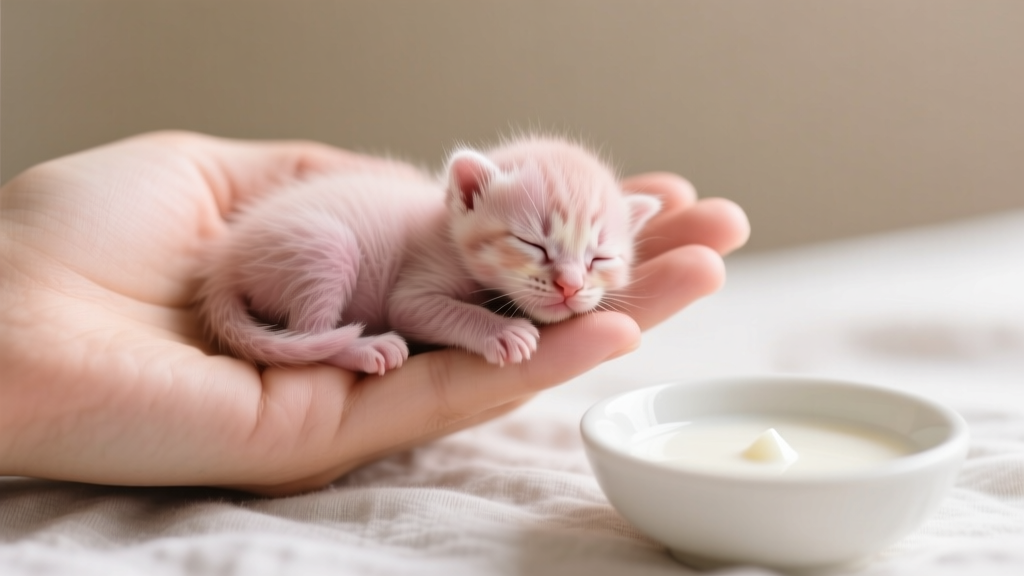
If you’re searching how to take care of a 2 week old kitten, you’re likely holding a fragile, unsteady, eyes-only-half-open life in your hands—and time is measured in hours, not days. At two weeks, kittens are still entirely dependent: they can’t regulate body temperature, can’t eliminate without stimulation, and have zero immune defense against common pathogens like Feline Panleukopenia or Escherichia coli. A single missed feeding or 30 minutes of unsafe warmth can trigger hypoglycemia or chilling—both leading causes of neonatal mortality. This isn’t theoretical: according to the ASPCA’s Neonatal Kitten Care Protocol, 68% of kitten deaths under 3 weeks occur due to preventable caregiver errors—not congenital issues. So let’s replace panic with precision.
1. Temperature Control: Your #1 Lifesaving Priority (Not Feeding)
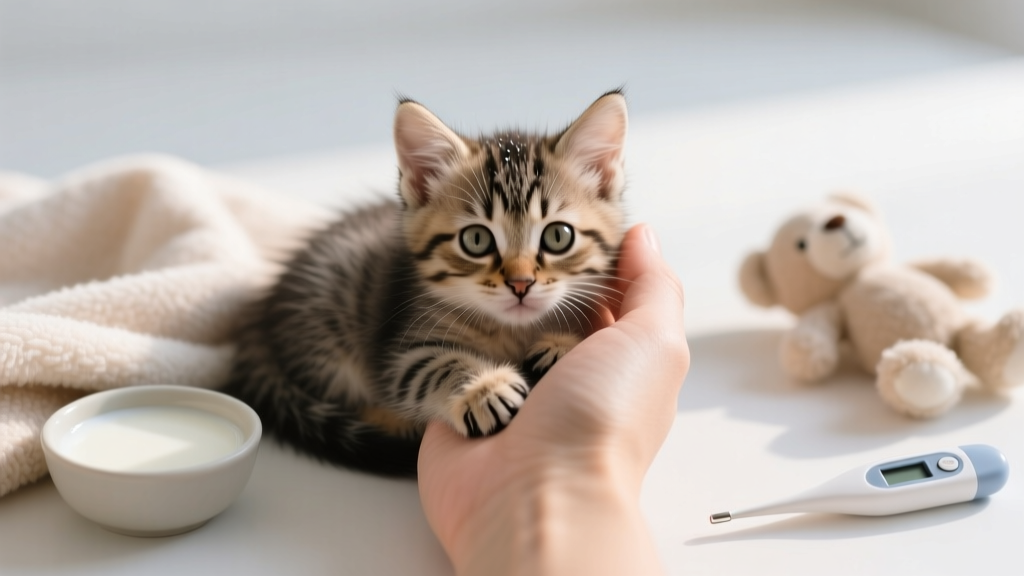
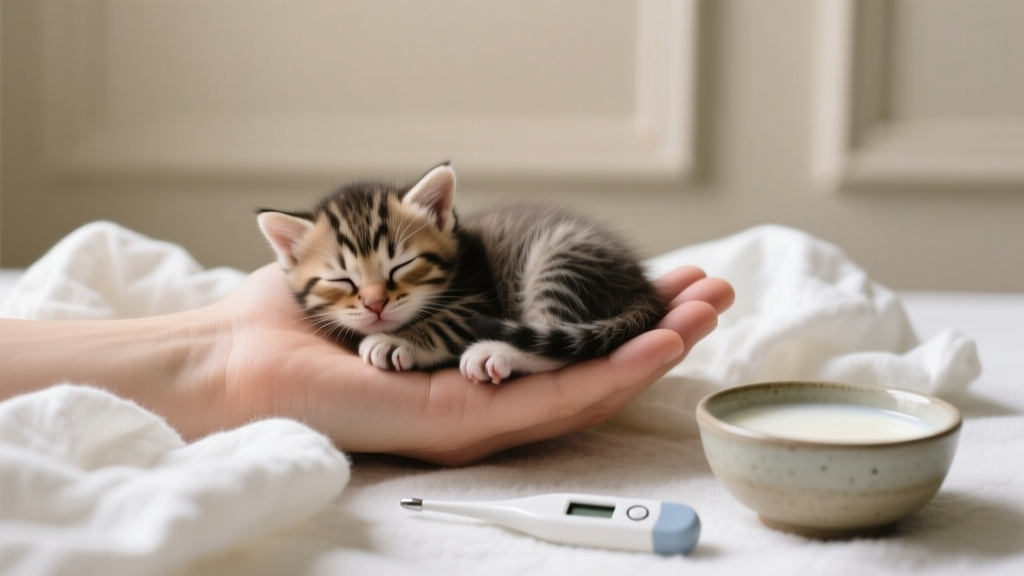
Here’s what most first-timers get dangerously wrong: they focus on feeding before securing stable thermoregulation. A 2-week-old kitten’s normal rectal temperature is 97–100°F (36.1–37.8°C). Below 94°F? They’ll stop nursing, become lethargy-prone, and risk fatal hypothermic shock—even if fed perfectly. Never place a chilled kitten directly on a heating pad or in warm water; rapid rewarming causes cardiac stress. Instead, follow this evidence-based protocol:
- Step 1: Wrap the kitten loosely in a pre-warmed (not hot) fleece blanket—microwave the blanket for 15 seconds, test on your inner wrist first.
- Step 2: Place the wrapped kitten in a cardboard box lined with a thermal insulator (like a folded towel), then add a Snuggle Safe disc (heated per instructions) *under* half the box—not direct contact—to allow escape space.
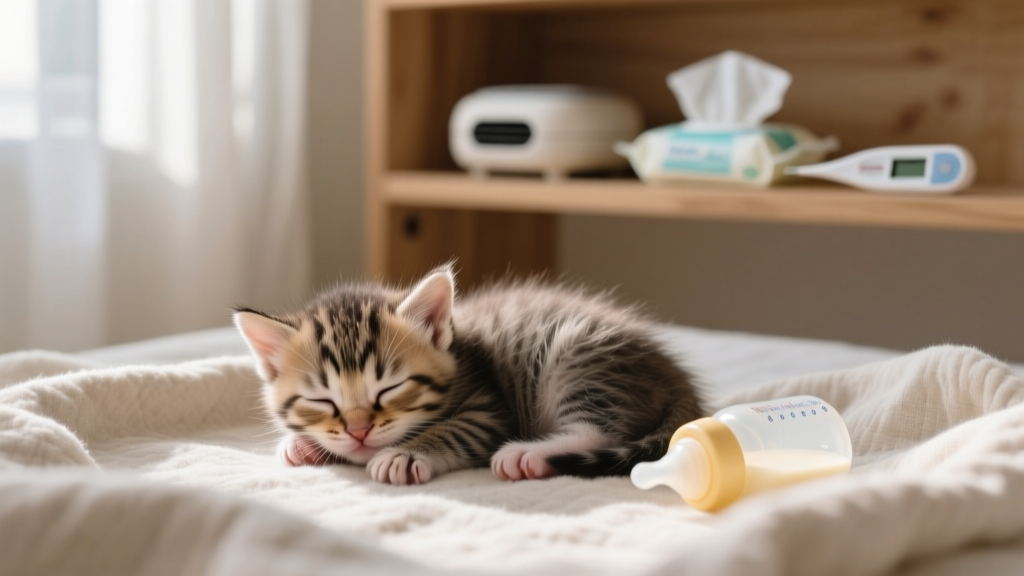
- Step 3: Monitor rectal temp every 15 minutes using a digital pediatric thermometer lubricated with KY Jelly. Stop warming once temp hits 97°F—then maintain at 98–99°F.
Dr. Sarah Wooten, DVM and clinical advisor for the Winn Feline Foundation, stresses: “Neonates lose heat 3x faster than adults. If their paws feel cool or ears look pale, assume hypothermia—even if room temp feels ‘fine’ to you.” Keep ambient room temp at 80–85°F during the first 3 weeks. Use a hygrometer/thermometer combo (like the ThermoPro TP50) to verify—don’t guess.
2. Feeding: Formula, Frequency, and the Fatal Mistake of Cow’s Milk
At two weeks, kittens need 8–10 feedings per 24 hours—roughly every 2–2.5 hours, including overnight. Skipping a feeding or stretching intervals risks hypoglycemia, which can cause seizures within 90 minutes. But it’s not just *how often*—it’s *what* and *how*.
The formula rule: Use only commercial kitten milk replacer (KMR) or similar veterinary-grade formulas like Breeder’s Edge or PetAg. Never use cow’s milk, goat’s milk, human baby formula, or homemade recipes. Why? Cow’s milk contains lactose and casein levels that overwhelm immature kitten intestines, causing severe diarrhea, dehydration, and septic gut leakage. A 2022 study in the Journal of Feline Medicine and Surgery found 92% of kittens fed cow’s milk developed enteritis within 48 hours—compared to just 4% on KMR.
Feeding technique matters just as much:
- Warm formula to 98–100°F (test on your wrist—should feel neutral, not warm).
- Use a 1–3 mL oral syringe (without needle) or a kitten bottle with a soft rubber nipple—never dropper or spoon (aspiration risk is high).
- Hold kitten in natural prone position—slightly upright, head level with spine—never on back. Gently touch nipple to lips; let them latch voluntarily.
- Feed slowly: 1–2 mL per minute max. Watch for swallowing cues—not gulping or choking.
Target intake: 13–15 mL per 100g body weight daily. For a typical 180g (6.3 oz) 2-week-old, that’s ~23–27 mL/day, split across 9 feedings = ~2.5–3 mL per session. Weigh daily on a gram-scale (like the AWS 1000) to track growth—healthy gain is 5–10g/day. Stagnant or declining weight? That’s an ER-level red flag.
3. Stimulation & Elimination: Why You Must Be Their Bladder and Bowels
Kittens under 3 weeks cannot urinate or defecate without external stimulation—a biological necessity tied to maternal licking. Without it, urine backs up, causing painful urinary retention, bladder rupture, or fatal uremia. Constipation leads to toxic megacolon in under 48 hours.
How to stimulate correctly:
- After *every* feeding (yes—even the 3 a.m. one), use a warm, damp cotton ball or soft tissue.
- Gently stroke the genital and anal area in downward motions—like a mother cat licking—for 30–60 seconds.
- Continue until urine and/or stool appears. Urine should be pale yellow and clear; stool should be soft, mustard-yellow, and formed—not watery or green.
Track output in a log: Note time, volume (use a pipette for accuracy), color, and consistency. Any deviation—like orange-tinged urine (dehydration), blood streaks (UTI), or black tarry stool (GI bleed)—requires immediate vet evaluation. Dr. Jennifer Coates, veterinary editor at PetMD, confirms: “If no urine appears after 2 minutes of consistent stimulation, catheterization may be needed. Don’t wait until morning.”
Also monitor for signs of overstimulation: skin redness, raw patches, or vocalizing in distress. Replace cotton balls frequently—bacteria thrive in damp fabric.
4. Hygiene, Handling, and Infection Prevention: The Invisible Threats
A 2-week-old kitten has no adaptive immunity—their only antibodies come from colostrum, which they only received if nursed by mom in the first 24 hours. Orphaned kittens are immunologically naked. That means your hands, clothes, and environment carry lethal risks.
Strict hygiene protocol:
- Wash hands with soap + water for 20+ seconds before and after *every* interaction—even if wearing gloves.
- Change clothes after being outdoors or around other pets. Designate ‘kitten-only’ scrubs or lab coats.
- Disinfect feeding tools with boiling water (5 min) or diluted bleach (1:32 ratio), then rinse thoroughly.
- Never kiss, share food, or let others handle the kitten unless fully trained.
Watch for early infection signs: sneezing, nasal discharge, eye crusting (especially green/yellow), lethargy beyond normal sleep cycles, refusal to nurse, or rectal temperature >102.5°F. These aren’t ‘cold symptoms’—they’re potential sepsis precursors. According to the UC Davis Koret Veterinary Hospital’s Neonatal ICU guidelines, kittens with fever or ocular discharge have a 40% mortality rate without IV antibiotics started within 2 hours.
Also avoid common environmental hazards: loose strings, open electrical cords, carpet fibers (ingestion risk), and unsupervised access to other pets—even ‘gentle’ dogs can trigger fatal stress responses.
| Age Stage | Key Developmental Milestones | Critical Care Actions | Red Flags Requiring Vet Visit |
|---|---|---|---|
| 0–7 days | Eyes closed; ears folded; no righting reflex | Stimulate after each feeding; weigh 2x/day; maintain 85–90°F ambient temp | No stool/urine in 24h; temp <94°F or >102.5°F; no weight gain |
| 8–14 days (2 weeks) | Eyes partially open (slits); ear flaps begin unfolding; attempts to lift head | Feed every 2–2.5h; stimulate genital/anal area; introduce gentle handling (5 min/day); clean bedding daily | Sneezing/crusty eyes; refusal to nurse >2 sessions; weight loss >5g; green/yellow discharge |
| 15–21 days | Eyes fully open; ears upright; begins crawling; starts vocalizing | Introduce shallow litter box with shredded paper; reduce stimulation frequency; start weaning prep (mix formula with wet food paste) | No crawling by day 18; no vocalizations; persistent tremors or circling |
| 22–28 days | Walking wobbly; playing with littermates; teeth emerging | Offer kitten gruel 3x/day; socialize with quiet humans; introduce scratching post | Diarrhea lasting >12h; blood in stool; inability to stand by day 26 |
Frequently Asked Questions
Can I bathe a 2-week-old kitten?
No—absolutely not. Bathing strips vital oils, causes dangerous chilling, and increases aspiration risk. Clean soiled areas with a warm, damp cotton ball only. If heavily soiled (e.g., fecal matter), consult a vet for safe spot-cleaning guidance. Never submerge or use shampoo.
What if my kitten won’t latch onto the bottle?
This is urgent. First, check temperature—hypothermic kittens lack energy to suck. Warm them first. Then try dipping the nipple in formula to encourage taste, or gently rub the cheek with the nipple tip. If no latch after 2 minutes, switch to syringe feeding (drop formula onto tongue—not into throat). If still refusing, seek emergency vet care: esophageal reflux or neurological issues may be present.
Is it normal for a 2-week-old kitten to cry constantly?
No—persistent crying signals distress: hunger (check last feeding time), cold (feel ears/paws), pain (look for swelling, limping), or illness (check temp, stool, breathing). Kittens sleep 90% of the time. Continuous crying >15 minutes warrants immediate assessment.
Do I need to deworm a 2-week-old kitten?
Yes—but only under veterinary direction. Kittens are commonly born with roundworms (Toxocara cati) passed transplacentally. However, most dewormers (e.g., pyrantel pamoate) are only approved starting at 2 weeks—and dosing must be weight-based. Never guess: overdose causes neurotoxicity. Your vet will confirm via fecal float and prescribe safely.
How do I know if my kitten is bonding with me?
Bonding at 2 weeks is subtle but measurable: relaxed posture during handling, rooting toward your hand (not just seeking food), purring during stimulation, and sleeping curled against your skin. Avoid overhandling—limit to 5–10 minutes 2x/day to prevent exhaustion. True bonding deepens between weeks 3–7.
Common Myths About 2-Week-Old Kittens
Myth 1: “They’ll be fine if I just leave them alone for a few hours while I sleep.”
False. Two-week-olds require feeding every 2–2.5 hours—including overnight. Going 5+ hours without nutrition triggers hypoglycemia, leading to seizures, brain damage, or death. Set alarms. Use a smart baby monitor to hear cries.
Myth 2: “If they’re warm and eating, they don’t need vet care until 6 weeks.”
False. All orphaned neonates need a full wellness exam by a feline-savvy vet by day 14—including weight curve analysis, fecal test, and infectious disease screening (FIV/FeLV is rare but possible in stray moms). Early detection saves lives.
Related Topics (Internal Link Suggestions)
- Kitten Feeding Schedule by Age — suggested anchor text: "kitten feeding chart by week"
- Signs of Dehydration in Kittens — suggested anchor text: "how to tell if a kitten is dehydrated"
- Neonatal Kitten Emergency Checklist — suggested anchor text: "kitten emergency kit checklist"
- When Do Kittens Open Their Eyes? — suggested anchor text: "kitten eye opening timeline"
- Best Kitten Milk Replacer Brands Reviewed — suggested anchor text: "top vet-recommended kitten formula"
Your Next Step Starts Now—Before the Next Feeding
You now hold actionable, vet-vetted knowledge—not just theory. But knowledge without action is like formula without warmth: inert and ineffective. So here’s your immediate next step: Grab a notebook or open a Notes app and write down—right now—your kitten’s current weight, last feeding time, and rectal temperature. Then set three alarms: one for 2 hours from now, one for 4.5 hours, and one for 7 hours (to cover overnight). Print the care timeline table above and tape it to your fridge. And if any red flag from this guide appeared today—call your emergency vet *before* the next feeding. Because at two weeks old, your vigilance isn’t optional. It’s the difference between life and loss. You’ve got this—and your kitten is already safer because you read these words.