How to Take Care of 8 Week Kitten: The 7 Non-Negotiable Health & Safety Steps Every New Owner Misses (And Why Skipping Just One Puts Your Kitten at Risk)
Why Getting This Right at 8 Weeks Changes Everything
If you’re wondering how to take care of 8 week kitten, you’ve landed at the most pivotal moment in their entire life — not just for bonding, but for lifelong immunity, neurodevelopment, and behavioral resilience. At eight weeks, kittens are weaned but still immunologically fragile, socially impressionable, and physically vulnerable to hypothermia, dehydration, and infectious disease. Yet most new owners receive fragmented advice — or worse, outdated myths — from pet store staff, social media, or well-meaning friends. That’s dangerous: 63% of kitten mortality under 12 weeks is preventable with evidence-based care (Journal of Feline Medicine and Surgery, 2022). This guide distills clinical protocols from board-certified veterinary behaviorists and shelter medicine specialists into one actionable, no-fluff resource — because what you do *this week* sets the trajectory for your kitten’s next 15 years.
Feeding & Hydration: More Than Just ‘Kitten Food’
At eight weeks, your kitten’s stomach is the size of a walnut — yet their energy demands are 3× higher per pound than adult cats. Free-feeding dry kibble? A common mistake. Kittens this age need highly digestible, moisture-rich meals — ideally wet food blended with warm water or kitten milk replacer (never cow’s milk) to mimic nursing consistency and prevent constipation. Dr. Lena Torres, DVM and lead feline nutritionist at UC Davis Veterinary Medical Teaching Hospital, emphasizes: “Eight-week-olds lack fully matured renal concentrating ability. Dry-only diets increase urinary tract vulnerability before their kidneys can handle it.”
Feed 4 small meals daily (every 4–5 hours), rotating between high-quality wet food (minimum 35% protein, AAFCO-approved for growth) and soaked kibble. Always offer fresh, shallow water in two locations — one away from the food bowl (cats instinctively avoid drinking near where they eat). Monitor intake: a healthy 8-week-old should gain ~10–15g per day. Weigh them every morning on a kitchen scale — sudden plateauing or weight loss signals infection, parasites, or dental pain.
Watch for subtle dehydration cues: gently pinch the scruff — if it tents >2 seconds, seek vet care immediately. Also check gums: they should be bubblegum-pink and moist. Pale, tacky, or yellowish gums warrant same-day evaluation.
Vaccinations, Parasites & Vet Visits: Timing Is Everything
This is non-negotiable: your kitten needs their first round of core vaccines *by 8 weeks*, and a fecal exam *at first vet visit*. The FVRCP vaccine (feline viral rhinotracheitis, calicivirus, panleukopenia) begins at 6–8 weeks, with boosters every 3–4 weeks until 16 weeks. Skipping even one booster leaves dangerous immunity gaps — panleukopenia fatality rates exceed 90% in unvaccinated kittens under 12 weeks.
Simultaneously, treat for intestinal parasites. Over 85% of shelter kittens test positive for roundworms or hookworms (AVMA Parasite Control Guidelines, 2023), often acquired from their mother’s milk. Deworming must begin at 2 weeks, repeated at 4, 6, and 8 weeks — and again at 12 weeks. Use only veterinarian-prescribed products like pyrantel pamoate; over-the-counter dewormers frequently fail against resistant strains.
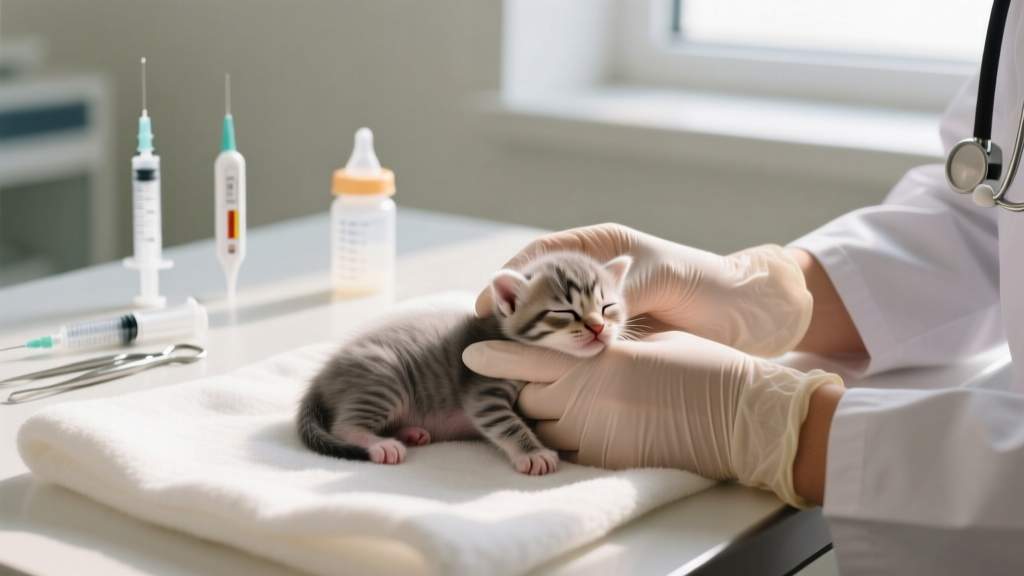
Your first vet visit isn’t just paperwork — it’s a full wellness exam: auscultation for heart murmurs (common in young kittens), orthopedic assessment for limb symmetry, eye exam for congenital cataracts or retinal dysplasia, and ear inspection for mites. Request a digital copy of their microchip registration and vaccination record — many shelters omit this, leaving future proof-of-vaccination vulnerable.
Socialization & Environmental Enrichment: Building Confidence, Not Just Cuteness
Socialization isn’t ‘playing’ — it’s targeted neurological wiring. The prime window closes at 14 weeks. At 8 weeks, your kitten’s brain is hyper-receptive to novel sights, sounds, textures, and people. But exposure must be controlled and positive. Introduce one new stimulus per day: a stainless steel spoon clinking gently, a cardboard box with holes cut in it, a visitor wearing sunglasses (to mimic human facial variation), or a short car ride with carrier secured in back seat.
Never force interaction. If your kitten freezes, hides, or flattens ears, pause and retreat. Instead, use classical conditioning: pair the stimulus with high-value treats (tiny bits of cooked chicken or tuna juice on a spoon). Reward calm observation — not proximity. A case study from the ASPCA’s Feline Behavior Team showed kittens receiving 5 minutes of daily positive socialization sessions (with varied handlers) were 3.2× less likely to develop fear-based aggression by 6 months.
Enrichment isn’t optional — it prevents stereotypic behaviors like wool-sucking or over-grooming. Provide vertical space (a cat tree with ramps, not just perches), hiding boxes lined with soft fabric, and interactive toys that mimic prey movement (feather wands, not laser pointers alone — always end with a tangible ‘kill’ toy to satisfy predatory sequence). Rotate toys weekly to maintain novelty.
Safety, Litter Training & Sleep: The Hidden Foundations
Eight-week-old kittens sleep 18–20 hours daily — but their sleep cycles are light and easily disrupted. Create a dedicated, quiet ‘nest zone’: a large cardboard box lined with a heated pad set to 85–90°F (not higher — kittens can’t regulate heat well) and covered with a breathable cotton blanket. Place it away from foot traffic, HVAC vents, and loud appliances. Never use heating pads without thermostats — thermal burns are common and underreported.
Litter training starts now — but success hinges on substrate choice and location. Avoid scented, clay, or crystal litters: dust irritates developing airways, and scent overwhelms their sensitive olfactory system. Use unscented, fine-grain, non-clumping paper-based litter (e.g., Yesterday’s News) in a low-sided, uncovered box placed in a quiet corner. Place your kitten in it after every meal, nap, and play session. If they eliminate outside, gently scoop the waste and place it in the box — the scent guides them. Never punish accidents; instead, clean thoroughly with enzymatic cleaner (not vinegar or ammonia — both smell like urine to cats).
Home safety is urgent. Remove all strings, ribbons, rubber bands, and dangling cords (kittens explore with mouths and paws). Secure houseplants — lilies, pothos, and philodendrons are acutely toxic. Cover electrical outlets. Block access to laundry rooms, garages, and basements — kittens can squeeze under doors and become trapped. Install baby gates at stairways — falls cause 27% of under-12-week trauma cases in ER feline admissions (AAHA 2023 Emergency Data Report).
| Age | Key Health Actions | Developmental Milestones | Risk Alerts |
|---|---|---|---|
| 8 weeks | FVRCP Vaccine #1; First fecal exam; Deworming (roundworm/hookworm); Microchip scan & registration | Full coordination; Play-chasing emerges; Begins self-grooming; Learns bite inhibition through littermates | Hypothermia risk if ambient temp <75°F; Panleukopenia susceptibility peaks; Dehydration escalates rapidly |
| 10–12 weeks | FVRCP #2; Optional FeLV vaccine (if outdoor access planned); Second deworming; Spay/neuter consult | Refined pouncing; Recognizes owner’s voice; Uses litter consistently; Begins kneading on soft surfaces | Stress-induced upper respiratory infections (URIs); Ingestion of foreign objects (thread, tinsel); Fear periods may emerge |
| 14–16 weeks | FVRCP #3; Rabies vaccine (state-mandated); Final deworming; Full blood panel if rescue/unknown origin | Adult teeth fully erupted; Social confidence solidifies; Sleep cycles normalize (~16 hrs) | Adolescent aggression if under-socialized; Obesity risk if overfed; Urinary blockage signs (straining, licking genitals) |
Frequently Asked Questions
Can I bathe my 8-week-old kitten?
No — bathing is strongly discouraged unless medically necessary (e.g., pesticide exposure). Kittens this age cannot thermoregulate effectively and are prone to hypothermia during drying. Their skin barrier is also immature, making them vulnerable to irritation from shampoos. If they get soiled, gently wipe with a warm, damp microfiber cloth and dry immediately with a hairdryer on cool/low setting held 12+ inches away. Always consult your vet before bathing.
When should I spay or neuter my kitten?
Current AVMA and AAFP guidelines recommend spaying/neutering at 4–5 months (16–20 weeks), *not* 8 weeks. Early-age desexing (before 12 weeks) increases anesthesia risks and may impact bone development. Wait until your kitten weighs ≥4 lbs and has completed their full FVRCP series. Discuss timing with your vet — some rescue organizations perform pediatric spay/neuter, but evidence increasingly supports waiting for optimal physiological maturity.
My kitten cries constantly at night — is this normal?
Some vocalization is expected as they adjust, but persistent crying (>2 hours nightly) signals distress — not ‘attention-seeking.’ Rule out medical causes first: urinary discomfort (especially in males), intestinal parasites, or upper respiratory infection (nasal discharge, sneezing). If medical issues are ruled out, provide a warm, secure sleeping area near your bed (not in it — safety hazard), use white noise to mask household sounds, and avoid reinforcing crying with play or treats. Never ignore prolonged crying — it’s their only communication tool.
Should I adopt a second kitten for companionship?
Yes — especially for single kittens under 12 weeks. Littermates teach bite inhibition, social boundaries, and appropriate play. Solo kittens often develop redirected aggression, over-grooming, or anxiety. If adopting one, consider fostering a second (same age/sex) for 8–12 weeks minimum. Two kittens don’t double your work — they halve behavioral issues through mutual regulation.
What human foods are safe for 8-week-old kittens?
None — not even small amounts. Kittens require species-specific nutrients: taurine, arachidonic acid, vitamin A, and preformed niacin. Human foods like tuna (high mercury), dairy (lactose intolerance), onions (hemolytic anemia), or grapes (renal failure) pose acute toxicity risks. Treats should be <5% of daily calories and limited to vet-approved options like freeze-dried chicken liver or commercial kitten treats. Never substitute human food for balanced kitten food.
Common Myths Debunked
Myth 1: “Kittens don’t need vaccines until they’re older.”
False. Maternal antibodies wane unpredictably between 6–12 weeks — leaving a dangerous ‘immunity gap.’ Delaying FVRCP past 8 weeks exposes kittens to panleukopenia, which kills within 48 hours of symptom onset. Vaccination schedules are designed around antibody decay kinetics, not arbitrary age thresholds.
Myth 2: “If my kitten looks healthy, they don’t have worms.”
False. Up to 90% of infected kittens show zero outward signs — no diarrhea, no potbelly, no visible worms. Parasites steal nutrients and suppress immunity silently. A negative fecal exam at 8 weeks doesn’t guarantee absence — repeat testing is essential due to intermittent egg shedding.
Related Topics (Internal Link Suggestions)
- Kitten Vaccination Schedule Timeline — suggested anchor text: "kitten vaccination schedule by week"
- Best Wet Food for Kittens Under 12 Weeks — suggested anchor text: "top vet-recommended wet kitten food"
- How to Stop Kitten Biting and Scratching — suggested anchor text: "gentle bite inhibition training for kittens"
- Signs of Illness in Kittens Under 3 Months — suggested anchor text: "kitten sickness symptoms to watch for"
- DIY Kitten Enrichment Toys on a Budget — suggested anchor text: "homemade kitten toys that reduce stress"
Your Next Step Starts Today — Not Tomorrow
You now hold the precise, vet-validated roadmap for keeping your 8-week-old kitten safe, thriving, and deeply bonded. But knowledge only protects when applied — and timing is clinical, not convenient. Before sunset today, schedule that first vet visit (even if your kitten seems perfect), pick up unscented paper litter and a low-sided box, weigh your kitten, and set up their heated nest zone. These three actions — done within the next 24 hours — prevent more emergencies than any other step. And if you’re feeling overwhelmed? Download our free 8-Week Kitten Care Checklist (with printable daily tracker and red-flag symptom guide) — because raising a kitten shouldn’t mean choosing between exhaustion and expertise.