How to Care for an Abandoned Kitten: The First 72 Hours That Save Lives (Veterinarian-Approved Steps You Can’t Skip)
Why This Guide Could Save a Life Today
If you’ve just found a shivering, silent, or crying newborn kitten alone in a box, alley, or storm drain—you’re holding more than a fragile animal. You’re holding a life with less than 48 hours to survive without intervention. How to care for an abandoned kitten isn’t just about compassion—it’s about knowing which actions are medically non-negotiable in the first critical hours. Neonatal kittens (under 4 weeks) cannot regulate body temperature, digest food unassisted, or eliminate waste without stimulation—and mortality spikes by 30% for every hour they go without warmth and colostrum. This guide distills protocols used by shelter veterinarians, foster coordinators, and feline neonatal specialists into one actionable, time-sensitive roadmap—no prior experience required.
Step 1: Stabilize — Warm, Assess, and Isolate (First 15 Minutes)
Abandoned kittens are almost always hypothermic—even if they feel ‘warm’ to your hands. Their normal rectal temperature is 95–100°F (35–37.8°C); below 94°F (34.4°C), they risk cardiac arrest. Never feed a cold kitten: digestion halts, and aspiration pneumonia becomes likely.
Action plan:
- Warm gradually: Wrap a heating pad on LOW (never high) in two layers of towels; place kitten on top—not directly on it. Or use a rice sock (1/2 cup uncooked rice in a clean sock, microwaved 20 sec, shaken well, wrapped in cloth). Monitor skin temperature every 5 minutes—stop warming once ears/paws feel warm and pink.
- Assess age & condition: Use this quick visual guide: Eyes closed + ears flat = under 1 week. Eyes open but wobbly = 2–3 weeks. Walking steadily + teeth emerging = 4+ weeks. Check gums: pale = shock/anemia; yellow = liver stress; dry/sticky = dehydration.
- Isolate immediately: Place in a quiet, draft-free box lined with soft, non-looped fabric (no towels—threads snag claws). Keep away from other pets and children. This prevents stress-induced immune collapse and stops potential pathogen spread (e.g., feline panleukopenia).
According to Dr. Susan Little, DVM and former president of the American Association of Feline Practitioners, “Hypothermia is the #1 killer of orphaned kittens before starvation. Warming must precede all other care—including feeding.”
Step 2: Hydrate & Feed — What, When, and How Much (Hours 1–24)
Neonatal kittens require calories every 2–3 hours—including overnight. But formula choice, volume, and technique matter more than frequency. Cow’s milk causes fatal diarrhea. Overfeeding leads to aspiration or bloat. Underfeeding triggers rapid blood sugar crash (hypoglycemia), causing tremors, seizures, or coma.
Formula essentials:
- Use only commercial kitten milk replacer (KMR) or similar (e.g., Just Born, Breeder’s Edge): These contain taurine, balanced fat-protein ratios, and prebiotics absent in homemade recipes. A 2022 study in the Journal of Feline Medicine and Surgery found kittens fed cow’s milk had 4.7× higher risk of fatal enteritis within 48 hours.
- Warm formula to 98–100°F (36.7–37.8°C)—test on inner wrist. Cold formula slows gut motility; too-hot denatures proteins.
- Feeding volumes (per feeding): 2 mL per ounce of body weight (e.g., 4 oz kitten = ~8 mL). Weigh daily on a gram scale—kittens should gain 7–10 g/day. No gain? Reassess feeding technique or consult a vet immediately.
Always feed kittens on their belly, head slightly elevated—not upright like a human baby. Use a 1–3 mL syringe (without needle) or specialized kitten bottle with a soft nipple. Let them suck at their own pace—never force. If they choke, stop, gently tilt head down, and rub back until clear.
Step 3: Stimulate & Sanitize — The Hidden Lifesaving Routine
Kittens under 3 weeks old cannot urinate or defecate without physical stimulation—mimicking the mother’s licking. Skipping this causes urinary retention, bladder rupture, constipation, and sepsis. Equally critical: strict sanitation. Neonates have zero immunity; common household bacteria (like E. coli) can kill in under 12 hours.
Stimulation protocol:
- After every feeding, use a warm, damp cotton ball or soft tissue.
- Gently stroke the genital and anal area in circular motions for 30–60 seconds—until urine or stool appears.
- Observe output: Urine should be pale yellow and plentiful; stool should be mustard-yellow and soft (first 3 days) then transitioning to brownish-seedy. No output after 3 stimulations? Call a vet—this signals ileus or obstruction.
Sanitation rules:
- Wash hands with soap and water for 20 seconds before/after handling.
- Disinfect feeding tools with boiling water (5 min) or diluted bleach (1:32) — rinse thoroughly.
- Change bedding daily; wash in hot water + fragrance-free detergent.
- Never kiss, share utensils, or let kittens near your face—zoonotic risks include Bordetella and ringworm.
Step 4: Vet Triage & Long-Term Pathways (Days 1–7)
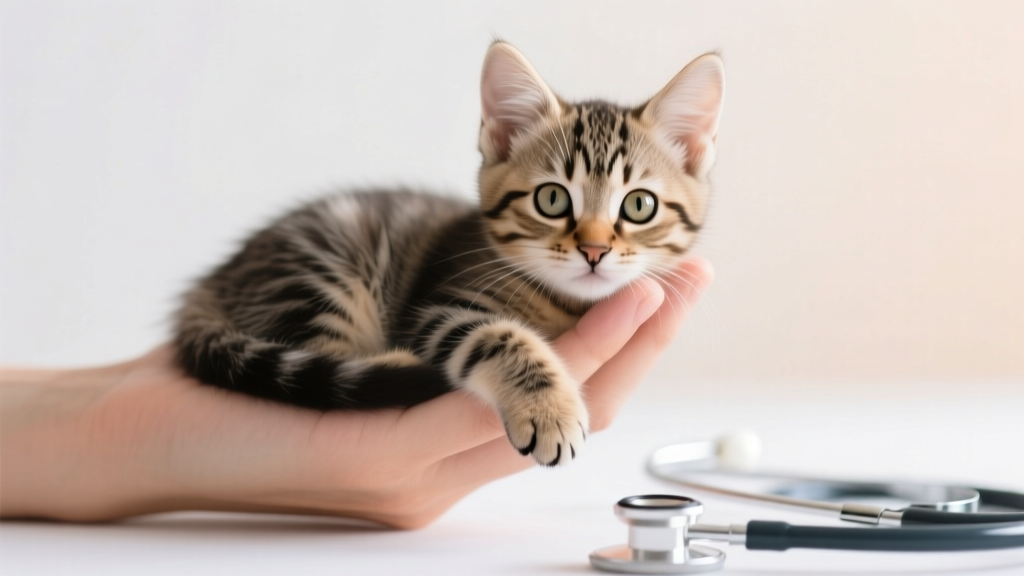
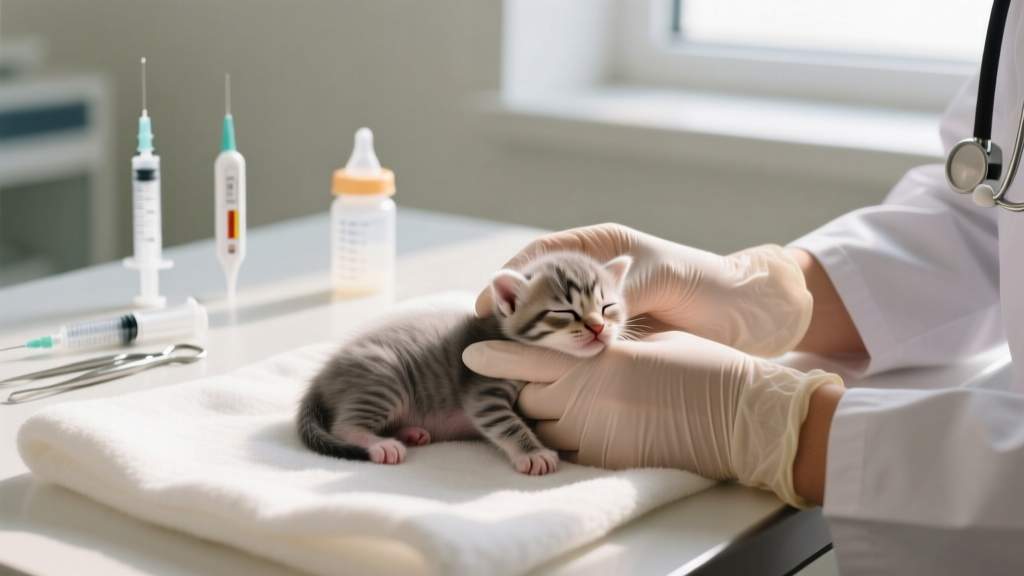
Even if the kitten seems stable, professional assessment is essential by Day 1 or Day 2. A veterinarian will check for congenital defects (cleft palate, heart murmurs), test for feline leukemia (FeLV) and FIV (only reliable after 8 weeks), deworm (most abandoned kittens carry roundworms), and administer first vaccines (FVRCP) starting at 6 weeks.
Here’s what to expect during that first visit—and how to prepare:
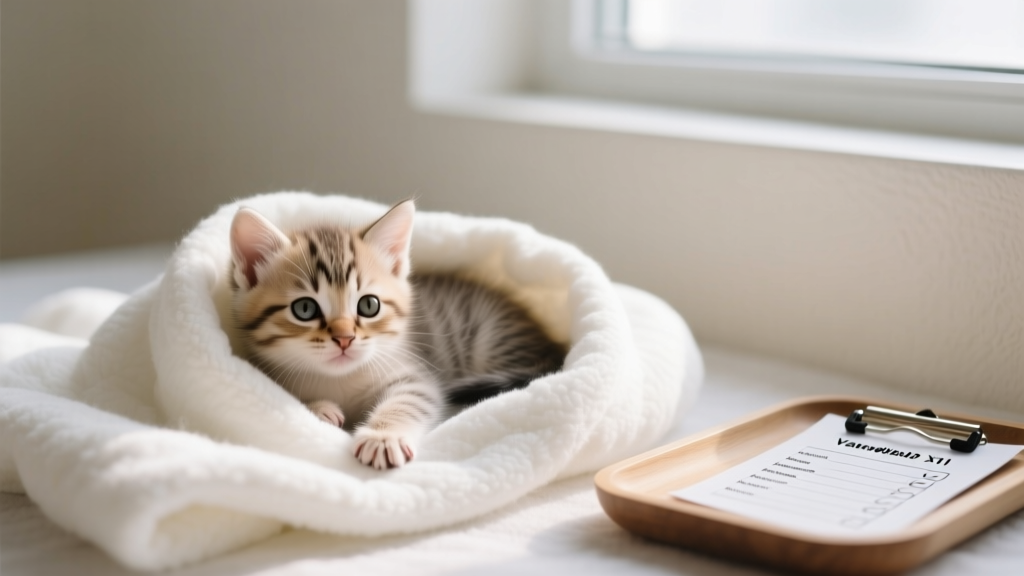
- Bring feeding log: Times, amounts, stool/urine notes, weight (in grams).
- Ask about fecal float test (for parasites) and PCR testing for feline herpesvirus/calicivirus—common in stressed orphans.
- Discuss fostering vs. rehoming: Shelters often lack neonatal capacity. Many rescue groups (e.g., Kitten Lady’s network, local Humane Society foster programs) provide free formula, supplies, and 24/7 tele-vet support—if you commit to 2–4 weeks of care.
Real-world example: In Portland, OR, a volunteer named Maya rescued three 5-day-old kittens from a rain-soaked garage. She followed warming/feeding protocols but missed stimulation cues—leading to urinary retention in one kitten. At the vet, he was catheterized and placed on antibiotics. “I thought I was doing everything right,” she shared. “But learning the subtle signs—like a bloated belly or lethargy after feeding—changed everything.”
Kitten Care Timeline: Critical Milestones & Actions
| Age | Key Developmental Signs | Essential Actions | Vet Visit Timing |
|---|---|---|---|
| 0–1 week | Eyes closed; ears flat; no teeth; relies entirely on caregiver | Warmth 24/7; feed every 2–3 hrs; stimulate after each feeding; weigh daily | Day 1–2: Initial exam, deworming, baseline weight |
| 1–2 weeks | Eyes begin opening (usually Day 7–10); ear flaps lift; starts crawling | Continue feeding/stimulation; introduce gentle handling; monitor for eye discharge (sign of infection) | Day 10: Repeat deworming; check for upper respiratory signs |
| 2–3 weeks | Eyes fully open; ears upright; attempts standing; begins kneading | Introduce shallow litter box with paper pellets; start socialization (gentle petting, soft voices); reduce night feedings | Week 3: Fecal test; discuss FeLV/FIV testing window |
| 3–4 weeks | Walking confidently; plays with siblings; teeth emerging; begins grooming | Transition to gruel (KMR + wet kitten food); increase playtime; introduce scratching post | Week 4: First FVRCP vaccine; microchip discussion |
| 4–6 weeks | Weaned; uses litter reliably; full set of deciduous teeth; highly social | Spay/neuter consultation (early-age sterilization recommended); adoptable status review | Week 6: Second FVRCP; rabies if local law requires |
Frequently Asked Questions
Can I give an abandoned kitten cow’s milk or goat’s milk?
No—absolutely not. Cow’s milk lacks the proper protein-to-fat ratio and contains lactose levels kittens cannot digest, leading to severe, dehydrating diarrhea within hours. Goat’s milk is similarly unsuitable and may carry Caprine arthritis encephalitis virus, transmissible to cats. Only use FDA-approved kitten milk replacers (KMR, Just Born, or Breeder’s Edge). A 2021 Cornell Feline Health Center review confirmed zero cases of survival beyond 72 hours in kittens fed non-formula milk substitutes.
What if the kitten won’t eat or cries constantly?
Refusal to nurse or persistent, high-pitched crying signals distress—not hunger. Possible causes include hypothermia, pain (e.g., umbilical infection), neurological issues, or severe dehydration. Check rectal temp first. If below 95°F, warm immediately before attempting feeding. If crying continues after warming and feeding, seek emergency vet care—within 2 hours. Do not wait.
How do I know if the kitten has fading kitten syndrome?
Fading Kitten Syndrome (FKS) isn’t a single disease—it’s a cluster of symptoms indicating systemic failure: lethargy, low body temperature (<94°F), weak suck reflex, shallow breathing, pale gums, and inability to right itself when placed on its side. Mortality exceeds 90% without ICU-level care. If you observe 3+ of these signs, contact a 24/7 emergency clinic immediately—even if it’s 2 a.m. Early IV fluids and dextrose can reverse hypoglycemia and buy critical time.
Should I try to find the mother before intervening?
Only if the kitten is warm, quiet, and appears well-fed—and you can observe the area safely for 2–4 hours. Mother cats often leave kittens briefly to hunt or rest. But if the kitten is cold, crying nonstop, covered in ants/mud, or visibly injured, intervene immediately. Delaying care for ‘wait-and-see’ costs lives. As Dr. Melynn Oliver, shelter medicine specialist at UC Davis, states: “Every minute counts. Your safe, swift action is the difference between life and loss.”
Do abandoned kittens need vaccinations earlier than owned kittens?
Yes—due to compromised immunity and high-risk exposure, orphaned kittens receive their first FVRCP (feline viral rhinotracheitis, calicivirus, panleukopenia) vaccine at 4–6 weeks, not 8 weeks. Boosters follow every 2–3 weeks until 16 weeks. This accelerated schedule is endorsed by the American Animal Hospital Association (AAHA) 2023 Feline Vaccination Guidelines.
Common Myths About Abandoned Kittens
- Myth #1: “You shouldn’t touch newborn kittens—they’ll be rejected by mom.”
False. Cats don’t reject kittens due to human scent. In fact, most mothers abandon litters because of illness, injury, or environmental stress—not handling. If you find kittens, assess their condition first. Intervention saves lives.
- Myth #2: “If they’re warm and quiet, they’re fine.”
False. Hypothermic kittens become lethargy and stop crying—this is a late, dangerous sign. A truly healthy neonate is active, rooting, and vocalizing regularly. Silence + cool skin = emergency.
Related Topics (Internal Link Suggestions)
- Signs of dehydration in kittens — suggested anchor text: "kitten dehydration symptoms"
- Homemade kitten formula alternatives — suggested anchor text: "safe kitten milk replacer recipes"
- When to take a kitten to the vet — suggested anchor text: "emergency kitten vet signs"
- Fostering neonatal kittens — suggested anchor text: "how to foster orphaned kittens"
- Kitten socialization timeline — suggested anchor text: "critical period for kitten bonding"
Conclusion & Your Next Step
Caring for an abandoned kitten is equal parts science and soul—a blend of precise physiology, compassionate vigilance, and unwavering consistency. You now hold the knowledge to stabilize, nourish, protect, and advocate for a life that arrived alone—but doesn’t have to stay that way. Don’t wait for ‘perfect conditions.’ Grab a digital scale, warm a rice sock, mix KMR, and begin. And if uncertainty creeps in—call your local shelter, rescue group, or 24/7 vet helpline before the first feeding. Your courage in those first minutes sets the trajectory for everything that follows. Ready to take action? Download our free printable Neonatal Kitten Care Log (with feeding tracker, weight chart, and symptom checklist) — available now.