How to Take Care of 4 Month Old Kitten: The Critical 7-Day Health & Development Checklist Every New Owner Misses (And Why Skipping One Step Risks Lifelong Issues)
Why This Is the Most Important Month in Your Kitten’s Life
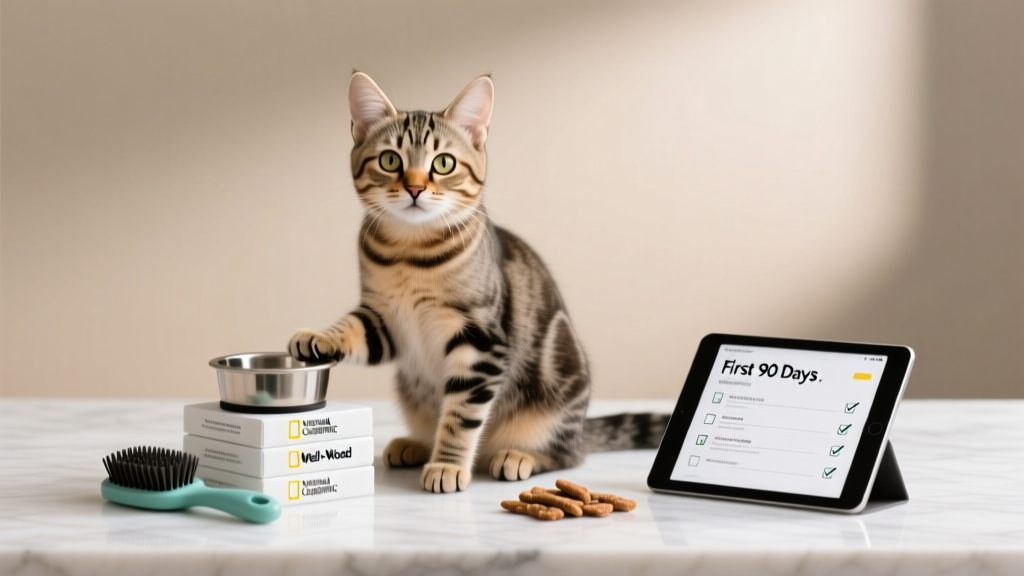
If you’re searching for how to take care of 4 month old kitten, you’ve landed at a pivotal inflection point—not just another milestone, but a biological deadline. At 16 weeks, your kitten’s immune system is transitioning from maternal antibodies to self-sufficiency, their socialization window is narrowing rapidly (closing fully by 14–16 weeks), and their skeletal and neurological development is accelerating. Missed vaccinations now mean delayed protection against panleukopenia, calicivirus, and rabies; overlooked intestinal parasites can stunt growth and trigger chronic GI issues; and insufficient positive human interaction may cement lifelong fear responses. This isn’t ‘just kitten care’—it’s foundational health architecture.
Vaccinations, Parasite Control & Veterinary Checkups: Timing Is Non-Negotiable
At 4 months, your kitten should be completing their core vaccine series—and this is where many owners unknowingly leave gaps. According to the American Association of Feline Practitioners (AAFP) 2023 Vaccination Guidelines, kittens require two doses of FVRCP (feline viral rhinotracheitis, calicivirus, panleukopenia) spaced 3–4 weeks apart, with the final dose administered no earlier than 16 weeks to ensure maternal antibody interference has waned. That means if your kitten received their first shot at 8 weeks, the second likely landed at 12 weeks—and the third, critical booster is due now, at 4 months.
Simultaneously, intestinal parasite screening becomes urgent. A 2022 study in the Journal of Feline Medicine and Surgery found that 68% of shelter kittens aged 12–16 weeks tested positive for at least one parasite—even after prior deworming—due to reinfection from environmental oocysts (e.g., Toxoplasma) or resistant hookworm strains. Your vet should perform both fecal flotation and PCR testing, not just a visual check. If your kitten hasn’t had a heartworm antigen test yet, request it—yes, even indoors. Indoor cats have a 25% lower risk, but mosquitoes enter homes through open doors and screens, and heartworm disease in cats is often fatal and difficult to diagnose.
Here’s what your 4-month wellness visit must include:
- A full physical exam—with special attention to dental development (those adult premolars are erupting now), lymph node palpation, and eye fundoscopy to rule out congenital retinal defects
- Weight tracking plotted on a feline growth chart (ideal gain: 0.25–0.5 lbs/week)
- Microchip scan verification (to confirm it’s readable and registered)
- Spay/neuter discussion: While some vets still recommend waiting until 5–6 months, the AAFP now supports early-age spay/neuter (as young as 12–14 weeks) for shelter kittens—and for owned kittens, 4 months is the sweet spot: large enough for safe anesthesia, small enough to avoid first heat (females can cycle as early as 4 months!) and reduce mammary tumor risk by 91% if done before first estrus.
Nutrition & Feeding Transitions: From Kitten Formula to Adult-Ready Fuel
Your 4-month-old kitten is no longer a neonate—but they’re also not ready for adult food. Their metabolism remains hyperactive (requiring ~250–300 kcal/day for a 3–4 lb kitten), and their protein needs peak between 12–16 weeks to support lean muscle synthesis and organ maturation. Switching to adult food too soon starves them of taurine, arginine, and DHA—nutrients critical for retinal health, cardiac function, and neural myelination.
Dr. Sarah Wooten, DVM and clinical advisor for the World Small Animal Veterinary Association, emphasizes: “Kittens don’t ‘grow out of’ kitten food—they grow into it. Their nutritional demands remain elevated until ~10–12 months. Premature transition is the #1 dietary cause of stunted growth in domestic shorthairs.”
What to feed—and how to transition:
- Choose a food meeting AAFCO’s ‘Growth’ or ‘All Life Stages’ standard—not ‘Maintenance.’ Look for ≥35% crude protein (dry matter basis) and ≥18% fat.
- Feed 3–4 small meals daily (not free-feed). Kittens this age lack gastric stretch receptors—overfeeding causes regurgitation and obesity. Use a kitchen scale to measure portions: e.g., ¼ cup high-quality kibble + 1 tbsp wet food per meal.
- Transition slowly over 10 days if changing brands: Days 1–3: 75% old / 25% new; Days 4–6: 50/50; Days 7–9: 25/75; Day 10: 100% new. Sudden changes cause diarrhea and bacterial dysbiosis.
- Hydration is non-negotiable. Add water to wet food (1 tsp per tablespoon) or use a stainless-steel fountain—kittens dehydrate faster than adults and rarely drink voluntarily. Urine specific gravity should be >1.030 on urinalysis; values below indicate chronic mild dehydration, linked to early-onset CKD.
Socialization, Play & Environmental Enrichment: Building Confidence Before the Window Closes
The sensitive period for feline socialization ends between 14–16 weeks. By 4 months, your kitten is forming lasting associations about humans, other pets, sounds, and novel objects. Miss this window, and ‘shyness’ becomes hardwired avoidance—not timidity, but neurobiological aversion.
Real-world example: Luna, a 4-month-old tabby adopted from a quiet rural home, hissed at vacuum cleaners, men with hats, and children. Her new owner followed a structured desensitization protocol: playing vacuum sounds at low volume while offering chicken broth from a syringe, then gradually increasing volume over 12 days while pairing with play sessions using wand toys. By week 3, Luna approached the (unplugged) vacuum and rubbed her cheek on it. Key principle: Never force proximity. Let the kitten choose engagement—and always end sessions on a positive note.
Enrichment must go beyond toys. Create vertical territory (cat trees with platforms at 3’, 5’, and 7’ heights), hiding spots (cardboard boxes with multiple entrances), and scent-based games (hide treats in paper bags or crumpled foil). Rotate toys weekly—novelty triggers dopamine release, reinforcing exploratory behavior. And crucially: dedicate 15 minutes twice daily to interactive play mimicking hunting sequences (stalking → pouncing → biting → ‘killing’). End each session with a treat—this completes the predatory sequence and prevents redirected aggression.
Litter Box Mastery & Early Behavioral Boundaries
By 4 months, litter box issues should be rare—if they’re occurring, dig deeper. Common culprits aren’t ‘spite’ or ‘rebellion’ (cats lack those cognitive frameworks) but medical pain (UTIs, constipation), substrate aversion (scented litter, noisy liners), or location stress (box near washer/dryer or in high-traffic areas).
Rule out medical causes first with a urinalysis and abdominal palpation. Then optimize the environment:
- One box per cat + 1 extra (so 2 boxes minimum, even for solo kittens)
- Uncovered, large (at least 1.5x kitten’s length)—covered boxes trap ammonia and feel like traps
- Clay or unscented clumping litter only—avoid crystal, pine, or corn litters; their texture and dust irritate developing paws and airways
- Place boxes in quiet, low-traffic rooms with easy escape routes—never in closets or behind doors
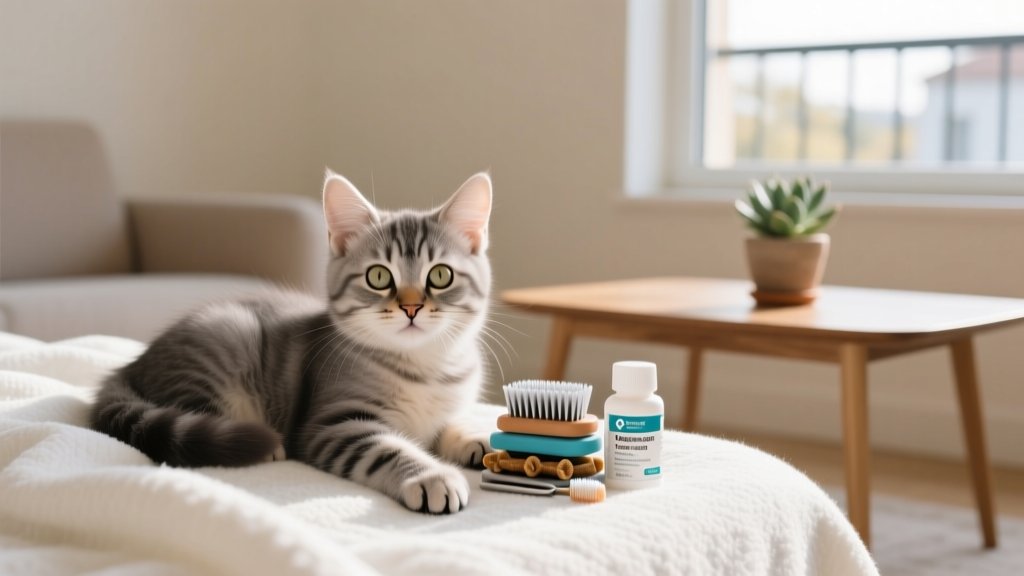
For scratching: Provide horizontal (corrugated cardboard) and vertical (sisal-wrapped posts) options in high-traffic zones (e.g., beside your sofa, near their bed). Trim nails every 10–14 days—not to prevent scratching, but to blunt sharp tips that snag fabric and skin. Use Feliway Classic spray near off-limits furniture for 7 days to reduce marking motivation.
| Age Milestone | Key Health Actions | Risk of Delay | Owner Action Deadline |
|---|---|---|---|
| 12–14 weeks | FVRCP booster #2; First fecal test; First heartworm antigen screen | Partial immunity; Undetected parasite load | Completed |
| 16 weeks (4 months) | FVRCP booster #3; Rabies vaccine (non-adjuvanted); Full fecal PCR; Spay/neuter consult | Zero protection against FPV (fatal in >90% unvaccinated kittens); Heartworm misdiagnosis; Unplanned pregnancy | Now — within next 7 days |
| 20 weeks (5 months) | Final weight-based vaccine titer check; Dental prophylaxis assessment | Antibody waning; Early gingivitis progression | 2–4 weeks from now |
| 24 weeks (6 months) | First annual wellness bloodwork (CBC, chemistry, T4); Microchip registration update | Missed early kidney/liver dysfunction | 6 weeks from now |
Frequently Asked Questions
Can I bathe my 4-month-old kitten?
No—bathing is strongly discouraged unless medically necessary (e.g., pesticide exposure). Kittens this age cannot thermoregulate effectively in water, and bathing strips protective skin oils, triggering over-grooming and dermatitis. Spot-clean with a damp microfiber cloth instead. If absolutely required, use warm (not hot) water, pH-balanced kitten shampoo, and dry thoroughly with towels—not blow-dryers.
How much should my 4-month-old kitten sleep?
16–20 hours per day is normal. Their sleep cycles alternate between deep REM (for neural pruning) and light dozing (for environmental vigilance). Don’t mistake stillness for lethargy—if they perk up instantly when you enter the room or respond to crinkling paper, they’re healthy. True lethargy (no response to stimuli, refusal to eat for >12 hours) warrants immediate vet contact.
Is it okay to let my kitten outside at 4 months?
Strongly discouraged. Outdoor access before 6 months dramatically increases risks: vehicle trauma (peak mortality for kittens 4–7 months), predation (owls, coyotes), toxin ingestion (antifreeze, pesticides), and infectious disease (FIV, FeLV). Even screened porches pose fall hazards—kittens lack depth perception until 5 months. Keep them indoors; use leash walks in enclosed yards only after full vaccination and 2 weeks post-booster.
My kitten bites during play—is this normal?
Yes—but it must be redirected immediately. Biting is part of prey-drive development, but allowing mouth contact on skin teaches bite inhibition failure. When biting occurs, freeze, withdraw your hand, and offer a toy. Never use hands as play objects. If biting persists beyond 5 months, consult a veterinary behaviorist—early intervention prevents escalation.
Should I brush my kitten’s teeth at 4 months?
Absolutely—and start now. Introduce a soft finger brush and enzymatic toothpaste (never human paste) for 5 seconds daily, gradually increasing to 30 seconds. 70% of cats show signs of periodontal disease by age 3; beginning at 4 months builds tolerance and prevents plaque mineralization. Reward with a lick of tuna water after each session.
Common Myths About 4-Month-Old Kittens
Myth 1: “They’re old enough to be left alone for 8+ hours.”
Reality: Four-month-olds lack bladder/bowel control for extended periods. Confining them without bathroom access causes stress-induced cystitis or inappropriate elimination. Max solo time is 4–5 hours—and only if they have multiple litter boxes, fresh water, and safe enrichment.
Myth 2: “If they’re eating well and playful, they’re definitely healthy.”
Reality: Kittens mask illness masterfully. Weight loss as small as 10% (e.g., 0.3 lbs in a 3-lb kitten) signals serious disease. Subtle signs—slight gum pallor, decreased grooming, or quieter purring—often precede vomiting or lethargy by days. Daily weight checks are essential.
Related Topics (Internal Link Suggestions)
- Kitten Vaccination Schedule Timeline — suggested anchor text: "4 month kitten vaccination schedule"
- Best Wet Food for Kittens Under 6 Months — suggested anchor text: "top-rated kitten wet food"
- How to Stop Kitten Biting and Scratching — suggested anchor text: "gentle kitten bite inhibition training"
- Signs of Illness in Kittens — suggested anchor text: "kitten sickness warning signs"
- Indoor Cat Enrichment Ideas — suggested anchor text: "4 month kitten enrichment activities"
Your Next Step Starts Today—Not Tomorrow
Caring for a 4-month-old kitten isn’t about perfection—it’s about precision in timing and consistency in compassion. You now know that skipping that third FVRCP booster, delaying spay surgery, or ignoring subtle hydration cues isn’t a ‘small oversight.’ It’s a pivot point with lifelong consequences. So don’t wait for your next vet appointment. This week, call your clinic and book a 16-week wellness visit—mention you need fecal PCR, rabies vaccine, and spay/neuter evaluation. Print this care timeline table. Weigh your kitten daily for 7 days and log it. And tonight, sit quietly beside their sleeping spot—observe their breathing rate (normal: 20–30 breaths/min), ear temperature (should feel warm, not hot), and whether they knead softly. These tiny acts build the foundation for a decade of vibrant health. You’ve got this—and your kitten is already so much safer because you asked how to take care of 4 month old kitten.