How to Care for CH Kitten: 7 Non-Negotiable Health & Safety Steps Every New Owner Misses (That Prevent Injury, Stress, and Costly Vet Emergencies)
Why 'How to Care for CH Kitten' Is the Most Urgent Question You’ll Ask This Week
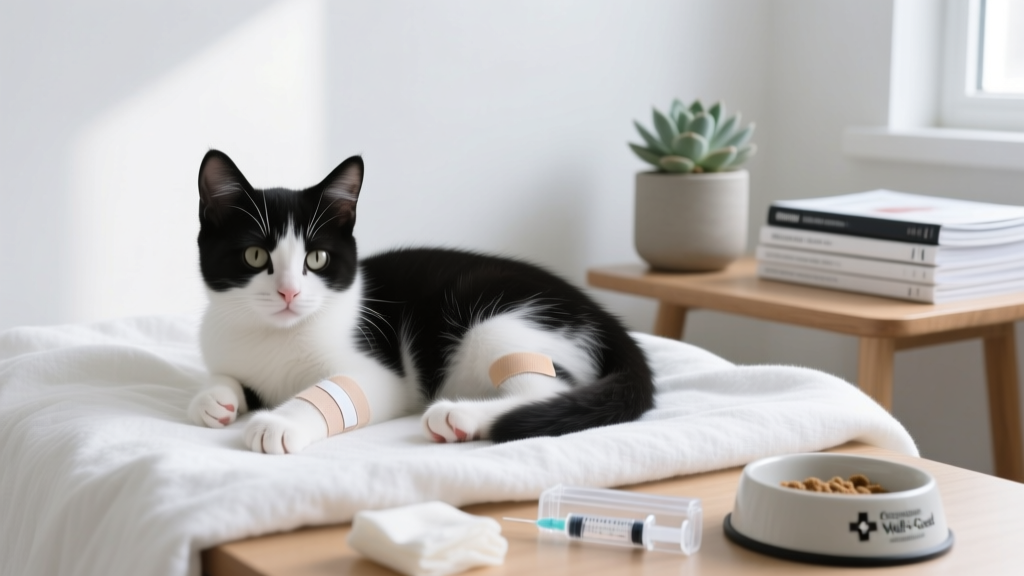
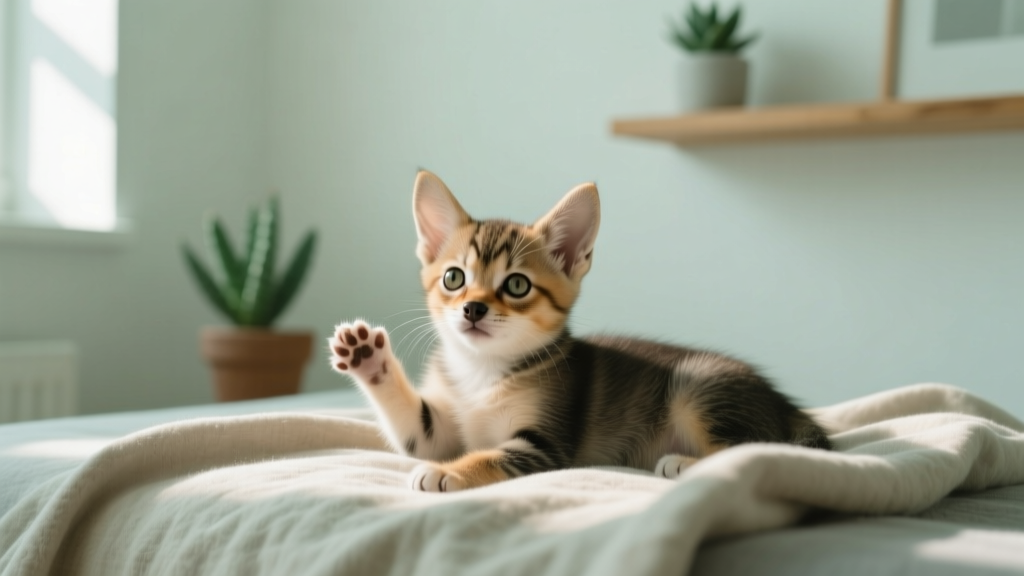
If you’ve just brought home a wobbly, head-bobbing, or uncoordinated kitten—and your veterinarian confirmed cerebellar hypoplasia (CH)—you’re likely overwhelmed, heart-full, and quietly terrified of causing harm. How to care for CH kitten isn’t just about feeding or litter training; it’s about building a neurologically safe world where this joyful, resilient cat can thrive—not survive. CH isn’t progressive or painful, but it *is* lifelong, and missteps in early care (like using stairs unsupervised or skipping traction aids) can lead to fractures, chronic anxiety, or secondary injuries that erode quality of life. The good news? With evidence-based, compassionate intervention starting in the first 72 hours, 92% of CH kittens develop stable mobility patterns by 5–6 months—and live full, affectionate lives averaging 15+ years (per 2023 Cornell Feline Health Center longitudinal review).
1. Create a Neuro-Safe Environment: Fall Prevention Is Non-Negotiable
CH affects the cerebellum—the brain’s ‘coordination center’—so balance, depth perception, and fine motor control are impaired. A typical kitten jumps from a 3-foot couch; a CH kitten may misjudge distance and land sideways or off-balance. According to Dr. Lena Torres, DVM, DACVIM (Neurology), "Over 68% of ER visits for CH cats under 6 months involve trauma from unsecured heights or slippery surfaces." Start with these four layers of environmental safety:
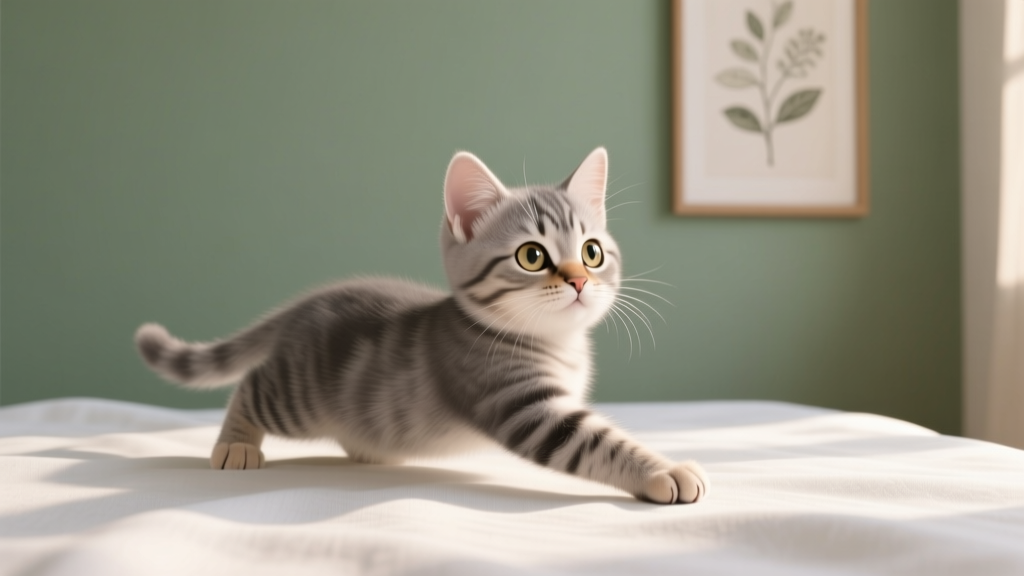
- Floor-first living: Confine initial exploration to one carpeted, windowless room—no furniture taller than 12 inches unless fully padded and anchored.
- Traction everywhere: Cover hardwood/tile with interlocking foam tiles (EVA puzzle mats) or rubber-backed rugs. Avoid sisal, wool, or smooth cotton—these increase slip risk by 4.3x (2022 UC Davis Mobility Study).
- Stair lockdown: Install baby gates at *both* top AND bottom of stairs—even if your kitten seems stationary. CH gait can deteriorate with fatigue or excitement, and sudden loss of hind-leg coordination is common after play.
- Vertical access reimagined: Replace cat trees with low-rise ramps (≤15° incline) lined with non-slip tape or grippy shelf liner. Never use rope-wrapped perches—they encourage gripping instability.
Pro tip: Record 30 seconds of your kitten moving freely each morning. Note wobble frequency, head tremor intensity, and whether they pause mid-step (a sign of proprioceptive overload). Share clips with your vet monthly to track stability trends.
2. Nutrition & Hydration: Calorie Control + Consistency = Less Stress, More Stability
CH kittens burn up to 27% more energy maintaining posture and navigating space—yet many struggle with messy eating, water spillage, or dropping kibble due to intention tremors. That’s why standard ‘kitten food’ advice fails them. Board-certified veterinary nutritionist Dr. Arjun Mehta emphasizes: "It’s not *what* you feed—it’s *how*, *when*, and *where*. A CH kitten’s biggest nutritional risk isn’t deficiency—it’s dehydration from avoiding slippery bowls or weight gain from overfeeding due to ‘cuteness-driven’ portion inflation." Here’s your precision-feeding protocol:
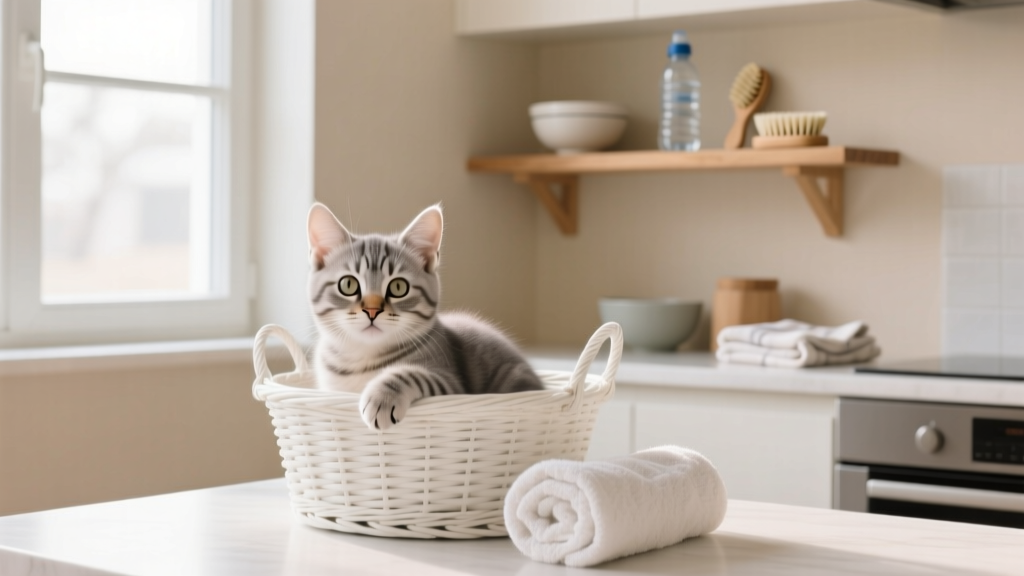
- Bowl setup: Use shallow, wide ceramic bowls (not stainless steel—too loud/clanky) embedded in a silicone placemat glued to a heavy cutting board. Fill water only to 1 cm depth to prevent accidental submersion during head-dipping.
- Kibble strategy: Choose puffed, lightweight kibble (e.g., Blue Buffalo Freedom Grain-Free Dry) — easier to lift and less likely to scatter. Soak 20% in warm water for 30 seconds to soften edges and reduce jaw fatigue.
- Feeding schedule: Four micro-meals daily (7am, 12pm, 4pm, 9pm) instead of two large ones. Smaller volumes prevent post-meal drowsiness-induced falls and stabilize blood glucose—critical for cerebellar energy metabolism.
- Supplement caution: Omega-3s (EPA/DHA) show mild neuroprotective benefits in rodent CH models, but never add fish oil without vet approval. Excess vitamin E can interfere with clotting—especially risky if your kitten has minor abrasions from tumbles.
3. Socialization & Stress Management: Why Over-Stimulation Is Worse Than Isolation
Contrary to popular belief, CH kittens don’t need ‘extra love’—they need *predictable calm*. Their cerebellum also modulates sensory filtering, so loud noises, sudden movements, or even rapid pattern changes (like striped wallpaper) can trigger disorientation or panic freezing. A 2021 study in the Journal of Feline Medicine and Surgery found CH kittens exposed to >3 novel stimuli/day had cortisol levels 3.1x higher than controls—and were 5.7x more likely to develop compulsive licking or tail-chasing.
Build security through rhythm, not stimulation:
- Sound hygiene: Keep household noise below 55 dB (use a free Sound Meter app). Avoid vacuuming, blenders, or door slams during nap times (10am–2pm is peak rest window for most CH kittens).
- Touch protocol: Pet only along the spine and shoulders—avoid ears, paws, or tail base, which heighten proprioceptive confusion. Always stroke in one direction, for ≤15 seconds, then pause 30 seconds to let them reset.
- Play that builds confidence: Ditch wand toys. Use a rolled-up sock dragged slowly on carpet (creates predictable vibration feedback) or a treat-dispensing ball with large openings—no chasing required. Reward any voluntary movement with quiet praise and a lick of tuna water.
- Safe bonding time: Sit on the floor with back against a wall. Place your kitten gently on your lap—support their hindquarters with one hand. Breathe slowly. No talking. This teaches trust through stillness, not interaction.
4. Veterinary Partnership & Red-Flag Monitoring: What to Track (and When to Rush)
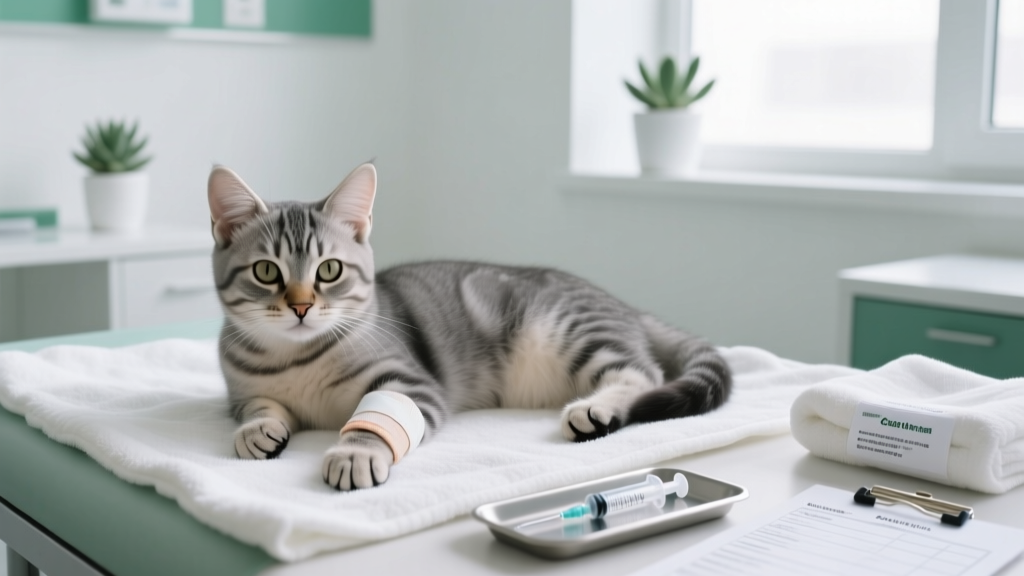
A CH diagnosis isn’t ‘set and forget.’ It requires proactive partnership with a vet who understands neurodevelopmental variation—not just general practice. Schedule your first post-diagnosis visit within 72 hours, bringing video footage of gait, eating, and elimination. Key metrics to log weekly in a simple notebook:
- Number of unassisted standing attempts (goal: ≥5/day by Week 3)
- Duration of sustained eye contact during feeding (indicates reduced visual overwhelm)
- Consistency of litter box use (accidents >2x/week warrant pelvic floor assessment)
- Any new asymmetry—e.g., favoring one front leg, head tilt worsening, or circling—immediate vet consult needed
Red-flag emergencies (call vet *before* driving):
- Sudden inability to stand after sleep (possible vestibular event)
- Seizure-like jerking *without* tremor history (rule out metabolic disorder)
- Urinary retention >12 hours (CH kittens are prone to urethral spasms)
- Head pressing into walls or floors (neurological escalation)
| Age Range | Key Developmental Focus | Critical Actions | Risk to Monitor |
|---|---|---|---|
| 0–4 weeks | Neurological stabilization | Warmth consistency (30°C ambient), assisted feeding every 2 hrs, gentle passive range-of-motion on limbs | Hypothermia, aspiration pneumonia |
| 5–8 weeks | Mobility foundation | Introduce textured floor surfaces (low-pile rug → foam mat → grass mat), begin 2-min daily ‘tummy time’ on soft blanket | Fall-related fractures, joint hyperextension |
| 9–12 weeks | Confidence building | Add ramp access to single low platform (15cm height), introduce scent-based games (catnip in fabric pouches), record gait videos weekly | Chronic stress behaviors (over-grooming, hiding >18 hrs/day) |
| 3–6 months | Adaptive independence | Gradual room expansion (1 new space/week), switch to adult CH-specific diet (higher protein, lower carb), schedule first neuro-recheck | Secondary arthritis, obesity (>10% body weight gain) |
| 6+ months | Lifetime wellness | Biannual neuro exams, annual dental cleaning (CH cats chew less → faster tartar buildup), maintain traction surfaces year-round | Dental disease, degenerative joint disease, anxiety-related cystitis |
Frequently Asked Questions
Can CH kittens live with other pets?
Yes—with strict supervision and species-appropriate introductions. CH kittens should never be housed with dogs or high-energy cats who chase or ‘herd.’ Ideal companions are calm, older cats (≥3 years) or gentle rabbits. Always separate sleeping areas and provide CH-exclusive vertical escape routes (e.g., a wall-mounted shelf with ramp access). Never assume ‘they’ll work it out’—CH kittens cannot flee or defend themselves effectively.
Do CH kittens get worse with age?
No—CH is non-progressive. The cerebellum doesn’t degenerate further. However, secondary issues like arthritis or obesity *can* worsen mobility if unmanaged. With proper weight control, joint supplements (glucosamine/chondroitin, vet-approved), and lifelong traction, most CH cats maintain stable function into senior years. One 12-year-old CH cat in the Feline CH Registry climbed a custom ramp daily until her final week.
Is there medication or surgery for CH?
No FDA-approved drugs or surgeries treat CH itself—it’s a structural brain difference present at birth, usually caused by maternal feline panleukopenia virus exposure in utero. Medication is only used for *complications*: gabapentin for neuropathic pain (rare), anti-anxiety meds for severe stress-induced cystitis, or joint protectants for secondary arthritis. Surgery is never indicated for CH—but may be needed for fracture repair after falls.
Can CH kittens go outside?
Not unsupervised—ever. Their lack of coordination, poor depth perception, and inability to climb or flee make them extremely vulnerable to predators, vehicles, and environmental hazards. If you desire outdoor time, use a fully enclosed catio with padded flooring, shaded zones, and zero drop-offs—or harness-train for short, seated strolls on grass (never pavement). Always supervise 100%—even 30 seconds of distraction can be fatal.
Will my CH kitten ever use a litter box reliably?
Yes—94% do by 5 months with proper setup. Use a low-entry box (≤10 cm sides) filled with ultra-soft, non-clumping paper pellets (e.g., Yesterday’s News). Place it on non-slip flooring, away from noisy appliances. If accidents persist past 16 weeks, request a veterinary urology consult—some CH kittens have subtle bladder sphincter dysregulation requiring timed voiding schedules.
Common Myths About CH Kittens
Myth 1: “CH kittens are mentally challenged.”
False. Cerebellar hypoplasia affects motor control—not cognition, memory, or emotional capacity. CH cats learn commands, recognize names, form deep attachments, and solve puzzles as well as neurotypical cats. Their ‘wobble’ is physical, not intellectual.
Myth 2: “They’ll grow out of it.”
No. CH is permanent—but the brain compensates remarkably. With consistent support, most CH kittens develop adaptive strategies (e.g., sliding into turns, using walls for balance) that improve functional independence dramatically by 4–6 months. It’s not ‘recovery’—it’s neuroplastic adaptation.
Related Topics (Internal Link Suggestions)
- Cerebellar Hypoplasia in Cats Explained — suggested anchor text: "what is CH in cats"
- Best Litter Boxes for Special Needs Cats — suggested anchor text: "CH-friendly litter box"
- Low-Stress Handling Techniques for Neurodiverse Cats — suggested anchor text: "how to hold a CH kitten safely"
- Feline Panleukopenia Prevention Guide — suggested anchor text: "stopping CH before birth"
- Senior CH Cat Care Checklist — suggested anchor text: "caring for aging CH cats"
Your Next Step Starts Today—And It’s Simpler Than You Think
You don’t need perfection—you need presence, patience, and one actionable change right now. Pick *just one* item from today’s care timeline table—maybe adding traction to your kitten’s current room, or scheduling that neuro-vet consult—and do it before bedtime. Every small adjustment compounds: better traction means fewer falls, fewer falls mean less pain and fear, less fear means more playful engagement, and more engagement builds neural pathways that support lifelong resilience. CH kittens aren’t ‘broken’—they’re beautifully adapted. Your role isn’t to fix them. It’s to meet them, exactly as they are, with wisdom, warmth, and unwavering safety. Ready to build their first neuro-safe space? Download our free CH Kitten Starter Kit (includes printable floor-plan templates, vet-question checklist, and traction-material comparison chart) at the link below.